Table of Contents >> Show >> Hide
- Why Room Dividers Work So Well
- 23 Clever Room Divider Ideas for Every Style and Space
- 1. Folding Screens for Instant Flexibility
- 2. Open Bookshelves That Divide and Store
- 3. Floor-to-Ceiling Curtains
- 4. Wood Slat Partitions
- 5. Glass Partitions for Light-Loving Rooms
- 6. Sliding Barn Doors
- 7. Pocket Doors for Hidden Separation
- 8. Half Walls for Subtle Definition
- 9. Built-In Storage Dividers
- 10. Plant Walls and Green Dividers
- 11. Rattan or Cane Screens
- 12. Upholstered Panels
- 13. Hanging Panels
- 14. Beaded Curtains
- 15. Tall Wardrobes as Dividers
- 16. Sofa Placement as a Soft Divider
- 17. Console Tables and Credenzas
- 18. Freestanding Fireplace Dividers
- 19. Decorative Metal Screens
- 20. Accordion Dividers
- 21. Gallery Wall Dividers
- 22. Kitchen Island or Breakfast Bar Dividers
- 23. DIY Salvaged Material Dividers
- How to Choose the Right Room Divider
- Best Room Divider Ideas for Small Spaces
- Best Room Divider Ideas for Open-Concept Homes
- Room Divider Mistakes to Avoid
- Real-Life Experiences With Room Dividers
- Conclusion
Open layouts are wonderful until your dining room becomes your office, your office becomes your laundry-folding station, and your “relaxing living room” is suddenly giving everyone a front-row view of your snack cabinet. That is where clever room divider ideas come to the rescue. A good divider does not just split a space; it creates purpose, privacy, storage, flow, and a little design drama without requiring a sledgehammer or a construction permit.
Whether you live in a studio apartment, a small house, a loft, or an open-concept home that needs better zoning, room dividers can help you create separate areas while keeping your space stylish and flexible. The best part? You can go as simple as curtains or as polished as custom wood slats. Some ideas are renter-friendly, some are DIY-friendly, and some are “call a carpenter and pretend you totally understand millwork” friendly.
Below are 23 clever room divider ideas that combine beauty, function, and smart space planning.
Why Room Dividers Work So Well
Room dividers are popular because modern homes often ask one room to do five jobs. A living room might also need to serve as a home office, play zone, guest sleeping area, reading corner, or workout space. Instead of adding permanent walls, dividers create visual boundaries while keeping the layout adaptable.
The right divider can improve privacy, soften noise, hide clutter, add storage, or simply make a room feel more intentional. In small spaces, it can make a studio feel like a one-bedroom. In larger homes, it can stop open-plan rooms from feeling like one giant furniture showroom where the sofa is emotionally lost.
23 Clever Room Divider Ideas for Every Style and Space
1. Folding Screens for Instant Flexibility
A folding screen is the classic room divider for a reason. It is portable, stylish, and requires absolutely no drilling. Use one behind a sofa, beside a bed, near an entryway, or around a work-from-home corner. Choose rattan for a breezy look, upholstered panels for softness, or painted wood for a decorative accent.
2. Open Bookshelves That Divide and Store
An open bookshelf is one of the smartest room divider ideas because it separates space without blocking all the light. Place a tall shelf between a living area and dining area, or use a low bookcase to define an entryway. Style it with books, baskets, plants, and a few sculptural objects. Just avoid filling every shelf until it looks like a garage sale with vertical ambition.
3. Floor-to-Ceiling Curtains
Curtains are affordable, renter-friendly, and surprisingly elegant. Use ceiling-mounted tracks to divide a bedroom from a living room, hide storage, or create a guest area. Heavy drapes add privacy and sound softness, while sheer curtains create a gentle visual boundary while still letting light pass through.
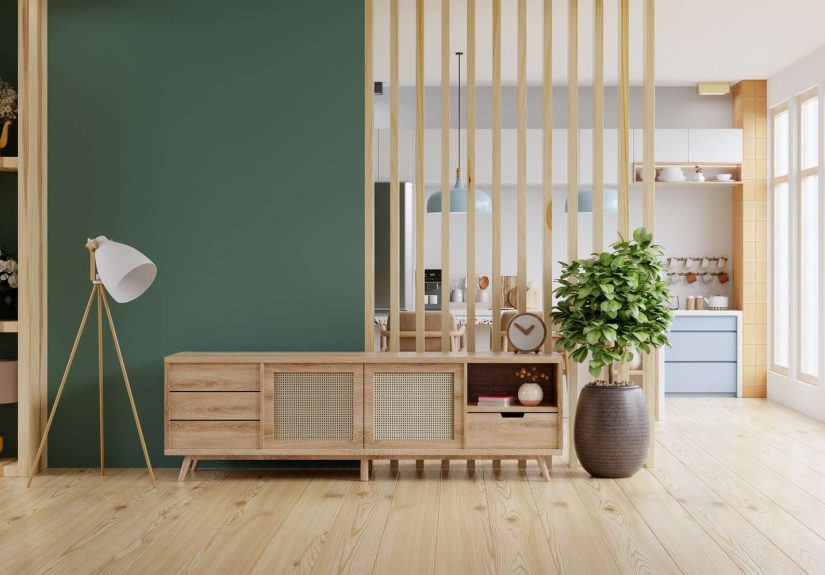
4. Wood Slat Partitions
Wood slat room dividers offer separation without making a space feel closed off. Vertical slats are especially popular in modern, Scandinavian, and midcentury-inspired interiors. They work beautifully between living and dining areas, behind a bed, or near a staircase. The gaps keep the room airy, while the repeated lines add rhythm and texture.
5. Glass Partitions for Light-Loving Rooms
If you want separation but refuse to sacrifice natural light, glass partitions are a polished solution. Clear glass feels modern and open, while fluted or frosted glass adds privacy. This idea works well for home offices, bedrooms, and studio apartments where daylight is too precious to block.
6. Sliding Barn Doors
Sliding barn doors are practical when you need a divider that can fully open or close. They work for laundry zones, pantries, home offices, or bedrooms. For a modern update, choose sleek flat-panel doors instead of rustic reclaimed wood. That way, your room says “custom design” instead of “farmhouse theme party.”
7. Pocket Doors for Hidden Separation
Pocket doors slide into the wall, making them ideal for tight spaces where swing doors are inconvenient. They are more permanent than curtains or screens, but they deliver a clean, architectural look. Use them between a bedroom and sitting area, kitchen and dining room, or office and hallway.
8. Half Walls for Subtle Definition
A half wall, also called a pony wall, creates separation while maintaining an open feel. It can define an entry, shield a kitchen counter, or separate a toilet area in a bathroom. Add a wood cap, built-in shelf, or decorative paneling to make it feel intentional rather than unfinished.
9. Built-In Storage Dividers
Built-ins are perfect when you want a divider that works hard. Think cabinets between a kitchen and living room, shelving around a column, or a storage wall that separates a mudroom from the main living space. This idea is more of an investment, but it can make a home feel custom and organized.
10. Plant Walls and Green Dividers
A plant divider brings privacy, texture, and life to a room. Use a tall plant stand, hanging planters, or a shelving unit filled with greenery. Snake plants, pothos, philodendrons, and ZZ plants are forgiving choices for beginners. A green divider is especially nice for separating a reading nook or softening a home office.
11. Rattan or Cane Screens
Rattan and cane dividers add warmth without visual heaviness. They pair well with coastal, boho, vintage, and modern organic interiors. Because woven materials allow some light through, they create privacy without turning one side of the room into a cave where houseplants go to file complaints.
12. Upholstered Panels
Upholstered room dividers add softness and can help reduce echo in open spaces. They are great for bedrooms, offices, and reading areas. Choose linen, velvet, boucle, or patterned fabric depending on your style. Bonus: an upholstered divider can bring color and texture into a neutral room without repainting a wall.
13. Hanging Panels
Hanging panels create a modern, lightweight divider. They can be made from fabric, wood, felt, metal, or acrylic. Some systems slide on tracks, making them adjustable. This idea is useful for lofts, studios, and shared bedrooms because it provides flexible privacy without bulky furniture.
14. Beaded Curtains
Beaded curtains are playful, retro, and full of personality. They are not the best choice for serious privacy, but they can define a doorway, dressing zone, music corner, or creative studio. Choose wood beads for a natural look or glass beads if you want sparkle without committing to a disco ball lifestyle.
15. Tall Wardrobes as Dividers
In a studio apartment or open bedroom, a wardrobe can act as a divider while adding essential storage. Place it between the sleeping area and living zone, leaving enough clearance for easy movement. For a lighter effect, choose wardrobes in a color close to the wall or add mirrors to reflect light.
16. Sofa Placement as a Soft Divider
Sometimes the best room divider is already in the room. Floating a sofa away from the wall can define a living area within an open floor plan. Add a console table behind it for lamps, books, baskets, or decorative objects. This simple layout trick creates zones without adding anything tall or permanent.
17. Console Tables and Credenzas
A console table or credenza can divide spaces while keeping sightlines open. Use one behind a sofa, between a dining and living area, or near an entry. A credenza adds closed storage for games, linens, office supplies, or all those mystery cords everyone owns but no one can identify.
18. Freestanding Fireplace Dividers
A double-sided fireplace or freestanding fireplace feature can separate two zones while becoming a dramatic focal point. This works best in larger rooms, open-concept homes, or renovations. For a lower-commitment version, use an electric fireplace console to anchor a seating area.
19. Decorative Metal Screens
Metal screens can feel modern, industrial, Moroccan-inspired, or art deco depending on the pattern. They are durable and visually striking, making them ideal for entryways, dining rooms, patios, and lofts. Laser-cut designs create beautiful shadows, especially when paired with good lighting.
20. Accordion Dividers
Accordion dividers are flexible and easy to move. They can open wide, fold compactly, and shift as your needs change. Use them to create a temporary office, hide workout equipment, or give guests a bit of privacy. They are especially useful in rental homes where permanent changes are not an option.
21. Gallery Wall Dividers
A divider does not have to be plain. Turn a freestanding panel or low partition into a mini gallery wall with framed art, photographs, or textiles. This idea works well behind a bed, beside a dining area, or in a creative workspace. It gives the divider a second job: showing off your taste.
22. Kitchen Island or Breakfast Bar Dividers
In open-plan homes, a kitchen island naturally separates cooking and living zones. Add pendant lights above it to strengthen the boundary. A breakfast bar can also divide a small apartment kitchen from the living area while adding seating, storage, and a casual gathering spot.
23. DIY Salvaged Material Dividers
If you enjoy projects, salvaged materials can become unique room dividers. Old doors, shutters, window frames, pallets, lattice panels, or vintage screens can be cleaned, painted, hinged, and reused. This approach adds character and keeps materials out of the landfill. Just make sure old paint is safe and hardware is sturdy before bringing your masterpiece indoors.
How to Choose the Right Room Divider
Think About Privacy First
If you need real privacy, choose curtains, sliding doors, wardrobes, opaque screens, or upholstered panels. If you only need visual separation, open shelving, plants, slats, or glass partitions may be enough.
Consider Natural Light
Small rooms can feel cramped when a divider blocks too much light. In those spaces, choose open bookcases, glass, slatted wood, cane, or sheer curtains. These options define space while keeping the room bright.
Match the Divider to the Room’s Style
A divider should feel like part of the design, not an emergency solution shoved into the room after a furniture argument. For modern homes, consider glass, metal, or slats. For cozy interiors, try curtains, wood screens, or upholstered panels. For boho spaces, rattan, macrame, and plants are natural fits.
Measure Before You Buy
Always measure height, width, walking clearance, and furniture placement. A divider that looks elegant online may feel enormous in real life. Leave enough space to move comfortably around the room, open drawers, pull out chairs, and avoid dramatic collisions with coffee.
Best Room Divider Ideas for Small Spaces
Small spaces need dividers that work without stealing too much floor area. The best choices are curtains, open shelving, slim folding screens, plant stands, and furniture placement. A studio apartment can benefit from a curtain around the bed, a bookshelf between sleeping and living zones, or a sofa positioned to create a clear lounge area.
For a tiny bedroom-office combo, try a lightweight screen beside the desk. It helps your brain understand that “work mode” and “sleep mode” are different things, even if they happen three feet apart. For an entryway in a small home, a low bookcase or narrow console can create a drop zone without blocking the room.
Best Room Divider Ideas for Open-Concept Homes
Open-concept spaces often need structure more than privacy. Use rugs, lighting, furniture placement, and dividers together to create zones. A sofa can separate the living room from the dining area, while a console table behind it adds function. A wood slat partition can distinguish an entry without making the space feel closed. Built-in shelving can turn an awkward column into a design feature.
The goal is not to chop the room into tiny boxes. The goal is to give each area a role. Think of it like assigning seats at dinner: everyone can still talk, but at least the mashed potatoes know where they belong.
Room Divider Mistakes to Avoid
Choosing Something Too Tall and Heavy
A massive divider can overwhelm a small room. If your space already lacks light, choose airy materials or partial-height pieces.
Ignoring Traffic Flow
A divider should not make your daily route feel like an obstacle course. Keep pathways clear and natural.
Forgetting Storage Opportunities
If you need more organization, choose a divider that includes shelves, cabinets, baskets, or hooks. Beautiful is nice. Beautiful plus storage is where the magic lives.
Using the Wrong Material
Bathrooms and kitchens need moisture-friendly materials. Busy family rooms need durable surfaces. Bedrooms can handle softer fabrics and decorative screens.
Real-Life Experiences With Room Dividers
One of the most useful lessons from living with room dividers is that the first placement is rarely the final placement. A folding screen may begin life beside a desk, move behind a sofa, spend two weeks hiding laundry baskets, and eventually become the “temporary” guest room wall that stays for three years. That flexibility is exactly why room dividers are so practical. They let your home change as your routine changes.
In small apartments, curtains often deliver the biggest transformation for the lowest cost. Hanging a ceiling-mounted curtain around a bed can make a studio feel calmer almost immediately. It gives the sleeping area a sense of enclosure, which is helpful when your kitchen sink is technically visible from your pillow. The trick is to hang the curtain high and wide. Short curtains mounted too low can look like a changing room at a discount store, and nobody wants their bedroom to whisper “fitting room number four.”
Bookshelves are another favorite because they solve two problems at once: separation and storage. However, they work best when styled with breathing room. If every shelf is packed solid, the divider becomes a wall of visual noise. Mixing books with baskets, ceramics, framed photos, and plants keeps the piece attractive from both sides. For safety, tall shelves should be properly anchored whenever possible, especially in homes with children, pets, or enthusiastic people who gesture dramatically while telling stories.
Plant dividers are beautiful, but they require honesty. If you forget to water plants until they look personally betrayed, choose low-maintenance varieties or use a mix of real and high-quality faux greenery. A divider made of healthy plants feels fresh and calming. A divider made of crispy brown leaves feels like a tiny indoor haunted forest.
Wood slat dividers and glass partitions tend to feel more architectural. They are excellent for homeowners who want a long-term upgrade without fully closing off the layout. These options are especially useful in open homes where the problem is not a lack of space, but a lack of definition. A slatted divider near an entry, for example, can make the front door feel connected yet separate from the living room.
The most important experience-based tip is to decide what job the divider must do before choosing the style. Is it for privacy, storage, light control, sound softness, clutter hiding, or visual interest? A sheer curtain will not hide a messy office. A heavy wardrobe may block too much light. A gorgeous metal screen may look amazing but do very little for noise. When the divider matches the real problem, the whole room suddenly works better.
Room dividers are not just design accessories. They are quiet little problem-solvers. They help homes feel more personal, more organized, and more comfortable. And unlike permanent walls, they allow you to change your mind, which is helpful because furniture has a mysterious way of becoming “wrong” at 10 p.m. on a Tuesday.
Conclusion
The best room divider ideas combine style with purpose. A folding screen can add instant charm, curtains can create privacy on a budget, bookshelves can divide while storing, and wood slats or glass partitions can make a home feel custom and refined. Whether you want to separate a studio apartment, define an open-concept living room, hide clutter, or create a cozy work zone, there is a divider that can do the job beautifully.
Start with the function you need most, then choose the material, height, and style that fits your space. With the right divider, one room can become two zones, three uses, and possibly the most organized corner of your home. That is not just clever design; that is domestic wizardry with better lighting.
Note: This article is written in original American English for web publishing, with practical room divider ideas inspired by current interior design best practices and real home layout solutions.