Table of Contents >> Show >> Hide
- Why Grout Gets So Dirty in the First Place
- Why This 2 Ingredient Homemade DIY Grout Cleaner Works
- How to Make the Cleaner
- What You Need Before You Start
- How to Use This Homemade Grout Cleaner
- Where This DIY Grout Cleaner Works Best
- Where You Should Be Careful
- Mistakes to Avoid
- How Often Should You Clean Grout?
- What If the Grout Still Looks Bad?
- Simple Maintenance Tips to Keep Grout Cleaner Longer
- Is This Better Than Store-Bought Grout Cleaner?
- Conclusion
- Experiences With a 2 Ingredient Homemade DIY Grout Cleaner
Note: This draft uses baking soda + 3% hydrogen peroxide as the two-ingredient homemade DIY grout cleaner because multiple U.S. home-care sources recommend that combination for lifting grime and brightening stained grout, while routine vinega
Martha Stewart
+2
Mapei
+2
tural stone.
Natural Stone Institute
+6
Martha Stewart
+6
Mapei
+6
icle treats this mixture as a cleaner and brightener, not a true disinfectant, and it includes safety warnings not to mix bleach with other cleaners and not to combine hydrogen peroxide with vinegar in the same container.
CDC
+2
Houston Methodist
+2
>
Grout has a special talent: it can make an otherwise clean room look like it just survived a mud-wrestling tournament. Your tile may be shiny, your sink may sparkle, and your mirror may be serving movie-star energy, but dingy grout lines will still sit there like tiny gray spoilers. The good news? You do not need a cabinet full of mystery sprays to fix the problem. A simple 2 ingredient homemade DIY grout cleaner can do a surprisingly solid job of cutting through everyday buildup and brightening stained grout.
For this version, the winning duo is baking soda and hydrogen peroxide. It is affordable, easy to mix, and practical for bathrooms, kitchen backsplashes, entryways, and other tiled areas that collect dirt faster than anyone would like to admit. Better yet, this homemade grout cleaner is simple enough for a quick weekend reset but strong enough to make you squint at the floor and say, “Wait… was it always that color?”
In this guide, you will learn why this DIY grout cleaner works, how to make it, how to use it without damaging your surfaces, what mistakes to avoid, and what to do when your grout needs more than a homemade fix. Let’s get those grout lines back in the game.
Why Grout Gets So Dirty in the First Place
Grout is usually cement-based and porous, which means it absorbs things like moisture, soap residue, grease, dust, and everyday grime. In a bathroom, that often means mildew stains, body-oil residue, and soap scum. In a kitchen, it is more likely to be grease, food splatter, and traffic dirt. Either way, grout acts like a sponge with a long memory.
That is why tile can still look fairly decent while the grout starts to darken, yellow, or develop patchy stains. If the grout was never sealed, or if the sealer has worn away, the discoloration tends to show up even faster. Translation: your grout is not dramatic. It is just porous.
Why This 2 Ingredient Homemade DIY Grout Cleaner Works
The beauty of this homemade grout cleaner is that it relies on two ingredients that do different jobs very well.
Baking Soda
Baking soda is a mild abrasive, which is a fancy way of saying it helps scrub away surface grime without acting like sandpaper. It also helps thicken the mixture into a paste, so it clings to grout lines instead of immediately sliding off your tile like it is late for another appointment.
Hydrogen Peroxide
Standard 3% hydrogen peroxide helps loosen organic stains and brighten dingy grout. It is especially useful when grout has that tired, yellowed, “I used to be white in 2019” appearance. Mixed with baking soda, it creates a paste that is easy to apply and effective for common household soil.
Together, these ingredients make a practical DIY grout cleaner for everyday deep cleaning and cosmetic brightening. It is not magic, but it is close enough to make your knees forgive you for kneeling on the bathroom floor.
How to Make the Cleaner
Here is the basic formula:
- 2 parts baking soda
- 1 part 3% hydrogen peroxide
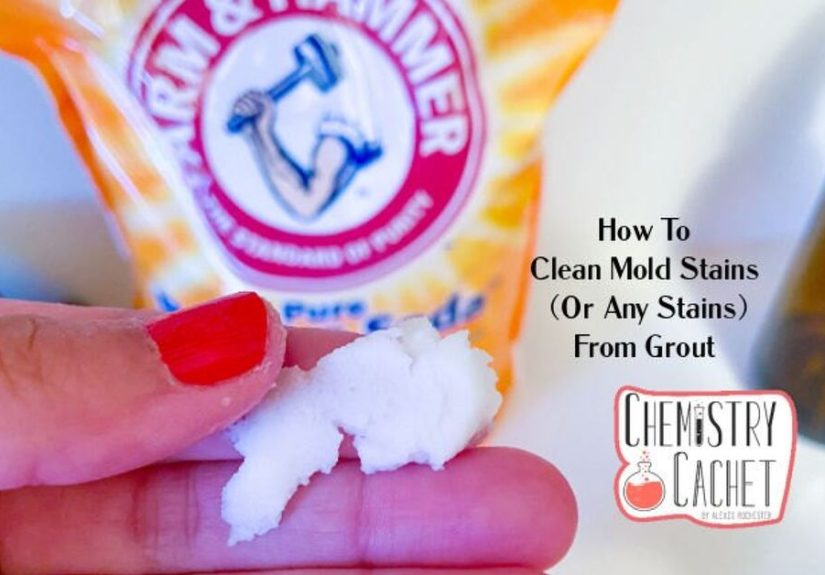
Mix until you get a spreadable paste. You want it thick enough to stay on the grout, but not so dry that it crumbles like cookie topping. If it feels too runny, add a little more baking soda. If it is too stiff, add a tiny splash more peroxide.
This is the simplest version of a baking soda and hydrogen peroxide grout cleaner, and it works well because it is uncomplicated. No chemistry-set chaos. No over-the-top recipe with half the pantry. Just two ingredients that actually make sense together.
What You Need Before You Start
- Baking soda
- 3% hydrogen peroxide
- A small bowl
- A spoon or old spatula for mixing
- A nylon grout brush, old toothbrush, or small scrub brush
- A microfiber cloth or sponge
- Warm water for rinsing
- Gloves
If you are cleaning a large tile floor, a wet-dry vacuum can make cleanup easier after rinsing. It is not required, but it is one of those tools that suddenly makes you feel wildly organized.
How to Use This Homemade Grout Cleaner
1. Prep the area
Sweep or vacuum loose dirt first. This step matters more than people think. If you skip it, you are basically scrubbing dust mud into the grout and calling it progress.
2. Lightly dampen the grout
Use a damp cloth or a light spritz of warm water. This helps loosen surface debris and makes the paste easier to spread.
3. Apply the paste
Spoon or dab the cleaner directly onto the grout lines. Try to keep the paste concentrated on the grout rather than smearing it all over the tile just because you are in the zone.
4. Let it sit
Allow the paste to sit for about 5 to 10 minutes for normal dinginess, or up to 15 minutes for more stubborn staining. Do not let it dry rock-hard on the surface. If needed, work in smaller sections.
5. Scrub gently but thoroughly
Use a nylon-bristle brush or old toothbrush to scrub in small circular motions or short back-and-forth strokes. You are trying to lift dirt out of the pores, not audition for a grout demolition crew.
6. Rinse well
Wipe with a damp sponge or microfiber cloth, then rinse the area with clean water. Remove all paste residue so the tile does not dry with a dusty film.
7. Dry the surface
Buff the area dry with a clean cloth. Dry grout gives you a more accurate read on whether it is actually cleaner or just temporarily darker from moisture.
Where This DIY Grout Cleaner Works Best
This tile grout cleaner is best for:
- Bathroom floor grout
- Shower grout with light to moderate staining
- Kitchen backsplash grout
- Entryway tile grout
- Laundry room tile
- General grime, discoloration, and residue
It is especially useful when your grout is dirty, dull, or stained but still structurally sound.
Where You Should Be Careful
Not every tiled surface wants the same treatment. Before using any homemade grout cleaner, test a small hidden spot first.
Avoid this on natural stone without checking first
If your tile is marble, limestone, travertine, or another natural stone, use extra caution. Natural stone is more sensitive than ceramic or porcelain, and the wrong cleaner can create damage faster than you can say “I thought this was a quick project.” For stone surfaces, a stone-safe cleaner is usually the smarter move.
Do not use it on crumbling grout
If the grout is cracked, flaking, missing in spots, or turning sandy when you touch it, cleaning is not the first fix. At that point, you may need repair, resealing, or regrouting.
Do not confuse cleaning with disinfecting
This DIY paste is designed to clean and brighten grout. It is not the same thing as using an EPA-registered disinfectant when disinfection is necessary.
Mistakes to Avoid
Using metal brushes
Wire brushes can be too harsh and may damage grout. Stick with nylon bristles.
Scrubbing like you are angry at the floor
Over-scrubbing can wear down grout, especially older or unsealed grout. Firm is good. Destructive is not.
Mixing random cleaners together
Do not add bleach. Do not combine peroxide with vinegar in the same container. Do not improvise a science experiment because a social media comment section told you to. Safe cleaning beats dramatic cleaning every time.
Skipping the rinse
Leftover residue can dull tile and attract more dirt later. Rinse well and dry thoroughly.
Using vinegar as routine grout maintenance
Even though vinegar shows up in many DIY cleaning ideas, it is not the best long-term choice for grout care, especially if you do not know your tile and grout type. This recipe skips that issue by focusing on a more reliable two-ingredient paste.
How Often Should You Clean Grout?
For bathrooms and kitchens, a light grout cleaning every few weeks can help prevent the dramatic before-and-after situation from becoming too dramatic. A deeper clean with this 2 ingredient homemade DIY grout cleaner every month or two is usually enough for many homes, depending on traffic, moisture, and how often someone in the household apparently cooks tomato sauce like it is an extreme sport.
If your grout stays damp for long periods, improve ventilation. Run the bathroom fan, wipe down shower walls, and let floors dry out. Cleaner grout is great. Dry grout is even smarter.
What If the Grout Still Looks Bad?
Sometimes grout is clean but still stained. If you have already cleaned it and the discoloration remains, here are a few possibilities:
- The grout may need resealing
- The stain may be too deep for DIY cleaning alone
- The grout color may have permanently changed over time
- You may need a grout pen or grout colorant for cosmetic improvement
- The grout may need replacement if it is damaged
This is an important distinction. Not all ugly grout is dirty grout. Sometimes it is old grout wearing the visual equivalent of sweatpants and refusing to bounce back.
Simple Maintenance Tips to Keep Grout Cleaner Longer
- Vacuum or sweep tiled floors regularly
- Wipe spills quickly, especially grease and coffee
- Use a pH-appropriate cleaner for routine tile care
- Improve ventilation in bathrooms
- Dry shower walls and floors after use when possible
- Reseal grout as needed based on wear and moisture exposure
Routine care is not glamorous, but it beats crawling around on the floor with a toothbrush at 8 p.m. on a Sunday.
Is This Better Than Store-Bought Grout Cleaner?
That depends on the problem. For everyday grime, light staining, and routine brightening, this homemade DIY grout cleaner is a strong budget-friendly option. For severe mold issues, heavy mineral buildup, or damaged grout, a specialty cleaner or professional service may work better.
The biggest advantage of this recipe is simplicity. It is easy to mix, easy to apply, and practical for people who want a cleaner floor without buying a whole shelf of products. The biggest limitation is that it is still a DIY paste, not a miracle cure for cracked grout, deep structural issues, or years of total neglect. Nothing humbles a person faster than realizing their “stain” is actually “the old color now.”
Conclusion
If your grout lines are looking tired, this 2 ingredient homemade DIY grout cleaner is one of the easiest ways to freshen them up without overcomplicating the job. Baking soda gives you gentle scrubbing power, hydrogen peroxide helps brighten and lift grime, and together they create a paste that is easy to apply and surprisingly effective.
The secret is not just the recipe. It is the method: prep the area, apply the paste, give it a few minutes to work, scrub with a nylon brush, rinse thoroughly, and dry the surface. Add in a little routine maintenance, and your tile can stay cleaner longer instead of cycling between “fine” and “why does this bathroom look haunted?”
For many households, this is the sweet spot: simple ingredients, smart technique, and results that make the whole room look brighter. Not bad for two ingredients and a bit of elbow grease.
Experiences With a 2 Ingredient Homemade DIY Grout Cleaner
One reason this kind of cleaner keeps getting attention is that people often notice a difference almost immediately, especially in small spaces. A bathroom floor that looked permanently dingy can suddenly appear several shades lighter after one pass. It is not always because the tile changed dramatically; sometimes the grout was simply dragging down the whole room. Once the grout brightens, the space looks cleaner, newer, and more cared for, even before anything else gets touched.
In rental homes, this recipe tends to be especially satisfying. Many renters do not want to spend money on specialty products for a place they do not own, but they still want the bathroom and kitchen to feel fresh. A bowl, baking soda, hydrogen peroxide, and an old toothbrush can turn into a low-cost reset. People often describe the experience the same way: the first section looks good, the second section looks even better, and then suddenly they are on the floor cleaning grout behind the toilet because now it has become personal.
Kitchens bring a slightly different experience. Bathroom grime is usually obvious, but kitchen grout can be sneakier. It picks up grease, crumbs, cooking residue, and foot traffic slowly enough that the floor starts looking dull before you really notice why. When homeowners use a baking soda and hydrogen peroxide grout cleaner in the kitchen, the common reaction is surprise at how much brighter the entire floor looks after the grout is cleaned. It is one of those jobs where the “after” feels cleaner than the amount of effort would suggest.
Another common experience is learning that technique matters more than brute force. People often assume grout cleaning requires aggressive scrubbing, but many find better results when they let the paste sit briefly first and then scrub with controlled pressure. Working in smaller sections also helps. Instead of smearing cleaner over the whole room and panicking when it starts drying, it is usually easier to divide the area into manageable patches. That approach reduces frustration and leads to more even results.
Of course, not every experience is a fairy tale with sparkling tile and triumphant background music. Sometimes people clean the grout and realize the issue is not dirt at all. The grout may still look blotchy because it is permanently stained, poorly sealed, or simply worn out. In those cases, the cleaner still helps by removing the surface grime and revealing what the grout actually needs next. That alone can be useful. It is much easier to decide whether you need a grout pen, fresh sealer, or a repair once the built-up dirt is gone.
Overall, the experience most people report is that this DIY method feels approachable. It does not require fancy equipment, it does not demand a deep knowledge of tile chemistry, and it gives visible results fast enough to feel rewarding. That matters because cleaning tasks are easier to repeat when they do not feel impossible. A two-ingredient recipe that works well, smells manageable, and fits into a normal weekend routine is often exactly what people need to keep grout from sliding back into the danger zone.
“` :