Table of Contents >> Show >> Hide
- What Makes a Kitchen “Tuscan,” Anyway?
- 16 Tuscan Kitchens to Steal the Look
- 1) The “Patina Is a Personality” Kitchen
- 2) The Exposed-Beam Daydream
- 3) The Arched-Ceiling Statement Kitchen
- 4) The Matte-Stone Countertop Classic
- 5) The Tumbled-Backsplash Texture Party
- 6) The Plaster Hood That Deserves a Fan Club
- 7) The Terracotta Floor “Instant Vacation” Kitchen
- 8) The Copper + Iron “Cook Like a Nonna” Setup
- 9) The Farmhouse Sink with Italian Soul
- 10) The Warm Cream Cabinetry “Soft Sunlight” Look
- 11) The Olive-and-Sage Color Story Kitchen
- 12) The Hand-Touched Tile Moment
- 13) The Open Shelving “Market Finds” Display
- 14) The Rustic Table-First Layout
- 15) The Modern Tuscan “Less Theme, More Texture” Update
- 16) The “Little Details, Big Passport Energy” Kitchen
- How to Create a Tuscan Kitchen Without a Full Remodel
- Common Tuscan Kitchen Mistakes (and How to Avoid Them)
- Conclusion
- of “Tuscan-at-Home” Experiences to Make the Style Feel Real
Want your kitchen to feel like it’s wearing linen pants, carrying a market basket, and casually saying “ciao” to the afternoon sun?
That’s the magic of a Tuscan kitchen: warm, rustic, a little imperfect on purposeand so welcoming you’ll suddenly believe
that everyone should linger at the table for “just one more bite.”
Tuscan style isn’t about being fancy. It’s about being lived-in: earthy color palettes, natural materials, Old World textures,
and details that feel collected over time. Below are 16 Tuscan-inspired kitchen looks (and the design “ingredients” that make them work),
plus practical ways to recreate the vibewhether you’re remodeling or simply rearranging your countertop like it’s a tiny Italian piazza.
What Makes a Kitchen “Tuscan,” Anyway?
Think of Tuscan kitchen design as a recipe: start with natural materials (wood, stone, clay), add warm earth tones, then finish with
texturedistressed finishes, hand-touched surfaces, and architectural curves. The end result should feel like it has a story,
not like it was unboxed five minutes ago.
The signature Tuscan “flavors”
- Earthy palette: terracotta, warm creams, honeyed wood, olive and sage greens, muted golds.
- Natural textures: tumbled stone, plaster, reclaimed wood beams, brick, hammered metals.
- Old World details: arches, thick edges, chunky hardware, artisanal tile, statement hoods.
- Hospitality-first layout: a big table, a generous island, or at least one “stay and chat” corner.
16 Tuscan Kitchens to Steal the Look
1) The “Patina Is a Personality” Kitchen
In Tuscany, perfection is suspicious. Cabinets with a worn finish, scuffed stone floors, and a few dings here and there don’t read as
“old”they read as beloved. Aim for distressed wood cabinetry or a glaze finish that highlights edges and corners, then pair it with
matte stone counters so everything feels grounded and honest.
Try it: Swap shiny pulls for darker, aged-looking hardware and add a wooden cutting board that never leaves the counter
(because you’re “always about to chop herbs,” obviously).
2) The Exposed-Beam Daydream
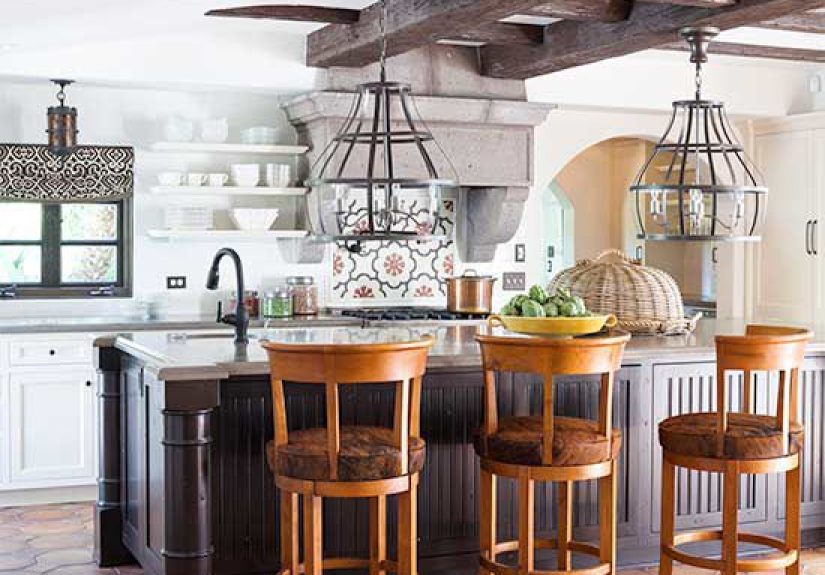
Nothing says “Italian countryside” like reclaimed wood beams overhead. Even in a newer home, beams instantly introduce that villa vibe,
especially when paired with creamy walls and warm lighting. If you can’t add structural beams, faux box beams can still deliver the look
without requiring you to become a part-time carpenter.
Design tip: Keep ceilings and walls lighter so the beams look intentionalnot like your kitchen is wearing a heavy hat indoors.
3) The Arched-Ceiling Statement Kitchen
Arches are Tuscan style’s love language. A brick barrel ceiling, an arched alcove behind the range, or even an arched doorway instantly
softens a space and adds romance. This is the kitchen equivalent of writing a love letter on thick paper instead of sending “k” as a text.
Try it: If remodeling isn’t happening, mimic arches with decorarched mirrors, arched niche shelving, or a curved range hood silhouette.
4) The Matte-Stone Countertop Classic
Tuscan kitchens tend to favor stone surfaces that feel organic and touchablethink honed or leathered finishes rather than glossy polish.
The point is subtle texture and softness, like the countertop is quietly saying, “Relax. We’re not doing fingerprints today.”
Pair with: warm wood cabinets and a backsplash that has movement (tumbled stone or artisan tile) instead of a crisp, modern grid.
5) The Tumbled-Backsplash Texture Party
A Tuscan backsplash often looks less “installed” and more “crafted.” Tumbled stone, warm neutral tile, or mixed mosaic details add depth.
The best versions feel layered, like the kitchen has been updated over timewithout looking like you accidentally bought three different tiles
during a midnight online sale.
Shortcut: Choose one main tile and use a small accent band or niche to add interest (instead of turning the whole wall into a patchwork quilt).
6) The Plaster Hood That Deserves a Fan Club
A dramatic range hoodoften plastered, curved, or heavily framedis a Tuscan hallmark. It becomes the kitchen’s focal point, like a fireplace
you cook under. Add corbels, a chunky mantel edge, or a softly curved form to bring that Old World presence.
Style it: Keep decor minimal: a pair of ceramic vessels or a small framed tile inset is enough. Let the hood do the talking.
7) The Terracotta Floor “Instant Vacation” Kitchen
Terracotta tile floors are practically a passport stamp. Their warm clay color creates a sunbaked foundation that makes everything above it feel richer.
If real terracotta isn’t in the budget, look for porcelain tile that mimics that earthy tone and slightly varied surface.
Bonus: Terracotta pairs beautifully with creamy whites, warm taupes, and olive greensso your palette basically designs itself.
8) The Copper + Iron “Cook Like a Nonna” Setup
Copper pots and wrought iron accents are a classic Tuscan combowarm plus rugged, shiny plus grounded. The trick is balance:
a copper pot rack, copper cookware, or copper pendant shades paired with iron brackets, hardware, or lighting.
Try it: Hang one rail and display your prettiest tools. Functional decor is the Tuscan way of saying, “Yes, I cook,” without proving it in court.
9) The Farmhouse Sink with Italian Soul
An apron-front sink feels right at home in Tuscan-style kitchens because it’s practical and nostalgic at the same time. Pair it with a bridge faucet
or an aged brass finish for extra Old World charm. Then add a linen towel that looks like it’s been to an olive grove. (Optional, but encouraged.)
10) The Warm Cream Cabinetry “Soft Sunlight” Look
Bright white can feel too stark for Tuscan style. Instead, lean into creamy whites, soft putty tones, or warm beige that looks flattering in every light.
This creates a gentle backdrop for wood, stone, and iron to shinelike a gallery wall, but for your countertop.
Style note: Avoid cool gray undertones; Tuscan kitchens thrive on warmth.
11) The Olive-and-Sage Color Story Kitchen
Greens that feel drawn from natureolive, sage, muted mossbring Mediterranean kitchen style to life. Use them on lower cabinets, an island,
or even just a feature wall. Green also makes terracotta, natural wood, and brass look expensive (without demanding you refinance your life).
Easy win: Paint the island a soft olive and keep perimeter cabinets warm cream for a timeless two-tone approach.
12) The Hand-Touched Tile Moment
Tuscan design loves anything that looks made by a person, not a machine. Hand-painted accents, artisan-look ceramics, or textured tile
(think subtle variation and imperfect edges) creates that collected, soulful feel. Use it behind the range or in a niche so it feels special.
13) The Open Shelving “Market Finds” Display
Tuscan kitchens often showcase everyday objectsceramic bowls, olive oil bottles, wood boards, and pottery. Open shelves are perfect for this
because they make the kitchen feel active and personal, like someone just put the groceries away and then got distracted by a good conversation.
Rule of thumb: Group similar items (all whites, all earth tones) so it looks curated, not chaotic.
14) The Rustic Table-First Layout
If you want your kitchen to feel like Tuscany, give it a place to gather. A chunky wood table, a breakfast nook with a banquette,
or even two comfy counter stools can create that “linger here” energy. Tuscan style is less about the stove and more about what happens after dinner.
15) The Modern Tuscan “Less Theme, More Texture” Update
Today’s Tuscan-inspired kitchens often keep the warmth but skip the heavy, overly ornate look. Think simpler cabinet profiles, cleaner lines,
and fewer decorative borderswhile still emphasizing stone, wood, and earthy color. It’s the difference between “Italian villa” and “Italian villa,
but I also own a smartphone.”
Modern pairing: A warm neutral cabinet + a statement stone slab backsplash (continuous surface) can feel fresh and elevated.
16) The “Little Details, Big Passport Energy” Kitchen
If you’re not renovating, go after the micro-moments: replace one light fixture with something iron or aged brass, add a woven rug in warm tones,
display lemons in a bowl, bring in a vintage cutting board, and swap glossy accessories for matte ceramics. Tuscan charm is built on layers,
not one giant dramatic gesture.
How to Create a Tuscan Kitchen Without a Full Remodel
Start with color and texture (the “cheap but mighty” combo)
- Paint: warm cream, soft taupe, or muted olive for instant Mediterranean warmth.
- Textiles: linen towels, woven baskets, jute or vintage-style runners.
- Hardware: aged bronze, iron, or antique brass pulls can transform cabinets quickly.
- Countertop styling: wood boards, ceramic crocks, and a small bowl of citrus do a lot of heavy lifting.
Pick one “hero” element
Tuscan kitchens feel cohesive when one feature anchors the vibe: terracotta floors, a statement hood, a warm stone backsplash, or a reclaimed wood beam.
Choose the hero first, then support it with quieter choices. Otherwise, your kitchen can end up looking like it’s wearing every accessory it ownsat once.
Keep it practical
Natural materials are gorgeous, but they also have opinions (especially about stains). If you’re busy, consider surfaces that mimic the look:
porcelain tile that resembles terracotta, quartz that echoes natural stone, or durable finishes that still read warm and matte.
Common Tuscan Kitchen Mistakes (and How to Avoid Them)
Mistake: Going “theme park Tuscany”
Too many grapes, roosters, faux-Tuscan murals, and decorative borders can make the kitchen feel dated fast. Instead, use materials and
colors to create the mood. Let the architecture and textures do the storytelling.
Mistake: Using cool grays as the base
Tuscan style lives in warm undertones. If your “neutral” reads icy, the rustic elements can feel out of place. Choose creams, warm taupes,
or mushroom tones instead.
Mistake: Over-distressing everything
A little patina is charming. Too much can feel like your cabinets survived a small tornado. Keep distressing subtle and pair it with cleaner elements
(simple hardware, straightforward lighting) to keep the look elevated.
Conclusion
A Tuscan kitchen isn’t just a styleit’s a feeling: warm light, natural textures, and a space designed for real life (and real snacks).
Whether you add terracotta floors, soften your palette with creamy neutrals, bring in reclaimed wood, or simply display a few ceramic bowls like you
just returned from an Italian market, the goal is the same: make the kitchen inviting enough that people forget their phones exist.
And if anyone asks where you vacationed? Just smile mysteriously and say, “Oh, you know… Tuscany.” Then gesture toward your range hood like it’s a landmark.
of “Tuscan-at-Home” Experiences to Make the Style Feel Real
The funniest thing about a Tuscan-inspired kitchen is how quickly it changes what you do in it. You don’t just cookyou start behaving like
a person who buys herbs “by the bunch,” pours olive oil with dramatic confidence, and believes bread should always be torn, not sliced.
Start with the soundtrack. Put on a mellow Italian jazz playlist or anything that sounds like a movie scene where someone is chopping garlic slowly,
even though nobody chops garlic slowly in real life. Then open a windowbecause Tuscan kitchens feel airy, and also because sautéing onions deserves
good ventilation and a little respect.
Next, give yourself a small ritual. In Tuscany, the kitchen is tied to the market: fresh produce, simple ingredients, and a “today is enough” mindset.
Recreate that by doing a mini “market haul” at your local grocery store: a cluster of lemons, a bunch of rosemary, a bag of good pasta, cannellini beans,
ripe tomatoes, and a wedge of Parmigiano-Reggiano. Even if dinner is just pantry pasta, your countertop will look like it’s about to star in a travel show.
Then lean into the details that make the room feel lived-in. Keep a wooden cutting board out. Store utensils in a ceramic crock. Put a small bowl of citrus
on the table like it’s a centerpiece (because in a Tuscan kitchen, food is décor and décor is food-adjacent). If you have terracotta or warm-toned tile,
notice how it makes the space feel softer at nightespecially with warm bulbs instead of bright, cool overhead lighting.
The real “abroad from home” moment happens when you host, even casually. Set out olives, bread, and a simple salad. Use mismatched plates on purpose.
Pour sparkling water into glasses like it’s an event. Pull stools up to the island and invite someone to keep you company while you cookTuscan kitchens
are built for conversation, not isolation. The room should feel like it’s gently nudging everyone to stay longer.
Finally, let the kitchen earn its patina. Don’t panic over every scuff or scratch. Tuscan style celebrates a home that’s used and enjoyed.
Over time, your space becomes less “inspired by Tuscany” and more “inspired by the way we live here”and that’s the most authentic version of the look.
Because the true Tuscan experience isn’t the tile or the beams. It’s the feeling that the kitchen is the heart of the home… and it’s open for one more bite.