Table of Contents >> Show >> Hide
- What “Got What They Deserved” Means in DC (Where Nothing Stays Dead)
- 1) The Joker: Chaos Clown, Meet Locked Door
- 2) Lex Luthor: The Man Who Could’ve Been Superman (And Fumbled It)
- 3) General Zod: “Kneel” Doesn’t Work Great in the Phantom Zone
- 4) The Riddler: When Your Big Reveal Ends in Handcuffs
- 5) Two-Face: Chance, Coin, Consequence
- 6) Scarecrow: Fear Merchant Who Ends Up Afraid
- 7) Bane: The Conqueror Who Learns Strength Has Limits
- 8) The Penguin: Crime Boss Who Keeps Slipping on His Own Image
- 9) Black Mask: The “Control Freak” Who Gets Outsmarted
- 10) Ocean Master (Orm): The Would-Be King Who Loses the Throne
- 11) Ares: God of War Who Gets Defeated by Refusing to Feed the Fire
- 12) Sinestro: The Fear Dictator Who Becomes a Prisoner of Fear
- 13) Brainiac: The Collector Who Gets Collected
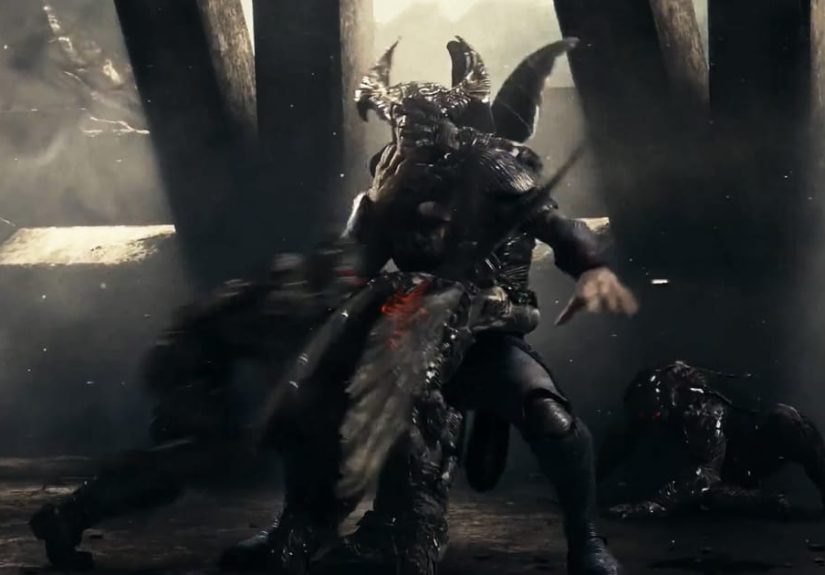
- 14) Steppenwolf: The Warlord Who Learns He’s Replaceable
- 15) Darkseid: The God of Control Who Can’t Fully Control Reality
- 16) The Anti-Monitor: Multiverse-Eater Who Gets Stopped by Sacrifice
- Why This Kind of Villain Comeuppance Feels So Satisfying
- 500+ Words of “Experience” Add-On: How These Villains Hit Different When You Read, Watch, and Rewatch
- Conclusion
Warning: Light spoilers ahead across DC comics, movies, and TV. Also: moral lessons. Also: capes. Proceed bravely.
DC is basically a giant, beautifully chaotic laboratory for one question: “What happens when someone is the worst?”
Sometimes the answer is “they get away with it until the next crossover.” But other timesoh, the poetic justice is so perfect
it feels like the universe itself filed the paperwork, notarized it, and stamped it with a Bat-signal.
This list isn’t about “who’s the most evil” or “who has the coolest theme music.” It’s about the villains who, in one way or another,
ended up facing consequences that matched their crimesoften with a deliciously ironic twist. Think of it as DC’s version of
karma with a dramatic monologue.
What “Got What They Deserved” Means in DC (Where Nothing Stays Dead)
In superhero stories, “deserved” usually falls into a few categories:
- Justice: They’re stopped, arrested, exiled, or stripped of power.
- Irony: Their obsession becomes their punishment (fear, control, fame, etc.).
- Reversal: The trap they set becomes the trap they fall into.
- Reality check: They get a moment of clarity that hurts more than a punch.
And since this is DC, “consequences” can mean anything from “Arkham again” to “banished across dimensions” to “cosmic defeat at the Dawn of Time.”
(Yes, DC escalates faster than your group chat after someone says, “We need to talk.”)
1) The Joker: Chaos Clown, Meet Locked Door
The Joker’s whole brand is that rules don’t apply to himlaws, morals, physics, basic customer service etiquette. But the most satisfying Joker endings
are the ones where he’s forced back into the one thing he can’t stand: containment.
Across many major Batman stories and adaptations, Joker’s “deserved” outcome is rarely a neat bow. It’s a cage. A cell. A system that says,
“No, you don’t get to rewrite reality with a punchline.” For a villain who thrives on control-by-chaos, being physically stopped is the ultimate insult.
2) Lex Luthor: The Man Who Could’ve Been Superman (And Fumbled It)
Lex isn’t just “evil rich guy.” He’s the guy who truly believes the world would be perfect if everyone would simply acknowledge that he’s the smartest
person alive and please stop cheering for that farm boy in a cape.
Some of Lex’s most poetic “deserved” moments come when he gets a taste of what he claims he wants: power, influence, the ability to “fix” the world.
And thenbecause he’s Lexhe uses it to prove a point instead of saving people. The punishment isn’t always prison. It’s the realization that
his ego is the real kryptonite. The worst part? Deep down, he knows it.
3) General Zod: “Kneel” Doesn’t Work Great in the Phantom Zone
Zod’s greatest dream is absolute Kryptonian dominance: command, conquest, obedience. He’s a military authoritarian with the world’s most aggressive
recruitment slogan.
His “deserved” fate, repeatedly across DC continuity, is being banished to the Phantom Zonea prison that’s basically the opposite of
ruling anything. It’s not a kingdom. It’s not even a battlefield. It’s confinement. Zod’s hunger for control ends with him trapped in a place where
control is meaningless, and freedom is a rumor.
4) The Riddler: When Your Big Reveal Ends in Handcuffs
The Riddler’s core need isn’t money or powerit’s being the smartest person in the room. He’s the human embodiment of “Actually…” and he wants an
audience for every scheme.
One of the most satisfying Riddler outcomes is when the grand intellectual performance ends not with applause, but with arrest and institutional walls.
The message is simple: you can pose all the puzzles you want, but eventually someone answers with, “Cool. Now sit down.” For a villain addicted to
validation, that’s a harsh (and beautiful) silence.
5) Two-Face: Chance, Coin, Consequence
Two-Face is tragedy weaponized. Harvey Dent turns justice into gambling, insisting the universe is just a coin flip away from fairness.
The “deserved” angle for Two-Face isn’t gloating over his downfallit’s the inevitability that a life built on randomness eventually collapses under its
own logic. When you outsource morality to a coin, you don’t get “fate.” You get chaos. And chaos doesn’t protect you. It catches upusually at the
worst possible time, with the worst possible odds.
6) Scarecrow: Fear Merchant Who Ends Up Afraid
Scarecrow sells terror like it’s an online course: “Welcome to Fear 101. Today’s lesson is trauma.” He studies fear, weaponizes it, and treats human
panic like a lab experiment.
That’s why his most satisfying comeuppance is when fear stops being “data” and becomes personal. In several iconic stories and adaptations,
Scarecrow is confronted by the very thing he inflicts on othersterror that he can’t control. For a villain who thinks he’s above emotions,
the punishment is having his own mind turn against him.
7) Bane: The Conqueror Who Learns Strength Has Limits
Bane often styles himself as the “necessary” villainthe one who breaks the hero to prove a philosophical point. He’s not just strong; he’s strategic,
disciplined, and absolutely convinced he’s the future of power.
The most fitting Bane outcomes are the ones where he’s defeated not by brute force alone, but by resiliencewhere Batman (or the hero of the moment)
proves that strength isn’t just muscle or venom. Bane’s “deserved” lesson is brutal and simple: you can break bodies, but you can’t always break will.
8) The Penguin: Crime Boss Who Keeps Slipping on His Own Image
Penguin craves legitimacy. He wants to be seen as refined, untouchable, “business-minded.” He’s the kind of villain who would absolutely insist
his umbrella is “bespoke.”
His best comeuppance is when his carefully curated respectability collapses and the world sees what he really is: a thug with expensive taste.
Penguin’s punishment is that he can’t buy true statusbecause the moment you build your identity on appearances, Batman just has to pull one thread
and the whole suit unravels.
9) Black Mask: The “Control Freak” Who Gets Outsmarted
Black Mask thrives on dominationfear, intimidation, cruelty as a leadership style. His whole vibe is “I’m the boss,” even when nobody asked.
The most satisfying Black Mask endings are when his reign collapses because of the thing he underestimates most: other people’s agency. Whether it’s
heroes, antiheroes, or his own allies turning on him, his “deserved” moment is watching control slip away. For someone who treats people like property,
losing power is more devastating than losing a fight.
10) Ocean Master (Orm): The Would-Be King Who Loses the Throne
Ocean Master is a classic power-hungry royal antagonist: he wants the crown, the respect, the myth. He’s convinced Atlantis should kneelpreferably
to him, specifically.
His most fitting punishment is losing what he chased: the throne, the loyalty, and the legitimacy. When a villain’s identity is “I am the rightful ruler,”
being exposed as unworthy hits harder than any trident. Orm’s “deserved” outcome is a reminder that leadership isn’t inheritedit’s earned, and he didn’t.
11) Ares: God of War Who Gets Defeated by Refusing to Feed the Fire
Ares embodies conflict. He doesn’t just enjoy warhe believes war is the natural state of humanity and the ultimate truth. His philosophy is basically,
“If it’s peaceful, it’s lying.”
That’s why Ares’s most satisfying defeats are the ones that reject his entire worldview. When Wonder Woman (or other heroes) refuse to validate him
refusing to become what he wantsAres loses more than a battle. He loses the argument. For a villain powered by endless conflict,
being overcome by compassion and clarity is the ultimate humiliation.
12) Sinestro: The Fear Dictator Who Becomes a Prisoner of Fear
Sinestro’s pitch is dangerously persuasive: order over chaos, control over freedom, fear as the tool that keeps society “safe.”
The problem is that his “order” always seems to come with him at the top and everyone else under his thumb.
Sinestro’s most poetic outcomes are when his empire of fear collapses and he’s left with the thing he worshipsfearwithout the power to direct it.
Whether he’s stripped of authority, captured, or forced into uneasy alliances, his “deserved” fate is living proof that fear isn’t stability.
It’s a shaky foundation, and eventually it cracks.
13) Brainiac: The Collector Who Gets Collected
Brainiac doesn’t “conquer” in the usual wayhe catalogs. He bottles cities, archives civilizations, and reduces living worlds to curated exhibits.
It’s villainy with a spreadsheet.
So Brainiac’s most satisfying comeuppance is when his obsession backfires: when the “collector” becomes the one contained, defeated, or outmaneuvered,
and the living chaos of heroes proves impossible to neatly label. His punishment is learning that life isn’t a museumno matter how fancy the display case.
14) Steppenwolf: The Warlord Who Learns He’s Replaceable
Steppenwolf is the kind of villain who thinks brute conquest equals worth. He’s loyal to Darkseid’s power structure, chasing favor like it’s a cosmic
employee-of-the-month award.
His “deserved” arc hits when he discovers what tyrannies always do to their servants: they treat them as disposable. When his campaign fails,
he isn’t rewarded for efforthe’s punished for weakness. For a villain who believes violence earns respect, being discarded by the very evil he serves is
the perfect ending. It’s not just defeat. It’s irrelevance.
15) Darkseid: The God of Control Who Can’t Fully Control Reality
Darkseid isn’t just a villain; he’s a cosmic statement: oppression, domination, anti-life. He doesn’t want to defeat youhe wants to remove the concept
of your freedom.
One of Darkseid’s most satisfying “deserved” losses comes when the universe pushes back against his attempt to overwrite existence itself.
His own mechanismshis omega-level punishments, his anti-life obsessionbecome part of a story where heroes refuse to surrender meaning, choice,
or hope. Darkseid is terrifying because he’s bigger than a punch. But that’s also why his defeats matter: they prove that even “inevitable evil”
can be resisted.
16) The Anti-Monitor: Multiverse-Eater Who Gets Stopped by Sacrifice
The Anti-Monitor represents apocalypse at scaleworlds erased, realities collapsing, existence reduced to “before” and “after.”
He’s the villain equivalent of deleting your entire hard drive and then asking why you’re upset.
His “deserved” end in DC lore is being ultimately defeated through heroic resistance and sacrificethe one thing he can’t compute.
The Anti-Monitor’s worldview is that power decides what exists. The DC Universe answers: no, people dothrough choices, courage, and yes,
occasionally a dramatic last stand that makes you believe in superheroes again.
Why This Kind of Villain Comeuppance Feels So Satisfying
DC villains are often built around a single big flaw: obsession with control (Luthor, Darkseid), addiction to fear (Scarecrow, Sinestro),
craving validation (Riddler), or belief in domination (Zod, Steppenwolf). The best “they got what they deserved” moments don’t just stop the villain
they answer the villain’s worldview.
When the Joker is contained, it’s society insisting chaos doesn’t get the final word. When Zod is exiled, it’s the universe refusing dictatorship.
When the Anti-Monitor falls, it’s proof that meaning is stronger than destruction. In other words: the punishment fits because the story makes it fit.
500+ Words of “Experience” Add-On: How These Villains Hit Different When You Read, Watch, and Rewatch
There’s a specific kind of fan experience that only superhero stories can deliver: the slow-burn satisfaction of watching a villain’s worldview
collapse under the weight of its own nonsense. And DC, with its decades of comics plus movies, animation, and TV, gives you a buffet of that feeling.
If you’ve ever binged Batman stories (comics or screen), you know the rhythm. A villain makes a grand claim“fear is truth,” “chaos is freedom,”
“order requires tyranny,” “I’m the only one smart enough to run this city.” And for a while, the story lets them look right.
That’s the hook. That’s why the villain feels dangerous: not just because of what they do, but because they almost convince you they’re inevitable.
Then comes the shiftthe moment you can practically hear the universe clearing its throat. Maybe it’s Batman refusing to become the villain’s mirror.
Maybe it’s Superman choosing compassion over pride. Maybe it’s Wonder Woman rejecting a god’s bait. Whatever the hero’s decision is, it turns the villain’s
philosophy into a trap. And the fan experience is basically: “Ah. There it is. That’s the good stuff.”
What’s fun is how the medium changes the flavor:
-
Comics give you the long game. You can watch someone like Lex Luthor spend years trying to “win,” only for the story to reveal that
his victory would still feel empty because the real enemy was his ego. -
Movies tend to deliver cleaner, sharper consequences. The villain gets stopped in a way that feels finaleven if we all know
sequels exist. It’s catharsis with surround sound. -
Animation often nails the “poetic justice” angle because it can be bold with symbolism. A fear villain confronted by fear,
a control villain losing controlanimated DC loves making the theme visible. -
TV gives you the slow simmer. You watch villains like Reverse-Flash become personal, tangled into a hero’s life, until the eventual
consequence feels like a season-long exhale.
And the community experience matters too. DC fans love debating whether a villain “deserved” their fate, whether it was too harsh,
whether redemption was possible, or whether Arkham needs a better HR department. Those conversations are part of the fun because they force you to ask:
what do we actually want from justice in fiction? Total punishment? Rehabilitation? A moment of clarity? A second chance?
The reason these “got what they deserved” stories stick is that they give us something reality rarely does: consequences that match the crime in a way
that feels emotionally true. Not always neat. Not always permanent. But meaningful. And sometimes, honestly, it’s just nice to watch a villain
who thinks they’re untouchable discover they’re very touchablepreferably by the narrative itself.
Conclusion
DC villains are iconic because they’re extreme reflections of real human flawsego, fear, obsession, hunger for power. The best “deserved” endings
aren’t about cruelty; they’re about answers. The story looks the villain in the eye and says, “No. That worldview doesn’t win here.”
And whether the consequence is a prison cell, a shattered reputation, exile to another dimension, or a cosmic defeat written into multiverse history,
the feeling is the same: justice lands, the theme clicks, and the reader (or viewer) gets that rare, delicious satisfaction of seeing
consequences make sense.