Table of Contents >> Show >> Hide
- 1. Mel Brooks Asked George Lucas Before Spoofing Star Wars
- 2. The Merchandising Joke Came From a Real Limitation
- 3. Industrial Light & Magic Helped Make the Parody Look Legit
- 4. Spaceball One Was Inspired by a Real Battleship
- 5. Mel Brooks Had Not Directed a Movie in Six Years
- 6. The Movie Spoofs More Than Star Wars
- 7. Rick Moranis Made Dark Helmet Lovably Pathetic
- 8. John Candy’s Barf Is a Classic Brooks Sidekick
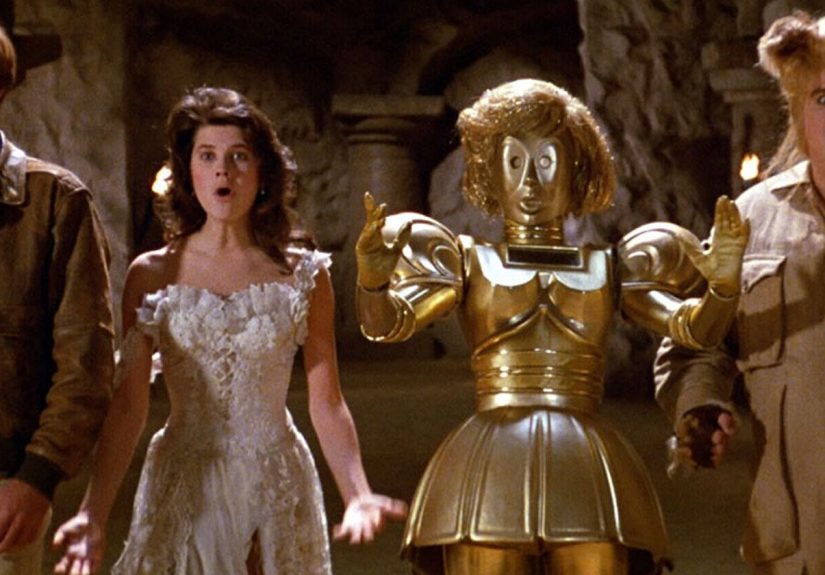
- 9. Joan Rivers Voiced Dot Matrix, but Lorene Yarnell Played the Body
- 10. Mel Brooks Played Two Major Roles
- 11. The “Instant Cassette” Scene Predicted Franchise Self-Awareness
- 12. The Movie Was a Modest Box-Office Performer Before Becoming a Cult Favorite
- 13. The Film’s PG Rating Helped Make It a Family Comedy Staple
- 14. The Sequel Joke Became a Real Hollywood Prophecy
- 15. “May the Schwartz Be With You” Became Its Own Pop-Culture Password
- Why Spaceballs Still Works After All These Years
- Personal Viewing Experiences and Fan-Friendly Reflections
- Conclusion
Note: This article is written in original, web-ready HTML body format and is based on verified movie history, cast information, production background, box-office context, and current public reporting about Spaceballs.
Some movies age like fine wine. Spaceballs ages like a can of “Perri-Air” that somehow survived in a collector’s basement next to a VHS player, three action figures that legally do not exist, and a T-shirt that says “May the Schwartz Be With You.” Released in 1987, Mel Brooks’ Spaceballs was not merely a parody of Star Wars; it was a full-throttle, helmet-too-big, merchandising-obsessed comedy rocket aimed at the entire galaxy of sci-fi blockbusters.
Directed, co-written, produced, and performed by Mel Brooks, Spaceballs gathered an unforgettable comedy crew: Rick Moranis as the hilariously insecure Dark Helmet, John Candy as the half-man, half-dog Barf, Bill Pullman as Lone Starr, Daphne Zuniga as Princess Vespa, Joan Rivers as the voice of Dot Matrix, and Brooks himself as both President Skroob and Yogurt. The result was a spoof that critics did not always know what to do with, but fans happily adopted like a strange cosmic pet.
Below are 15 trivia tidbits about Mel Brooks’ Spaceballs that reveal why this movie still zooms through pop culture at ludicrous speed.
1. Mel Brooks Asked George Lucas Before Spoofing Star Wars
One of the most famous pieces of Spaceballs trivia is that Mel Brooks approached George Lucas before making his Star Wars parody. Brooks did not need to send a trembling messenger droid, but he respected Lucas enough to ask for a blessing. Lucas reportedly had no problem with the spoof, which makes sense: parody is part of the comedy ecosystem, and Brooks was not hiding his target. The movie opens with a joke so close to Star Wars that it might as well knock on the Death Star and ask to borrow sugar.
The important catch was merchandising. Brooks agreed not to produce official Spaceballs toys or merchandise that could compete with Star Wars products. Naturally, being Mel Brooks, he turned that restriction into one of the movie’s greatest jokes.
2. The Merchandising Joke Came From a Real Limitation
“Merchandising! Merchandising!” is not just a funny scene; it is the film winking so hard it nearly pulls a muscle. Yogurt’s showroom of fake productsSpaceballs lunch boxes, flamethrowers, dolls, and other ridiculous tie-inswas Brooks’ way of poking fun at Hollywood’s growing obsession with franchise merchandise.
The joke lands even better because real Spaceballs merchandise was limited for years. In other words, the movie advertised a toy empire that could not officially exist. That is comedy with a legal department hiding behind the curtain.
3. Industrial Light & Magic Helped Make the Parody Look Legit
Part of the reason Spaceballs works is that it does not look like a cheap sketch stretched to feature length. The spaceships, laser effects, giant spacecraft, and visual gags have enough polish to make the universe feel real enough for the jokes to explode properly.
Lucasfilm’s Industrial Light & Magic was involved in post-production and visual effects support, which gave the parody a professional sci-fi texture. That matters because Brooks understood a golden rule of spoof comedy: the sillier the joke, the straighter the world around it should look. A giant spaceship shaped like a vacuum cleaner is funnier when it is treated with the visual seriousness of a galactic war machine.
4. Spaceball One Was Inspired by a Real Battleship
The absurdly long opening shot of Spaceball One is one of the film’s signature gags. The ship keeps passing the camera, and passing, and passing, until the audience starts to wonder whether the theater projector has been hijacked by an intergalactic freight train.
Behind the joke was a surprisingly serious design idea. The look of Spaceball One was inspired in part by massive military vessels, including the Japanese battleship Yamato. That background gives the ship a sense of exaggerated power, which makes its later transformation into Mega Maid even more wonderfully ridiculous.
5. Mel Brooks Had Not Directed a Movie in Six Years
Before Spaceballs, Brooks had taken a six-year break from directing feature films. His previous directing credit was History of the World, Part I in 1981. By the time Spaceballs arrived in 1987, the movie industry had changed, and sci-fi blockbusters had become bigger, louder, and more merchandised than ever.
That gap makes Spaceballs feel like Brooks returning to the director’s chair with a whoopee cushion hidden under the control panel. He had spoofed Westerns, horror films, silent movies, and historical epics; now he was taking aim at space opera.
6. The Movie Spoofs More Than Star Wars
Yes, Star Wars is the main target. Dark Helmet is obviously a Darth Vader parody, Lone Starr combines Han Solo and Luke Skywalker energy, Princess Vespa riffs on Princess Leia, and Yogurt is Brooks’ tiny, wise, very business-minded answer to Yoda.
But Spaceballs also takes playful shots at Star Trek, Alien, Planet of the Apes, The Wizard of Oz, and even the general language of adventure movies. John Hurt’s cameo, for example, turns one of cinema’s most shocking sci-fi scenes into a punchline. It is the kind of joke that rewards movie fans who have watched too much late-night cable and are proud of it.
7. Rick Moranis Made Dark Helmet Lovably Pathetic
Dark Helmet could have been a simple Darth Vader spoof: heavy breathing, black costume, dramatic cape, end of joke. Rick Moranis made him much funnier by playing him as a frustrated little man trapped inside a villain’s costume that is clearly too big for his emotional maturity.
His performance turns Dark Helmet into a comedy masterpiece of insecurity. He wants to be terrifying, but he is needy, petty, childish, and easily flustered. The enormous helmet is not just a costume gag; it is a visual summary of the character’s problem. His ambition is huge. His patience is tiny.
8. John Candy’s Barf Is a Classic Brooks Sidekick
John Candy’s Barfshort for Barfolomewis described as a “mog,” half-man and half-dog. As Barf proudly explains, he is his own best friend. It is a silly line, but Candy’s warmth makes it oddly adorable.
Barf could have been nothing more than a furry costume and a tail joke, but Candy gives the character a loyal, relaxed, big-hearted charm. He is the Chewbacca parody, yes, but he is also the emotional cushion of the movie. Whenever the plot threatens to become too chaotic, Barf lumbers in and makes the madness feel friendly.
9. Joan Rivers Voiced Dot Matrix, but Lorene Yarnell Played the Body
Dot Matrix is one of the film’s cleverest casting combinations. The physical performance was handled by Lorene Yarnell, a dancer and mime known for her precise movement skills, while Joan Rivers provided the unmistakable voice.
That pairing gave Dot Matrix both robotic physical comedy and rapid-fire personality. The character is a spoof of C-3PO, but with Rivers’ sharp delivery, she becomes something more specific: a glamorous, opinionated chaperone who sounds like she has seen every bad date in the galaxy and kept notes.
10. Mel Brooks Played Two Major Roles
Brooks does double duty as President Skroob and Yogurt. President Skroob is the bumbling leader of Planet Spaceball, a man whose political strategy appears to involve panic, vanity, and terrible decisions. Yogurt, meanwhile, is the wise little keeper of the Schwartz and the film’s chief merchandising philosopher.
Skroob is also “Brooks” spelled backward, which is exactly the kind of joke that feels both obvious and perfect. Brooks has always loved wordplay, vaudeville timing, and character names that come with their own rimshot. In Spaceballs, he gives himself two roles because apparently one Mel Brooks was not enough to keep the galaxy unstable.
11. The “Instant Cassette” Scene Predicted Franchise Self-Awareness
One of the smartest jokes in Spaceballs is the scene where the villains watch a copy of the movie while they are still inside the movie. They fast-forward through the film until they arrive at the present moment, leading to the immortal confusion: “When will then be now?”
That gag feels shockingly modern. Today, audiences are used to meta-comedy, streaming jokes, franchise references, and characters who know they are trapped inside a story. In 1987, Brooks was already slicing open the movie screen and letting the characters peek through. It is not just a joke about home video; it is a joke about storytelling itself.
12. The Movie Was a Modest Box-Office Performer Before Becoming a Cult Favorite
Spaceballs was released in the summer of 1987 and earned a respectable domestic box office total, though it was not an earth-shattering blockbuster. Its real power grew later through VHS, cable television, DVD, Blu-ray, streaming, and repeat viewing.
This is the perfect habitat for a quote-heavy comedy. Some movies need a big screen. Spaceballs needs a living room, friends who can quote every line, and at least one person who says “ludicrous speed” before anyone touches the remote. Its cult status was not built overnight; it was built one rewatch at a time.
13. The Film’s PG Rating Helped Make It a Family Comedy Staple
Although Brooks was famous for pushing jokes as far as he could, Spaceballs carried a PG rating. That made it easier for younger viewers to discover the film on home video and television. Many fans first encountered it not as a theatrical event, but as the funny movie an older sibling, parent, uncle, or extremely cool babysitter put on during a weekend.
That family-friendly accessibility helped turn Spaceballs into a gateway Mel Brooks film. It has enough silliness for kids, enough movie references for adults, and enough absurd lines for everyone to shout at inappropriate moments during road trips.
14. The Sequel Joke Became a Real Hollywood Prophecy
At the end of Spaceballs, Brooks teases a sequel with the title Spaceballs 2: The Search for More Money. For decades, that seemed like one of the greatest fake sequel titles in comedy history. It mocked Hollywood’s hunger for follow-ups before franchise culture became the entertainment industry’s favorite snack.
Now, the long-discussed Spaceballs sequel has become more than a fan fantasy. Public reporting has confirmed development on a new follow-up from Amazon MGM Studios, with Mel Brooks involved and original cast members including Rick Moranis, Bill Pullman, Daphne Zuniga, and George Wyner connected to the project. The joke about searching for more money has aged so well that Hollywood finally took it as a business plan.
15. “May the Schwartz Be With You” Became Its Own Pop-Culture Password
The Schwartz is the movie’s parody of the Force, and “May the Schwartz be with you” remains the film’s most famous line. It works because it sounds close enough to the original to be instantly recognizable, but silly enough to belong only to Brooks.
That is the secret of the best Spaceballs jokes. They do not merely copy Star Wars; they bend the original until it becomes something proudly ridiculous. The Schwartz is mystical, marketable, and vaguely embarrassing to say out loud in public, which is exactly why fans still say it.
Why Spaceballs Still Works After All These Years
The lasting appeal of Spaceballs comes from the way it combines old-school comedy with blockbuster parody. Brooks’ humor is rooted in vaudeville, sketch comedy, slapstick, wordplay, and fourth-wall breaking. But the movie also understands the visual language of 1980s science fiction. It knows the shiny helmets, grand music cues, desert planets, heroic rescues, and evil empires well enough to make fun of them from the inside.
It also helps that the cast commits completely. Rick Moranis never acts as though he is above the material. John Candy never treats Barf as a throwaway costume role. Bill Pullman plays Lone Starr with just enough sincerity to keep the adventure moving. Daphne Zuniga gives Vespa the spoiled-princess energy needed for the comedy to work. Joan Rivers makes Dot Matrix feel like a robot who could roast an entire wedding party before breakfast. Brooks, naturally, keeps popping up like a cosmic carnival barker.
For SEO readers searching for Spaceballs trivia, Mel Brooks Spaceballs facts, Dark Helmet trivia, or Spaceballs behind the scenes, the movie offers a treasure chest of stories. It is not just a spoof; it is a snapshot of a moment when Hollywood blockbusters were becoming myth machines, toy machines, sequel machines, and brand machines. Brooks saw the machinery and decided to throw a banana peel under it.
Personal Viewing Experiences and Fan-Friendly Reflections
Watching Spaceballs today feels different depending on when you first discovered it. If you saw it as a kid, the movie probably registered as a loud, goofy space adventure where a dog-man flew around in a Winnebago and a villain had a helmet large enough to require its own ZIP code. The jokes were broad, the characters were cartoonish, and the entire universe seemed designed by someone who asked, “What if Star Wars had more lunch meat?”
As an adult, the experience becomes richer. You start noticing how carefully built some of the jokes are. The opening crawl does not simply imitate Star Wars; it adds one too many “very” words, stretching the famous phrase until it becomes absurd. The long shot of Spaceball One is not just a visual gag; it is a lesson in patience, timing, and commitment. The movie waits long enough for the audience to understand the joke, then keeps waiting until the joke becomes funnier, then keeps going until the joke becomes a lifestyle.
There is also a special pleasure in watching Spaceballs with people who have different levels of sci-fi knowledge. A hardcore Star Wars fan will catch the obvious references immediately. A casual viewer may simply enjoy Rick Moranis losing his temper or John Candy wagging his tail. Someone who knows Alien will appreciate John Hurt’s cameo on a deeper level. Someone who has never seen Alien may still laugh because the scene is staged with such perfect “what on earth is happening?” energy.
The movie is also a surprisingly good introduction to Mel Brooks’ style. His comedy often depends on breaking rules that other movies treat as sacred. Characters talk to the audience. Serious moments collapse into wordplay. Villains behave like middle managers having a terrible Monday. Sacred myths get dressed in silly hats. In Spaceballs, that style fits beautifully because space opera is already full of destiny, prophecy, dramatic breathing, and people staring intensely at glowing objects. Brooks simply adds the missing ingredient: nonsense.
One of the best modern experiences is rewatching Spaceballs after seeing how massive franchise culture has become. The merchandising joke feels less like a parody and more like a documentary with better timing. Superhero universes, streaming spin-offs, collectible popcorn buckets, limited-edition helmets, and endlessly rebooted sagas have made Yogurt look less like a comic exaggeration and more like the galaxy’s most honest marketing executive.
Yet the film never feels mean-spirited. That may be why it has lasted. Spaceballs makes fun of Star Wars, but it also clearly loves the fun of space adventure. The ships, costumes, villains, princesses, desert planets, and laser sword battles are mocked with affection. Brooks is not burning down the temple; he is running through it with a rubber chicken, knocking over the gift shop, and somehow making everyone want to visit again.
For viewers returning to the movie now, the best approach is simple: do not demand subtlety. Spaceballs is not trying to be quiet comedy. It is a marching band in a space helmet. It wants you to groan, laugh, quote lines, and point at the screen when a reference lands. It is best watched with snacks, friends, and a willingness to accept that sometimes the dumbest joke in the room is also the smartest.
That is the magic of Spaceballs. It turns parody into comfort food. It reminds fans that cinema can be both silly and sharp, ridiculous and carefully crafted. And it proves that when Mel Brooks sets a course for ludicrous speed, the smartest thing to do is buckle up, protect the Schwartz, and enjoy the ride.
Conclusion
Spaceballs remains one of Mel Brooks’ most quotable and beloved comedies because it understands both the power and the absurdity of blockbuster mythology. Its 15 trivia tidbits reveal a movie shaped by real Hollywood relationships, clever production choices, inspired casting, visual-effects ambition, and a genius-level ability to turn limitations into punchlines. From George Lucas’ blessing to the no-merchandising joke, from Rick Moranis’ oversized helmet to Joan Rivers’ unforgettable robot voice, Spaceballs is more than a parody of Star Wars. It is a comedy about movies, marketing, fandom, and the glorious nonsense of taking space battles way too seriously.