Table of Contents >> Show >> Hide
- Quick ID cheat sheet (no lab coat required)
- The 11 usual suspects (with real-world ID tips)
- 1) American House Spider (Parasteatoda tepidariorum)
- 2) Long-Bodied Cellar Spider (Pholcus phalangioides)
- 3) Bold Jumping Spider (Phidippus audax)
- 4) Grass Spider (Agelenopsis spp.)
- 5) Funnel Weavers (Barn Funnel Weaver & relatives, Agelenidae)
- 6) Wolf Spider (Lycosidae family)
- 7) Parson Spider (Herpyllus ecclesiasticus)
- 8) Yellow Sac Spider (Cheiracanthium spp.)
- 9) Orb-Weavers (Araneidae family)
- 10) False Black Widow (Steatoda spp.)
- 11) The two you actually treat differently: Black Widow & Brown Recluse
- Bites and “should I worry?” (the calm, practical version)
- How to get fewer spiders (without turning into a full-time exorcist)
- Conclusion
- Extra: 500-ish words of real-life “house spider” moments (and what they mean)
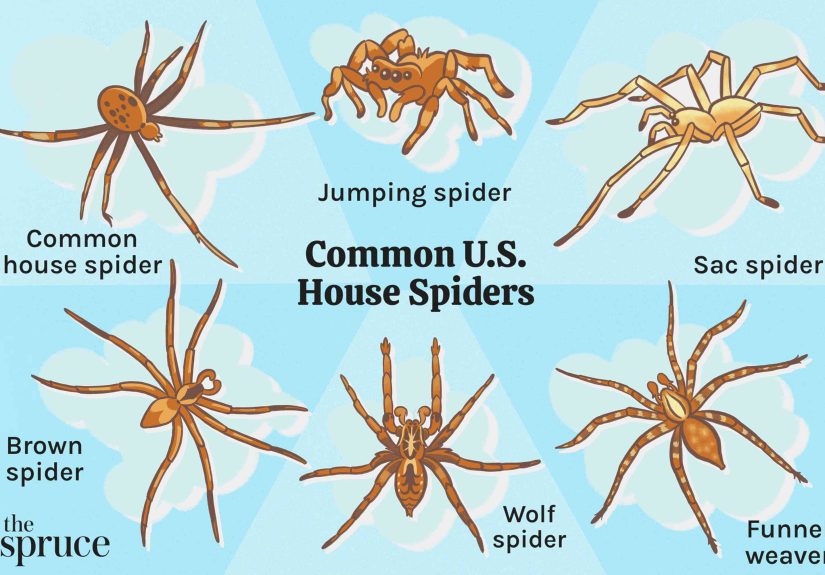
Spiders have a talent for showing up at the exact moment you’re carrying laundry, holding coffee, and feeling emotionally fragile. The good news: most common house spiders in the U.S. are harmless, shy, and more interested in eating flies than in starting beef with humans. The better news: once you learn a few quick clues, “mystery spider” becomes “oh, it’s that one again.”
Quick ID cheat sheet (no lab coat required)
- Web = identity: messy cobweb (house/false widow), flat sheet + funnel (grass/funnel weaver), perfect wheel (orb-weaver).
- Hunter vs. sitter: jumpers, wolf spiders, and parson spiders roam; they don’t park in a big capture web.
- Location matters: ceilings/corners (cellar spiders), basements/storage (house spiders), porches/eaves (orb-weavers).
- Two “handle with care” exceptions: shiny black female with a red hourglass (black widow) and tan “violin-marked” spider in a known recluse region (brown recluse).
The 11 usual suspects (with real-world ID tips)
1) American House Spider (Parasteatoda tepidariorum)
ID clues: small gray-brown spider; subtle chevron/mottled abdomen; messy tangle cobweb in corners.
Where it hides: basements, crawl spaces, behind stored stuff, under sinksanywhere “undisturbed” sounds like a lifestyle.
Risk: low. Bites are rare and usually happen only if it’s trapped against skin.
If you want it gone: vacuum webs/egg sacs; reduce indoor insects (their food); declutter corners.
2) Long-Bodied Cellar Spider (Pholcus phalangioides)
ID clues: tiny body + very long legs; loose web; often “vibrates” when bothered like it’s buffering in real life.
Where it hides: ceiling corners, basements, garages, crawl spaces.
Risk: very low. Not considered harmful to people; often eats other small bugs (and sometimes other spiders).
If you want it gone: remove webs and improve ventilation/cleaning in damp, dark areas.
3) Bold Jumping Spider (Phidippus audax)
ID clues: compact, fuzzy body; often black with white/yellow/orange spots; turns to “look” at you; moves in hops.
Where it hides: sunny windows, porches, houseplants, exterior walls near lights.
Risk: low. Bites are uncommon and typically mild.
If you want it gone: a cup-and-card relocation works; keep window screens tight to prevent easy entry.
4) Grass Spider (Agelenopsis spp.)
ID clues: sheet web with a funnel/tunnel retreat; brown spider with lengthwise striping; lightning-fast runner.
Where it hides: shrubs, foundation plantings, window wells; sometimes basements if they wander in.
Risk: low. Defensive bites are possible but usually not medically significant.
If you want it gone: knock down exterior webs near doors/windows; seal cracks and add door sweeps.
5) Funnel Weavers (Barn Funnel Weaver & relatives, Agelenidae)
ID clues: similar “funnel” web vibe, often around structures; brown/tan spiders that prefer edges and crevices.
Where it hides: garages, sheds, basements, around window frames; more noticeable in late summer/fall.
Risk: low. They can bite if pinned, but serious effects are uncommon.
If you want it gone: reduce clutter where webs anchor; use sticky monitors along baseboards to track activity.
6) Wolf Spider (Lycosidae family)
ID clues: medium-to-large, hairy, brown/gray with stripes; no capture web; sprints across floors. Bonus drama: moms may carry babies on their back.
Where it hides: garages, basements, ground-level rooms, near doors.
Risk: low. A bite can hurt (they’re bigger), but venom isn’t considered especially dangerous.
If you want it gone: relocate; focus on ground-level sealing and cutting down indoor insects.
7) Parson Spider (Herpyllus ecclesiasticus)
ID clues: dark spider with a pale stripe near the “neck” and a lighter, arrow-like marking on the abdomen; fast, zig-zag runner.
Where it hides: floors/baseboards, basements, bathrooms, garages; hunts at night.
Risk: low. Bites are uncommon and usually mild.
If you want it gone: vacuum along edges, reduce clutter, and seal small gaps at baseboards/foundations.
8) Yellow Sac Spider (Cheiracanthium spp.)
ID clues: pale yellow to tan; makes a small silk “sac” (tent-like retreat) in corners, along ceilings, behind frames; roams at night.
Where it hides: upper corners, closets, behind wall hangingsand occasionally in bedding or clothing.
Risk: moderate. Bites are one of the more commonly reported because of clothing/bedding contact; pain and redness are typical.
If you want it gone: shake out clothes/shoes; vacuum corners; keep bedding off the floor; address insect prey and entry points.
9) Orb-Weavers (Araneidae family)
ID clues: classic round orb web; chunky abdomen; colors range from brown to orange to gray with patterns.
Where it hides: porches, eaves, gardens, near exterior lights; mostly “around homes” more than inside them.
Risk: low. Bites are rare and usually minor.
If you want it gone: move/adjust exterior lights, or gently clear webs from high-traffic paths (they often rebuild elsewhere).
10) False Black Widow (Steatoda spp.)
ID clues: widow-like silhouette (bulbous abdomen) + messy cobweb, but typically no red hourglass. Often dark brown to purplish-black with faint patterns.
Where it hides: garages, sheds, basements, outdoor furniture, quiet indoor corners.
Risk: low to moderate. Bites can be painful but serious outcomes are uncommon.
If you want it gone: avoid bare-hand handling; remove webs in high-contact areas; reduce clutter around storage.
11) The two you actually treat differently: Black Widow & Brown Recluse
Black widow (Latrodectus spp.) ID clues: shiny black female with a red/orange hourglass on the underside; tangled web in sheltered spots.
Brown recluse (Loxosceles reclusa) ID clues: tan-brown with a darker “violin” mark; six eyes (three pairs) instead of eight; favors undisturbed storage in its established range.
Where they hide: widowswoodpiles, garages, sheds, clutter; reclusesclosets, boxes, piles of clothes in south-central/Midwestern regions (rare outside their range).
Risk: higher than other house spiders. If you suspect a bite from either, seek medical adviceespecially with severe pain, cramping, spreading symptoms, or a worsening wound.
Bites and “should I worry?” (the calm, practical version)
Most people never get bitten by the spiders living in their home. Spiders don’t hunt humans; they bite mainly when they’re pressed against skin (think: rolling over in bed, putting on a shoe, grabbing a towel). Still, it’s helpful to know what usually happens and what’s unusual.
- Typical mild reaction: a small red bump, itchiness, and localized tendernesssimilar to a bee sting or mosquito bite.
- Call a clinician sooner rather than later if you have severe pain, muscle cramping, sweating, nausea, trouble breathing, or symptoms spreading away from the bite site.
- Widow suspicion: significant pain and muscle cramping (latrodectism) can occur after a black widow bite; medical evaluation is recommended.
- Recluse suspicion: in established recluse regions, a bite that worsens over hours to daysespecially blistering or a growing woundshould be evaluated. Outside the range, recluses are often falsely blamed for unrelated skin infections.
Helpful (and safe) evidence: If you can capture the spider in a sealed container without touching it, identification gets much easier. Otherwise, a clear close-up photo is the next best thing. “It was brown and it moved” is understandable, but not super diagnostic.
How to get fewer spiders (without turning into a full-time exorcist)
- Seal entry points: weather stripping, door sweeps, caulk cracks around windows/foundations.
- Reduce the buffet: manage flies/gnats/ants; keep outdoor lights from pulling insects to doors.
- Declutter: cardboard piles and “mystery corners” are spider resorts; use lidded plastic bins for storage.
- Targeted monitoring: glue boards along baseboards help you see what’s actually insideespecially useful in garages/basements.
Conclusion
Most house spiders are just freeloading pest control: awkward to meet, useful to have around, and not plotting your downfall. With a few simple spider identification cuesweb type, hangout spots, and behavioryou can tell the harmless regulars from the rare species that deserve extra caution. And if you want fewer eight-legged sightings, the long-term fix is simple (if not glamorous): seal gaps, reduce indoor insects, and declutter spider-friendly zones.
Extra: 500-ish words of real-life “house spider” moments (and what they mean)
The shower cameo. You pull back the curtain and there’s a spider doing yoga in the bathtub. Usually it’s a roaming hunterwolf spider, parson spider, or sac spiderthat wandered in and can’t climb the slick sides. It didn’t move in because it loves your shampoo; it got trapped by gravity. A cup-and-paper rescue is often faster (and less messy) than a shoe-based trial.
The laundry jump-scare. You grab a hoodie from the floorbecause “it’s basically clean”and a spider drops out like it’s auditioning for a stunt show. This is why yellow sac spiders get blamed for bites: they like tucked corners in clothing, and bites happen when fabric presses them against skin. The least exciting hack is also the best one: shake out clothes and towels, especially if they’ve been on the floor overnight.
The porch web to the face. You step outside at night and instantly become an unwilling extra in a nature documentary. That’s usually an orb-weaver building near lights where moths gather. If this happens a lot, move the light away from the doorway or switch it to a less insect-attractive option. You’ll still have orb-weavers somewhere, but hopefully not at eyebrow level.
The garage glove gamble. You reach into an old box or woodpile and suddenly remember gloves exist. Good instinct. Garages and sheds are perfect for cobweb builders like widows and false widows: dark, dry, and full of crevices. The goal isn’t fear; it’s routine cautiongloves, a quick visual check, and less clutter. Spiders love stillness; humans love storing things indefinitely. Meet in the middle.
The “Is this a brown recluse?” spiral. Any brown spider has been accused of being a recluse at least once. Recluses are region-limited, and in many states they’re rare or absent. If you’re outside the established range, odds are you’re seeing a look-alike (often wolf spiders or funnel weavers). If you are in range, skip internet panic and get evidence: sticky monitors, reduced clutter, andif neededa local expert who can identify specimens.
The ceiling-corner roommate. You notice a wispy web in the upper corner, leave it alone, and suddenly it has expanded into a small architectural project. That’s often an American house spider or a cellar spider setting up shop where you won’t bother it. If you don’t like webs, regular vacuuming solves it. If you don’t mind webs, these spiders tend to stay putand they quietly reduce flies and other small pests that wander through your home.
The surprise spider parade. You find one, then another, then you start imagining a tiny spider HOA meeting behind your couch. Usually, more spiders means more food (indoor insects) or easier access (gaps around doors/windows). Fix those two things and the “parade” tends to fade. Spiders aren’t drawn to houses because they hate you; they’re drawn because your porch light is basically a neon “BUGS HERE” sign.