Table of Contents >> Show >> Hide
- 1) The violence is driven by mythsnot biology
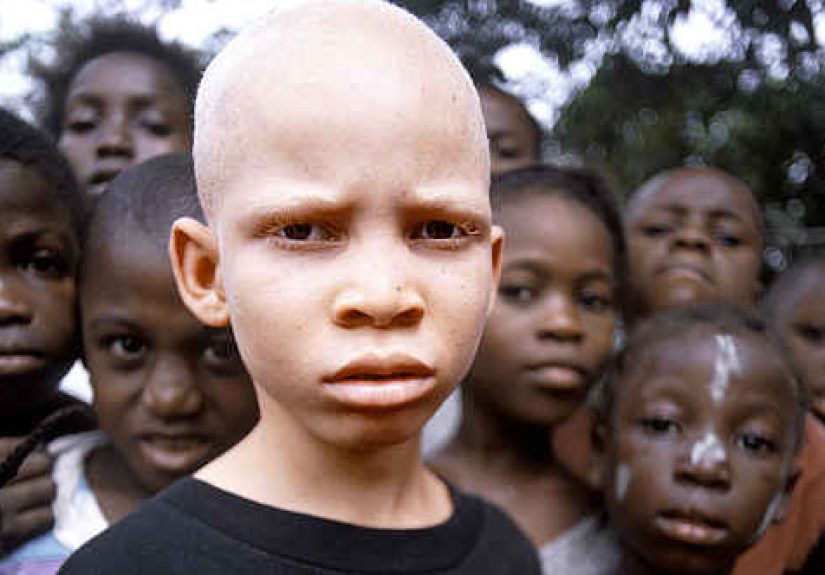
- 2) Children are especially at risk
- 3) “Albino hunting” is really a supply chain
- 4) Survivors live with lifelong injuriesand lifelong reminders
- 5) Families can be forced into impossible choices
- 6) Grave tampering is part of the horror
- 7) Discrimination is constanteven where violence isn’t
- 8) Justice is uneven, and impunity feeds the cycle
- 9) Politics can make the danger worse
- 10) The most effective antidotes are boring: education, healthcare, and enforcement
- So What Now?
- Experiences That Explain the Reality (About )
“Albino hunting in Africa” sounds like a phrase from a dystopian novel, except it’s not fictionand it’s not
“Africa” as one single place, either. What’s happening is a pattern of targeted violence in certain countries and
regions, fueled by superstition, profit, and the kind of cruelty that makes you wonder how humans ever invented
puppies and still ended up here.
This article uses the blunt headline on purpose: to match the blunt reality. But we’ll also use more accurate
language, because people aren’t adjectives. The victims are people with albinismchildren,
teenagers, parents, students, workerswho deserve safety, healthcare, and the right to exist without being treated
like a walking myth.
We’re going to lay out 10 tragic facts, explain why these crimes happen, and talk about what actually helps.
Expect some dark humor aimed at the myths and the profiteersnever at the people living with albinism.
(If your “magic potion” requires harming a human being, congratulations: you’ve reinvented crime.)
1) The violence is driven by mythsnot biology
The lie: “Their bodies have magic.”
In parts of East and Southern Africa, dangerous folklore claims that the body parts of people with albinism can be
used in rituals or potions to bring wealth, luck, or power. That’s the engine behind “albino hunting”: not a
medical condition, but a market for superstition.
The truth: albinism is a genetic condition
Albinism is an inherited condition involving reduced or absent melanin, affecting skin, hair, and eyes and often
causing vision issues. It’s not contagious. It’s not mystical. And it’s definitely not a coupon code for riches.
2) Children are especially at risk
Small bodies, smaller defenses
Many reports describe children as frequent targets because they’re easier to abduct, intimidate, and isolate. In
some communities, families keep kids indoors, move them to protective centers, or stop sending them to schoolnot
because education isn’t valued, but because survival comes first.
When “normal childhood” becomes security planning
Imagine needing a safety protocol for walking to class. For many families, that’s not imagination; it’s Tuesday.
3) “Albino hunting” is really a supply chain
Myth meets money
The attacks are rarely random. They often involve intermediaries, buyers, and people who profit from fear. In some
areas, superstition intersects with economic desperationlike mining and fishing communities where people are
promised “luck” or “success” through rituals.
It’s organized crime wearing a costume
Call it what it is: trafficking and exploitation. Superstition is the marketing department. Greed is the CEO.
4) Survivors live with lifelong injuriesand lifelong reminders
Not every attack ends in death
Some people survive attacks but endure severe injuries that require surgeries, prosthetics, and long-term
rehabilitation. International medical support has helped some children rebuild mobility and confidencebut no
prosthetic can replace a stolen sense of safety.
Trauma doesn’t clock out
Survivors often describe fear that lingers: fear of traveling alone, fear at night, fear that protection is
temporary. The body heals on a timeline; trauma keeps its own calendar.
5) Families can be forced into impossible choices
Protective schools can mean separation
In response to attacks, some governments and organizations have supported boarding schools or protective shelters.
These can save livesbut they can also separate children from parents and communities for long periods.
Safety vs. normalcy is a cruel trade
No family should have to choose between a child’s education and a child’s life. Yet many doquietly, daily, with
clenched teeth.
6) Grave tampering is part of the horror
When the threat doesn’t end after death
In some places, fear extends beyond the living. Reports have documented grave tampering linked to the same
superstitions about “valuable” body parts. This adds a second layer of terror: communities worry not only about
attacks, but about what happens afterward.
It’s an attack on dignity
Grave violations don’t just harm individuals. They poison trust in a community’s ability to protect its own dead.
7) Discrimination is constanteven where violence isn’t
Stigma travels faster than truth
Even when someone isn’t physically attacked, many face daily discrimination: being called “ghosts,” being treated
as cursed, being excluded from school, work, or public life. Social isolation can be as routine as sunrise.
And yes, the sun itself is a threat
People with albinism often have increased sensitivity to UV exposure and a higher risk of sun damage and skin
cancer without adequate protection. So the danger can come from the sky and from societyan unfair
two-front war.
8) Justice is uneven, and impunity feeds the cycle
Arrests aren’t the same as accountability
Some countries have increased prosecutions and penalties. But many reports still point to weak investigations,
limited forensic capacity, and cases that stall. When attackers believe they won’t be caughtor won’t be punished
violence becomes a “risk” they’re willing to take.
“Only a few cases” is not a comforting statistic
For families living in fear, a low conviction rate doesn’t read as “a system under strain.” It reads as “we’re on
our own.”
9) Politics can make the danger worse
Myths get weaponized during high-stakes seasons
Multiple reports and investigations have raised concerns that election periods can correlate with increased fear
and rumorsbecause some people seek “power” through ritualized violence. Even the perception of political
involvement can make communities feel that no one is truly safe.
When power flirts with superstition, people bleed
The most tragic part is how preventable it all is: if leaders and institutions consistently condemned myths,
enforced laws, and funded protection and education, the “market” collapses.
10) The most effective antidotes are boring: education, healthcare, and enforcement
Myths hate sunlight (the metaphorical kind)
Awareness campaigns work. Community education works. School inclusion works. Reliable policing and prosecutions
work. Access to sunscreen, hats, eye care, and low-vision support works. In other words: the solutions aren’t
magicalthey’re practical.
And yes, representation matters
When people with albinism are visible as leaders, professionals, artists, and advocateswhen their stories are told
accuratelythe myths lose oxygen. Stigma thrives in silence. Dignity thrives in public.
So What Now?
If you came for “10 tragic facts,” here’s the uncomfortable takeaway: none of these facts are inevitable. They’re
the result of systemsbelief systems, economic systems, justice systemsthat can be changed.
The real tragedy isn’t that albinism exists. It’s that myths about albinism still get more funding than sunscreen,
more airtime than science, and more loyalty than human life.
- For communities: education that replaces folklore with facts.
- For governments: consistent enforcement, protection programs, and transparent reporting.
- For NGOs and partners: survivor support, legal aid, and healthcare access (skin + vision).
- For media: accurate languagepeople first, sensationalism last.
Because the best way to end “albino hunting” is to stop treating it like an inevitable cultural quirk and start
treating it like what it is: a violent human rights crisis.
Experiences That Explain the Reality (About )
To understand how “albino hunting in Africa” affects everyday life, it helps to zoom innot on headlines, but on
routines. Many people with albinism describe living with a constant background calculation that others never have
to do. It’s not dramatic. It’s repetitive. And that’s what makes it exhausting.
One recurring experience reported by journalists and human rights researchers is the “travel rule”: don’t walk
alone, especially after dark. That can mean coordinating with relatives just to visit a market, taking longer
routes to stay near crowds, or avoiding certain errands entirely. A simple decision like “Do I go pick up my
prescription?” becomes a security question, not a health question.
School can feel like both refuge and risk. Some students with albinism have spoken about being teased, avoided, or
labeled as cursedyet school may also be where they can access support, friends, and teachers who understand their
vision needs. In areas with known attacks, families may choose protective boarding centers. Those places can be
life-saving, but they can also feel like a childhood spent behind a fence: safe, but separated. The experience is a
strange kind of double lifebeing protected because you’re in danger, and being in danger because you exist.
Health adds another layer. Albinism often comes with low vision and higher vulnerability to sun damage. So people
develop a second daily ritual alongside safety planning: sun planning. Hats, long sleeves, shade, sunscreenwhen it
exists and is affordable. Some describe the frustration of knowing the basics of prevention while lacking the
supplies to practice it consistently. It’s hard to focus on long-term skin health when short-term physical safety
is unstable.
Families carry a heavy emotional load. Parents describe the fear of letting children play outside, the guilt of
restricting freedom, and the anger of having to explaingentlyto a child why the world is behaving irrationally.
Older siblings may become informal bodyguards. Everyday affection gets mixed with strategy: “Hold my hand” becomes
both love and protection.
And yet, many stories also include defiance. People with albinism become advocates, students become leaders, and
communitiessometimes slowlyshift from superstition to solidarity. The experience is not only fear; it’s endurance.
Not only vulnerability; it’s resistance. The most powerful “magic” in these stories isn’t found in a potion. It’s
found in people insisting, again and again, that they are fully human and fully worthy of being safe.