Table of Contents >> Show >> Hide
- Why These Haunting Documentaries Feel More Unsettling Than Horror Movies
- 1. Grizzly Man
- 2. The Imposter
- 3. Capturing the Friedmans
- 4. Dear Zachary: A Letter to a Son About His Father
- 5. Three Identical Strangers
- 6. Tickled
- 7. Cropsey
- 8. The Act of Killing
- 9. Grey Gardens
- 10. Paradise Lost: The Child Murders at Robin Hood Hills
- The Experience of Watching Haunting Documentaries
- Final Thoughts
Fiction has rules. Real life, meanwhile, likes to kick the door off its hinges, pour coffee on the carpet, and leave everyone staring at each other in stunned silence. That is exactly why the best haunting documentaries hit so hard. They are not scary because they rely on jump scares, ominous violins, or a creepy doll blinking in the corner. They are scary because every bizarre twist, every uncomfortable revelation, and every “there is absolutely no way this happened” moment actually happened to somebody.
If you love documentaries that linger in your brain like a weird voicemail you cannot delete, this list is for you. These films are disturbing, heartbreaking, eerie, and occasionally so unbelievable they play like prestige thrillers dreamed up at 2 a.m. by a screenwriter with too much caffeine. Some are true crime documentaries, some are psychological portraits, and some are haunting in a sad, almost ghostly emotional sense. All of them prove the same thing: reality does not need help being dramatic.
Why These Haunting Documentaries Feel More Unsettling Than Horror Movies
The most chilling documentaries do something horror films can only envy: they remove the safety net. When you watch a fictional nightmare, part of your brain knows the monster was cast, lit properly, and probably ate a sandwich between takes. But haunting documentaries about real people and real events take away that comfort. These stories happened in ordinary towns, regular homes, schools, courtrooms, and living rooms. They happened to families who thought they were safe, communities that trusted the wrong people, and individuals whose lives turned surreal overnight.
That is what makes documentaries stranger than fiction so powerful. They expose how fragile normal life can be. One minute, it is a family dinner. The next minute, it is a national scandal, a decades-long mystery, or a secret so dark it rewrites everyone’s memory of the past. In other words, these are not just disturbing documentaries. They are proof that real life has better plot twists than most streaming thrillers.
1. Grizzly Man
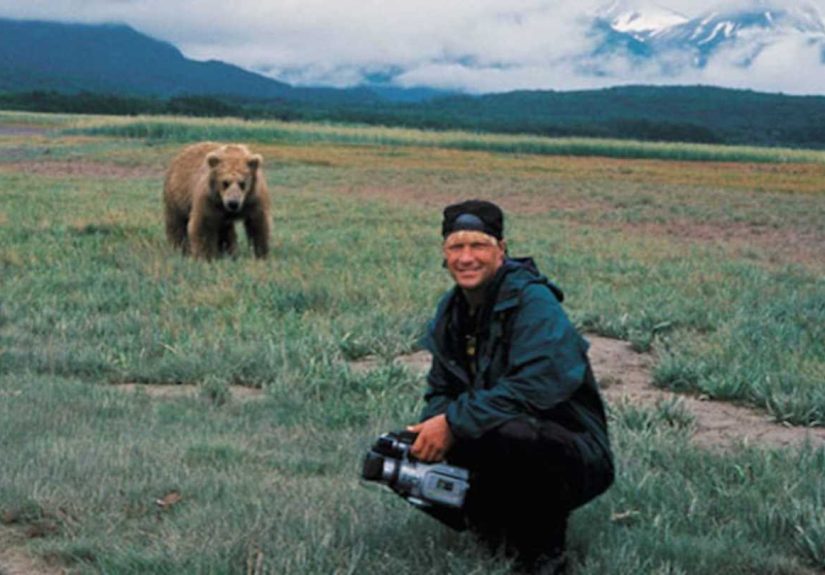
Werner Herzog’s Grizzly Man is haunting because it begins like a nature documentary and gradually reveals itself as something much sadder and more complicated. The film centers on Timothy Treadwell, a man who spent years living among grizzly bears in Alaska, filming them with deep affection and a kind of spiritual intensity that feels both moving and alarming. At first, he seems like a passionate conservationist who simply loved animals more than most people love their own extended families.
Then the documentary starts asking harder questions. Was Treadwell protecting the bears, projecting onto them, or drifting into a fantasy where danger no longer applied to him? Herzog turns that tension into the film’s real subject. Grizzly Man is not just about wildlife. It is about obsession, loneliness, and the terrifying moment when devotion becomes delusion. The result is one of the most haunting true story documentaries ever made, because it leaves you face to face with nature’s beauty and its total indifference.
2. The Imposter
If someone pitched The Imposter as a fictional thriller, most editors would probably say, “Tone it down, champ.” But the story is real, and that is what makes it so eerie. The documentary follows Frédéric Bourdin, a serial con artist who convinced a Texas family that he was their missing teenage son, even though he was older, from another country, and looked different enough that common sense should have thrown itself through a window.
What makes this film unforgettable is that it refuses to sit still as a simple fraud story. Instead, it becomes a layered puzzle about grief, denial, performance, and the stories people tell themselves when reality is too painful to face directly. Bart Layton’s style, with dramatic reenactments and carefully staged interviews, only sharpens the tension. It plays like noir, but it lands like a psychological bruise. Few stranger than fiction documentaries capture the slipperiness of truth this well.
3. Capturing the Friedmans
Capturing the Friedmans is the kind of documentary that makes certainty feel suspicious. What begins as an investigation into child abuse allegations against a father and son in a Long Island family becomes something far murkier: a portrait of a household collapsing under accusation, fear, shame, and media pressure. Andrew Jarecki uses home videos and interviews to create a film that feels less like a straightforward case file and more like a room full of broken mirrors.
That is why the film remains so haunting. It is not content to hand viewers a neat answer and send them home feeling smug. Instead, it forces you to sit with discomfort. You watch family members remember the same events differently. You see how memory can become unstable under pressure. You realize how quickly a suburban home can transform into a battlefield of competing truths. It is one of the best disturbing documentaries for viewers who want something more unnerving than simple shock value.
4. Dear Zachary: A Letter to a Son About His Father
There are sad documentaries, and then there is Dear Zachary, which basically shows up carrying emotional dynamite. Director Kurt Kuenne originally made the film as a tribute to his friend Andrew Bagby for Andrew’s young son, Zachary, after Andrew was murdered. Even that premise alone is enough to hit hard. But the documentary keeps unfolding in devastating ways, turning from a loving memorial into a furious, grief-stricken indictment of a system that failed the people left behind.
What makes it haunting is not just the tragedy. It is the raw intimacy. This does not feel like a filmmaker observing pain from a safe distance. It feels like someone staring directly into it because he has no other choice. The home videos, interviews, and emotional urgency make the documentary almost uncomfortably personal, which is exactly why it works. It is not polished into emotional safety. It hurts, and it remembers, and it refuses to look away.
5. Three Identical Strangers
Three Identical Strangers begins with one of the most joyful setups in documentary history: three young men discover by pure chance that they are identical triplets separated at birth. For a while, the story has the energy of a crowd-pleasing miracle. There are TV appearances, instant brotherhood, and enough feel-good momentum to make you think you have wandered into a much warmer movie than advertised.
Then the floor drops out. The documentary peels back the circumstances of their separation and reveals a hidden experiment that turns a heartwarming reunion into something deeply sinister. Suddenly the film is not just about family. It is about ethics, class, secrecy, identity, and the unsettling idea that some institutions can treat human lives like research material. That tonal shift is what makes the film so effective. It starts like a hug and ends like a chill down your spine.
6. Tickled
Never has a documentary with such a ridiculous title inspired so many viewers to mutter, “Well, that escalated quickly.” Tickled starts with journalist David Farrier becoming curious about competitive endurance tickling videos online. Strange? Sure. Potentially funny? Absolutely. But what follows is a rabbit hole of harassment, intimidation, secrecy, and power games that turns a seemingly goofy topic into one of the most unnerving documentaries of the last decade.
The genius of Tickled is that it weaponizes your own disbelief. Every time you think the story cannot possibly get darker, it somehow finds a basement under the basement. Beneath the weird surface is a deeply unsettling story about control, humiliation, and the internet’s ability to magnify private cruelty. It is one of those real-life documentaries that leaves you staring at the credits, wondering how a film about tickling managed to become a cautionary tale about obsession and abuse. Reality, as always, is showing off.
7. Cropsey
Cropsey is what happens when an urban legend stops being a campfire story and starts looking back at you. The documentary begins with the folklore of a boogeyman said to haunt Staten Island, a figure used to scare children into staying out of the woods. That alone is creepy enough. But the film then connects the myth to real disappearances and to the case of Andre Rand, a convicted kidnapper linked in the public imagination to the legend.
What makes Cropsey so haunting is the way it blurs the line between folklore and fact. It is not merely a true crime story, and it is not merely a documentary about a scary local myth. It is about how communities manufacture fear, how legends grow around real suffering, and how a place can absorb trauma until it starts telling ghost stories about itself. If you are looking for chilling documentaries that feel like horror movies without needing a single fake demon, start here.
8. The Act of Killing
There are documentaries that inform you, documentaries that move you, and documentaries that leave your moral compass spinning like a busted ceiling fan. The Act of Killing belongs in the last category. Joshua Oppenheimer’s film examines the Indonesian mass killings of the 1960s by inviting former perpetrators to reenact their crimes in the style of the movies they love. Yes, really. And yes, it is as disturbing as that sounds.
The result is one of the most unique and haunting documentaries ever made. Instead of relying on conventional testimony, the film reveals how these men see themselves, how performance masks guilt, and how entire societies can normalize horror when accountability never arrives. It is dreamlike, grotesque, surreal, and devastating. The film does not just ask what happened. It asks what it means to live in a world where people can turn atrocity into theater and still call themselves heroes.
9. Grey Gardens
Not every haunting documentary needs a crime scene. Sometimes a film becomes eerie because it captures a life drifting out of time. Grey Gardens, the landmark documentary about Edith Bouvier Beale and her daughter, “Little Edie,” is haunting in exactly that way. Living in a decaying East Hampton mansion, the pair are funny, theatrical, frustrating, vulnerable, and impossible to forget.
The film is often remembered for its eccentricity, and yes, there is plenty of that. But reducing it to oddball behavior misses the deeper chill. Grey Gardens is really about isolation, faded glamour, family dependency, and the strange performances people create in order to survive disappointment. It feels intimate, melancholy, and quietly ghostly, as if the American dream got dressed up for dinner and never recovered. It is proof that haunting documentaries do not always shout. Sometimes they just sit in a crumbling room and sing.
10. Paradise Lost: The Child Murders at Robin Hood Hills
Paradise Lost: The Child Murders at Robin Hood Hills remains one of the most influential true crime documentaries for a reason. On its surface, it follows the investigation into the murders of three boys in West Memphis, Arkansas, and the prosecution of three teenagers who became known as the West Memphis Three. But the deeper you go, the more the film becomes a study in panic, prejudice, and the frightening speed with which a community can decide who the villains are.
The documentary is haunting because it captures not just a crime, but a climate. Fear of Satanism, suspicion of outsiders, courtroom theater, and media frenzy all combine into something that feels less like justice and more like a social fever dream. Watching it now, you can feel how easily narrative overtakes evidence when a town wants answers more than truth. It is stranger than fiction in the worst way: not because it is flashy, but because it is believable.
The Experience of Watching Haunting Documentaries
Watching haunting documentaries is a different experience from watching horror movies, thrillers, or even prestige dramas based on true stories. A fictional film usually offers some kind of release. The villain gets caught, the mystery gets solved, or at the very least the music tells you when to breathe again. Haunting documentaries are ruder than that. They often end with questions still open, grief still active, and systems still broken. They do not tuck you in. They hand you a flashlight and point toward the dark hallway.
That is part of their power. When you watch a film like Dear Zachary, you are not just reacting to plot. You are reacting to real grief that still feels alive on camera. When you watch The Act of Killing, you are not admiring a clever concept so much as confronting the terrifying elasticity of human self-justification. When you watch Three Identical Strangers, the emotional whiplash comes from seeing joy curdle into ethical horror in real time. These films stay with you because they are not built to entertain first and soothe later. They are built to reveal.
There is also a strange intimacy to the experience. Many of the best disturbing documentaries make you feel as if you have been let into a room you were never supposed to enter. You are hearing family arguments, private memories, institutional secrets, and deeply personal confessions. That can feel invasive, but it can also feel necessary. Great documentary filmmaking turns access into insight. It allows viewers to understand not just what happened, but how people live inside the aftermath.
And then there is the aftereffect. The best stranger than fiction documentaries do not end when the screen goes black. They follow you into the kitchen while you get water. They sit next to you while you scroll aimlessly and pretend you are fine. They make you text a friend, “Okay, I need to talk about what I just watched.” Sometimes they even change how you see the world. A family photograph starts looking more mysterious. A news report sounds less complete. A simple human story becomes a maze of power, secrecy, memory, and perspective.
That is why people keep coming back to these films, even when they are uncomfortable. They offer something rarer than escapism: confrontation. They remind us that truth can be bizarre, heartbreaking, manipulative, funny, unfair, and deeply unresolved all at once. In a media landscape crowded with recycled twists, haunting documentaries still feel dangerous because they reveal a reality that refuses to behave like neat fiction. And honestly, that may be the creepiest thing of all.
Final Thoughts
The best haunting documentaries are not just about dark events. They are about the instability of truth, the fragility of memory, and the eerie ways ordinary life can slide into the surreal. Whether the story involves a vanished identity, a family mystery, a buried experiment, a collapsing justice system, or people performing their own nightmares for the camera, these films all share one quality: they linger. They follow you after the credits, rearrange your assumptions, and make scripted thrillers seem almost polite by comparison.
So if you are in the mood for documentaries that are stranger than fiction, more unsettling than most horror movies, and far more difficult to shake, these ten are worth your time. Just maybe do not queue up all ten in one weekend unless you enjoy staring at the ceiling at 1:47 a.m. wondering what, exactly, humanity is doing.