Table of Contents >> Show >> Hide
- Who Is The Artist Behind “Yes, But”?
- Why These Sarcastic Comics Hit So Hard
- 25 Funny Contradictions That Make “Yes, But” So Addictive
- What Makes The Humor Feel Smart Instead Of Mean
- Why “Yes, But” Works So Well Online
- What Readers Really Take Away From The Series
- Everyday Experiences That Feel Straight Out Of A “Yes, But” Comic
- Final Thoughts
Some comics make you laugh. Some make you think. And then there are the rare gems that do both while quietly roasting modern life like a marshmallow left too long over the fire. That is exactly why Anton Gudim’s “Yes, But” series has become such a hit. These sarcastic comics are simple on the surface, but their punch lands hard because each one exposes a contradiction we all recognize, even if we would rather not admit it out loud.
The brilliance of the series is that it does not need a giant speech bubble, a wall of text, or a dramatic moral lesson. Gudim takes two ideas that should fit together nicely, then reveals the absurd gap between what we say and what we actually do. The result is funny, sharp, and a little uncomfortable in the best possible way. It is the visual equivalent of nodding confidently in public and then walking into a glass door five seconds later.
In a digital world full of overexplaining, “Yes, But” feels refreshingly efficient. The comics are quick to read, easy to share, and instantly relatable. More importantly, they tap into something timeless: people are full of contradictions. We want convenience and discipline. We want wellness and junk food. We want privacy and attention. We want less screen time while staring directly at a screen to complain about it. Gudim simply notices these tiny collisions and turns them into witty visual satire.
Who Is The Artist Behind “Yes, But”?
Anton Gudim is an illustrator known for using minimalist, highly readable visuals to point out the strange logic of everyday life. His “Yes, But” format works because it is clean and immediate. In just two panels, he can take a modern habit, a social trend, or a common behavior and flip it into something hilariously revealing. The comics often feel universal because they are built from familiar routines: shopping, dieting, working, scrolling, organizing, relaxing, and pretending we have it all under control.
What makes Gudim stand out is that his work does not scream at the audience. It observes. It notices. It shrugs with perfect comic timing. Rather than telling readers what to think, the series presents a contradiction and lets the irony do the heavy lifting. That restraint is a huge part of the appeal. The joke lands because the reader connects the dots alone, and that little moment of recognition is where the magic happens.
Why These Sarcastic Comics Hit So Hard
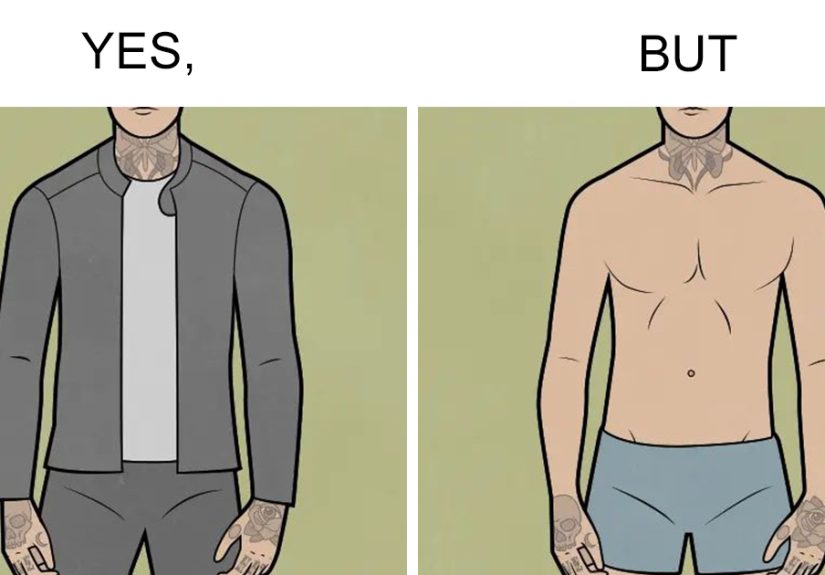
At the heart of the series is a classic comedy engine: contrast. Humor often works by setting up one expectation and then revealing a clashing reality. Gudim does that visually, which makes the punchline faster and cleaner. One side says “yes.” The other side says “but.” That tiny turn is enough to expose hypocrisy, wishful thinking, bad habits, social pressure, and plain old human silliness.
There is also a layer of social satire here. These are not random jokes tossed into the internet void. Many of the comics reflect consumer culture, online behavior, health trends, performative values, and modern convenience. They are funny because they are true, and they are shareable because they make people feel seen. Sometimes a little too seen. Nobody wants to be personally attacked by a minimalist drawing, yet here we are.
25 Funny Contradictions That Make “Yes, But” So Addictive
Health, Habits, And Self-Improvement
- Wanting to get fit, but choosing the easiest shortcut every time. Modern life loves a wellness goal, just not the inconvenience that comes with it.
- Eating something healthy, but drowning it in extras. The salad says discipline. The toppings say emotional support.
- Buying productivity tools, but using them to procrastinate better. A new planner cannot save a person committed to chaos.
- Talking about balance, but glorifying burnout. Rest is important, right up until someone brags about answering emails at midnight.
- Wanting peace of mind, but feeding stress all day long. We chase calm while keeping our brains on permanent notification mode.
Convenience, Technology, And Modern Living
- Loving remote freedom, but depending completely on battery life and Wi-Fi. Nothing says independence like panicking over 3% power.
- Using apps to simplify life, but somehow creating more digital clutter. We organize our chaos into folders and call it progress.
- Wanting less screen time, but using screens to complain about screens. It is the most on-brand contradiction of the century.
- Craving convenience, but missing the patience we had before everything became instant. Fast solutions often create slow frustration.
- Owning smart gadgets, but still feeling helpless over basic problems. The house may be connected, but the human inside it is still confused.
Shopping, Status, And Consumer Absurdity
- Wanting to save money, but treating sales like a competitive sport. Nothing empties a wallet faster than a discount that feels like victory.
- Mocking luxury labels, but still caring way too much about branding. We say substance matters most while squinting at logos.
- Buying more storage because we own too much stuff. The solution to clutter becomes premium clutter management.
- Chasing minimalism by purchasing minimalism-themed products. Apparently simplicity now comes in packaging.
- Wanting authenticity, but being heavily influenced by aesthetics. People love “realness” as long as it also looks curated.
Morality, Image, And Social Behavior
- Wanting to look kind, but acting selfish when nobody is watching. Public virtue and private behavior do not always share a calendar.
- Claiming independence, but seeking nonstop approval. The rebellion is real, but so is the need for likes.
- Defending principles in theory, but folding under convenience in practice. Ethics are easiest when they cost absolutely nothing.
- Celebrating individuality, but rewarding conformity. Be yourself, just maybe not in a way that makes anyone uncomfortable.
- Wanting honesty, but only when it is flattering. Truth is great until it shows up wearing work boots.
Work, Leisure, And Everyday Chaos
- Dreaming of free time, but filling every empty minute. We beg for rest and then schedule it into submission.
- Cleaning up one area while ignoring the disaster next to it. A tidy corner can be a beautiful lie.
- Planning to be organized tomorrow while living like a tornado today. Future-you has an exhausting reputation.
- Romanticizing simple living while juggling very complicated habits. The fantasy is cottagecore; the reality is twelve tabs open and cold coffee.
- Wanting life to slow down, but fearing the silence that comes with it. Sometimes noise feels easier than reflection.
What Makes The Humor Feel Smart Instead Of Mean
A lot of sarcastic humor collapses because it punches too hard or too vaguely. Gudim’s comics usually avoid that trap by focusing on contradictions rather than cruelty. The target is not one unlucky person. The target is a pattern. A habit. A social reflex. An everyday absurdity that millions of people participate in without noticing. That is why the comics feel more like a mirror than a lecture.
There is also something clever about the lack of heavy dialogue. Without a big verbal explanation, the reader gets room to project personal experience onto the image. One person sees a joke about work culture. Another sees a joke about consumerism. Someone else sees their own Tuesday. That flexibility gives the comics staying power. They are specific enough to be sharp, but open enough to travel across audiences.
Why “Yes, But” Works So Well Online
Let’s be honest: the internet rewards speed. If a joke takes too long to set up, people keep scrolling. Gudim’s format is built for the modern attention span without feeling disposable. The visuals are clean, the structure is instant, and the emotional reaction is immediate. You get the setup, you get the reversal, and then you get that satisfying little sting of recognition.
That makes these comics ideal for social media, where the best content is not just funny but also shareable. People repost “Yes, But” comics because they capture a feeling they have struggled to phrase. The image becomes a shortcut for saying, “This is ridiculous, and somehow this is exactly how we live.” In that sense, the comics are not just entertainment. They are shorthand for modern frustration.
What Readers Really Take Away From The Series
The strongest visual satire does not simply point and laugh. It reveals. It makes familiar behavior look strange again. That is what “Yes, But” does so well. It strips away the excuses and shows how often people hold two opposing ideas at once. We care about health and sabotage it. We care about time and waste it. We care about values and bend them when life gets convenient. The joke is not that humans are terrible. The joke is that humans are gloriously inconsistent.
And that is probably why the series feels oddly comforting. Once you accept that everyone is a walking contradiction, the pressure to appear perfectly logical starts to loosen. The comics invite readers to laugh at the mess instead of pretending it does not exist. That is a pretty generous kind of humor.
Everyday Experiences That Feel Straight Out Of A “Yes, But” Comic
One reason these sarcastic comics land so well is that most people already have their own personal “yes, but” archive. You may not draw it, but you live it. Maybe you buy a giant water bottle to become “one of those healthy people,” then forget to drink from it until bedtime. Maybe you spend twenty minutes searching for a meditation video because you are “too stressed” to relax without the perfect one. Maybe you promise yourself a quiet evening, then somehow end up doomscrolling, online shopping for things you do not need, and watching a cleaning video while your laundry forms a small mountain nearby.
Work life is full of these contradictions too. Plenty of people want flexibility, but then feel guilty the moment they stop working. They dream about logging off early, yet bring the laptop to the couch “just in case.” They complain about endless meetings while scheduling more of them. They chase efficiency with apps, calendars, systems, trackers, timers, and color-coded labels, only to discover they have built a very organized machine for feeling overwhelmed.
Social life is no better, which is exactly why it is so funny. We say we miss our friends, but cancel plans because we are tired from working too much. We want genuine connection, but still overthink texts like they are legal documents. We claim not to care what people think, then reread our own messages looking for imaginary embarrassment. We crave honesty, but panic when someone is brutally direct. Basically, everyone wants authenticity until authenticity walks into the room wearing muddy shoes.
Even small domestic moments feel like Gudim material. You clean the kitchen, but shove random items into one drawer so the counters look peaceful. You buy storage bins to become more organized, then forget what is inside them. You save leftovers with admirable optimism and discover them a week later like an archaeologist studying your own bad decisions. You start a “simple morning routine” that somehow requires specialized coffee, a matching notebook, calming music, and enough time to wake up two hours earlier than reality allows.
And then there is technology, the undefeated champion of modern contradiction. People want to be present, but photograph everything. They want privacy, but click “accept all” on every pop-up just to make the notification disappear. They hate how much time they spend online, but the internet is also where they shop, work, chat, relax, learn, and avoid thinking about folding fitted sheets. The whole thing is absurd, and that absurdity is exactly where “Yes, But” thrives.
These experiences matter because they make the series feel less like a distant art project and more like a running commentary on ordinary life. The comics are funny, sure, but they also offer a strange little moment of self-recognition. You laugh because the contradiction is clever. You keep thinking about it because the contradiction is yours. That blend of humor and honesty is hard to fake, and it is the reason Gudim’s work sticks in people’s minds long after the quick scroll is over.
Final Thoughts
Anton Gudim’s “Yes, But” series proves that the funniest comics are often the ones that say the least and reveal the most. By building jokes around contradiction, he turns ordinary behavior into sharp visual satire that feels current, relatable, and weirdly universal. These comics do not need a complicated setup because modern life already provides one. All Gudim has to do is point at it with excellent timing.
If you enjoy sarcastic comics, visual irony, and smart social commentary, “Yes, But” is easy to understand and hard to forget. It reminds us that people are inconsistent, culture is full of mixed signals, and daily life is packed with tiny hypocrisies hiding in plain sight. In other words: yes, humanity is trying its best, but wow, we are also incredibly funny to look at.