Table of Contents >> Show >> Hide
- Meet the Dutch Design Duo Behind the Calm
- The Signature Pieces: Grid Planks and a Shelf That Treats Cookbooks Like Art
- Why Wooden Kitchen Accessories Still Win in 2026
- The Design Logic Behind “Cut on One Side, Serve on the Other”
- Choosing Wood Like a Grown-Up (Without Becoming a Wood Nerd)
- How to Care for Wooden Kitchen Accessories (So They Don’t Turn Into Splinter Art)
- How to Use a Grid Plank Without Becoming Weird About the Grid
- Buying Checklist: What to Look for in Wooden Kitchen Accessories
- Kitchen Experiences: What These Wooden Accessories Feel Like in Real Life (About )
- Conclusion: Quiet Design, Loud Impact
If your kitchen drawer is a graveyard of flimsy spatulas, mystery peelers, and one gadget that only works on “left-handed Tuesdays,”
it might be time for a reset. Enter wooden kitchen accessories: the quiet overachievers of home cooking. They don’t beep. They don’t
need an app update. And they age like a well-loved leather jacketreminding you, gently, that you actually cook in this house.
Now add Dutch design to the mix and things get even better. Dutch designers are famously good at taking everyday objects, stripping
away the nonsense, and leaving you with something so smart you wonder why it didn’t exist before. In this case, we’re talking about a
Dutch design duo whose wooden kitchen pieces feel like they were made for real life: meal prep, messy hands, last-minute guests, and
those “I’ll just eat cheese for dinner” nights.
Meet the Dutch Design Duo Behind the Calm
The studio Daphna Laurens was founded by Dutch designers Daphna Isaacs Burggraaf and
Laurens Manders in Eindhoven. Their origin story has that classic creative-energy vibe: they met as students, discovered
their best work happened when they “worked as one designer,” and built a practice that blends industrial design with the visual punch
of applied and fine art.
What makes them feel especially relevant to the kitchen is their obsession with objects that are straightforward but not boring. Their
pieces don’t shout. They don’t try to become the main character. They just make daily life smootherlike a friend who brings the good
snacks and also helps you clean up.
The Signature Pieces: Grid Planks and a Shelf That Treats Cookbooks Like Art
1) The Grid Planks: “Cut Here, Serve There” (Finally, a Design That Respects Your Chaos)
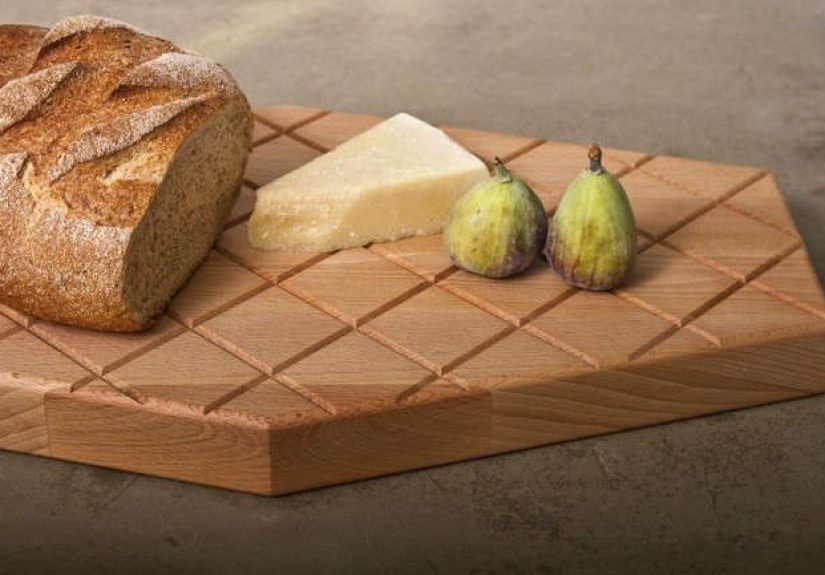
Their most kitchen-famous object is the Grid Plank, a thick beech-wood board designed to do two jobs beautifully:
chopping and serving. The idea is almost laughably sensible: one side is smooth for cutting, and the other has a graphic grid pattern
meant to stay pretty for presentation. In other words, you can prep dinner without turning your serving board into a scratched-up
crime scene.
The boards are substantialthick enough to feel stableand the forms are based on the studio’s “grid studies,” a method they use to
develop shapes and proportions. Translation: this isn’t just a rectangle with a price tag. It’s a board with intentional geometry,
designed to look good even when all you’ve put on it is a pile of grapes and emotional support cheddar.
- Material: Beech wood (durable, tight-grained, and naturally suited to kitchen tools)
- Use: Smooth side for chopping; grid side for serving
- Design benefit: Your “presentation side” stays cleaner and visually crisp longer
2) The LookShelf: A Wooden Shelf That Turns Kitchen Clutter into a Display
The duo also designed an oak shelf often referred to as the LookShelf, intended to display books like art. In the kitchen,
that translates beautifully: cookbooks become decor, and your iPad (a modern cookbook with a shorter attention span) gets a dignified perch.
This is the kind of object that quietly changes behavior. When storage looks intentional, you treat your space with more intention.
You put things back. You stop stacking cookbooks like they’re about to be shipped across the ocean. You become, for a moment, the kind
of person who might own matching containers.
Why Wooden Kitchen Accessories Still Win in 2026
Wood is having a long, well-deserved momentand not just because it photographs nicely on marble countertops. Good wooden tools solve
real problems: they’re gentle on cookware, comfortable in the hand, and they bring warmth to kitchens that can otherwise feel like
stainless-steel laboratories.
Wood is easier on knives and hands
Hard surfaces like glass or stone can be rough on knife edges. Wood has a bit of “give,” which helps preserve sharpness and makes cutting
feel smoother. Plus, thick wooden boards don’t skitter around like a startled deer when you’re trying to dice an onion quickly.
Wood can be safeif you treat it like a tool, not a plate
Food safety isn’t about being afraid of wood; it’s about habits. Cross-contamination happens when ready-to-eat foods touch surfaces used
for raw meat, poultry, seafood, or eggs. The fix is simple: clean properly and consider using separate boards for raw proteins and produce.
- Wash boards after each use with hot, soapy water; rinse and dry thoroughly.
- For added safety, sanitize occasionally using a diluted bleach solution, then rinse and air-dry.
- Replace boards that develop deep grooves, cracks, or damage you can’t clean effectively.
A well-made wooden board is not a disposable accessory. It’s closer to cast iron: it rewards care. Treat it well, and it becomes safer,
nicer to use, and better-looking over time.
The Design Logic Behind “Cut on One Side, Serve on the Other”
The Grid Plank concept is a master class in how to design for real behavior. People want a board that can do everything, but that usually
means it does everything “fine” and nothing beautifully. Here, the duo separates functions without adding complexity.
Think of it like a tiny system:
- Prep side (smooth): Let it get scratched. That’s its job.
- Serve side (grid): Keep it cleaner. That’s its job.
- Result: You stop buying “special serving boards” that live in a cabinet until guests arrive.
This kind of thinking is why Dutch design is so loved: it’s not decoration pretending to be useful. It’s usefulness that happens to be gorgeous.
Choosing Wood Like a Grown-Up (Without Becoming a Wood Nerd)
You don’t need to memorize a lumber catalog to choose great wooden kitchen accessories. But a few basics help you buy smarter:
Beech wood
Beech is a classic for kitchen tools in Europe: hard enough to take abuse, fine-grained enough to clean well, and visually calmperfect for
modern design. It also takes oil nicely, which helps it resist drying and cracking over time.
Maple and walnut
In the U.S., maple is a top choice for cutting boards because it’s durable and relatively gentle on knives. Walnut is slightly softer and
often prized for its darker color and rich grain. Both can last decades with good care.
Bamboo
Bamboo boards are popular because bamboo is fast-growing and tends to resist moisture. That said, bamboo can be hard, and quality varies.
If you buy bamboo, look for a reputable maker and keep up maintenance so it doesn’t dry out or split.
How to Care for Wooden Kitchen Accessories (So They Don’t Turn Into Splinter Art)
Caring for wood is mostly about preventing extremes: don’t soak it, don’t bake it, and don’t pretend it’s dishwasher-safe unless the maker says so.
Daily cleaning
- Hand-wash with warm, soapy water soon after use.
- Do not soak; prolonged water exposure can warp wood.
- Dry thoroughly. Store upright or with airflow when possible.
Deodorizing and stain help
For lingering odors (hello, garlic) or surface stains, a classic trick is coarse salt and lemon. Scrub gently, rinse, dry, and move on with your life.
Your cutting board does not need a complicated skincare routinejust consistent basics.
Oiling and conditioning
The goal of oiling is to keep wood from drying out, which can lead to cracking and roughness. Many U.S. kitchen authorities recommend
food-grade mineral oil or board creams/butters (often mineral oil plus beeswax).
- Avoid: cooking oils like olive or vegetable oil for conditioningthese can oxidize and go rancid over time.
- How often: roughly monthly for frequently used boards, or when the surface looks dry.
- A simple test: if water stops beading and starts soaking in quickly, it’s time to re-oil.
Repairs
Light sanding can refresh a heavily used board. But if deep cracks and grooves develop, replacement is the safer movethose are the places
bacteria and moisture love to hide.
How to Use a Grid Plank Without Becoming Weird About the Grid
The grid side is visually satisfying, yes. It’s also not a mandate to align your olives at 90-degree angles like a tiny tapas architect.
Here are a few non-precious ways to use it:
- Weeknight prep: Chop on the smooth side; flip and serve sliced citrus, herbs, or bread alongside dinner.
- “Guests are coming” emergency: Toss cheese and fruit on the grid side. It will look intentional even if you’re panicking.
- Breakfast board: Toast, butter, jam, maybe a soft-boiled egg. The grid makes it feel like a café moment.
- Kitchen counter sanity: Use it as a landing zone for lemons, garlic, and the one avocado that’s perfect for 17 minutes only.
Paired with something like the LookShelf holding cookbooks or a tablet, you get a kitchen that feels organized without turning into a showroom.
That’s the sweet spot: a space that looks good because it works well.
Buying Checklist: What to Look for in Wooden Kitchen Accessories
- Thickness and stability: A thicker board stays put and feels safer.
- Wood quality: Tight grain, smooth finish, no obvious cracks or rough seams.
- Food-safe finish: Confirm the finish is appropriate for food contact (or buy unfinished and condition it yourself).
- Thoughtful function: Finger holds, reversible sides, and shapes that fit how you cook.
- Maintenance reality: If you won’t oil it ever, choose something that can handle benign neglect (or accept you’ll replace it sooner).
Kitchen Experiences: What These Wooden Accessories Feel Like in Real Life (About )
Picture a Saturday morning when the kitchen is quiet enough to hear the kettle think. You pull out a thick wooden planksolid, warm, and
reassuringly heavyand suddenly breakfast feels less like “fuel” and more like a tiny ritual. Toast goes down. Fruit gets sliced. The board
doesn’t slide away like a prank. There’s a small, satisfying thud each time the knife meets wood, a sound that says, “Yes, this is what tools are
supposed to do.”
On a Tuesday night, the experience changes. Now you’re cooking with one eye on the pan and the other on whatever life thing is happening
(emails, kids, a group chat debating where to eat while you are literally eating at home). You chop fast on the smooth sideonion, bell pepper,
something green so you can feel virtuous. The board takes it. No drama. No wobble. And when dinner is done, you flip to the grid side and suddenly
the counter looks… composed. You put lime wedges and a handful of herbs on top, and it feels like you planned this on purpose.
Then there’s the “people are coming over” moment, which begins with confidence and ends with you whispering, “Why did I say 7:00?”
This is where a design like the Grid Plank earns its keep. You don’t need to transfer food to a fancier platter. You don’t need to wash an extra
dish because you’re already behind. You just flip the board, arrange a few thingscheese, crackers, maybe a very brave pile of grapesand suddenly
your kitchen looks like it belongs to someone who owns matching glassware.
The grid pattern does something sneaky: it gives your eyes a structure. Even when the food is casually thrown down, the pattern makes it feel
intentional. It’s the visual equivalent of wearing a blazer over a T-shirt. You’re still comfortable, but now you look like you tried.
Over time, wood tools develop a relationship with you. They pick up small marks on the working sideevidence of dinners made and snacks assembled.
And maintenance becomes oddly satisfying. Once in a while you oil the board, watch the grain deepen, and feel like you just gave your kitchen
accessory a spa day. (Self-care, but for objects. We contain multitudes.)
In the end, that’s the real appeal of wooden kitchen accessories from a thoughtful Dutch design duo: they don’t just sit there looking pretty.
They quietly improve how cooking feelsmore grounded, less frantic, more “I can do this” and less “why is everything sticky?”
Conclusion: Quiet Design, Loud Impact
The best kitchen accessories don’t demand attention; they earn trust. Wooden tools do that through comfort, durability, and a natural fit with
everyday cooking. And when those tools come from a Dutch design duo like Daphna Laurensdesigners who obsess over function, clarity, and form
you get objects that make your kitchen feel calmer and more capable.
Choose pieces that match how you actually cook. Care for them like tools worth keeping. And if a board can help you chop dinner and serve dessert
without making your kitchen look like a tornado stopped by, that’s not just design. That’s a small, daily upgrade.