Table of Contents >> Show >> Hide
- The “Same Grocery List” Experiment: Why It Hits So Hard
- What the Data Says About Grocery Inflation (2020–2023)
- Why “Food at Home” Inflation Feels Worse Than “Average Inflation”
- The Hidden Villains: Shrinkflation, Quality Changes, and “Same Name, New Reality”
- So… Was It Just “Greed”? A More Useful Answer
- Practical Ways to Cope With Grocery Inflation Without Hating Your Life
- What This Story Really Reveals: Inflation Is a Timeline, Not a Moment
- Real-Life Experiences: What People Say When They Re-Buy the “Same Cart”
- Conclusion
There are a lot of ways to understand inflation. You can read charts, follow economic debates, or stare into the
middle distance while whispering, “How is pasta eight dollars?” But one of the most effective methods is also the
simplest: buy the same stuff, years apart, and let the receipts do the talking.
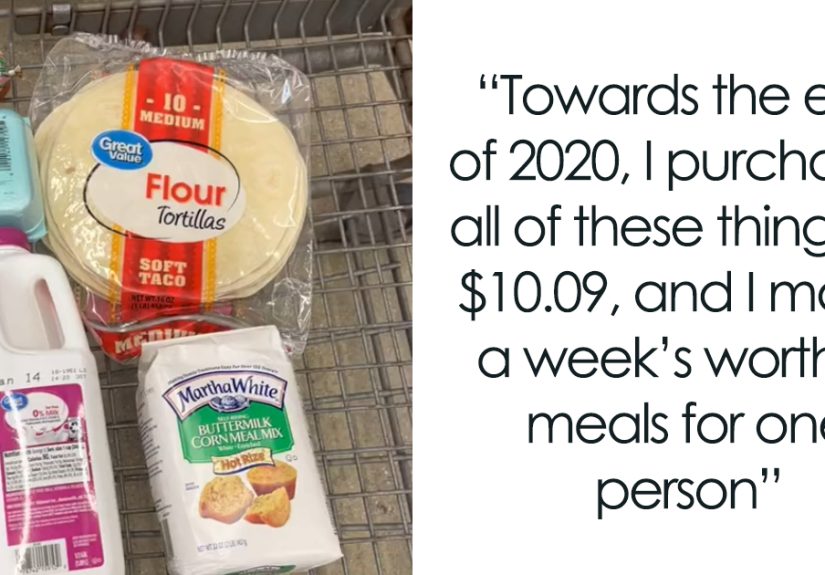
That’s exactly what one woman didrecreating the same grocery list in 2020, 2022, and 2023 to show how much everyday
life changed in just a few trips to the store. No fancy spreadsheet required. Just the brutal honesty of a paper
receipt long enough to be used as a scarf.
In this article, we’ll break down what a “same grocery list” comparison actually reveals about grocery inflation,
why prices spiked so hard in 2022, why 2023 felt confusing (“Wait… inflation is down, so why am I still broke?”),
and how shoppers can cope without resorting to eating air-fried optimism for dinner.
The “Same Grocery List” Experiment: Why It Hits So Hard
The reason these price-comparison videos go viral isn’t because people suddenly discovered the existence of
inflation. It’s because they captured something deeply relatable: inflation isn’t a headlineit’s a habit.
You buy groceries weekly. You notice when your normal cart feels lighter but costs more. You realize your “quick
run” totals $97. You consider applying for a small business loan to purchase name-brand cereal.
Re-buying the same grocery list across multiple years is powerful because it controls for the sneaky variables that
usually make inflation hard to “feel” in a clean way. You’re not comparing Thanksgiving dinner to a random Tuesday.
You’re comparing the exact same items (or as close as possible) and asking: “What changedand why?”
What This Kind of Comparison Can (and Can’t) Prove
A single shopper’s receipts won’t perfectly represent every household. Stores, regions, brands, and promotions vary.
A product might be out of stock in one year, replaced by a similar item. And sometimes the biggest difference isn’t
inflationit’s “this brand quietly shrank the package and hoped you wouldn’t notice.”
Still, the experiment works as a reality check. It shows how “average” inflation can translate into specific,
everyday price jumpsespecially for staples like eggs, dairy, meat, and packaged foods that families buy repeatedly.
It also highlights how inflation compounds: a bunch of smaller increases across many items can feel like your budget
is being pecked to death by a thousand price tags.
What the Data Says About Grocery Inflation (2020–2023)
Economists measure inflation using broad indexesmost famously the Consumer Price Index (CPI). Within CPI, the
category “food at home” captures groceries (the stuff you buy at the store), while “food away from home” captures
restaurants and takeout.
Here’s the key point: grocery inflation didn’t move at one steady pace. It rolled in waves.
Prices rose in 2020, accelerated in 2021, surged in 2022, and then cooled in 2023though “cooled” doesn’t mean
“went back to normal.” It mostly means prices stopped climbing as fast. The new, higher level stuck around.
2020: The “Wait, Why Is Flour Gone?” Year
Grocery inflation in 2020 was driven by pandemic whiplash. People stopped eating out and started cooking at home,
sometimes like they were auditioning for a survival show. That sudden shift changed demand patterns overnight.
Supply chains also took hits: plant closures, labor disruptions, transportation bottlenecks, and a food system
originally optimized for restaurants having to pivot toward grocery shelves. The result was noticeable price growth
for many categoriesespecially early in the pandemic when shortages and uncertainty were at their peak.
2022: The Big Spike (and Why It Felt So Personal)
If 2020–2021 were the warm-up, 2022 was the main event. Grocery prices climbed at a pace that many Americans hadn’t
seen in decades. Several forces piled on at once:
- Energy and transportation costs increased the cost to produce and ship food.
- Labor markets were tight, raising wages and operating costs across the supply chain.
- Global disruptions (including war-related commodity shocks) affected key inputs like grain and fertilizer.
- Avian influenza contributed to dramatic egg and poultry price swings.
- Weather and crop issues added volatility to produce and dairy.
Importantly, grocery prices aren’t just raw commodities. The cost of the wheat matters, surebut so does packaging,
trucking, refrigeration, processing, labor, and retail operations. In other words: your loaf of bread isn’t just
wheat; it’s a whole logistics ballet wearing a hairnet.
2023: Inflation Cooled… But Your Grocery Bill Still Looked Rude
In 2023, the pace of food price inflation slowed compared to 2022. Supply chains improved, wholesale price
pressures eased, and some categories stabilized. Late in 2023, year-over-year grocery inflation looked much smaller
than the prior year’s peak.
But here’s why many shoppers still felt like nothing improved: slowing inflation doesn’t erase the earlier jump.
If prices rise fast in 2022 and then rise slowly in 2023, you’re still paying more than you used tojust not
getting hit with the same speed of increases.
Another reason 2023 felt confusing is that price changes weren’t uniform. Some items eased, others stayed elevated,
and restaurant prices continued climbing faster than grocery prices in many months. So even if your at-home grocery
inflation cooled, your “quick lunch” budget might have felt like it was doing push-ups.
Why “Food at Home” Inflation Feels Worse Than “Average Inflation”
Even when overall inflation numbers improve, grocery inflation tends to remain emotionally loud for a few reasons:
1) You buy groceries frequently
Many big-ticket expenses (like appliances) happen occasionally. Groceries happen constantly. Frequent purchases
create frequent reminderslike a subscription service you didn’t ask for.
2) Staples don’t feel optional
If the price of luxury patio furniture rises, most people shrug and keep their old chairs. But if eggs, milk, bread,
and chicken rise, families have to adapt immediately. That’s why inflation in necessities can feel harsher than
inflation in discretionary stuff.
3) Substitution has limits
Yes, you can switch brands, shop sales, buy frozen vegetables, or swap proteins. But there’s a point where
“substitutions” become “I’m eating rice and vibes again,” and that’s not a long-term plan.
The Hidden Villains: Shrinkflation, Quality Changes, and “Same Name, New Reality”
When people say, “This used to cost less,” they’re often rightand not just because the sticker price rose.
Sometimes the product changes quietly:
- Shrinkflation: smaller packages, same price (or higher).
- Ingredient changes: reformulations that affect quality while prices stay elevated.
- Fewer promotions: the “sale cycle” changes, so the price you used to rely on shows up less often.
This is part of why “buy the same grocery list” is both powerful and tricky. Even if the item looks identical,
the value might have shifted. The receipt captures price; your pantry captures the truth.
So… Was It Just “Greed”? A More Useful Answer
People argue about “greed” whenever prices rise fastand it’s a fair question. Companies can raise prices beyond
cost increases in certain conditions, especially when consumers expect inflation and stop being shocked by higher
prices. Market concentration and reduced competition can also influence pricing behavior.
But if your goal is to understand grocery inflation (and not just scream into a baguette), a more useful approach is:
multiple forces hit at once. Pandemic disruptions changed demand and supply. Shipping and energy costs jumped.
Labor costs rose. Global commodity shocks happened. Disease outbreaks impacted key categories like eggs.
The system absorbed itand shoppers felt it at checkout.
Practical Ways to Cope With Grocery Inflation Without Hating Your Life
You can’t coupon your way out of the entire macroeconomy. But you can reduce the damage. Here are strategies that
consistently help real households manage higher grocery prices:
1) Shop a plan, not a mood
The most expensive grocery trip is the one where you buy random ingredients with no plan and then order takeout
because you “have nothing to eat.” Make a short weekly meal plan and build the list around it.
2) Track price per unit (per ounce, per pound, per count)
Inflation plus shrinkflation means sticker prices lie by omission. Unit pricing helps you compare value fairly.
A “cheaper” package can be more expensive if it’s smaller.
3) Use store brands strategically
Private-label products often provide strong value, especially for staples: flour, sugar, frozen vegetables,
canned beans, pasta, oats, and basic dairy items. Save the brand-name budget for the few items where quality
matters most to you.
4) Rotate proteins (and embrace “flexible” recipes)
Build recipes that can swap proteins easilytacos, stir-fries, soups, grain bowls. If chicken is high this week,
pivot to beans, eggs (when they’re not acting dramatic), or ground turkey.
5) Treat “bulk” like a tool, not a personality
Bulk buying helps when (a) you’ll actually use it, (b) you can store it safely, and (c) it won’t spoil.
Focus on shelf-stable and freezable items first.
6) Cut waste before you cut nutrition
Before you slash fruits and vegetables, look at what gets thrown out. Reducing food waste is one of the fastest,
least painful ways to lower your effective grocery cost.
What This Story Really Reveals: Inflation Is a Timeline, Not a Moment
The “same grocery list” experiment works because it turns inflation into a timeline you can hold in your hand.
It shows how a series of shocksfrom the pandemic to supply chain constraints to global commodity disruptionscan
move through the food system and land on your kitchen counter.
It also clarifies an important point: inflation cooling doesn’t mean prices “undo.” Most of the time, it means
the climb slows. That’s why 2023 could look better on paper while still feeling expensive in practice.
Real-Life Experiences: What People Say When They Re-Buy the “Same Cart”
To make this topic more human, let’s talk about the kinds of experiences shoppers commonly describe when they try
their own version of the “same grocery list” test. Not in a lab. Not in an economic model. In the fluorescent glow
of aisle seven, where hope goes to compare unit prices.
First comes the optimism phase. People start with confidence: “I’m going to prove inflation is real with data.”
They bring old receipts (or app histories), pick a familiar listmilk, eggs, bread, chicken, produce, a couple of
pantry staplesand head to the same store. It feels practical, almost fun, like a budget-friendly science project.
Then they start scanning items and the optimism evaporates faster than a store-brand seltzer left open in the car.
Next is the “Is this the same product?” phase. The brand looks the same. The box art is the same. But the weight
is different. The family-size bag is now a “generous medium.” The cereal that used to feed a household for a week
now lasts until Wednesday if everyone practices emotional restraint. This is when people realize that inflation
isn’t only a price storyit’s a value story. Paying more is one thing. Paying more for less is a personality test.
Then comes substitution. Shoppers start making quick decisions: swap fresh berries for frozen, switch to store
brand pasta, pick whatever protein is on sale, skip the “fun item” because the fun item is now apparently gold
plated. Many people say this is where shopping feels more exhausting than it used to. The trip isn’t just picking
foodit’s negotiating with a constantly changing set of prices. The mental load rises, even if the cart doesn’t.
A lot of people also describe a weird emotional whiplash in 2023: they heard inflation was “easing,” but their
totals didn’t drop. When they re-buy the same list, the 2023 receipt is often lower than the 2022 shock peakbut
still far above 2020. So the feeling isn’t relief; it’s resignation. “Okay, it’s not getting worse as fast, but
this is still the new normal.” That’s a real psychological shift: the budget stops being a plan and starts being a
coping mechanism.
Finally, there’s the adaptation phasewhere people develop new habits that stick. Some families batch-cook more,
not because they love meal prep, but because it protects them from last-minute takeout prices. Some become loyal to
discount grocers or warehouse clubs. Some rotate meals based on what’s cheapest that week. And many get surprisingly
good at using leftovers, freezing portions, and planning “bridge meals” (simple dinners that connect two grocery
trips without panic-buying).
The big takeaway from these experiences is that inflation changes behavior. The “same grocery list” trend isn’t
just about proving prices rose. It’s about showing how quickly households were forced to become more strategicand
how the cost of living isn’t only measured in dollars, but also in time, stress, and the constant feeling that
your budget is doing gymnastics without your permission.
Conclusion
A woman buying the same grocery list in 2020, 2022, and 2023 didn’t just create a viral momentshe created a
relatable lens. Those receipts capture what the CPI can sometimes feel too abstract to explain: grocery inflation
came in waves, peaked painfully in 2022, and cooled in 2023 without reversing the earlier climb.
If you’re trying to cope, the best approach isn’t chasing a mythical “back to 2020 prices” button. It’s building a
system that reduces waste, improves flexibility, and protects your budget from volatility. The economy may be
complicated, but dinner still shows up every nightso you might as well meet it with a plan, a freezer, and a
sense of humor.