Table of Contents >> Show >> Hide
- From Photo Album to Short-Form Video Machine
- The Business Logic: Attention, Ads, and TikTok Envy
- Algorithm Gym: Why Instagram Pushes Reels So Hard
- Why It Feels “Shoehorned” to So Many Users
- Instagram’s TikTok Problem (and Why Reels Won’t Go Away)
- The Creator Dilemma: Adapt or Be Buried
- What This Means for Everyday Users
- Can Instagram Be Both Photo App and Video Platform?
- of Real-World Experiences: Living with Reels in Your Feed
If you’ve opened Instagram lately and thought, “Wait, when did my cozy photo app turn into TikTok’s cousin?” you’re not imagining things. Reels is everywhere. It’s in your main feed, your Explore tab, your notifications, your dreams… probably. For many users, it feels less like a natural evolution and more like short-form video was aggressively squeezed into every empty corner of the app.
So why does it feel like Reels is being shoehorned into Instagram instead of gently invited in? To answer that, we need to look at TikTok envy, ad dollars, algorithms, and what happens when a beloved photo-sharing app decides it really wants to be a video-first entertainment platform.
From Photo Album to Short-Form Video Machine
Once upon a time, Instagram was simple: square photos, retro filters, artsy brunch shots. Video wasn’t even part of the original plan. It only arrived when Instagram panicked about Vine. Fast-forward to today and short-form video is the main course, not the side dish.
Instagram Reels officially launched globally in 2020 as a direct answer to TikTok, whose growth made every social media executive break out in a cold sweat. TikTok proved that swipeable, vertical video with a super-sticky recommendation engine could keep people watching for hours. Meta (Instagram’s parent company) wanted in on that attention, and fast.
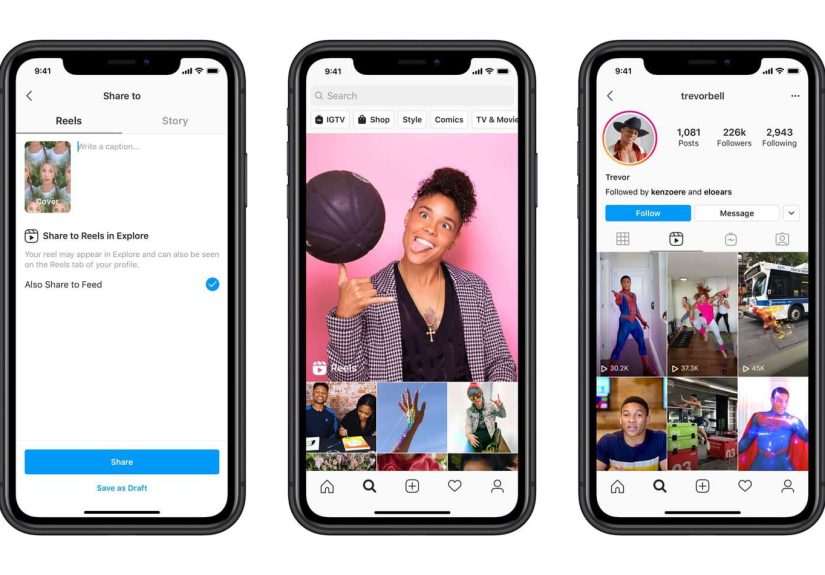
Reels wasn’t built as a separate appit was bolted straight onto Instagram: a new tab, new surface in Explore, and a shiny slot in the main navigation bar. The result? Users woke up one day and their familiar photo app suddenly wanted them to become video creators, whether they had signed up for that or not.
The Business Logic: Attention, Ads, and TikTok Envy
If you strip away the UX debates and creator complaints, Reels exists for one big reason: attention equals revenue.
- Reels dominates time spent. Recent data suggests that somewhere between one-third and one-half of the time people spend on Instagram now goes to Reels.
- Reels reaches more people. Studies show Reels can reach roughly double the audience of traditional feed images or even carousels, with average reach rates around 30%.
- Reels ads scale globally. Reels ad inventory can theoretically reach hundreds of millions of users, making it a key lever for Meta’s ad business as it competes with TikTok and YouTube.
On earnings calls, Meta leadership has repeatedly pointed to Reels and its AI recommendation engine as major drivers of engagement and long-term growth. In other words: if people spend more time watching Reels, Meta has more chances to show ads, and investors smile a little wider.
That’s why Reels didn’t politely ask for a small corner of the app. It barged in, dragged the furniture around, and took the seat by the window.
Algorithm Gym: Why Instagram Pushes Reels So Hard
Instagram doesn’t just host Reelsits algorithm loves Reels. The platform has been explicit: Reels get preferential treatment. They appear in more places, get boosted to non-followers, and are highlighted across Explore and the dedicated Reels feed.
The logic is simple:
- Reels keep people on the app longer.
- More time on the app means more ad impressions.
- More impressions means more revenue per user.
So the algorithm behaves like an overexcited trainer at a gym, constantly yelling, “More Reels! More reps! Forget those photos, give me vertical video!” You can still post photos, surebut if you compare reach, engagement, and discovery potential, Reels are playing in the major leagues while photos are stuck in the minors.
That imbalance is precisely what makes many users feel like Reels are being forced into their experience rather than added as an optional bonus.
Why It Feels “Shoehorned” to So Many Users
Reels isn’t just a new feature; it changed the identity of Instagram. Users who signed up for a visual diary of their friends and favorite creators now open the app and see strangers dancing, lipsyncing, cooking, or selling them something within three seconds.
In 2022, a viral petition titled “Make Instagram Instagram Again” summed up the frustration: people wanted fewer videos, fewer recommendations, and more photos from friends. Even high-profile users like Kim Kardashian and Kylie Jenner publicly complained that the app felt too much like TikTok.
Here’s why it feels so jammed in:
- Reels invaded the main feed. Instead of being clearly separated, Reels show up between posts from friends. One minute you’re looking at your cousin’s baby; the next, you’re watching a stranger’s choreographed dance.
- Discovery replaced familiarity. Instagram used to prioritize people you knew. Now, like TikTok, it leans hard into discovery and recommendationswhich makes the app feel less like a social network and more like an entertainment channel.
- Photo creators feel sidelined. Photographers and illustrators often report lower reach on static posts unless they “hack” the system with carousels or video-style content. Their experience of the app changed without their consent.
- UI clutter and constant prompts. Buttons, badges, “Try Reels!” nudges, and remix prompts all push users toward video, whether they’re interested or not.
The result is cognitive dissonance: users still think of Instagram as “the photo app,” while the product team clearly wants it to be “the short-form video platform that also happens to host photos.” That mismatch is exactly what makes Reels feel shoehorned in.
Instagram’s TikTok Problem (and Why Reels Won’t Go Away)
Underneath all this is a simple competitive reality: TikTok changed the game. It proved that a pure, algorithm-driven short-form video feed could dominate attention, especially among younger users. Meta can’t afford to give up that territory.
Internal reports and external analysis have highlighted that Instagram’s more traditional friend-based feed wasn’t enough to compete with TikTok’s hyper-personalized content roulette. So Meta leaned into an AI-driven “discovery engine” and stuck Reels at the center of it.
At the same time, Meta has been under pressure to keep ad revenue strong while investing heavily in AI and new technologies. Short-form video is a natural way to create huge, scalable ad inventoryespecially when the content scrolls endlessly and the algorithm can serve ads between Reels almost invisibly.
Translation: Reels isn’t a side quest. It’s a core part of Meta’s strategy. That’s why you see it everywhere, even if you don’t want to.
The Creator Dilemma: Adapt or Be Buried
For creators and brands, Reels is both blessing and curse.
On the plus side:
- Reels can introduce you to totally new audiences who never would have seen your static posts.
- The format encourages experimentation: transitions, trending audio, quick tips, behind-the-scenes clips, and mini-vlogs are all fair game.
- Brands that embrace Reels often report major gains in reach and engagement compared with pure-photo strategies.
On the downside:
- Creators feel forced to become part-time video editors just to maintain visibility.
- High-performing photos may suddenly underperform if they’re not supported by Reels content.
- Some users complain that their Reels perform inconsistently, with the algorithm feeling unpredictable and opaque.
This creates a situation where not making Reels feels like voluntarily accepting a reach penalty, even if you’d rather focus on photos, long captions, or other formats. That pressure contributes to the “shoehorned” feeling: Reels isn’t just an option; it’s the option the platform heavily nudges you toward.
What This Means for Everyday Users
If you’re not a creator and you just want to see your friends’ posts without being bombarded by strangers trying to sell you something, Reels can feel like an uninvited guest who never leaves the party.
Meta, however, sees a different story in the data: people watch Reels for long stretches, and that’s exactly what the company optimizes for. Short-form video is addictive, and the recommendation engine quickly learns what keeps you scrolling.
The trade-off is subtle but important:
- You gain more entertaining content tailored to your interests.
- You lose some of the intimacy and predictability that defined early Instagram.
For many users, especially those who loved the original “photo album” vibe, it genuinely feels like the app they signed up for has been squeezed into a new shape to host Reelsand some of the original charm got trimmed off in the process.
Can Instagram Be Both Photo App and Video Platform?
Instagram is trying to have it both ways: it says it cares about photographers and static content, while its algorithm clearly favors video. It introduces new tools for creators but also drowns users in recommendations and Reels-heavy feeds. Occasionally, after major backlash, it has rolled back or tweaked some changesproof that user sentiment still matters, at least a little.
In an ideal world, Instagram would:
- Offer clearer controls to dial Reels up or down in your feed.
- Give photos and carousels more balanced distribution.
- Separate the “discovery entertainment” experience from the “friends and family” feed more visibly.
Will it happen? Maybe in small ways. But as long as Reels continues to fuel engagement, ad inventory, and competitive positioning against TikTok and YouTube, it’s not going anywhere. The feature is too deeply wired into the business model to be an optional bolt-on.
That’s the heart of it: Reels is shoehorned into Instagram because Instagram itself is being reshaped around Reels.
of Real-World Experiences: Living with Reels in Your Feed
To really understand why Reels feels so forced, it helps to look at how different kinds of users experience the app now.
The Photographer Who Didn’t Sign Up for This
Imagine a photographer who joined Instagram in 2014. Back then, the platform was perfect: moody cityscapes, golden-hour portraits, editorial-style grids. Their following grew steadily through carefully curated images and thoughtful captions.
Fast-forward to now. Their meticulously edited photosshot on full-frame camerasget half the reach of a 10-second vertical video filmed on a phone by someone dancing in a kitchen. The app keeps nudging them: “Turn this post into a Reel!” “Use trending audio!”
They notice that when they finally cave and post a simple behind-the-scenes Reel (just a pan of their setup and a quick voiceover), it reaches more people than their last five still images combined. It’s validating and annoying at the same time. They get the message loud and clear: play the Reels game or enjoy invisibility.
The Small Business Owner Learning to Lip-Sync
Now think about a small business owner who uses Instagram to sell handmade candles. For years, static product photos and carousel posts worked fine: a shot of a candle, a close-up of the label, maybe a flat lay with props. Then, gradually, those posts stop performing.
They start hearing advice like, “You have to do Reels now,” as if it’s a new tax law. So they begin experimenting: packing orders on camera, showing quick “day in the life” clips, jumping on trending sounds. Their first few Reels are awkward, but a couple take off. Suddenly they’re getting DMs from people who discovered them purely through Reels.
Sales go up, but so does the pressure. Now they’re not just a makerthey’re also a content studio. They feel grateful for the reach but also a bit resentful that the format wasn’t optional. Reels didn’t feel like a gentle opportunity; it felt like a requirement that arrived overnight.
The Casual Scroller Overwhelmed by Noise
Then there’s the casual user who just wants to check on friends, stalk a few exes in peace, and watch dog videos. They open Instagram during lunch and are instantly greeted with a full-screen Reel from a stranger. They scroll again: more strangers. Eventually, they see something from a friendbut only after a mini-tour of “For You” style content they didn’t ask for.
They notice that posts from people they actually know feel buried under a pile of recommendations. The app is undeniably more “entertaining,” but also more exhausting. They’re not mad at Reels themselves; they’re mad that Reels walked into the main feed without knocking.
The Social Media Manager Caught in the Middle
Finally, picture the social media manager trying to keep a brand’s account afloat. Every report they present now has a familiar slide: “Reels are outperforming everything else.” Leadership asks, “Why don’t we just post Reels?” The manager knows the answer: Reels are time-consuming, require planning, and can still flop regardless of effort.
They juggle feed posts, Stories, DMs, UGC, and now a steady stream of Reels to satisfy the algorithm gods. They know Reels are crucial, but they also see the fatigueon their own team and in the audience. When followers comment things like “Can you just post regular photos again?” it confirms what many feel: Reels isn’t just a fun add-on. It’s a structural change that redefined the whole platform.
All these experiences point to the same conclusion: Reels is powerful, useful, and even funbut the way it was integrated into Instagram makes it feel less like a natural evolution and more like the product of corporate urgency. It’s not just on Instagram; it’s reshaping what Instagram is allowed to be.
Whether you love it, hate it, or grudgingly post your weekly Reel to “feed the beast,” one thing is clear: Reels is here to stay, and Instagram has already rearranged the furniture around it.