Table of Contents >> Show >> Hide
- The Short Answer: Australia Wants Distance, Speed, and Staying Power
- Why Nuclear-Powered Submarines Instead of Diesel-Electric Boats?
- Why American Submarines, Specifically?
- What Australia Is Actually Buying Under AUKUS
- Why the United States Is Willing to Do This
- The Real Risks, Costs, and Criticisms
- What This Means for the Indo-Pacific
- The Experience of AUKUS: What This Looks Like in Real Life
- Final Take
Nuclear submarines are not exactly an impulse buy. No one wanders into a defense partnership, shrugs, and says, “Sure, let’s grab a few of those too.” Yet that is roughly how the debate can sound from a distance: Why would Australia, a country that does not have nuclear weapons, spend staggering sums to buy American nuclear-powered submarines? The answer is simpler than the jargon makes it seem and messier than the press releases admit.
Australia is buying American nuclear submarines because its strategic environment has changed, its geography is enormous, and conventional diesel-electric boats do not solve the same problem. Canberra wants submarines that can travel farther, arrive faster, stay hidden longer, and operate with the United States and the United Kingdom in a region where military competition is getting sharper by the year. In plain English: Australia wants more reach, more endurance, and more deterrence. And under AUKUS, the quickest path to that goal runs through American Virginia-class submarines before a later transition to the future SSN-AUKUS design.
That does not mean the plan is simple. It is expensive, politically sensitive, industrially difficult, and dependent on training thousands of people who cannot learn this job from a YouTube playlist and a can-do attitude. But the strategic logic is real. Australia is not buying these boats because submarines are glamorous. It is buying them because geography is rude, deterrence is expensive, and the Indo-Pacific is not getting any calmer.
The Short Answer: Australia Wants Distance, Speed, and Staying Power
Australia sits far from most of its major allies and far from many of the places that matter most in a crisis. That sounds comforting until you remember that distance cuts both ways. Being far away can provide a buffer, but it also means Australian forces must travel vast stretches of ocean to show up where they matter. A submarine that spends too much time getting to the patrol area is a bit like a firefighter who uses half the shift driving to the fire.
That is one reason Australia’s old undersea model no longer looks sufficient. The Royal Australian Navy’s Collins-class submarines have long been respected, but they are diesel-electric boats built for a different era and under different assumptions. They can be stealthy and dangerous, especially in certain littoral conditions, but they do not offer the same combination of speed, endurance, and sustained presence as a nuclear-powered attack submarine. Australia is planning for the 2030s, 2040s, and beyond, not for a world that still thinks BlackBerry phones are cutting-edge.
Strategic thinking in Canberra has also shifted. Australian defense policy is now more focused on deterrence, long-range operations, maritime denial, alliance integration, and the possibility of prolonged regional crises. When policymakers talk about protecting sea lanes, contributing to coalition operations, or complicating an adversary’s planning, they are really talking about credible military options across long distances. Nuclear-powered submarines provide exactly that kind of option.
Why Nuclear-Powered Submarines Instead of Diesel-Electric Boats?
The term “nuclear submarine” can confuse readers because it sounds more alarming than it is. Australia is not buying nuclear-armed submarines. It is buying conventionally armed submarines powered by nuclear reactors. That distinction matters. The reactor powers the boat. It does not turn the submarine into a floating doomsday machine.
They have far greater range and endurance
A diesel-electric submarine is constrained by fuel, batteries, and the need to periodically manage power in ways that affect operations. A nuclear-powered submarine, by contrast, can stay submerged for much longer periods and cover enormous distances without the same operational compromises. For a country like Australia, that is a very big deal. If your operating environment stretches across the Indian Ocean, Southeast Asia, and the wider Pacific, the ability to move fast and remain on station is not a luxury. It is the whole point.
They get to the fight faster
Speed rarely sounds exciting in a policy paper, but it changes everything in military planning. A nuclear-powered attack submarine can transit faster to a patrol area, which means it spends more of its life doing useful work and less of it behaving like a very expensive commuter. That extra time on station translates directly into more surveillance, more deterrence, more unpredictability, and more pressure on any opponent trying to calculate risk.
They are better suited for sustained allied operations
Australia is not planning to operate in isolation. A central purpose of AUKUS is to create a more integrated undersea force among Australia, the United States, and the United Kingdom. Using nuclear-powered submarines gives Australia a capability that matches its closest security partners more closely. That improves interoperability, training, logistics, doctrine, and mission planning. Put less formally, it is easier to operate as a team when everyone is not bringing wildly different equipment to the game.
They strengthen deterrence without requiring a huge visible footprint
Submarines are powerful precisely because they are hard to find. A capable attack submarine complicates an adversary’s naval planning, protects sea approaches, gathers intelligence, and can threaten high-value targets. That uncertainty is part of the deterrent effect. Australia is investing in a platform that can quietly impose caution on any rival navy that wants freedom of action in the region.
Why American Submarines, Specifically?
If Australia wants nuclear-powered submarines, why buy American ones at all? Why not wait and build its own from scratch? Because “from scratch” is what nations say right before they discover how many decades, engineers, welders, safety standards, regulators, and classified technologies are hiding inside those two innocent-looking words.
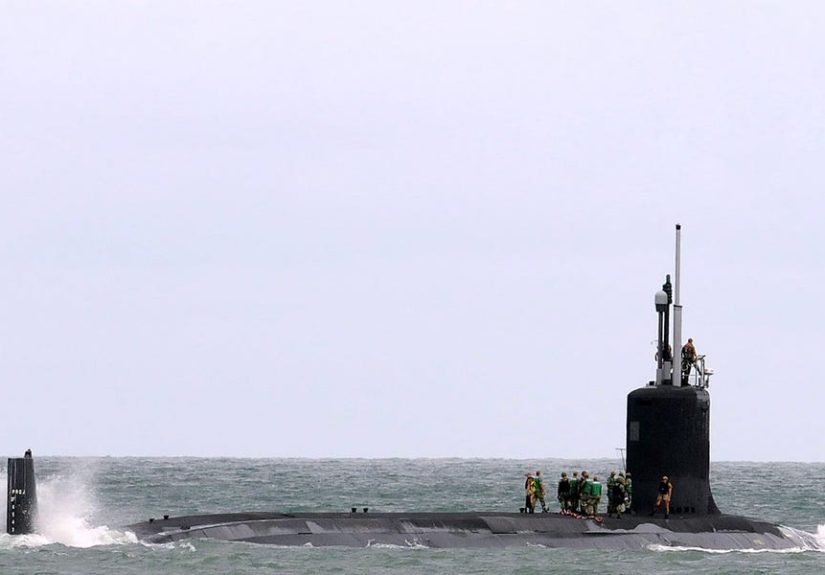
The American Virginia-class submarine offers Australia an interim solution that bridges the gap between today’s aging fleet and tomorrow’s SSN-AUKUS program. Under the AUKUS pathway, Australia is expected to buy three Virginia-class boats in the 2030s, with the possibility of two more if needed. That gives Canberra a sovereign nuclear-powered capability sooner than waiting exclusively for a later design to enter service.
There is also a trust issue, in the best sense of the word. The United States has shared naval nuclear propulsion technology with only one other country before: the United Kingdom. Australia is getting access not because this technology is easy to transfer, but because Washington sees Canberra as an exceptionally close ally with aligned strategic interests, a long record of defense cooperation, and the political reliability needed for something this sensitive.
Buying American boats also plugs Australia into an existing ecosystem. Training pipelines, maintenance practices, combat systems, industrial standards, and operational concepts already exist. That does not eliminate complexity, but it reduces the number of miracles required.
What Australia Is Actually Buying Under AUKUS
One reason the public conversation gets muddled is that AUKUS is not a single purchase order. It is a phased strategy. The submarine story unfolds in stages, and each stage is designed to solve a different problem.
Phase 1: Learn, train, and host allied submarines
Before Australia can operate its own nuclear-powered submarines, it needs trained crews, maintainers, regulators, infrastructure, and years of practical experience. That is why the early phase focuses on personnel exchanges, training in the United States and the United Kingdom, port visits, and preparations for Submarine Rotational Force–West at HMAS Stirling in Western Australia. In other words, before Australia gets the keys, it is spending years learning how to drive, service, safeguard, and manage the whole enterprise.
Phase 2: Buy Virginia-class submarines from the United States
This is the part that attracts headlines. Australia is set to purchase three Virginia-class submarines in the early 2030s, with up to two more possible. These boats are meant to provide a genuine Australian nuclear-powered submarine capability while the longer-term industrial effort continues. They are the bridge between intention and reality.
Phase 3: Build and field SSN-AUKUS
The final stage is even more ambitious. Australia and the United Kingdom will field the future SSN-AUKUS class, a design built with British foundations and American technology contributions. Australia is not merely renting someone else’s strategy here. It is trying to build a long-term sovereign undersea capability that can be sustained domestically. That is why the project is not only about hulls in the water; it is also about shipyards, workforce training, industrial policy, safety culture, and decades of institutional change.
Why the United States Is Willing to Do This
It is fair to ask why Washington would part with scarce submarines when it already wants more of them for its own fleet. The answer is that the United States does not see this as charity. It sees it as strategy.
First, an Australian nuclear-powered submarine capability increases allied undersea mass in the Indo-Pacific. For U.S. planners, that means more capable submarines operating from favorable geography with a trusted partner. More allied boats in the water means more surveillance, more uncertainty for adversaries, and more options in a crisis.
Second, Australia is helping pay for the ecosystem that makes the deal possible. Canberra is investing in the U.S. submarine industrial base and pouring money into shipyard preparation and domestic capacity building. The strategic pitch is not, “Please hand us submarines and good luck.” It is, “Let’s expand allied capacity together.”
Third, the submarines are only one part of a deeper alignment. AUKUS is also about technology sharing, supply chains, export control reform, advanced capabilities, and long-term defense integration. From Washington’s perspective, helping Australia build a nuclear-powered submarine capability binds a major ally even more tightly into a shared deterrence architecture.
The Real Risks, Costs, and Criticisms
None of this means the program is smooth sailing. In fact, it involves so many moving parts that “smooth” is not the adjective anyone serious should choose.
The industrial base problem is real
The most persistent concern is whether American shipyards can produce enough Virginia-class submarines for the U.S. Navy and for Australia on schedule. This is not a made-up worry invented by professional pessimists. The submarine industrial base has been under strain, and American policymakers have openly debated whether production can ramp up fast enough. If the industrial base lags, the entire timetable becomes harder to defend.
The price tag is huge
Nuclear submarines are among the most complex machines on Earth, and they come with all the budgeting charm you would expect from something that combines a warship, a stealth platform, a reactor plant, and a floating city for submariners. Australia is not only paying for submarines. It is paying for shipyard upgrades, workforce training, stewardship systems, infrastructure, and the slow construction of a national enterprise that did not previously exist at this scale.
The workforce challenge may be harder than the hardware challenge
Boats matter, but people matter more. Australia needs submariners, nuclear specialists, engineers, maintainers, regulators, supervisors, and industrial workers who can operate within a culture where mistakes are unacceptable. You cannot rush that by throwing money at it and hoping everyone becomes an expert by Tuesday.
There are sovereignty and political debates
Critics worry that Australia could become too dependent on Washington for technology, sustainment, or even strategic direction. Supporters counter that dependence already exists in many areas of modern defense and that AUKUS actually increases Australian capability rather than reducing it. The truth is more balanced: AUKUS strengthens Australian power, but it also ties that power more tightly to alliance structures and U.S. industrial performance.
Nonproliferation concerns have not vanished
Even though the submarines will be conventionally armed, the transfer of naval nuclear propulsion technology is still sensitive. AUKUS governments insist that the program will maintain high nonproliferation standards, but the issue remains politically charged because it touches the intersection of nuclear stewardship, international safeguards, and strategic competition.
What This Means for the Indo-Pacific
Strategically, AUKUS is about more than replacing old submarines with shiny new ones. It is part of a broader effort to harden allied deterrence in the Indo-Pacific. That matters because the region is increasingly defined by maritime competition, gray-zone coercion, military modernization, and the possibility that a crisis involving sea lines of communication or Taiwan could draw in multiple powers quickly.
A credible Australian attack submarine fleet would give allied planners more ways to distribute combat power, complicate naval movements, and sustain undersea presence from the eastern Indian Ocean to the western Pacific. It also sends a political message: Australia is not planning for a gentler future. It is investing for a tougher one.
That is why the submarine decision matters so much. It reflects a country concluding that its security environment has changed enough to justify a once-unthinkable step. Australia is not just buying American submarines. It is buying time, reach, deterrence, and a larger role in the region’s balance of power.
The Experience of AUKUS: What This Looks Like in Real Life
If the public version of AUKUS sounds like a parade of acronyms and press conferences, the lived experience is much more human, much less glamorous, and somehow more impressive. The real story is not just about prime ministers standing in front of flags. It is about sailors in classrooms, technicians in shipyards, planners with spreadsheets the size of surfboards, and long days in places that smell like steel, saltwater, and institutional coffee.
For Australian submariners, the AUKUS experience already looks like immersion. Officers and enlisted personnel have entered U.S. training pipelines, graduated from American submarine courses, and begun serving alongside U.S. crews on Virginia-class boats. That matters because submarine competence is not theoretical. It is learned through repetition, watchstanding, maintenance, safety drills, checklists, and the quiet discipline of a platform where everyone’s job can affect everyone else’s survival. The point is not to give Australians a quick tour of a reactor compartment and a handshake. The point is to make them fluent in a culture of submarine operations that has to be exacting every single day.
For Australian civilian maintainers, the experience is equally intense. AUKUS requires Australia to grow not only crews, but a sovereign support workforce capable of sustaining nuclear-powered submarines safely and professionally. That means training with U.S. systems, learning maintenance standards, and building habits that are far less cinematic than any movie about submarines. No dramatic soundtrack. Mostly technical manuals, procedural rigor, and a lot of very serious people making sure a tiny mistake never becomes a giant one.
On the Australian side, HMAS Stirling has become a symbol of the transition from theory to execution. Port visits by U.S. submarines, preparatory work for Submarine Rotational Force–West, and maintenance activity in Western Australia all show that AUKUS is no longer just a strategic concept. It is becoming an operating reality. This is the part of national security that rarely goes viral online because it involves infrastructure, logistics, workforce development, and controlled access areas rather than dramatic speeches. But it is exactly where serious capability is built.
The human experience is also emotional in quieter ways. For many Australians working inside the program, AUKUS is a national project of unusual scale. It asks people to master skills their country has never needed in quite this form. It creates career paths that barely existed a few years ago. It sends sailors and technicians into a tri-national system where they are not just learning equipment, but joining a strategic enterprise expected to last for decades. That can be exciting, but it can also be daunting. The standards are high because the stakes are high.
There is also a cultural adjustment. Australian personnel are learning inside institutions that have long traditions, rigid safety expectations, and intense operational norms. At the same time, the Americans and British are learning how to transfer knowledge without diluting standards. That two-way process is one of the most important, least flashy parts of the whole deal. AUKUS will succeed or fail not just on whether the boats arrive, but on whether the people, procedures, and industrial habits behind those boats mature fast enough to make the fleet credible.
So when people ask what the “experience” of buying American nuclear submarines looks like, the honest answer is this: it looks like decades of learning before the first grand payoff. It looks like submarine schools, engineering qualifications, pier-side maintenance, strategic patience, and a national workforce being stretched into a new era. It is less Hollywood and more hard hat. But that is exactly why it matters. Big strategy eventually becomes small daily routines, and those routines are already underway.
Final Take
Australia is buying American nuclear submarines because it believes the Indo-Pacific is entering a more dangerous period and that long-range undersea power is one of the best ways a maritime nation can protect itself and contribute to allied deterrence. The Virginia-class purchase is not the final destination. It is the bridge to a broader national submarine enterprise under AUKUS.
The decision carries real risks: cost, delay, dependence, industrial strain, and political controversy. But from Canberra’s point of view, the greater risk is doing too little, too late, with boats that cannot cover the distances or mission demands of the next several decades. That is the heart of the story. Australia is not buying American nuclear submarines because it wants a flashy new toy. It is buying them because it thinks the strategic weather is getting rough, and it would rather bring a storm-rated vessel than an umbrella.