Table of Contents >> Show >> Hide
- What Happens at the End of Whiplash?
- What Does the Whiplash Ending Mean?
- The Most Popular Theories About the Ending
- 1. The Triumphant Theory: Andrew Finally Becomes Great
- 2. The Tragic Theory: Andrew Wins the Performance but Loses Himself
- 3. The “Both Men Win and Lose” Theory
- 4. The Father Theory: The Ending Is Really About What Andrew Has Become
- 5. The Director’s Dark Theory: This Is Not the Beginning of a Happy Career
- Did Fletcher Actually Respect Andrew in the End?
- Why the Final Scene Feels So Intense
- So, Is the Ending Happy or Sad?
- Viewer Experiences: Why the Whiplash Ending Sticks With You
- Final Verdict
Spoiler warning: Yes, we are marching straight into the ending of Whiplash, sweaty drumsticks first. If you have somehow avoided one of the most pulse-pounding finales of the last decade, now is the time to turn back before Fletcher appears behind you and asks whether you’re rushing or dragging.
Damien Chazelle’s Whiplash is one of those rare movies that can make a rehearsal room feel more dangerous than an action film. On the surface, it’s about Andrew Neiman, an ambitious young drummer at an elite music conservatory, and Terence Fletcher, the terrifying conductor who treats encouragement like a contagious disease. But the movie’s final scene is why people still argue about it years later. Is the ending a triumph? A tragedy? A toxic love letter to greatness? Or all three at once, which is frankly rude but also brilliant?
That last performance doesn’t simply close the film. It detonates it. In just a few minutes, Whiplash turns from a brutal teacher-student drama into a debate about ambition, abuse, artistic obsession, ego, and whether greatness is worth becoming an emotional wreck in dress shoes. Let’s break down what actually happens, what it means, and why the ending has inspired so many popular theories.
What Happens at the End of Whiplash?
By the time the finale arrives, Andrew and Fletcher are no longer mentor and student in any healthy sense of the word. Their relationship has already exploded. Andrew has been humiliated, injured, pushed beyond reason, and eventually separated from the conservatory path he thought would define his life. Fletcher, meanwhile, has been exposed for his abusive behavior and loses his position.
Then comes the setup. Fletcher appears to offer Andrew a chance at redemption by inviting him to perform at a major concert. It looks, for one brief suspicious second, like a peace offering. Naturally, in a movie called Whiplash, peace lasts about as long as a loose cymbal screw.
Once Andrew walks onstage, he realizes he has been ambushed. Fletcher deliberately begins a piece Andrew does not know, exposing him in front of an audience packed with industry insiders. Andrew crashes publicly, exits the stage, and seems completely broken. His father tries to comfort him. It feels like the movie is ending on humiliation and defeat.
Then Andrew does the last thing Fletcher expects: he walks back out.
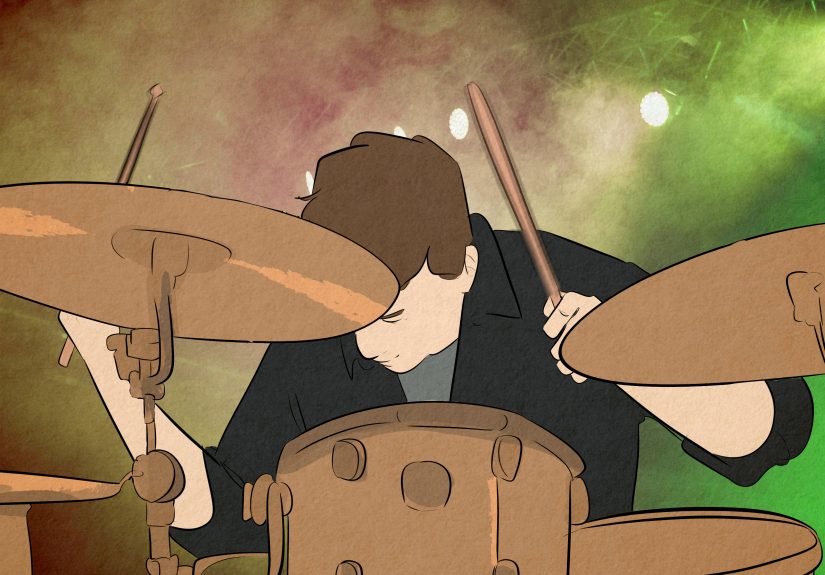
Instead of disappearing in shame, he hijacks the performance, starts “Caravan,” and forces the band to follow him. Fletcher is furious at first, then stunned, then engaged. What follows is the now-famous final stretch: Andrew unleashes a ferocious solo, Fletcher begins conducting with him instead of against him, and the two lock into a wordless exchange that feels like combat, collaboration, and mutual possession all at once. The movie ends on Andrew’s face, Fletcher’s approving look, and a final blast of artistic electricity.
What Does the Whiplash Ending Mean?
The genius of the ending is that it refuses to behave. It does not hand viewers a tidy moral. Instead, it gives us a dazzling final performance that can be read in completely different ways depending on what you think the movie is really about. If you believe Whiplash is about the birth of greatness, the ending plays like a victory lap. If you believe it is about the destruction caused by abusive mentorship, the same scene becomes a horror story with better lighting.
The ending works because both readings make sense. Andrew does achieve something extraordinary in that last scene. But the cost of getting there is hanging over every drum hit like a dark cloud wearing concert black.
The Most Popular Theories About the Ending
1. The Triumphant Theory: Andrew Finally Becomes Great
This is the most exhilarating interpretation, and it is easy to understand why so many viewers embrace it. Andrew is publicly humiliated, then claws his way back onto the stage and takes control. He does not just survive Fletcher’s trap. He flips it. In that reading, the finale is the moment Andrew proves he belongs among the greats.
He is no longer the frightened student begging for approval. He becomes the force in the room. Fletcher, who once controlled every beat, is suddenly reacting to Andrew. That reversal matters. It suggests Andrew has crossed the threshold from talented kid to undeniable artist. The ending becomes a twisted but undeniable breakthrough.
If you favor this theory, Fletcher’s final look is the key. He sees in Andrew exactly what he has been chasing: a musician capable of transcending fear, humiliation, and pressure to produce something explosive. In other words, Fletcher thinks he has finally found his Charlie Parker. From this angle, the movie ends on greatness being born in real time.
2. The Tragic Theory: Andrew Wins the Performance but Loses Himself
This is the darker and, frankly, more emotionally devastating interpretation. Yes, Andrew plays brilliantly. Yes, Fletcher finally respects him. But none of that means the ending is happy.
In this reading, Andrew’s return to the stage is not liberation. It is surrender. He is not escaping Fletcher’s worldview; he is fully absorbed by it. The final solo is thrilling because Andrew has become exactly the kind of obsessed, self-destructive artist Fletcher wanted to create. He does not beat the system. He becomes its proof of concept.
That is what makes the finale so unsettling. The performance is electric, but the emotional context is awful. Andrew has alienated people who cared about him, wrecked parts of his personal life, and tied his self-worth to the approval of a deeply abusive mentor. By the end, the applause matters less than the fact that Andrew seems willing to sacrifice everything for that brief moment of transcendence.
This theory also turns Fletcher’s satisfaction into something disturbing. If Fletcher smiles because his methods “worked,” then the ending becomes a brutal argument about how abuse can create visible results while still destroying the person who delivers them.
3. The “Both Men Win and Lose” Theory
Some viewers land in the messy middle, which is probably where the movie likes to live. Under this interpretation, the ending is both triumphant and tragic because both things are true at once.
Andrew does achieve something real. The performance is not fake, not imagined, not accidental. He reaches a level of confidence and authority he did not possess earlier in the film. But he gets there by moving deeper into the same obsession that has already damaged him.
Fletcher also “wins,” but only in a very poisonous sense. He gets the proof he wanted that extreme pressure can produce brilliance. Yet what he has actually built is not a healthy artist or even a stable human connection. He has created a moment, not a life. A masterpiece of control, maybe. A model for human flourishing, absolutely not.
This theory explains why the final scene feels so exhilarating and so wrong at the same time. The movie is not choosing between ecstasy and doom. It is forcing them to share a drum kit.
4. The Father Theory: The Ending Is Really About What Andrew Has Become
One of the most discussed details in the finale is Andrew’s father watching from the wings. That reaction shot is tiny, but it carries a lot of weight. Depending on how you read his expression, the ending changes shape.
If his look is one of awe, the scene suggests that even his father finally recognizes Andrew’s greatness. He sees his son doing something astonishing, something impossible to dismiss as a phase or a dangerous obsession. In that version, the father becomes our witness. He sees the talent fully bloom.
If his look is closer to fear or heartbreak, the meaning gets much darker. He is watching Andrew drift beyond reach, choosing Fletcher’s approval over everything else. His son may be magnificent in that moment, but he is also disappearing into the very obsession that nearly destroyed him earlier. Greatness arrives, but so does loss.
The movie never settles this for us, and that is exactly why the shot matters. The father represents the ordinary human life Andrew keeps moving away from: care, balance, connection, sanity, dinner without psychological warfare. His face becomes the moral question mark hanging over the finale.
5. The Director’s Dark Theory: This Is Not the Beginning of a Happy Career
Here is where things get even gloomier. Damien Chazelle has spoken about the ending in ways that lean darker than some viewers expect. He has suggested that the finale is meant to tilt tragic rather than purely triumphant, and in later comments he imagined a bleak future for Andrew after the final performance.
That does not mean audiences are “wrong” to feel the rush of the ending. The scene is designed to be thrilling. But Chazelle’s own perspective adds serious weight to the tragic reading. In his view, the final moment is not necessarily the launch of a healthy artistic life. It may be the point of no return.
This helps explain why the ending feels so complicated. The movie gives you the emotional high of a breakthrough, then quietly asks whether you just celebrated something terrible. It is a cinematic magic trick, except the rabbit is trauma.
Did Fletcher Actually Respect Andrew in the End?
Yes, but that does not automatically make the ending uplifting. Fletcher’s respect is real because Andrew does exactly what Fletcher values most: he transforms humiliation into performance, fear into fuel, and control into artistry. Andrew becomes impossible to dismiss.
But Fletcher’s respect is not nurturing. It is transactional, obsessive, and tied to a worldview that treats people as raw material for genius. That is why the final nod between them is so powerful. It is not a warm mentor-student reconciliation. It is closer to two combatants recognizing each other in the middle of the battlefield.
Fletcher approves because Andrew has finally met the standard Fletcher worships. The problem is that the standard itself may be monstrous.
Why the Final Scene Feels So Intense
The ending of Whiplash would not be nearly as famous if it were only smart on a thematic level. It also absolutely rips on a filmmaking level. The editing, sound, rhythm, close-ups, and pacing make the final performance feel like a showdown rather than a concert. Chazelle shoots drumming like a car chase. The cuts hit hard, the sweat matters, the silence matters, and the payoff lands because the movie has trained us to hear danger in every beat.
That technical precision is a big reason the ending creates such heated debates. The form feels triumphant even when the subtext feels grim. Your body reacts before your brain finishes the ethical paperwork. You get goosebumps, then existential dread, then maybe more goosebumps. It is a very efficient system.
So, Is the Ending Happy or Sad?
The most honest answer is: it is a happy ending for ambition and a sad ending for the human being attached to that ambition.
Andrew gets the moment he has wanted all along. He commands the stage. He earns Fletcher’s recognition. He proves his greatness. But the movie also strongly suggests that this kind of victory is inseparable from obsession, isolation, and damage. The ending is satisfying because Andrew reaches the artistic summit. It is upsetting because he may have had to abandon too much of himself to get there.
That tension is exactly why Whiplash endures. Lesser films answer the question. This one turns the question into the ending.
Viewer Experiences: Why the Whiplash Ending Sticks With You
One reason people keep searching for “Whiplash ending explained” is that the finale feels different depending on who you are when you watch it. See it as a teenager, and the ending can feel like rebellion, pure nerve, and the thrill of proving adults wrong. See it as an exhausted adult with a history of bad bosses, manipulative teachers, or impossible standards, and suddenly the same scene looks less like glory and more like a panic attack set to jazz.
For musicians, athletes, writers, and other performance-minded people, the ending can hit especially hard because it dramatizes a very real fear: what if the thing that makes you excellent is also the thing that ruins your life? Lots of viewers recognize that inner bargain. They may never have had a Fletcher throwing chairs, but they know perfectionism. They know the ugly little voice that says rest is weakness and anything less than greatness is failure. Whiplash doesn’t invent that voice. It turns the volume way up and gives it a conductor’s baton.
The first viewing is often a rush. Many people come away from the ending electrified, almost euphoric. Andrew comes back onstage, takes control, and forces the world to watch. It feels bold. It feels cinematic. It feels like he has finally become who he was meant to be. Then the second viewing happens, and the mood can change dramatically. Suddenly you notice everything around the solo: the trap Fletcher set, the father’s expression, the years of humiliation, the way Andrew’s triumph is still tangled up with a need for approval from the worst possible person.
That rewatch effect is a big part of the movie’s reputation. The ending ages with you. It also changes with your life experience. If you have ever chased achievement so hard that joy disappeared, the finale can feel painfully familiar. If you have ever been praised only when you performed at a superhuman level, Fletcher’s approval lands like poison wrapped in applause. The movie understands something uncomfortable: success can feel amazing in the exact moment it damages you.
There is also the simple visceral experience of watching the scene. Even viewers who reject Fletcher’s philosophy often admit the ending is exhilarating. That is not hypocrisy. That is the movie doing its job. It puts you inside Andrew’s adrenaline, his tunnel vision, his need to seize back control. For a few minutes, the film makes you feel why someone would choose the stage over safety, the solo over the exit, the impossible over the sensible. Then it leaves you to deal with the emotional bill afterward.
And that is probably why the finale keeps showing up in conversations, rankings, reaction videos, and late-night debates between movie lovers who should absolutely be asleep by now. The ending does not merely ask what greatness looks like. It asks what greatness feels like from the inside, and whether that feeling is worth the wreckage. Some viewers leave inspired. Some leave horrified. Many leave both. That split reaction is not a flaw. It is the whole point.
Final Verdict
The ending of Whiplash is powerful because it refuses to flatten itself into a simple message. Andrew’s final performance is a breakthrough, a breakdown, and a bargain all at once. He conquers the stage, shocks Fletcher, and delivers the kind of greatness he has been chasing from the beginning. But the movie never lets us forget the emotional cost of that achievement.
So when people ask whether the ending is triumphant or tragic, the best answer is yes. It is triumphant in form, tragic in implication, and unforgettable because it makes those two things happen simultaneously. That is why the scene still lands like a punch. Whiplash ends on ecstasy, dread, and one final question: if this is greatness, what did it take to get there?