Table of Contents >> Show >> Hide
- What “Vintage French Mixing Bowl” Actually Means
- Four Classic Types of Vintage French Mixing Bowls
- Why People Fall Hard for These Bowls
- How to Spot a Good Vintage French Mixing Bowl
- Food Safety: The Not-So-Romantic But Very Important Part
- Where to Buy a Vintage French Mixing Bowl in the U.S.
- Care and Cleaning: Keep the Charm, Skip the Damage
- How to Use One Like You Actually Cook (Not Just Decorate)
- How Much Should You Pay?
- Conclusion: A Bowl That Brings France to Your Countertop
- Field Notes: 5 Vintage French Mixing Bowl Experiences (The Fun, Messy Truth)
A vintage French mixing bowl is one of those kitchen objects that somehow manages to be
practical, beautiful, and mildly judgmental all at once. Practical because it can handle everything from
crepe batter to bread dough. Beautiful because the French have never met a utilitarian object they
couldn’t make charming. Judgmental because the moment you set it on the counter, it silently implies
you should be whisking something by hand while wearing an apron that says “Paris” on it.
But beyond the romance, vintage French bowls are legitimately great tools. The right one is heavy enough
to stay put while you stir, shaped to help you whisk efficiently, and durable enough to outlive your
current obsession with “protein desserts.” Let’s talk about what makes these bowls special, which styles
to look for, how to buy them wisely in the U.S., and how to actually use one without turning it into a
fragile museum piece that only holds lemons.
What “Vintage French Mixing Bowl” Actually Means
“Vintage” generally points to pieces made decades ago (often mid-century or earlier), while “French”
can mean either made in France or strongly associated with classic French kitchenware styles.
Some bowls are unmistakably French because they carry maker’s marks (often “France” stamped on the base).
Others are French in formlike the famous cul-de-poule (a rounded, deep bowl prized by bakers).
The sweet spot is a bowl that’s both: French-made and built for real mixing. That’s where you get the
best mix of function, craftsmanship, and that “found it at a brocante” energyeven if you bought it
online in sweatpants.
Four Classic Types of Vintage French Mixing Bowls
1) The Copper “Cul-de-Poule” (The Baker’s Flex)
If you’ve ever seen a pastry chef whip egg whites in a copper bowl like it’s a sacred ritual, that’s
not just theater (okay, it’s partly theater). Copper can bind with certain egg white proteins, helping
stabilize the foam and making it less likely to collapse or go grainy. In real life, that means
meringues can be a little more forgiving, and you get that glossy, sturdy peak that makes you feel like
you deserve your own tiny baking show.
True vintage copper bowls may be unlined (common for egg whites) or part of broader copper cookware
traditions (often lined for cooking). For mixing, you’ll typically see smooth interiors designed for
whisking, with a rounded bottom that makes circular whisk motions efficient.
2) French Ceramic & Stoneware Bowls (Workhorse With Style)
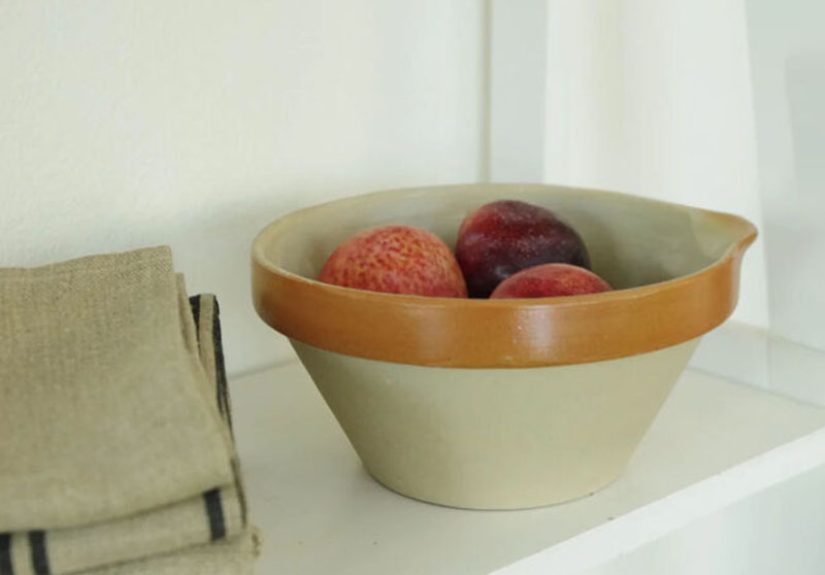
French ceramic mixing bowls often lean into “rustic but refined.” Think thick walls, steady weight,
and a glazed surface that cleans up easily. Some modern French makers still use mineral-rich clay and
high-resistance ceramic techniques, and those design cues echo older pieces: sturdy, stable, and meant
to live on a countertop without fear.
Vintage stoneware can be especially satisfying for doughs because the bowl’s heft keeps it from skating
across the counter while you knead. It’s also great for “mix and rest” recipespancake batter, overnight
bread starter, or cookie dough chilling in the fridgebecause it holds temperature steadily.
3) French Enamelware Bowls (Farmhouse Energy, City Convenience)
Enamelware is typically metal coated with a glassy enamel surface. The appeal: it’s lightweight compared
to ceramic, doesn’t feel fussy, and it looks fantastic with honest wear. Vintage French enamel bowls often
show up with soft pastel tones, wide rims, and sometimes a pouring lipperfect for batter or dressing.
These bowls shine when you want something that feels old-school but still practical. They’re also
excellent “project bowls” for messy tasks like tossing floury dough or mixing meatballs, because the
smooth enamel cleans up fast. The tradeoff: enamel can chip if abused, and once it chips badly, it
deserves a gentler life.
4) Opal Glass & Everyday French Table Bowls (Vintage, Minimal, Tough)
France has a history of durable glass tableware, including opal glassa translucent white glass
with a soft, milky look. Vintage French opal glass bowls are often collected as “everyday beautiful”
pieces: easy to stack, easy to wash, and surprisingly resilient. If you like a clean, minimalist look
that still whispers “mid-century kitchen,” this category is a strong contender.
Why People Fall Hard for These Bowls
The practical reasons are straightforward: weight, shape, durability, and comfort. French bowls tend to
be designed for hands-on cookingwhisking, stirring, kneadingrather than purely decorative display.
The aesthetic reasons are sneakier: the curves are pleasing, the materials age gracefully, and even small
imperfections (tiny glaze crazing, faint utensil marks, mellow patina) make the bowl feel like it has a
backstory.
And then there’s the emotional reason: cooking feels better when your tools feel like they belong to a
real kitchen. A vintage French mixing bowl is the opposite of a flimsy freebie bowl that arrives with a
coupon. It has presence. It has opinions. It has probably seen more baguettes than your entire neighborhood.
How to Spot a Good Vintage French Mixing Bowl
Look for Maker’s Marks (But Don’t Panic If You Don’t See One)
Many French pieces have stamps on the basesometimes a brand name, sometimes just “France,” sometimes a
symbol. If you’re shopping online, ask for a clear photo of the bottom. If you’re shopping in person,
flip it over like you’re inspecting a watermelon. This is normal behavior in the vintage aisle.
Check the Shape for Real Mixing
A bowl meant for mixing usually has a curve that helps ingredients circulate as you whisk. Copper and
stainless “cul-de-poule” bowls are rounded and deep. Ceramic mixing bowls often have a broad base for
stability. If the bowl is shallow and flared like a serving piece, it can still workbut it’s more
“toss a salad” than “whip a soufflé.”
Inspect the Surface
- Ceramic/stoneware: avoid deep cracks; light crazing can be common in older glaze.
- Enamelware: small chips are normal; big chips on the interior can limit food use.
- Copper: look for dents (okay) vs. structural warping (not okay). Interiors should be smooth for whisking.
- Glass: check rims carefully for chips; they hide like they’re playing a game.
Food Safety: The Not-So-Romantic But Very Important Part
Vintage kitchenware can be perfectly usable, but it’s smart to be cautiousespecially with older
ceramics and pottery. Some antique or imported ceramic glazes can contain lead, which may leach into
food under certain conditions. Chips, cracks, or heavily worn glaze can increase risk, and acidic foods
are often the biggest concern.
The practical approach: if you can’t verify food-safe glazing and the bowl looks questionable, use it
for dry ingredients, fruit with peels, decor, or as a “prep bowl” for tasks that don’t involve storing
acidic foods. If you want a bowl for daily batter and dough, consider vintage pieces from known
dinnerware sources, or modern French-made ceramic designed for food usethen keep the truly antique
bowl as your kitchen’s most beautiful side character.
Where to Buy a Vintage French Mixing Bowl in the U.S.
You’ve got three main routes, and each has its own personality:
-
Antique stores & flea markets: best for hands-on inspection. Bring cash, patience,
and the ability to look casually interested while internally screaming “THIS IS THE ONE.” -
Estate sales: surprisingly good for kitchenware, especially if the home has a
long-time cook. The bowls may be mixed in with ordinary stuff, which is how you get lucky. -
Online marketplaces: widest selection, but rely on photos and seller accuracy. Ask
about chips, cracks, and underside markings. If the listing says “vintage French bowl???” with three
question marks, proceed with gentle suspicion.
Helpful search terms include: vintage French mixing bowl, cul de poule bowl,
French enamelware bowl, French stoneware bowl, opal glass French bowl,
and specific makers if you’re hunting (for example, classic French stoneware and ceramic brands, or
copper makers associated with French coppercraft traditions).
Care and Cleaning: Keep the Charm, Skip the Damage
Copper Bowls
For a copper mixing bowl, gentle is the whole philosophy. If it’s a dedicated egg-white bowl, the
interior is usually left unlined; wash with mild soap and warm water, then dry immediately.
Avoid abrasive scrubbers that can scratch. For exterior shine, many people use a gentle copper polish
or classic pantry methods (acid + salt), but you don’t have to keep it mirror-bright unless that’s your
personal brand.
If you’re dealing with tin-lined copper cookware (more common for pans than mixing bowls), never attack
the tin with harsh abrasivestin is softer than you think, and it can be damaged by aggressive scrubbing.
Specialized retinning services exist if you ever inherit a piece that needs restoration.
Ceramic & Stoneware
Modern French ceramic bowls are often dishwasher-friendly and built for temperature changes, but older
pieces deserve a little more respect. Avoid sudden temperature swings (like fridge-to-hot-oven drama),
and don’t soak for days. If you see crazing, be mindful about long storage of wet or acidic mixtures.
For most mixing tasksdry ingredients, doughs, batters used promptlystoneware can be a sturdy daily
companion.
Enamelware
Enamelware does best with mild soap and a soft sponge. The biggest enemy is impact: banging utensils,
stacking without padding, or dropping it like it’s a mic at karaoke. Treat it like a hardworking friend,
not a rental car. Also note: because enamelware is coated metal, it generally doesn’t belong in the
microwave. If you love the look, use it for mixing and serving, then heat elsewhere.
Opal Glass
Opal glass is loved because it looks delicate but behaves like it has excellent boundaries.
Still, treat rims kindly and avoid thermal shock. If you find a set of vintage French opal glass bowls,
you’ve basically unlocked the “effortless breakfast table” aesthetic.
How to Use One Like You Actually Cook (Not Just Decorate)
A vintage French mixing bowl earns its keep quickly. A few easy wins:
- Crepes & pancakes: whisk smooth batter, then pour neatly if the bowl has a lip.
- Vinaigrettes: emulsify oil and vinegar with mustard; a rounded bowl makes it fast.
- Bread dough: mix, rest, and watch it rise; heavier bowls stay steady while you knead.
- Meringue: if you’ve got copper, whip egg whites and feel like a pastry legend.
- Salads: big French bowls often double as serving piecestoss and serve in one move.
How Much Should You Pay?
Prices vary wildly because “vintage” ranges from mass-produced mid-century tableware to artisan copper
and rare regional ceramics. In general, everyday French glass and common enamel bowls can be relatively
affordable, especially in smaller sizes. Larger, pristine enamelware in rare colors climbs quickly.
Copper bowlsespecially substantial onesoften cost more because the material itself is valuable and
the demand is steady among bakers.
The smartest way to think about price: pay for condition (no major cracks, minimal chips),
function (shape you’ll actually use), and joy (you want to reach for it).
If it looks perfect but you’re afraid to touch it, it’s not a mixing bowlit’s an anxiety bowl.
Conclusion: A Bowl That Brings France to Your Countertop
A vintage French mixing bowl is more than a containerit’s a piece of cooking culture.
Whether you choose copper for meringues, stoneware for dough, enamelware for everyday mixing, or opal
glass for minimalist charm, the best bowl is the one that fits your cooking habits and your tolerance
for “special care instructions.”
Find one with good bones, treat it with basic respect, and use it often. The magic isn’t in owning a
French bowlit’s in the quiet upgrade to your daily cooking rhythm. Also, yes, your cookies may taste
the same… but you’ll feel cooler while making them. That counts.
Field Notes: 5 Vintage French Mixing Bowl Experiences (The Fun, Messy Truth)
1) The Flea Market Stare-Down. You will spot a bowl from six tables away. It will be
half-hidden behind a stack of plates and one suspicious clown figurine. Your brain will whisper:
“That’s the one.” Your body will try to walk calmly, as if you are a person who does not care deeply
about mixing bowls. This will fail. You will approach too quickly, pretend you’re looking at postcards,
then pivotsmoothly, casuallytoward the bowl like a spy who only trained for ceramics.
2) The Underside Reveal. Flipping a bowl to check the mark is a tiny adrenaline rush.
Sometimes you find a crisp stamp with “France” and a maker name. Sometimes it’s a faded ghost of ink.
Sometimes it’s nothing at all and you have to decide whether you’re buying a French bowl or merely a
bowl that believes in France. The good news: even without a mark, the shape and craftsmanship can
still be worth itespecially if it feels stable, balanced, and made for real mixing.
3) The “Patina vs. Grime” Moral Dilemma. The bowl comes home and you face the eternal
question: what is charming age, and what is just… old kitchen residue? Patina is the soft wear that
tells a storyslight exterior dullness on copper, gentle utensil traces, mellowed enamel color. Grime
is the sticky mystery that should not be part of your family’s future. The trick is to clean patiently
and gently, stopping before you erase the character. Think of it like restoring a vintage photo:
sharpen it, don’t rewrite it.
4) The First Recipe Test. Most people do a “starter recipe” the first time they use a
special bowl. Something simple and satisfying: crepes, pancakes, biscuits, a quick vinaigrette. This
is where you learn the bowl’s personality. A heavy stoneware bowl won’t budge while you stir. A copper
bowl feels like it was born to meet a whisk. An enamelware bowl feels easygoinglight, functional, ready
for chaos. If the bowl has a pouring lip, you will immediately become the kind of person who says,
“I love a good pour,” and you will mean it.
5) The Unexpected Lifestyle Shift. Here’s the funny part: one good mixing bowl can make
you cook more. Not because it’s magical, but because it removes friction. You stop dreading the awkward
stirring. You stop wrestling a bowl that skates around the counter. You stop thinking, “Ugh, cleanup,”
because the bowl feels nice to wash and nice to put away. Suddenly you’re mixing cookie dough on a
Tuesday. You’re whisking eggs like it’s a hobby. You’re making salad dressing from scratch because you
can. A vintage French mixing bowl doesn’t just sit there looking prettyit quietly upgrades your
kitchen habits, one batter at a time.
And if you ever catch yourself taking a photo of flour in a bowl because “the light is nice,” don’t be
embarrassed. That’s not vanity. That’s the French bowl effect.