Table of Contents >> Show >> Hide
- What Is the VHS Robot Inspired by Hackers?
- Why This Retro Robot Is More Than a Gimmick
- How the Tape-Swapping Robot Works
- The Real History Behind Tape Robots
- Why VHS Still Fascinates Makers
- The Preservation Angle: Saving What Tapes Remember
- What Makes This Build So Cyberpunk?
- Lessons for Builders and Retro-Tech Fans
- Could a VHS Robot Be Useful Today?
- Experience Notes: Living With the Idea of a Tape-Swapping Robot
- Conclusion
Somewhere between a dusty thrift-store electronics shelf and a neon-lit cyberpunk fever dream lives one of the most charming machines a retro-tech fan could imagine: a VHS robot that physically grabs tapes, loads them into a VCR, starts playback, ejects them, and puts them back like a very serious librarian with a fondness for tracking noise.
The project, inspired by the cult 1995 film Hackers, is not just a prop. It is a working tape-swapping robot built around a real mechanical problem: how do you automate a format that was never designed for modern convenience? Today we tap a touchscreen and expect a movie to appear instantly. VHS, by contrast, asks you to stand up, pick a cassette, push it into a machine, wait for motors to clunk, hope the tracking behaves, and then remember to rewind unless you want to disappoint your future self.
That is exactly why this robot is so delightful. It does not hide the awkwardness of analog media. It celebrates it. The whirring, pushing, gripping, and sliding are the whole show. It is a mechanical remix of video history, movie nostalgia, maker culture, and practical archiving wrapped in one wonderfully overbuilt contraption.
What Is the VHS Robot Inspired by Hackers?
The machine was inspired by a scene in Hackers where a tape-loading robot at a TV station becomes part of a playful on-screen battle. In the film, the robot acts like a broadcast jukebox, moving video tapes from shelves into playback equipment so the station can air specific content. The movie version is pure 1990s cyber-style theater: dramatic, shiny, and just believable enough to make hardware nerds pause the scene and say, “Wait, could that actually work?”
Decades later, the answer is: yes, with enough patience, rails, motors, sensors, air-powered actuators, and a willingness to let a VCR become the star of the workshop.
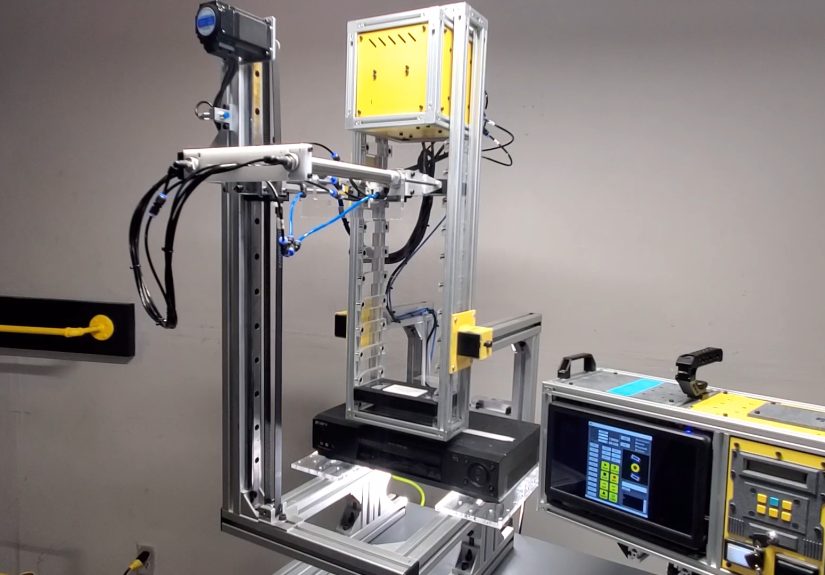
The modern build recreates the essential idea using standard VHS tapes. Instead of relying on imaginary Hollywood technology, it uses a practical vertical gantry, a tape gripper, an extender mechanism, and a pusher system. The robot moves to the correct shelf, grabs a cassette, carries it to the VCR, inserts it, triggers playback, and later retrieves the tape. In spirit, it is a jukebox. Instead of 45 rpm records or CDs, it serves chunky black rectangles full of magnetic memories.
Why This Retro Robot Is More Than a Gimmick
At first glance, a VHS-swapping robot seems like a glorious answer to a question nobody asked. After all, most people solved the “switching tapes” problem by abandoning tapes entirely. But retro technology has a way of making old problems interesting again.
For collectors, archivists, streamers, and preservation hobbyists, large tape libraries can become difficult to manage manually. A collection of ten tapes is cute. A collection of hundreds is furniture. A collection of thousands is a lifestyle choice that probably requires labels, shelving, humidity awareness, and a strong back. Automation can help turn that chaos into a repeatable workflow.
The robot is especially meaningful because VHS is not simply obsolete entertainment plastic. It is a record of home movies, local television, school plays, public access shows, regional commercials, family events, obscure documentaries, and media that may never have been released on DVD, Blu-ray, or streaming. Some of the most culturally valuable material in the world does not look valuable at first. It may be sitting in a box labeled “Channel 8 1994” or “Grandma Birthday Tape Maybe?”
That makes a VHS robot both funny and oddly important. It looks like a retro-futuristic toy, but it points toward a serious truth: analog media needs attention before the tapes, the playback machines, or the knowledge required to use them disappear.
How the Tape-Swapping Robot Works
A Mechanical Arm With a Very Specific Job
The design is refreshingly physical. A tape has to be located, grasped, moved, inserted, removed, and returned. Those steps may sound simple until you remember that VHS cassettes are not precision data cartridges. They vary in age, weight, label thickness, shell condition, and general willingness to cooperate. Some glide smoothly. Others feel like they spent a decade in a garage arguing with moisture.
The robot solves this with a combination of linear motion and gripping hardware. A vertical rail moves the carriage up and down so it can reach different shelf positions. A grabber holds the VHS cassette. An extender moves the cassette forward and backward. A pusher helps seat the tape into the VCR. The machine has to line up carefully because VCR loading slots were designed for human hands, not robotic enthusiasm.
Motors, Pneumatics, and a Cyberdeck
Part of the appeal is that the robot does not look like a silent consumer appliance. It looks like machinery. Stepper motors handle controlled movement, while pneumatic parts give the build that industrial “psshh-click” personality. A custom cyberdeck manages the process, making the whole system feel like something smuggled out of a 1990s TV station after the night shift.
The control system uses modern maker hardware, including an ESP32-based setup and motion-control software. That blend of old and new is what makes the project sing. The VCR is analog. The tapes are analog. The inspiration is cinematic nostalgia. But the control logic belongs to the modern DIY robotics world.
In other words, the robot is not trapped in the past. It is a bridge between eras. One end has magnetic tape and plastic clamshell cases. The other has microcontrollers, firmware, and maker-grade automation.
The Real History Behind Tape Robots
The Hackers scene may feel exaggerated, but tape automation was very real. Long before cloud dashboards and streaming servers, broadcasters and large organizations used robotic tape systems to manage repeated playback, recording, and archiving. TV stations needed reliable ways to cue programs, commercials, promos, and recorded feeds. Human operators could do it, but humans get tired, make mistakes, spill coffee, and occasionally load the wrong tape at the exact worst moment.
Broadcast cart machines and cassette-loading systems helped reduce that manual burden. Some systems could hold many tapes and move them between storage bins and video tape recorders. Sony’s broadcast automation history includes cassette-based systems for commercials and program playout, and professional systems such as Flexicart supported multiple video formats including Betacam SP, S-VHS, DVCAM, and D-2.
The same concept appears in enterprise data storage. Automated tape libraries are still used in data centers because tape remains useful for massive archives, backups, offline protection, and long-term storage. Instead of VHS cassettes, these systems move data cartridges. Instead of airing a TV show, they retrieve files, backups, or preservation copies. The mechanical idea is similar: a robot stores, retrieves, loads, and unloads physical media so people do not have to do it all by hand.
Why VHS Still Fascinates Makers
VHS is not the sharpest, cleanest, or most convenient video format. That is part of its strange magic. It has texture. It has flaws. It has timing noise, soft resolution, warped colors, worn labels, and the unforgettable anxiety of hearing a VCR make a noise that sounds expensive.
For makers, VHS is attractive because it is mechanical, understandable, and emotionally loaded. You can see the cassette. You can open the shell. You can watch the VCR pull tape around the drum. Unlike invisible cloud infrastructure, VHS has moving parts you can point at. It turns media playback into a physical event.
The VHS robot leans into that experience. It does not merely play a tape; it performs the ritual. The cassette is selected, lifted, inserted, and returned. That makes it feel less like a media player and more like a small stage production starring obsolete hardware.
The Preservation Angle: Saving What Tapes Remember
Nostalgia is fun, but preservation is the serious backbone of this story. Magnetic videotape does not last forever. Tapes can suffer from binder breakdown, sticky-shed problems, mold, warping, dropouts, and damage caused by poor storage or failing playback machines. Even when the tape itself survives, the equipment needed to play it may become rare, expensive, or difficult to repair.
That means the real race is not only against time. It is against parts availability, knowledge loss, and the slow disappearance of working VCRs. A shelf full of tapes is not an archive unless the content can be accessed. A box of recordings with no functioning playback path is closer to a mystery novel with the pages glued shut.
A robot can help with repeatable digitization workflows. Imagine loading a small batch of VHS tapes, having the robot feed them one by one into a VCR, and capturing each output to a digital file. The current build is not a full industrial digitization machine, but the idea scales conceptually. Add better sensing, logging, tape identification, capture hardware, error detection, and metadata entry, and the funny tape robot starts looking like a serious preservation assistant.
What Makes This Build So Cyberpunk?
Cyberpunk is often described through neon signs, rain-slick streets, megacorporations, and people wearing too many buckles. But at its core, cyberpunk is also about repurposing technology. It is about old systems hacked into new meanings, practical machines made personal, and people building tools from whatever hardware they can reach.
This VHS robot fits that spirit perfectly. It is not sleek in the Apple Store sense. It is exposed, mechanical, and proud of its weirdness. It combines a dead consumer format with modern control electronics. It uses a handmade interface to command a machine that serves analog video like a robotic butler with a Blockbuster membership card.
The result feels more authentic than a polished retro gadget. It has the “I built this because it should exist” energy that defines the best maker projects. Not every machine needs to be efficient. Some machines need to make people grin, teach a lesson, and remind us that technology can be theatrical.
Lessons for Builders and Retro-Tech Fans
Design for the Media, Not the Fantasy
A VHS cassette is not just a rectangular object. It has doors, reels, labels, friction points, and age-related quirks. A successful robot must respect the physical media. That means gentle gripping, consistent alignment, and enough tolerance for real-world variation.
Assume the VCR Is Part of the Robot
The VCR is not a passive box. It has its own timing, loading mechanism, sensors, and failure modes. If the VCR refuses a tape, hesitates, or ejects unexpectedly, the robot must either handle that gracefully or stop before turning a beloved cassette into confetti.
Automation Needs Feedback
The dream version of a VHS robot would know which tape is loaded, whether playback started, whether the signal is stable, when the tape ends, whether capture succeeded, and where the cassette should return. Sensors, logging, and feedback would make the system more reliable than a simple timed sequence.
Preservation Requires More Than Playback
Digitizing video is not just pressing record on a capture device. Good workflows need clean equipment, stable storage, correct labeling, file organization, quality checks, and backup strategy. The robot can swap tapes, but the archive still needs a human brain behind it.
Could a VHS Robot Be Useful Today?
Yes, but with realistic expectations. Most people do not need a home tape robot. If you only have five family tapes, a careful manual digitization setup is simpler. But for collectors, streamers, museums, local history groups, and analog media enthusiasts, automation can become useful once the collection is large enough.
The robot’s biggest value may be workflow consistency. It can repeat the same motion every time. It can reduce the need for a person to hover around the VCR. It can support long capture sessions. And, perhaps most importantly, it can make preservation visible. People pay attention when a robot is moving tapes around. That attention can lead to more interest in saving old media before it becomes unreadable.
In that sense, the VHS robot is a public relations win for analog preservation. It makes the topic fun. It turns “please digitize your tapes responsibly” into “look at this glorious machine feeding a VCR like it is 1995 and the future arrived wearing fingerless gloves.”
Experience Notes: Living With the Idea of a Tape-Swapping Robot
The most relatable part of a VHS robot is not the electronics. It is the memory of handling tapes. Anyone who grew up around VCRs remembers the tiny rituals: blowing dust off a cassette even though that probably did nothing, checking whether the record tab was broken, writing titles on labels with a marker, and feeling suspicious when a tape was lighter or heavier than expected.
A tape-swapping robot brings those memories back in a strangely amplified way. It treats each cassette as an object worthy of ceremony. The robot does not scroll through a menu. It reaches. It chooses. It commits. There is something satisfying about watching a machine do a task slowly and visibly, especially in a world where most technology hides its work behind a loading spinner.
If you have ever digitized old VHS tapes by hand, the appeal becomes even clearer. Manual digitization sounds simple until you are three hours deep, surrounded by cables, wondering whether the tape labeled “Vacation” is a beach trip, a school recital, or six episodes of a cooking show recorded over something important. You press play, adjust tracking, monitor the capture, stop the recording, rename the file, eject the cassette, insert the next one, and repeat. By tape number twelve, even the most dedicated archivist starts negotiating with the universe.
A robot does not remove every problem, but it changes the rhythm. Instead of babysitting each tape swap, the operator can focus on capture quality, file naming, and preservation decisions. In a more advanced setup, the robot could become part of a larger station: barcode scanning, automatic capture start, signal monitoring, and database logging. That turns a nostalgic machine into a practical assistant.
There is also a creative experience here. A VHS robot is perfect for streaming channels, retro events, museums, and educational demonstrations. People who might not care about magnetic media suddenly care when they see a cassette traveling on rails. Kids who have never used a VCR can understand the format immediately because the machine makes the process physical. Adults who remember VHS get the comedy and the charm instantly.
The best part is that the robot does not apologize for being unnecessary by modern standards. It is unnecessary in the same way a mechanical clock is unnecessary when your phone knows the time. It is unnecessary in the same way a record player is unnecessary when streaming exists. Yet those machines survive because they make technology feel tangible. They turn invisible convenience back into experience.
That is why “VHS Robot Swaps Tapes, As Seen In Hackers” works as more than a headline. It captures a whole mood: retro media refusing to vanish quietly, movie nostalgia becoming real hardware, and a maker deciding that a fictional tape bot deserved a second life. The result is clunky, clever, funny, and unexpectedly meaningful. In other words, exactly the kind of machine the future forgot to build properly the first time.
Conclusion
The VHS tape-swapping robot is a beautiful contradiction. It is impractical and practical, nostalgic and modern, silly and serious. Inspired by a memorable moment in Hackers, it turns a cult-movie idea into a functioning machine with real applications for retro streaming and media preservation.
More importantly, it reminds us that old technology is not dead just because it stopped being fashionable. VHS tapes still hold memories, broadcasts, experiments, and forgotten corners of culture. A robot that swaps them may look like cyberpunk comedy, but underneath the clunks and pneumatic hisses is a useful message: if we want analog history to survive, we need to play it, capture it, label it, and care for it before the machines go quiet.
Note: This HTML article is written as original web-publishable content based on real technical, historical, and preservation information, with no copied source passages or unnecessary reference placeholders.