Table of Contents >> Show >> Hide
- Why Lasers, Why Destroyers, Why Now?
- The Lasers Showing Up on U.S. Navy Destroyers
- How You Put a Laser on a Destroyer Without Turning the Ship Into a Toaster
- What These Lasers Can Do Well (And Where They Struggle)
- So What’s the Navy’s Big Picture Plan?
- Budget, Testing, and the Unsexy Work of Making Lasers Operational
- What This Means for the Future Fight at Sea
- Conclusion: Not Science FictionJust the Navy Being Practical
- Fleet Experiences: What It’s Like When a Laser Joins the Crew (500+ Words)
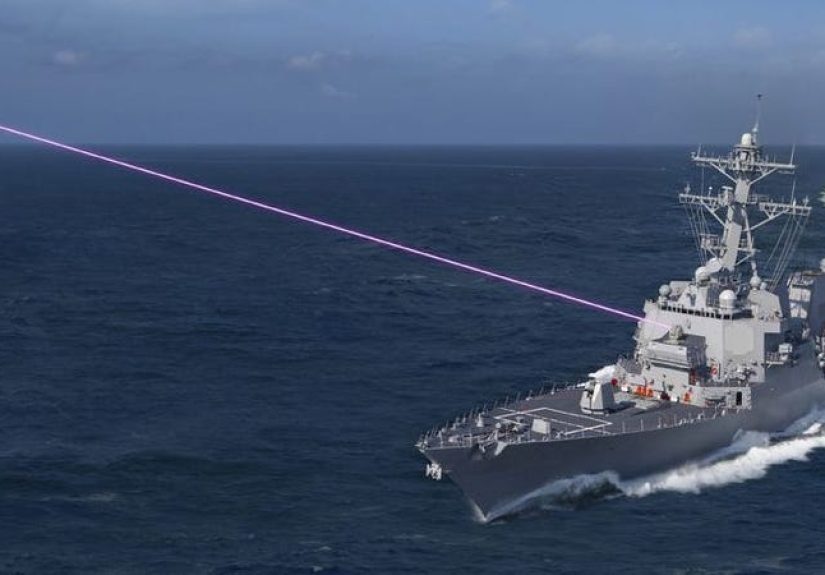
If you grew up thinking “laser battles” were reserved for space operas and arcade cabinets, the U.S. Navy would like to politely (and very brightly)
update your assumptions. Yes, real lasers. Yes, on real warships. And yes, on the U.S. Navy’s workhorse surface combatant: the guided-missile destroyer.
The idea sounds like science fiction until you realize it’s actually a very practical, very Navy problem: modern threats are getting cheaper, smaller,
and more numerousespecially drones and small, fast craft. Meanwhile, the traditional ways to knock them down (missiles, guns, electronic warfare)
are effective but can be expensive, finite, or not ideal in every situation. Enter directed energy: a tool that trades “more explosives” for
“more electricity,” and turns a ship’s power plant into a defensive option.
Why Lasers, Why Destroyers, Why Now?
Destroyers sit at the center of how the Navy protects carriers, amphibious ships, and merchant traffic. They’re the ships that show up early,
stay late, and carry a layered set of defensesradars, missiles, guns, decoys, and electronic warfare. In that layered approach, lasers aren’t meant
to replace missiles or guns; they’re meant to add another rung on the ladder, especially against “annoying but dangerous” targets:
small drones, swarming unmanned aircraft systems, and quick-moving surface threats that don’t deserve a million-dollar missile every time they pop up.
In plain terms: if the threat is cheap, frequent, and shows up at awkward times, the Navy wants a response that’s quick, repeatable, and doesn’t
empty the ship’s magazine. Lasers offer the promise of a low cost-per-engagement (electricity instead of ordnance), fast reaction time (light is
famously speedy), and deep “magazine” depth as long as the ship can generate power and manage heat.
The Lasers Showing Up on U.S. Navy Destroyers
When people hear “laser weapon,” they usually imagine a dramatic beam slicing through everything like a movie montage. The Navy’s reality is more
measuredand smarter. On destroyers today, the Navy’s laser story is best understood as two complementary approaches:
ODIN (a sensor-disrupting dazzler) and HELIOS (a higher-energy laser integrated into ship combat systems).
ODIN: The “Don’t Look at Me” Laser (Soft-Kill, Sensor Defeat)
ODIN stands for Optical Dazzling Interdictor, Navy. The key word is “dazzling.” ODIN is designed to disrupt or degrade optical
sensorsthink cameras and seekersrather than physically destroying a target in the classic “hard-kill” sense.
Why is that useful? Because many drones rely on electro-optical or infrared sensors to navigate, spot targets, or guide attacks. If you can
confuse the sensor, you can reduce the threat without always needing to shoot it down with a missile. It’s the maritime equivalent of shining an
aggressively bright flashlight into an incoming drone’s “eyes,” except the flashlight is built for serious tactical work and the ship is wearing
it like a new accessory.
ODIN has been installed on Arleigh Burke-class destroyers, with the first publicly discussed installation on
USS Dewey (DDG-105). The Navy (through NAVSEA) has described ODIN as a laser system intended to counter unmanned aerial systems,
and it’s been associated with rapid installation and fleet rollout efforts. In other words, ODIN is the Navy’s “get it on ships now” move:
a practical, fieldable system that fits the near-term need for counter-UAS defense.
HELIOS: The “Bring the Heat” Laser (Higher-Energy, Combat-System Integrated)
HELIOSshort for High Energy Laser with Integrated Optical Dazzler and Surveillanceis a bigger swing. It combines a high-energy
laser with an optical dazzler and adds a surveillance/targeting role. The emphasis is on integration: HELIOS is designed to plug into the
ship’s combat system (including the Aegis ecosystem on destroyers), so it can be more than a standalone gadget bolted to the deck.
HELIOS is associated with a roughly 60-kilowatt-class laser, with discussion of growth potential in public reporting and government
references. In early 2025 reporting tied to Department of Defense testing documentation, the Navy disclosed a successful at-sea demonstration in
fiscal year 2024 in which USS Preble (DDG-88) used HELIOS against an aerial target dronean important milestone because it moves
the conversation from “promising technology” to “tested from a fleet warship.”
It’s also a helpful reality check: the Navy isn’t pretending lasers are magic. HELIOS is being evaluated as one piece of a layered defense,
ideally handling certain targets so that missiles can be conserved for threats that truly require them.
How You Put a Laser on a Destroyer Without Turning the Ship Into a Toaster
The hardest part of shipboard lasers isn’t making lightlasers are well understood. The hard part is making light do precision work from a moving,
vibrating platform in salty air, while also dealing with two constant enemies: power and heat.
Power: Your “Ammo” Is Electricity
A destroyer can generate substantial electrical power, but it’s already feeding radars, sensors, communications, combat systems, and hotel loads
(yes, sailors also like lights and air conditioning). A laser weapon draws power in a way that can spike demand. That means the ship needs the
right electrical architecture, power conditioning, and controls so the laser can operate without stepping on other critical systems.
Cooling: Every Laser Is Also a Heat Management Project
Lasers are not 100% efficient. Even advanced systems waste energy as heat, and on a ship you can’t simply “open a window.” You need cooling loops,
heat exchangers, and a thermal plan that won’t degrade performance during long engagements. Think of it as the Navy’s version of high-performance
gaming: the moment you add power, you need better coolingexcept here the “graphics card” is a weapon.
Beam Control: Hitting the Right Pixel From a Rolling Ship
A laser weapon isn’t like firing a bullet. It’s line-of-sight, and it needs dwell time on a target to achieve an effect (dazzle, disable, or damage).
That requires stable tracking, atmospheric compensation (because air over the ocean is full of humidity, haze, and turbulence), and a system that can
keep the beam on target while the ship moves. This is a big reason the Navy talks about HELIOS not just as a “laser,” but as an integrated system.
What These Lasers Can Do Well (And Where They Struggle)
The most useful way to think about Navy lasers is as a specialist toolexcellent for some jobs, limited for others.
Here’s the honest scorecard.
Where Lasers Shine
-
Counter-drone defense: Small unmanned aircraft are a sweet spot. They can be hard to hit with guns at range and expensive to engage
with missiles, especially if the threat is persistent. -
Low cost per engagement: The “ammo” is power. Even factoring in maintenance, cooling, and wear, the cost logic is attractive when
the alternative is repeatedly firing expensive interceptors. -
Speed-of-light response: No ballistic flight time, no lead calculations like traditional gunnery. The system still has to track
and stabilize, but the engagement happens quickly once conditions are right. -
Scalable effects: Especially with dazzlers, you can apply a non-destructive effect (sensor disruption) that may be appropriate in
certain rules-of-engagement scenarios.
Where Lasers Get Humbled
-
Weather and atmosphere: Fog, heavy humidity, spray, haze, and even certain lighting conditions can reduce effectiveness. The ocean
is not a clean laboratory. - Line-of-sight limits: A laser can’t arc over the horizon like a missile. It’s direct path, which matters in cluttered environments.
-
Dwell time and target materials: Some targets take longer to affect. A fast-moving, tough, or well-protected target may not be an
ideal laser engagement. -
Integration and sustainment: The technology has to work consistently at sea, be maintainable by sailors, and fit into the ship’s
combat system and training pipeline. That’s a bigger challenge than a one-off demo.
So What’s the Navy’s Big Picture Plan?
Public Navy and Congressional reporting paints a clear trajectory: start with near-term systems that can counter drones and small threats, then
scale toward higher-power lasers capable of handling more stressing targets. That’s why the Navy’s portfolio includes efforts described in government
reporting as technology maturation programs and higher-power concepts intended to push beyond the 60-kilowatt class.
In practice, that means:
ODIN helps with sensor defeat and counter-UAS today;
HELIOS tests combat-system integration and higher-energy engagements from a destroyer;
and future efforts aim at more demanding targets and longer engagement envelopeswhile still acknowledging the physics and environmental realities
that make lasers challenging.
Lasers as Part of Layered Defense (Not a Silver Bullet)
On a destroyer, the defensive stack includes long-range missiles, shorter-range missiles, close-in guns, decoys, jamming, and now directed energy.
Lasers add a “middle option” that can be especially useful for drones and small craftthreats that can be dangerous in volume.
The Navy’s smart play is to avoid using one expensive tool for every job. If a laser can handle the target, keep the missiles for the targets that
only missiles can solve.
Budget, Testing, and the Unsexy Work of Making Lasers Operational
The Navy’s directed-energy story is full of exciting photos, but the real turning point is whether these systems become routine fleet tools.
That depends on consistent testing and evaluation, and on solving the “maintenance and reliability” reality that every new system faces.
Government reporting and oversight documents have repeatedly emphasized that directed-energy systems must prove they can handle operational conditions,
not just controlled demonstrations. That’s why the disclosed HELIOS test activity tied to fiscal year 2024 matters: it signals steady movement from
prototype experimentation to operationally relevant evaluation.
What This Means for the Future Fight at Sea
Putting lasers on destroyers is less about “pew-pew future weapons” and more about logistics and endurance.
If adversaries can throw cheap drones and unmanned systems at ships, defenders need options that don’t run out quickly or cost a fortune per shot.
Lasers offer a promising path to sustain defense across long operationsespecially when paired with traditional interceptors and electronic warfare.
The most realistic near-term outcome: lasers become a normal part of destroyer self-defense against drones and certain small threats, reducing the
burden on missiles and guns. The more ambitious outcome: higher-power lasers eventually contribute to defeating more complex threatsif the Navy can
solve power, cooling, beam control, and doctrine at scale.
Conclusion: Not Science FictionJust the Navy Being Practical
The U.S. Navy is putting lasers on destroyers because the math of modern threats is changing. Drones are cheap. Salvos are getting bigger. And the
ocean doesn’t care how cool your missile inventory looks on a spreadsheet when you need to stay on station for weeks.
ODIN shows the Navy’s appetite for fast fielding and immediate counter-drone utility. HELIOS shows the Navy’s intent to integrate higher-energy
directed weapons into the heart of the destroyer’s combat system and build a future where “defense” isn’t limited to whatever fits in a missile cell.
It’s not Star Warsat least not yetbut it is a very real shift toward electric weapons becoming part of surface warfare’s everyday toolkit.
Fleet Experiences: What It’s Like When a Laser Joins the Crew (500+ Words)
Official reports and headlines tend to focus on the weapon: the turret, the beam, the dramatic photo that looks like a neon pointer aimed at the sky.
But the most interesting “laser story” might be what happens in the quieter momentsduring installation, training, watchstanding, and the day-to-day
rhythm of keeping a new capability alive on a ship that already runs like a floating city.
The first big experience is usually timing. New systems like ODIN have been installed during maintenance periods such as dry-docking
availabilities, when the ship is already torn open in controlled ways. That matters because sailors have to live through the disruption: spaces
shifting, access routes changing, technicians everywhere, and the constant balancing act of “get the ship ready to deploy” while also “add this new,
complicated thing.” To the crew, the laser doesn’t show up as a headline. It shows up as a schedule, a work package, and a wave of training briefs.
Then comes the learning curve. A laser system introduces procedures that feel familiar and unfamiliar at the same time. Familiar
because it’s another weapon that must be operated safely, integrated into the ship’s tactical picture, and maintained with discipline. Unfamiliar
because the safety considerations can look different: controlling access to certain areas during testing, managing eye-safe zones, and coordinating
with the broader watch team so the laser is used appropriately alongside radars, electronic warfare gear, and traditional weapons.
On watch, the “laser experience” often becomes a story about options. Crews are used to thinking in layers: what’s the threat,
what’s the range, what’s the best effect, what’s the rules-of-engagement posture, and what else is happening in the environment? A destroyer team
might prefer not to spend a missile on a small droneespecially if it’s one of manyor if the drone’s behavior suggests it can be disrupted rather
than destroyed. In those moments, a dazzler-like capability can feel like a relief: another tool that can fit the scenario without burning through
finite interceptors.
There’s also a morale component that’s hard to measure but easy to imagine. Sailors are professionals, not sci-fi fans on a field trip, but they’re
still human. Having a directed-energy weapon aboard changes how people talk about the ship’s capability. You’ll hear less “we have a cool laser”
and more “we have another way to handle drones.” That shiftfrom novelty to practicalityis the sign a system is becoming operational.
Once the crew starts treating it like a normal tool (with checklists, maintenance routines, and training standards), the laser stops being a
headline and starts being a habit.
Finally, there’s the ongoing experience of real-world conditions. Sailors quickly learn that the ocean is a harsh test range.
Salt haze, spray, heat, humidity, and constant motion can challenge any advanced sensor or weapon. A system that performs beautifully on a clean day
has to prove itself on the messy days too. That’s why deployments and repeated evaluations matter so much: the fleet’s “experience” is the process of
turning a promising technology into something the ship can rely on at 0200, when the weather is ugly and the contacts won’t stop multiplying.
In the end, the most realistic “laser story” from the deckplates is not a single cinematic shot. It’s the steady accumulation of competence:
technicians keeping the system healthy, watchstanders learning where it fits in the tactical decision tree, and leadership building confidence that
the ship can defend itself with more than just whatever is loaded in the missile cells. That’s how a laser becomes a weaponby becoming routine.