Table of Contents >> Show >> Hide
- Quick Table of Contents
- 1) Piltdown Man: The “Missing Link” That Was Missing… Honesty
- 2) The Calaveras Skull: A Gold-Rush Prank That Wouldn’t Die
- 3) Crystal Skulls: Quartz, Quackery, and Marketing Magic
- 4) The Starchild Skull: When “Alien Hybrid” Meets Medical Reality
- 5) The Atacama “Alien”: A Tiny Skeleton and a Very Human Tragedy
- 6) “Alien” Elongated Skulls: Real Humans, Real Culture, Fake Conclusions
- 7) The Horned Giants of Pennsylvania: Antlers + Rumors = Headlines
- 8) Giant Skull Photos: Photoshop, Clickbait, and the Eternal Nephilim
- 9) Boskop “Super-Brains”: A Big-Headed Myth That Outran the Evidence
- 10) The Sealand “Alien Skull”: A Hoax That Unintentionally Inspired More
- Why Skull Hoaxes Keep Working
- How to Spot a Skull Hoax Before It Spots You
- Extra: of “Skull Hoax” Experiences (So You Don’t Have to Learn the Hard Way)
- Conclusion
Humans love a good skull story. A skull feels like evidencehard, literal, jaw-dropping proof that something extraordinary happened:
an ancient “missing link,” an alien visitor, a race of giants, or a lost civilization that definitely had better dental insurance than we do.
And because skulls sit at the intersection of science, myth, religion, and pop culture, they’re the perfect stage props for deception.
This article walks through ten of the most famous (and infamous) skull hoaxessome pulled off with sly craftsmanship, some powered by wishful thinking,
and some that spread because the internet can’t resist a spooky eye socket. We’ll keep it fun, but we’ll also keep it real: what the claim was,
why people believed it, how it got debunked, and what we can learn so we don’t get bonked on the head by the next too-good-to-be-true cranium.
Quick Table of Contents
- Piltdown Man: The “Missing Link” That Was Missing… Honesty
- The Calaveras Skull: A Gold-Rush Prank That Wouldn’t Die
- Crystal Skulls: Quartz, Quackery, and Marketing Magic
- The Starchild Skull: When “Alien Hybrid” Meets Medical Reality
- The Atacama “Alien”: A Tiny Skeleton and a Very Human Tragedy
- “Alien” Elongated Skulls: Real Humans, Real Culture, Fake Conclusions
- The Horned Giants of Pennsylvania: Antlers + Rumors = Headlines
- Giant Skull Photos: Photoshop, Clickbait, and the Eternal Nephilim
- Boskop “Super-Brains”: A Big-Headed Myth That Outran the Evidence
- The Sealand “Alien Skull”: A Hoax That Unintentionally Inspired More
1) Piltdown Man: The “Missing Link” That Was Missing… Honesty
The claim: In the early 1900s, “Piltdown Man” was presented as a revolutionary human ancestorpart ape, part humansuggesting
a big brain evolved early. This wasn’t just a fossil find; it was an evolutionary mic drop.
Why it fooled people: The pieces looked plausible if you already wanted them to be plausible. And plenty of people did.
At the time, there was major competition to find the “first” or “oldest” human ancestor, and a fossil that seemed to confirm
popular assumptions had a head start in the believability marathon.
How it was busted: As science improved, Piltdown got weird. Tests eventually showed mismatched origins: the skull fragments were human,
while the jaw came from an orangutan. Even more damning, the teeth had been filed down to look human, and the bones had been stained to appear older.
In other words: someone assembled a fossil smoothie and hoped nobody would taste the pulp.
The lesson: If a discovery perfectly fits the story people want, that’s not a bonusit’s a warning label. Confirmation bias can be
the most powerful adhesive in archaeology.
2) The Calaveras Skull: A Gold-Rush Prank That Wouldn’t Die
The claim: In 1866, a human skull supposedly turned up deep in a mine in California, beneath ancient layers associated with volcanic deposits.
That would’ve implied humans were in North America absurdly earlymaking it one of the most important finds on the continent.
Why it fooled people: The skull landed in a historical moment when big discoveries were being announced (and argued over) in public,
and the “frontier” had a flair for spectacle. Once a respected figure vouched for it, the skull gained momentum like a boulder rolling downhill
hard to stop, even when everyone starts hearing suspicious rattling.
How it was busted: Investigators pointed out the obvious-but-devastating detail: the skull looked like it belonged to a relatively recent
Native American, not an ancient “Pliocene” human. Over time, accounts emerged that it had been planted as a practical joke. Later testing supported a
relatively recent age. Still, the story kept getting recycled by people who needed it to be true for one worldview or another.
The lesson: A hoax doesn’t have to be sophisticated to be effective. It just has to be introduced at the right moment, to the right audience,
with the right confidence.
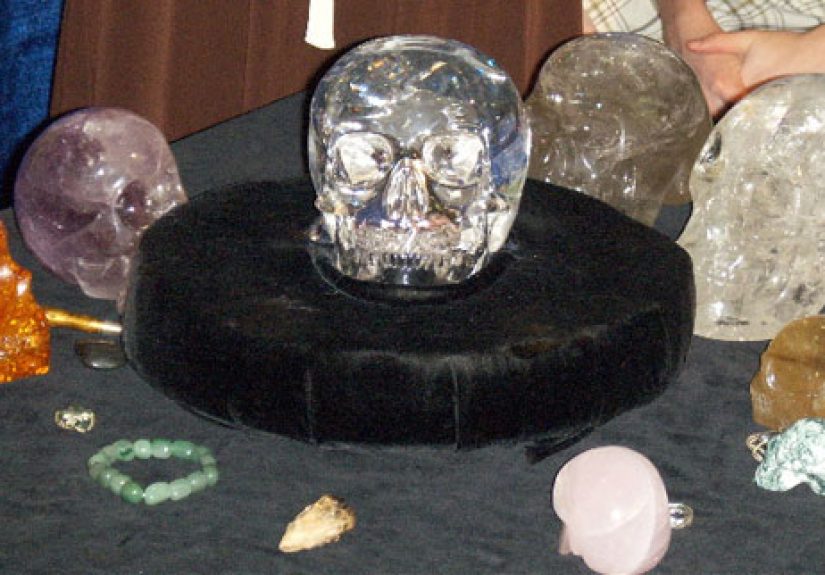
3) Crystal Skulls: Quartz, Quackery, and Marketing Magic
The claim: Crystal skullscarved from clear quartzwere touted as ancient Mesoamerican artifacts, sometimes credited to Aztecs or Maya,
and occasionally rumored to have mystical powers (because nothing says “archaeology” like supernatural Wi-Fi).
Why it fooled people: They’re gorgeous. Museums displayed them. Collectors wanted them. And pop culture poured gasoline on the story.
When an object is visually stunning, people tend to assume it must also be historically importantlike an ancient Instagram post you can hold.
How it was busted: Modern analysis found signs inconsistent with pre-Columbian carving methods. Research has pointed to more recent production,
and some evidence suggests modern tooling or polishing techniques. Once you start looking at tool marks, manufacturing style, and provenance gaps,
the “ancient mystery” begins to look a lot like 19th-century craftsmanship sold with a spicy backstory.
The lesson: Provenance matters. If the origin story is foggy and the object is conveniently “too perfect,” you’re not looking at an enigma.
You’re looking at a sales pitch.
4) The Starchild Skull: When “Alien Hybrid” Meets Medical Reality
The claim: The so-called “Starchild” skull was promoted as evidence of an alien-human hybridan extraordinary cranium with unusual shape
and large eye sockets, wrapped in a tale of secret discovery and suppressed truth.
Why it fooled people: The skull does look unusual, and “unusual” is catnip to anyone who likes mysteries. Add a dramatic provenance story,
a few confident assertions, and an audience already primed by UFO culture, and you get a legend that can outpace lab work.
How it was busted: Skeptical analyses pointed to a fully terrestrial explanation: a human child with congenital abnormalities such as hydrocephalus,
which can cause skull bones to expand and deform. Reports of DNA testing have supported a human origin. The “alien” interpretation wasn’t the simplest;
it was just the most cinematic.
The lesson: “Weird” isn’t a category of evidence. Before you leap to extraterrestrials, check medicine, anatomy, and the very human
history of misinterpreting bodies.
5) The Atacama “Alien”: A Tiny Skeleton and a Very Human Tragedy
The claim: A tiny, mummified skeleton found in Chilejust inches long, with an elongated skull and striking featureswas hyped as possible
alien remains. It even got a nickname that sounded like it should have its own action figure.
Why it fooled people: The body is visually shocking. When something looks like it broke the rules of biology, people jump to the most dramatic
explanation. In the internet age, the “alien” label spreads faster than the careful science ever will.
How it was busted: Genetic research identified the remains as human, with mutations linked to developmental abnormalities. Scientific teams
emphasized that the strange features could be explained through genetics and bone development, not extraterrestrial DNA.
The lesson: Behind “alien” headlines are often real humanssometimes childrendeserving dignity, not spectacle. Curiosity is fine; exploitation isn’t.
6) “Alien” Elongated Skulls: Real Humans, Real Culture, Fake Conclusions
The claim: Elongated skullsespecially those associated with places like Paracas in Peruget presented online as proof of aliens, hybrids,
or non-human ancient races. You’ve seen the captions: “Not human!” “Forbidden archaeology!” “Scientists are baffled!” (Scientists: not baffled.)
Why it fooled people: Elongated skulls look startling to modern eyes. And because the practice isn’t common in contemporary U.S. culture,
it’s easy for misinformation to wedge itself into that gap in familiarity.
How it’s debunked: Artificial cranial deformation is a well-documented cultural practice found across many societies and time periods.
In infancy and early childhood, the skull is malleable; binding or shaping can produce elongated forms. The skulls are humanwhat’s “alien” is the storytelling.
The lesson: Sometimes the real story is more interesting than the hoax. These skulls can teach us about identity, status, beauty norms,
and cultural belongingwithout importing space visitors into the conversation.
7) The Horned Giants of Pennsylvania: Antlers + Rumors = Headlines
The claim: Early 20th-century reports claimed archaeologists found “horned giants” in Pennsylvaniahuman skulls with horns,
and bodies of enormous height. It’s the kind of headline that practically writes its own late-night TV segment.
Why it fooled people: Newspaper culture at the time loved sensational finds, and “giants” were a recurring theme in American folklore,
especially around mound and burial narratives. Add the fact that excavation sites attracted curious visitors, and rumors could spread in real time,
like analog-era viral content.
How it was busted: Later review indicated the “horns” weren’t biological at all. One explanation: deer antlers were part of a bundle burial,
and an overheard comment (“There are horns over his head!”) ignited a chain reaction of exaggeration and joking. The skulls themselves were normal human skulls.
The lesson: Not every “hoax” begins with a mastermind. Sometimes it starts with a misunderstanding, then gets supercharged by attention.
8) Giant Skull Photos: Photoshop, Clickbait, and the Eternal Nephilim
The claim: Viral images show gigantic skulls or skeletons being excavatedoften framed as proof of biblical giants, a suppressed race,
or a Smithsonian cover-up. The photos are usually accompanied by a paragraph written in a breathless tone that smells faintly of conspiracy.
Why it fooled people: Images feel like proof, and social platforms reward shock over nuance. Also, giant stories have deep cultural roots,
so people “recognize” the narrative even when the evidence is paper-thin.
How it’s debunked: Many images are traced to digital art or photo-manipulation contests, altered photographs, or outright fabrications.
Fact-checkers and journalists have documented repeated cycles of the same pictures reappearing with new locations, new dates, and the same old claim.
The lesson: If the only “source” is a meme and the skeleton conveniently vanishes into “government storage,” you’re not reading archaeology.
You’re reading fan fiction with femurs.
9) Boskop “Super-Brains”: A Big-Headed Myth That Outran the Evidence
The claim: The “Boskop” story claims skulls found in South Africa prove an ancient race with enormous brainssometimes described as
genius-level humans who mysteriously disappeared, leaving the rest of us to struggle with printer setups and tax forms.
Why it fooled people: It borrows scientific vocabulary (cranial capacity!) and pairs it with a seductive narrative: a lost golden age of
intelligence. Online, the story often mutates into something even wilder, with exaggerated measurements and grand conclusions.
How it’s debunked: The “Boskop race” concept is widely treated as outdated or misrepresented. Claims of extreme brain size are frequently
inflated, and cranial capacity alone doesn’t map cleanly onto intelligence anyway. In some cases, images circulated as “Boskop skulls” have turned out to
depict medical conditions like hydrocephalus rather than evidence of a separate super-genius lineage.
The lesson: A number in a caption is not a conclusion. When you see “30% bigger brain” claims, ask: bigger than what, measured how,
and does anyone with expertise actually agree?
10) The Sealand “Alien Skull”: A Hoax That Unintentionally Inspired More
The claim: The “Sealand skull” was promoted as an alleged alien craniumhuman-ish size, enormous eye sockets, and dramatic features.
It looked like something that would blink slowly in a sci-fi movie trailer.
Why it fooled people: Our brains are pattern machines. Give us something vaguely humanoid and weird, and we’ll supply the rest of the story.
Plus, photos of a spooky skull travel well online: they’re creepy, compact, and instantly “shareable.”
How it was busted: The skull was not ancient extraterrestrial evidence. It was a plaster sculpturean art objectwhose existence helped inspire
further alien-skull rumors. Along the way, similar “alien skull” claims have often turned out to be misidentified animal skull fragments or modern creations.
The lesson: Hoaxes can be contagious even when they’re not malicious. A single compelling image can seed a whole ecosystem of copycat claims.
Why Skull Hoaxes Keep Working
1) Skulls are emotionally loud
A skull is personal. Even when it’s not yours (especially when it’s not yours), it triggers instinctive reactions: fear, awe, curiosity, reverence.
Hoaxes exploit that emotional volumebecause a shocked audience doesn’t fact-check as carefully.
2) “Expert disagreement” is easy to fake
Many hoaxes lean on the idea that “scientists are baffled” or “experts can’t explain it.” In reality, experts usually can explain it;
they just don’t do it in 12-second clips with ominous music.
3) Provenance is boring (until it saves you)
The most important question“Where did this come from, documented how, and handled by whom?”is also the least viral.
Hoaxes thrive in those gaps because the absence of paperwork gets rebranded as “mystery.”
How to Spot a Skull Hoax Before It Spots You
- Check the chain of custody: real finds have boring documentation.
- Look for independent verification: one loud storyteller is not a consensus.
- Beware of perfect storytelling: “suppressed truth” is often a marketing strategy.
- Respect human remains: ethical red flags often travel with bad science.
- Watch for recycled images: reverse-image searching is a modern superpower.
Extra: of “Skull Hoax” Experiences (So You Don’t Have to Learn the Hard Way)
If you’ve ever fallen into a skull-hoax rabbit hole, you know the experience has stagesalmost like a haunted house tour, except the jump scares are
screenshots of “ancient giants” and the gift shop sells certainty.
It often starts innocently: you’re scrolling late at night and see a photo of a skull the size of a washing machine, surrounded by archaeologists
who look like they’re excavating a dinosaurand the caption claims it’s human. Your brain does a quick calculation:
“That can’t be real… but what if it is?” Congratulations, you’ve just stepped onto the slippery floor labeled Maybe.
Then comes the second stage: the “research sprint.” You open ten tabs. One says the Smithsonian destroyed all the evidence.
Another says the skull was found in Mexico, or Saudi Arabia, or “a remote village” that suspiciously never needs a name.
A third tab insists DNA proved it was “non-human,” but doesn’t mention where the DNA report lives (spoiler: it lives in the same place as Bigfoot’s
LinkedIn profile).
If you’re lucky, stage three arrives quickly: the pattern recognition moment. You notice the image looks a little too cinematic:
perfect lighting, perfect framing, and a story that reads like it was written by someone who has never attended a single archaeology lecture but has
watched every season of a certain TV show about “ancient mysteries.” You start asking annoying questionsthe healthy kind.
“Who photographed this?” “Which museum cataloged it?” “Where was it published?” This is the exact moment a hoax starts losing oxygen.
Sometimes you take the experience offline. You walk into a museum and see a display about forgeriesPiltdown Man, fake artifacts, misidentified remains.
The vibe is different. There are dates. There are lab methods. There are careful words like “likely,” “evidence suggests,” and “unknown.”
It’s less thrilling than a conspiracy, but it feels sturdierlike standing on a bridge engineered by adults.
The most surprising experience is realizing that the real stories can be better than the fake ones. Artificial cranial deformation isn’t aliens,
but it is a window into identity and tradition. A debunked skull can teach you how science corrects itself.
Even the internet’s giant-skull obsession tells you something real about modern culture: we crave wonder, and we sometimes confuse wonder with truth.
The best “skull hoax” skill you can build is simple: pause before you share. Let your curiosity stay playful, but make your standards stubborn.
Because the next time a skull shows up with a headline that screams “FORBIDDEN,” you’ll know the truth:
if it were truly forbidden, it probably wouldn’t be sponsored by an algorithm.
Conclusion
Skull hoaxes thrive because they hijack something deeply human: our hunger for origins, mystery, and a story that makes the world feel bigger.
The good news is that the same tools that expose hoaxesdocumentation, skepticism, lab methods, and ethical standardsalso make the real discoveries
more meaningful. You don’t need aliens, giants, or crystal magic to be amazed; you just need the patience to let the evidence talk.