Table of Contents >> Show >> Hide
- The Viral Story That Had Pet Lovers Holding Their Breath
- Why Phoebe Had Every Reason To Be Nervous
- What Probably Made This Match Work So Well
- What Experts Recommend When Introducing A Dog To A Cat
- What Adopting A One-Eyed Cat Really Means
- Why This Story Resonated With So Many People
- The Bigger Adoption Lesson Hidden Inside The Cuteness
- Related Experiences From Real Pet Homes And Rescue Stories
- Final Thoughts
Some stories start with a dramatic rescue. Others begin with a tiny, nervous question that every pet owner has asked at least once: “Is this going to go terribly wrong?” In this case, the question came when a woman named Phoebe Gill brought home a newly adopted one-eyed cat named Stitch and wondered how her Bull Terrier, Alaska, would react. That is not exactly a setup that screams “instant harmony.” It sounds more like the opening scene of a household reality show titled Chaos: The Fur Edition.
But instead of giving the internet a cautionary tale, Phoebe ended up with something much sweeter: a dog-and-cat friendship that melted hearts and quietly challenged a whole pile of assumptions. The viral appeal of this story is obvious. You have a special-needs rescue cat, a muscular and mischievous Bull Terrier, and one anxious owner bracing for the worst. Then life pulls a fast one and gives everyone the wholesome ending they did not dare bet on.
What makes this story so memorable is not just that the animals got along. It is that their bond became a reminder that pets are individuals, that rescue animals are often far more adaptable than people expect, and that sometimes the biggest obstacle in adoption is not the animal in front of us. It is the scary little movie playing in our own head.
The Viral Story That Had Pet Lovers Holding Their Breath
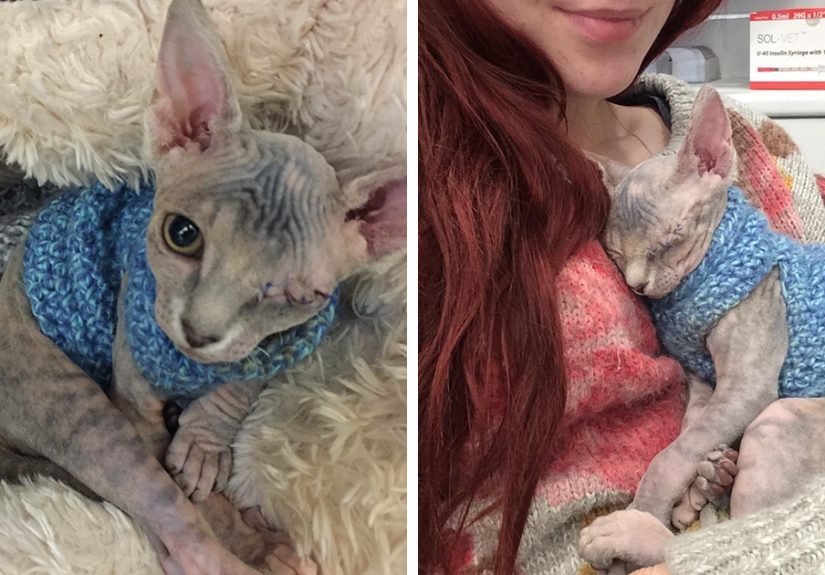
The now-famous story centers on Phoebe Gill, who saw a photo of Stitch and immediately felt drawn to her. Stitch had suffered an eye injury that ultimately led to the removal of the eye, but that did not stop Phoebe from falling for her. She adopted the cat anyway, because compassion occasionally shows up, takes one look at logic, and says, “Cute, but I’m doing this.”
The only real concern was Alaska, Phoebe’s Bull Terrier. If you know anything about Bull Terriers, you know they are not exactly decorative throw pillows. They are energetic, loyal, strong, funny, and often deeply attached to their people. They can also be intense. That intensity is part of their charm and part of why a new cat can feel like a risky addition.
Instead of tension, however, Phoebe got a full-blown friendship. Stitch settled in quickly. Alaska accepted her. Before long, the two were eating together, sleeping together, playing together, and shadowing Phoebe around the house like a two-animal welcome committee with zero respect for bathroom privacy. The result was not just cute. It was surprisingly instructive.
Why Phoebe Had Every Reason To Be Nervous
Let’s be fair to Phoebe here. Worrying about a resident dog’s reaction to a newly adopted cat is not irrational. It is responsible. Animal behavior experts consistently stress that introductions between dogs and cats should be handled carefully, because a poor first encounter can trigger fear, chasing, conflict, or long-term stress. A cat that bolts can activate prey drive. A dog that fixates can overwhelm a cat in seconds. A tense introduction can turn a promising match into a very long month.
Now add a one-eyed cat to the equation. Even though many cats adapt beautifully to vision loss or eye removal, a new environment can still be a lot to process. Furniture is unfamiliar. Sounds are new. Smells are everywhere. Then throw in a curious Bull Terrier with the emotional subtlety of a marching band, and yes, anxiety makes perfect sense.
There is also the breed stereotype factor. Bull Terriers are often misunderstood because of their powerful build and clownishly intense personality. But breed reputation alone does not predict whether a dog will accept a cat. Temperament, socialization, training, household setup, and supervised introductions matter far more than fear-driven guesswork.
Breed Stereotypes Make Bad Fortune Tellers
One reason this story struck such a chord online is that it overturned the lazy assumption that a strong, energetic dog automatically equals a bad cat companion. That is not how real life works. Plenty of large or muscular dogs are gentle, soft-hearted weirdos who would rather nap near the cat than chase it. Meanwhile, some tiny dogs behave as if they have been hired as unpaid neighborhood security officers.
Alaska’s response is a great reminder that individual personality wins. Bull Terriers are playful and deeply devoted, and that devotion can make them surprisingly eager to fold a new pet into the household once they understand the newcomer belongs there. In other words, the dog was not reading the internet comments section. She was reading the room.
What Probably Made This Match Work So Well
Not every dog-cat introduction ends in instant friendship, so why did this one appear to work so beautifully? While only Phoebe knows every detail of what happened inside her home, the outcome mirrors several things behavior experts often see in successful mixed-pet households.
1. Stitch Seems To Have Been Bold, Not Timid
Confident cats often do better during introductions than cats who panic easily. A cat that freezes, observes, and claims space calmly is less likely to trigger a chase response than one that sprints like the house is on fire. From the story, Stitch appears to have walked in with impressive confidence, and that probably helped set the tone.
2. Alaska Was Attached To Her Human
Phoebe described Alaska as the kind of dog who followed her everywhere. Dogs that are strongly people-oriented often take cues from their owner’s behavior. If the owner remains calm, rewards gentle behavior, and clearly treats the new animal as part of the family, the resident dog may adjust faster than expected. Alaska seems to have taken the hint that Stitch was not an intruder. She was part of the team now.
3. The Home Dynamic Encouraged Closeness
Animals living in the same household do not become bonded by magic alone. They become bonded through repeated safe interactions: eating near each other, resting near each other, moving through routines together, and learning that the other animal predicts comfort rather than chaos. Once that happens, companionship can snowball quickly.
What Experts Recommend When Introducing A Dog To A Cat
If this story has you dreaming about bringing home a cat to your dog family, do not skip the boring grown-up part. Yes, the cute ending is wonderful. No, you should not treat your living room like a social experiment with fur.
Animal welfare organizations and veterinary experts generally recommend a slow introduction process. That means setting up a safe room for the new cat, allowing scent exchange before face-to-face meetings, using gates or cracked doors for visual introductions, and keeping the dog leashed and calm during early interactions. Reward relaxed behavior. Interrupt fixation. Give the cat high places and easy escape routes. And never force a friendship because you are impatient and happen to love dramatic montages.
- Give the cat a separate safe space at first.
- Let both animals get used to each other’s scent before meeting.
- Use short, supervised sessions instead of one long stress-fest.
- Keep the dog under control with a leash during early interactions.
- Make sure the cat has vertical spaces and exits.
- Reward calm curiosity, not lunging, barking, or chasing.
- Slow down immediately if either pet shows fear or intense arousal.
The internet loves a magical “they were best friends in five minutes” story, but real success usually comes from patience. Even in homes where the bond becomes adorable, the adults behind the scenes are usually doing a lot of thoughtful management.
What Adopting A One-Eyed Cat Really Means
Part of the emotional punch of Stitch’s story comes from the fact that she was a one-eyed cat. People often see a visible disability and assume the animal will have a poor quality of life, require impossible care, or be permanently fragile. In reality, many cats with one eye adapt extremely well. Cats are masters of compensation. If they had résumés, “figuring it out anyway” would be in bold.
That does not mean there is no care involved. A cat with a history of eye injury still needs regular veterinary follow-up, a safe environment, and owners who pay attention to changes in the remaining eye. Consistency matters. Clutter control helps. Sharp hazards are a bad idea. But in many cases, a one-eyed cat can eat, play, cuddle, climb, stalk toys, and rule the household with the exact same level of confidence as any other cat.
In fact, stories like Stitch’s help challenge one of the most unfortunate myths in pet adoption: that “special needs” automatically means “sad life.” Often it means the animal needs a slightly different setup, a bit more observation, or a family willing to see possibility instead of limitation.
Why This Story Resonated With So Many People
This story went viral for a reason. It is not just cute. It hits three emotional buttons at once.
First, it is a story about fear being wrong. Phoebe expected tension and got tenderness. That kind of reversal is catnip for the human heart.
Second, it is a story about visible difference not preventing love. Stitch did not need to be “perfect” to be adored. She needed someone willing to choose her.
Third, it is a story about companionship showing up in an unexpected form. Alaska did not merely tolerate Stitch. She seemed to embrace her. That is what makes the photos and descriptions so memorable. People do not just love seeing pets coexist. They love seeing them belong to each other.
There is also something quietly reassuring here for anyone considering adoption. So many adopters worry they are not equipped for the imperfect pet, the older pet, the shy pet, the disabled pet, the medically quirky pet, or the pet whose story comes with a few question marks. And yet over and over, rescue stories show that the “hard sell” animal often turns out to be the emotional center of the home.
The Bigger Adoption Lesson Hidden Inside The Cuteness
What happened with Stitch and Alaska is not just a feel-good anecdote. It is a lesson in how to think better about pets. Do not judge compatibility by fear alone. Do not judge adoptability by appearance alone. And definitely do not assume a strong-looking dog and a one-eyed cat are doomed to become household rivals in a live-action cartoon.
Ask better questions instead. What is the dog’s actual temperament? Has the cat shown confidence around other animals? Can you create a slow and safe introduction plan? Do you have a veterinarian you trust? Can you give each pet room to decompress? Those questions are far more useful than spiraling into imagined disaster because your brain loves drama more than data.
Stories like this also remind us that adoption is not about finding a flawless animal. It is about finding a workable relationship and building a stable environment around it. Sometimes the bond arrives quickly. Sometimes it takes weeks. Sometimes the final form of success is not cuddling, but peaceful coexistence. All of those outcomes can be wins.
Related Experiences From Real Pet Homes And Rescue Stories
If Stitch and Alaska’s bond feels unusually heartwarming, it is because it taps into a pattern that rescue groups and adopters see again and again. Special-needs pets often inspire the deepest hesitation at first and the deepest attachment later. Many adopters admit that before bringing home a blind cat, a one-eyed kitten, or an animal with a visible difference, they imagined a daily routine filled with stress, expense, and constant emergency-level worry. What they often describe afterward is something very different: a short adjustment period followed by a surprisingly normal life, only with more gratitude and a lot more storytelling material.
That pattern shows up across rescue organizations. Families who adopt visually impaired cats often report that the cats memorize the layout of the home quickly, develop favorite sleeping spots, and play with the same commitment and chaos as any other cat. They may use sound, scent, and memory a little more. They may approach new spaces cautiously for a while. But once they settle in, many owners say the animal’s confidence becomes the most surprising part of the experience. The cat is not sitting around composing sad poetry about having one eye. The cat is trying to steal your chair.
Mixed-pet homes tell similar stories. Some adopters say their resident dog initially behaved like a nosy landlord inspecting a new tenant. Others describe a cautious first week followed by an unexpectedly sweet routine: shared naps, parallel mealtimes, synchronized hallway patrols, and a weird but charming emotional alliance built around following the human from room to room. In many homes, the relationship is less “instant soulmates” and more “I suppose we both live here now,” which slowly evolves into trust. That slow-burn version of friendship deserves more credit than it gets.
There are also rescue stories involving blind kittens and cats with major eye injuries who formed close bonds with other pets in the home. Some found comfort in another cat. Others attached themselves to a calm dog. In those households, owners frequently describe the same turning point: once the special-needs pet realizes the environment is safe, their personality explodes into view. The shy animal becomes playful. The uncertain one becomes demanding in the way only beloved cats can. The dog that seemed too rambunctious turns out to be gentle when it counts.
Perhaps the most relatable experience adopters share is this: the thing they feared most often becomes the thing they brag about most later. The “I’m not sure my dog can handle a cat” person becomes the one showing everyone photos of the pair sleeping nose-to-nose. The “I don’t know if I’m prepared for a special-needs cat” person becomes the one explaining, in great detail and with suspicious levels of joy, how the cat has learned every inch of the house and now behaves like a tiny, one-eyed monarch.
That is why stories like Stitch and Alaska’s matter. They are not just internet candy. They help future adopters imagine a better outcome. They show that caution is wise, but fear does not always deserve the final vote. Sometimes love, planning, patience, and one exceptionally confident rescue cat can build something better than your worst-case scenario ever allowed.
Final Thoughts
Phoebe Gill worried that her Bull Terrier would not know what to make of a newly adopted one-eyed cat. Instead, she ended up watching Alaska and Stitch become inseparable. That is the headline version. The deeper version is even better: a supposedly risky pairing turned into a lesson about compassion, patience, and the danger of underestimating animals.
Stitch did not arrive as a problem to be solved. She arrived as a cat who needed a home. Alaska did not respond like a stereotype. She responded like herself. And together they created the kind of everyday tenderness that people never get tired of seeing because it reminds us that home is not built by perfection. It is built by acceptance, routine, and the occasional decision to trust that the new little creature in the house might just belong there.
Honestly, that is a pretty good lesson for humans too.