Table of Contents >> Show >> Hide
- Why this question matters now
- The one job robots cannot take: building trust at the point of vulnerability
- What robots and AI are already good at
- Why the doctor’s human role becomes more valuable, not less
- Where AI can make doctors better at the irreplaceable job
- What patients actually need from doctors in the age of robots
- Experiences from the exam room: where the human job becomes obvious
- Conclusion
Robots can sort images, summarize charts, transcribe visits, draft portal replies, and probably never complain about the coffee in the break room. That is impressive. It is also not the same thing as being a doctor.
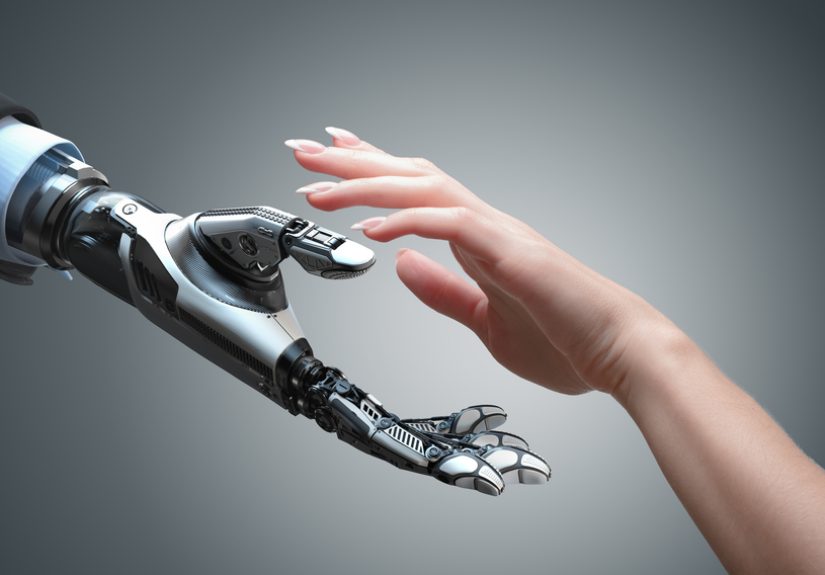
For all the talk about artificial intelligence in healthcare, one question keeps floating around exam rooms, hospital corridors, and anxious family group texts: what exactly will still belong to doctors when machines get smarter? The answer is both simple and surprisingly hard to automate. The one job robots can never take away from doctors is the deeply human work of earning trust and helping another person make sense of illness.
That job includes empathy, yes, but it is bigger than empathy. It is reading fear that never gets said out loud. It is noticing when a patient says “I’m fine” in the same tone people use when their car is making a noise “they’re sure is nothing.” It is translating complicated evidence into plain English, balancing risks, values, family dynamics, culture, timing, and uncertainty. It is knowing when to push, when to pause, and when to just sit there for a second so the room can catch up to the news.
That is why the future of medicine is not doctors versus robots. It is more likely doctors with better tools. The technology will get stronger. The human core of care will matter even more.
Why this question matters now
AI is no longer a sci-fi side character in healthcare. It is already handling practical tasks that used to eat up a physician’s day. Tools can draft responses to patient messages, suggest documentation, flag patterns in data, organize records, and reduce the administrative friction that has made modern medicine feel like a duel between the doctor and the keyboard.
That matters because burnout is real, and paperwork has been acting like an uninvited third person in the exam room for years. If technology can reduce screen time and give doctors more face-to-face time, patients win. Doctors win. Even the computer probably wins, although nobody has asked the computer how it feels.
But efficiency is only part of care. Patients do not come to doctors merely for data retrieval. They come for interpretation, reassurance, accountability, and guidance. A person with chest pain does not just want a list of possible causes. A parent with a sick child does not just want a probability table. A patient hearing the word “cancer” does not need polished text alone. They need someone to stand in the chaos with them and help decide what happens next.
The one job robots cannot take: building trust at the point of vulnerability
If this article had to boil the whole issue down to one sentence, here it is: robots can process information, but doctors turn information into care.
Trust is the difference. Not generic trust in science. Not abstract trust in hospitals. Personal trust. The kind that makes a patient admit they never took the medication. The kind that makes a family reveal what they are really afraid of. The kind that helps a person accept a diagnosis, ask a hard question, or choose a treatment that matches their values instead of someone else’s expectations.
That trust is not built by sounding nice. It is built by being present, accountable, and responsive in real time. It grows when a doctor remembers what matters to the patient, notices contradictions, explains tradeoffs honestly, and stays engaged when the answer is not easy. A machine can simulate warmth in a sentence. A physician has to carry the weight of what that sentence means in real life.
Empathy is part of it, but not the whole thing
A lot of recent attention has gone to studies showing that AI-generated responses can sound more empathetic than physician responses in online message settings. That should not be ignored. It tells us something important: overworked doctors are often writing under time pressure, and machines can produce calmer, more polished wording on demand.
Still, written empathy is not the same as clinical empathy. A chatbot can generate a graceful paragraph. It does not have to decide whether the patient should be told to go to the emergency department now, follow up tomorrow, or start hospice discussions. It does not have to see the patient’s face fall. It does not have to deal with the aftermath when a decision goes badly. And it does not own the moral responsibility attached to care.
In other words, sounding caring and being responsible for care are not identical jobs. Physicians do both. That combination is much harder to automate.
What robots and AI are already good at
To understand what doctors keep, it helps to see what machines are good at taking over. AI and robotic systems are especially useful when the task is structured, repetitive, data-heavy, or administratively annoying.
- Documentation and note creation: Ambient tools can listen, summarize, and build drafts so clinicians spend less time typing.
- Message drafting: AI can suggest polite, organized responses to common patient questions.
- Pattern recognition: Algorithms can help identify trends in imaging, lab values, and risk scores.
- Triage support: Systems can sort symptoms, route messages, and surface priorities.
- Education and explanation drafts: AI can create first-pass patient instructions in simpler language.
- Workflow cleanup: Machines are excellent at the digital chores nobody went to medical school to perform.
That is not a small list. It is a meaningful shift. But notice what all these tasks have in common: they support care. They do not replace the relational center of care.
Why the doctor’s human role becomes more valuable, not less
Whenever technology gets better at the technical layer of work, the interpersonal layer becomes more visible. In medicine, that interpersonal layer is not decoration. It affects outcomes.
Patients are more likely to follow treatment plans when they feel heard. They are more likely to disclose crucial details when they trust the clinician. They are more likely to stay engaged through uncertainty when someone explains what is happening in a way that respects both facts and fear. A technically correct answer delivered without human understanding can still fail.
That is why the irreplaceable job is not merely “being nice.” It is the ability to combine clinical judgment with emotional intelligence. A skilled doctor is constantly doing quiet, complex work in the background: interpreting symptoms through the lens of the patient’s life, spotting what is medically urgent versus emotionally urgent, and helping a person move from panic toward clarity.
Machines can assist pieces of that process. They do not live inside the moral and relational burden of it.
Doctors work in context; robots work in inputs
Medicine is full of context that never fits neatly into a data field. A patient may refuse surgery because she is the only caregiver for her husband. A teenager may say he is “forgetting” his medication because the side effects make him miserable. An older adult may want less aggressive treatment not because he has given up, but because he values independence over extra months in a hospital bed.
These are not edge cases. This is medicine. Real care decisions live at the intersection of biology, psychology, family, money, culture, memory, fear, hope, and timing. Doctors have to make sense of all of that while still getting the science right.
A robot can organize the facts. A physician has to understand what the facts mean for this person, today, in this room, with this life.
Doctors are accountable in a way machines are not
One of the biggest differences between a doctor and a machine is responsibility. Patients do not just want outputs. They want someone answerable for the decision. Someone who can be questioned, challenged, trusted, and expected to act in the patient’s best interest.
That accountability matters most when the situation is messy. End-of-life care. Risky surgery. A scan with uncertain findings. A treatment with major side effects. A frightened family asking whether “doing everything” is actually the right thing. These are not customer service moments. They are moral moments. Physicians are trained to carry them.
Where AI can make doctors better at the irreplaceable job
Here is the optimistic part: the rise of AI does not have to flatten medicine into something cold and robotic. Used well, it can do the opposite.
If AI handles routine drafts, chart cleanup, inbox support, and other repetitive tasks, doctors may recover the one thing modern healthcare has been draining from them for years: attention. And attention is the raw material of empathy.
A doctor who is not drowning in clerical work can make eye contact longer. Ask one more question. Pause before interrupting. Notice that the patient did not really understand the explanation. Catch that subtle hesitation before consent. These are small human acts, but they are often where trust begins.
In that sense, the best use of AI in healthcare is not to replace the doctor’s humanity. It is to protect it.
The smartest model is partnership, not substitution
The strongest vision for AI in medicine is a partnership model. Let the machine predict, summarize, organize, and draft. Let the physician explain, personalize, decide, and take responsibility. Let the tool make the doctor more available, not more distant.
That balance matters because patients do not want medicine to become a strange vending machine of plausible answers. They want care that is competent and human. Fast, but not rushed. Efficient, but not impersonal. Smart, but not detached.
Healthcare systems that forget this will discover something simple: patients may admire technology, but they still remember how a doctor made them feel when things got real.
What patients actually need from doctors in the age of robots
As automation grows, the doctor’s job becomes clearer. Patients need physicians who can do five things no robot fully owns.
1. Translate complexity into meaning
Medical information is abundant. Meaning is scarce. Doctors help patients understand not just what the data says, but what it means for work, family, risk, quality of life, and next steps.
2. Build trust through presence
Trust is not downloaded. It is earned through consistency, listening, honesty, and follow-through. Machines can imitate tone. They do not form a therapeutic relationship in the full human sense.
3. Make judgment calls under uncertainty
Many medical decisions do not have one perfect answer. They involve tradeoffs. Doctors help patients navigate uncertainty rather than pretending every situation is neatly solvable.
4. Hold emotional weight without retreating
Illness is emotional even when the chart is tidy. Patients need clinicians who can stay steady when fear, grief, guilt, or confusion enters the room.
5. Connect care to values
Good medicine is not only about what can be done. It is about what should be done for this specific person. That requires values-based conversation, not just computational power.
Experiences from the exam room: where the human job becomes obvious
Talk to enough patients and clinicians, and the pattern shows up again and again. The memorable part of care is rarely the algorithm. It is the human exchange around it.
Consider an oncologist reviewing a scan that confirms the cancer has returned. An AI system may summarize the imaging, flag possible treatment pathways, and even draft a careful explanation. Helpful? Absolutely. But none of that replaces the moment when the physician walks into the room, sits down instead of hovering near the door, and says the truth with both clarity and compassion. The patient is not just hearing facts. The patient is measuring whether this person can be trusted to guide the next chapter.
Or think about a primary care visit with a patient whose diabetes has been out of control for months. The chart says nonadherent. The robot can spot the lab trend. The doctor asks one more question and learns the patient has been splitting pills to save money after losing a job. Suddenly the issue is not “compliance.” It is shame, finances, and survival. That shift does not happen because the data changed. It happens because the physician created enough safety for the patient to tell the truth.
In pediatrics, the same human edge appears in a different form. A worried parent may bring in a child for what turns out to be a mild illness. A machine can estimate risk and suggest home care. But an experienced clinician sees the parent’s exhaustion, explains what warning signs matter, and leaves them feeling capable instead of dismissed. That emotional reset has medical value. It reduces panic, improves follow-through, and builds confidence for the next time something goes wrong at 2 a.m.
Surgeons know this too. Before an operation, patients often remember less about the technical details than outsiders assume. They remember whether the doctor seemed rushed. Whether questions were welcomed. Whether risks were explained honestly. Whether anyone acknowledged how frightening it is to hand your body over to a stranger with excellent credentials and a very sharp plan. Informed consent is not just a legal event. At its best, it is a trust event.
Even in routine encounters, the human layer matters. A patient with chronic pain may have normal imaging and still feel miserable. A chatbot can offer self-management suggestions. A good physician can recognize frustration, validate suffering without exaggerating certainty, and build a plan that protects function and dignity. That kind of care asks for judgment, patience, and emotional steadiness. It is not flashy. It is profoundly important.
These experiences point to the same truth: the irreplaceable work of a doctor is not simply diagnosing disease. It is accompanying a person through uncertainty in a way that is clinically sound and deeply human. Robots can support that work. They can even make parts of it easier. But they do not become the relationship itself.
Conclusion
Robots will keep getting better at medicine’s technical tasks. They will write cleaner drafts, recognize more patterns, and remove more administrative drag from clinical work. That is good news. Healthcare needs the help.
But the one job robots can never take away from doctors is the human work at the heart of care: building trust, interpreting uncertainty, and guiding vulnerable people through decisions that are medical, emotional, and moral all at once.
That is not a leftover task. It is the main event. In fact, the more advanced the tools become, the more valuable that human role becomes. The future doctor may use extraordinary technology, but the doctor’s deepest purpose will still look familiar: listen carefully, think clearly, tell the truth, and stay present when it matters most.
Medicine may become more automated. It must never become less human.