Table of Contents >> Show >> Hide
- What Makes a Great Comic Book Movie Mentor?
- The Most Powerful Comic Book Movie Teachers And Mentors
- 1. Professor Charles Xavier – The Mind Behind the X-Men
- 2. Alfred Pennyworth – The Butler Who Raised Batman
- 3. Uncle Ben (and Aunt May) – The Soul of Spider-Man
- 4. Jor-El and the Kents – Raising a God to Be Human
- 5. The Ancient One – Sorcerer Supreme and Spiritual Drill Instructor
- 6. Stick – The Brutal Trainer Behind Daredevil and Elektra
- 7. Master Splinter – The Rat Sensei Who Raised Four Heroes
- 8. Yondu Udonta – “He May Have Been Your Father, Boy, But He Wasn’t Your Daddy”
- 9. Odin – The Complicated Father Figure of Asgard
- 10. Zuri and T’Chaka – The Moral Architects of Black Panther
- Why These Mentors Resonate So Strongly With Fans
- Experiences and Takeaways: What These Mentors Teach Us Off-Screen
- Conclusion
Superhero movies love a good training montage, but the real secret weapons aren’t magic hammers or radioactive spiders –
they’re the mentors who shape heroes long before the final battle. The most powerful comic book movie teachers and mentors
don’t just throw punches; they change destinies, save worlds, and occasionally ground a vigilante who forgot to sleep.
From telepathic professors to blue-skinned space pirates with heart-of-gold vibes, comic book films are packed with
teachers who prove that wisdom, compassion, and tough love can be just as mighty as any cosmic power. In this deep-dive,
we’ll look at the most powerful comic book movie mentors across Marvel, DC, and beyond – not just in terms of raw power,
but in moral influence, emotional impact, and the way they push their students to become something greater.
What Makes a Great Comic Book Movie Mentor?
Before handing out honorary diplomas, it helps to define what makes a comic book movie mentor truly “powerful.”
It’s more than a cool robe and a dramatic way of speaking (though those don’t hurt).
- Power plus principle: They have real abilities or status – telepathy, sorcery, royal authority – but they use it to guide, not dominate.
- Emotional stakes: They’re not just trainers; they’re surrogate parents, moral compasses, or the voice in a hero’s head when everything falls apart.
- Hard lessons: A great mentor lets the student fail, then helps them stand up stronger. Sometimes that even means sacrificing the relationship – or their life.
- Legacy: Their teachings echo through sequels, spinoffs, and entire cinematic universes.
With that in mind, let’s meet the most powerful comic book movie teachers and mentors who’ve shaped your favorite heroes.
The Most Powerful Comic Book Movie Teachers And Mentors
1. Professor Charles Xavier – The Mind Behind the X-Men
It’s hard to talk about superhero mentors without starting at Xavier’s School for Gifted Youngsters. Professor Charles Xavier,
as seen in the X-Men film series, is one of the most powerful telepaths on the planet and the architect of a safe haven
for young mutants who might otherwise be feared, weaponized, or killed. He’s both headmaster and therapist, guiding students
like Cyclops, Storm, Jean Grey, and Rogue as they learn to control reality-bending abilities instead of being destroyed by them.
In movies like X-Men, X2, and X-Men: Days of Future Past, Xavier balances being a compassionate teacher with being a
strategist who must make brutal calls for the “greater good.” We see him as an inspirational mentor in his prime and as a
guilt-ridden leader whose choices backfire, particularly around Jean Grey’s powers. That moral complexity makes him more than a
kindly professor – he’s a case study in how even the best mentors can be flawed and still profoundly shape the heroes around them.
2. Alfred Pennyworth – The Butler Who Raised Batman
Alfred Pennyworth may not be able to bend metal with his mind or blast energy from his hands, but in terms of emotional power,
he’s top-tier. Across multiple Batman film iterations – from Michael Gough and Michael Caine to Jeremy Irons and Andy Serkis –
Alfred is the grounding presence behind the cowl. He’s Bruce Wayne’s guardian, medic, mechanic, moral challenger, and occasionally
the only person brave enough to tell Batman he’s being an idiot.
In Christopher Nolan’s Dark Knight trilogy, Alfred’s mentorship is especially poignant. He pushes Bruce to value his own life,
warns him about self-destructive obsession, and even walks away when Bruce refuses to listen – a painful but very believable move
for someone who loves him like a son. Alfred’s “power” is his unwavering loyalty combined with his willingness to say the hard thing.
Without him, Batman is just a traumatized billionaire in a cape. With him, he’s a hero with a purpose and a home to come back to.
3. Uncle Ben (and Aunt May) – The Soul of Spider-Man
“With great power comes great responsibility” might be the single most famous line of superhero mentorship ever delivered. In Sam Raimi’s
Spider-Man trilogy, Uncle Ben’s short time on-screen defines Peter Parker’s entire journey. He doesn’t teach web-slinging or wall-crawling;
he teaches ethics, humility, and the idea that power must be used for others, not ego. Spider-Man’s guilt, growth, and heroism all trace back
to that car ride and the tragedy that follows.
In later films, especially the MCU’s take on Spider-Man, Aunt May becomes more of an active mentor, embodying compassion and community service.
Her insistence on helping people, even when they’re dangerous or complicated, pushes Peter to make harder, more grown-up choices. Together, Ben
and May show that the most powerful comic book movie teachers don’t need superpowers – they just need strong values and the courage to live by them.
4. Jor-El and the Kents – Raising a God to Be Human
Superman has a unique double-mentor setup: Jor-El, his Kryptonian father, and the Kent family, who raise him as Clark in Kansas.
In films like Superman (1978), Man of Steel, and others, Jor-El appears via holograms and recorded messages, delivering cosmic-level
wisdom about hope, leadership, and the responsibility that comes with godlike power. He provides the big-picture purpose: you’re here to
inspire, not rule.
Jonathan and Martha Kent, on the other hand, teach Clark how to be kind, humble, and human. They’re the ones who help him decide what kind
of man he wants to be, not just what kind of hero. Where Jor-El gives him a mission, the Kents give him a moral compass. The result is a hero
who can juggle saving the world with rescuing a single person from a burning building – because both matter.
5. The Ancient One – Sorcerer Supreme and Spiritual Drill Instructor
In Doctor Strange, the Ancient One (played by Tilda Swinton) ticks every box of the mystical mentor archetype. She is literally the
Sorcerer Supreme, guarding Earth from interdimensional threats while running a magical training academy. When Stephen Strange arrives,
broken in body and inflated in ego, she shatters his worldview – quite literally, via astral projection – and shows him how small his
understanding of reality really is.
What makes the Ancient One so powerful as a movie mentor isn’t just her ability to manipulate time and space. It’s how she challenges Strange’s
motivations. She calls out his arrogance, forces him to confront his fear of failure, and gradually transforms him from a glory-seeking surgeon
into someone willing to die repeatedly to protect others (hi, Dormammu loop). Even her own moral compromises push Strange to define what kind
of Sorcerer Supreme he wants to be after she’s gone.
6. Stick – The Brutal Trainer Behind Daredevil and Elektra
Stick is one of the most hard-edged mentors in comics, and although he’s more fully explored on television, his presence in the Daredevil
and Elektra film continuity still looms large as the kind of teacher who forges warriors, not well-adjusted adults. In the comics, he leads
the Chaste and trains Matt Murdock after his accident, turning his heightened senses into a finely tuned weapon. He also helps shape Elektra,
pushing both students toward a life of combat and sacrifice.
Stick’s mentoring style is the opposite of warm and fuzzy. He withholds affection, demands results, and believes that attachments only get
people killed. That harshness is part of what makes Daredevil such a relentless force in combat – and also part of what leaves Matt emotionally
scarred. Stick illustrates a darker truth about powerful mentors: they can give you the tools to survive while also leaving wounds that never
fully heal.
7. Master Splinter – The Rat Sensei Who Raised Four Heroes
On paper, “mutant rat who teaches four teenage turtles ninjutsu in a sewer” sounds like a joke. On screen, Master Splinter becomes one of the
most beloved mentors in comic book movies. In the various Teenage Mutant Ninja Turtles films, Splinter is more than a fight coach; he’s a
father who instills honor, discipline, and empathy in Leonardo, Raphael, Donatello, and Michelangelo.
His origin is a clever riff on Daredevil’s world: the Turtles’ story parodies the same radioactive accident, their enemy clan “The Foot”
mirrors the Hand, and Splinter’s name nods directly to Stick. But Splinter evolves past parody into a fully realized mentor – patient,
deeply caring, and willing to sacrifice himself to protect his sons. His power comes from his wisdom and his ability to make four very
different personalities fight as a family, not just a team.
8. Yondu Udonta – “He May Have Been Your Father, Boy, But He Wasn’t Your Daddy”
Yondu Udonta starts out looking like just another space pirate with a deadly whistle-controlled arrow. By the end of Guardians of the Galaxy Vol. 2,
he’s one of the most emotionally powerful mentors in the Marvel Cinematic Universe. We learn that Yondu refused to deliver a young Peter Quill
to Ego once he realized what was happening to the other children. Instead, he kept Peter, raised him among the Ravagers, and – in his very messy,
very flawed way – tried to give him a life.
His final act, sacrificing himself to save Peter in the cold of space, reframes their entire relationship. Yondu didn’t just train Star-Lord in
thievery and snark; he taught him survival, loyalty, and, eventually, what fatherly love looks like. The line from Kraglin – “He may have been your
father, boy, but he wasn’t your daddy” – hits so hard because we’ve watched Yondu grow from a selfish outlaw into someone willing to die so his
“son” can live. That’s mentor power at its rawest.
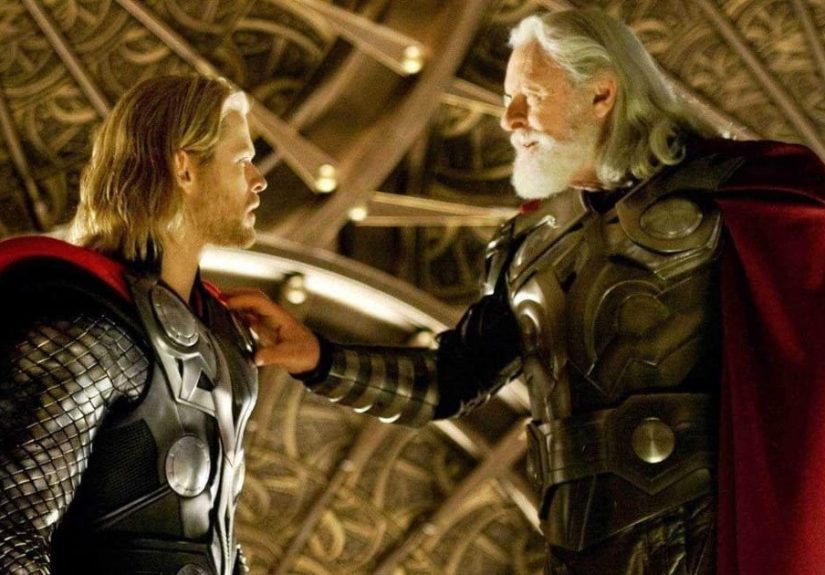
9. Odin – The Complicated Father Figure of Asgard
Odin in the Thor films occupies an interesting dual role: he’s both king and parent, teacher and jailer. As All-Father, he commands vast divine power.
As Thor and Loki’s father, he tries (and often fails) to set them on a path that won’t end with the Nine Realms burning. He banishes Thor to Earth to
teach humility, hides Hela and Loki’s true origins, and spends a lot of time trying to patch over the consequences of his own past conquest.
Odin’s mentoring style is far from perfect, but that imperfection is part of what makes him such an intriguing comic book movie teacher. Thor becomes
worthy not just by following Odin’s rules, but by surpassing his father’s limitations and choosing a different kind of ruler to be. A powerful mentor
doesn’t always have all the answers; sometimes, their greatest gift is forcing a student to question inherited beliefs.
10. Zuri and T’Chaka – The Moral Architects of Black Panther
In Black Panther, King T’Chaka and the shaman-warrior Zuri serve as T’Challa’s mentors both in life and in memory. T’Chaka teaches his son about
duty, isolationism, and the importance of protecting Wakanda, while also hiding a terrible secret about his brother and nephew. Zuri, as a trusted adviser,
reinforces those lessons and helps manage the spiritual and political rituals that shape T’Challa as a king.
The real mentoring magic happens when their flaws are revealed. T’Challa’s journey is partly about realizing that his mentors – men he deeply loved and
trusted – made choices that created Killmonger’s pain. Instead of rejecting them entirely, he uses their mistakes as fuel to build a more open, hopeful
version of Wakanda. That’s the next level of mentorship: when your students learn not just from what you did right, but from where you went wrong.
Why These Mentors Resonate So Strongly With Fans
The most powerful comic book movie teachers and mentors stick with audiences for the same reason real-life teachers do: they show up at pivotal moments.
They meet young heroes when they’re angry, lost, grieving, or dangerously cocky and give them a way forward. Sometimes that guidance is gentle – like
Aunt May’s quiet pep talks. Sometimes it’s brutal – like Stick’s training or the Ancient One’s ego-smashing reality checks.
These characters also reflect different kinds of mentorship:
- Parental mentors: Alfred, Yondu, the Kents, and Splinter essentially adopt their students.
- Institutional mentors: Professor X and the Ancient One run schools and sanctums, building entire communities of learners.
- Flawed mentors: Odin, T’Chaka, and even Xavier show how impactful guidance can come from people wrestling with their own guilt and blind spots.
In other words, these mentors feel powerful not just because they can warp time or move mountains, but because they mirror the messy, complicated
adults many of us grew up with – teachers, coaches, relatives, or bosses who changed our trajectory in ways we only understood years later.
Experiences and Takeaways: What These Mentors Teach Us Off-Screen
You don’t need a vibranium suit or a mystic relic to relate to the experience of being mentored – or of needing one. Part of the emotional punch
behind the most powerful comic book movie teachers and mentors is how they echo real-life relationships and struggles.
Take Yondu, for example. Many viewers walk out of Guardians of the Galaxy Vol. 2 thinking about complicated father figures – the stepdad who
stuck around even when the biological father didn’t, or the coach who believed in them more than anyone at home. Yondu is far from perfect, and
that’s the point. His story suggests that what makes a mentor powerful isn’t spotless behavior; it’s the willingness to grow, admit mistakes, and
ultimately choose sacrificial love.
Professor X and the Ancient One, meanwhile, invite us to think about the ethics of power in leadership and teaching. Both characters hide the full
truth from their students, believing it’s “for the greater good.” When those secrets come out, their protégés have to decide: Do I reject everything
my mentor taught me, or do I keep the good and move forward differently? That dilemma mirrors real-world experiences with teachers, parents,
religious leaders, or institutions that helped us in some ways while harming us in others.
Alfred, the Kents, Splinter, and Aunt May embody a quieter but equally profound kind of mentorship: consistent presence. They’re there for the mundane
days, the small failures, the late-night doubts. Many fans resonate with that model – maybe they had a grandparent who always had time to listen, a
teacher who never mocked their dreams, or a mentor who didn’t care how “cool” they were, just that they were kind and persistent. On-screen, those
relationships remind us that not every mentor moment comes with dramatic music; sometimes it’s just a cup of tea in the kitchen while someone tells
you they still believe in you.
Another powerful takeaway from these comic book mentors is how often the students surpass them. T’Challa ultimately becomes a more compassionate and
globally minded king than T’Chaka. Thor learns to rule without his hammer and without his father’s conquest-obsessed worldview. Doctor Strange starts
questioning the rules the Ancient One bent. Great mentors aren’t threatened by being outgrown; in fact, that’s kind of the goal. The same applies
off-screen: a good boss wants their team member to go further. A great teacher wants their student to exceed their own achievements.
For viewers, that progression offers both comfort and challenge. It’s comforting to think that, even if your role models weren’t perfect, you can still
take what they gave you and build something better. And it’s challenging because, if you find yourself in a mentor role – as a parent, teacher, or
manager – you’re reminded that your actions, apologies, and blind spots matter. You’re someone’s Alfred or Splinter or Yondu, whether you’ve accepted
that responsibility yet or not.
Ultimately, the most powerful comic book movie teachers and mentors show us that heroism is contagious. When one person chooses to guide instead of
control, to sacrifice instead of abandon, or simply to listen instead of dismiss, it changes the trajectory of someone else’s story. That ripple
effect is bigger than any solo fight scene. It’s why audiences keep returning to these films, not just for the explosions and costumes, but for the
relationships that quietly teach us how to be braver, kinder, and more intentional in our own lives.
And if you ever doubt the impact of a mentor, just remember: without a telepathic professor, a stubborn butler, a grieving uncle, a rat sensei, and
a blue-skinned Ravager with a whistling arrow, half your favorite heroes would still be sulking in their bedrooms, not saving the world.
Conclusion
The most powerful comic book movie teachers and mentors prove that behind every great hero is someone who invested the time, energy, and emotional
labor to help them grow. Whether they’re wielding magic, ruling a kingdom, or just making sure the hero eats breakfast, these mentors embody the
idea that power without guidance is dangerous – and that the right teacher can turn raw potential into world-changing heroism.
As comic book movies continue to evolve, so do their mentors: more diverse, more complex, and more honest about the cost of shaping the next
generation. That’s good news for fans, because it means we’ll keep getting stories that don’t just entertain us, but also challenge us to remember
the people who taught us, and to step into that mentoring role for someone else.