Table of Contents >> Show >> Hide
- What Makes a Bike Multitool “The Best” (Hint: It’s Not the Tool Count)
- The Best Bike Multitools by Riding Style
- Best “Do-Everything Without Being Ridiculous”: Mid-size folding multitools
- Best for Road & Gravel Riders: Compact tools with smart chain support
- Best for Mountain Biking: Bigger grip, more leverage, tubeless readiness
- Best for Bikepacking & Touring: When you’re far from help (and you know it)
- Best for Carbon-Cockpit Caution: Mini torque tools and controlled tightening
- Quick Buyer’s Checklist: Match the Tool to Your Bike in 60 Seconds
- How to Actually Use Your Multitool (So It’s Not Just Pocket Jewelry)
- A Smart Minimal Kit to Pair With Any Multitool
- What “Best” Looks Like in Real Life: A Few Specific Scenarios
- of Real-World “Experience” (Composite Stories Riders Will Recognize)
- Conclusion: Pick the Tool You’ll Carryand Then Make It Part of Your Routine
A bike multitool is the cycling equivalent of carrying a tiny, folding “I’m not calling an Uber” button.
It won’t turn you into a pro mechanic, but it will keep a loose stem from becoming a full-on
handlebar interpretive dance. The best bike multitools help you solve the problems that actually happen:
rattly bolts, drifting saddles, squeaky rotors, surprise chain issues, and the occasional “how did this even happen?”
moment that appears exactly five miles farther than you’d like from home.
This guide breaks down what matters (and what’s marketing glitter), then walks through standout multitool styles
and specific examples riders love for road, gravel, MTB, commuting, and bikepacking. You’ll also get a quick
decision framework so you don’t end up carrying a 27-function pocket anvil for rides where a 9-function mini tool
would’ve done the job.
What Makes a Bike Multitool “The Best” (Hint: It’s Not the Tool Count)
If you’ve ever bought a “47-in-1” gadget that couldn’t tighten a single bolt without threatening your knuckles,
you already know the truth: tool count is a party trick. Real quality comes from fit, leverage, and including
the right sizes for your bike.
1) The right sizes for modern bikes
Most bikes lean heavily on hex keysespecially 4mm, 5mm, and 6mm. Add 2mm and 2.5mm for small adjustments
(think: some lever reach screws, accessory mounts, and fiddly cockpit hardware).
If you ride a disc-brake bike (road, gravel, or mountain), T25 Torx is the celebrity guest star
you want at the party. If your bike has more Torx hardware, a tool with extra Torx sizes becomes valuable fast.
2) Leverage and ergonomics (because bolts don’t care about your feelings)
A multitool can have “every size,” but if the body is slippery, the bits are stubby, or the tool flexes under load,
it’s basically a stress toy. Look for longer bits, a shape you can grip, and side plates that don’t pinch your palms.
Bonus points for designs that let you brace properly when you’re tightening something that’s been vibrating loose
for 300 miles.
3) Hardened bits and tight tolerances
The best multitools feel “precise”the tool sits snug in the bolt head. That reduces rounding, slipping, and that
horrible moment when you realize you’ve turned a hex bolt into a smooth, shiny circle of regret.
4) The features you’ll actually use
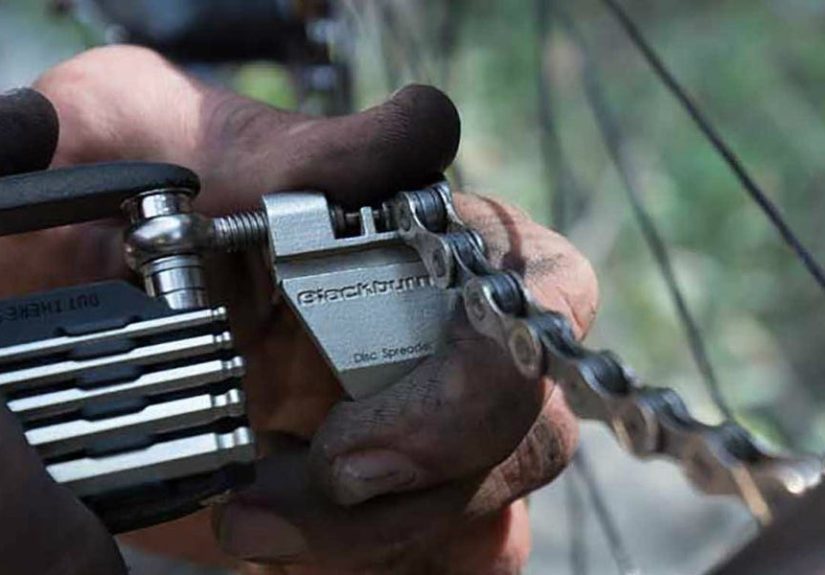
- Chain tool: priceless on longer rides, gravel adventures, and MTB days where a snapped chain is more “when” than “if.”
- Quick-link storage or master-link tool: if your chain uses a quick link, carrying a spare is cheap insurance.
- Spoke wrenches: helpful for minor wheel issuesespecially on touring/bikepacking rides.
- Tubeless plug tool: a huge upgrade for tubeless tires; it can turn a ride-ending puncture into a two-minute pit stop.
- Valve core tool: small, light, occasionally heroic (especially when sealant is involved).
- Rotor truing fork: not essential for everyone, but very nice when your rotor starts singing opera.
5) Size, weight, and where you’ll carry it
Be honest with yourself: are you actually going to carry it? The best multitool is the one that’s on the bike or in your pocket
when you need it. If a tool is too bulky, it will eventually “live” in your garage, quietly judging you.
The Best Bike Multitools by Riding Style
Instead of crowning one universal winner (because your commuter and your enduro rig don’t share a personality),
here are top-performing categories with specific examples and the kinds of riders they suit.
Best “Do-Everything Without Being Ridiculous”: Mid-size folding multitools
This is the sweet spot for most riders: enough tools to handle the common stuff, compact enough to live in a saddle bag,
bar bag, or jersey pocket without feeling like you’re smuggling a toaster.
-
Crankbrothers F15 a slim, premium option with a clever magnetic case that doubles as a handle,
giving you better grip when you’re actually using it. It’s the kind of tool that feels thoughtfully designed, not just
“stuffed with bits.” -
Lezyne Super V series (e.g., Super V 22) known for packing lots of useful functions into a sturdy,
ergonomic form, often with nice extras like quick-link storage and strong side plates for leverage. -
Topeak Mini Pro / Mini P-series options popular for a balanced layout and good on-bike functionality,
including versions with chain tools and master-link helpers.
Best for Road & Gravel Riders: Compact tools with smart chain support
Road and gravel fixes are often about cockpit tweaks, saddle adjustments, minor drivetrain drama, and getting home without
turning your ride into a roadside podcast episode called “Why Me.”
-
Topeak Mini P20 built around a forged body with an integrated chain tool and a built-in master-link tool,
making it a strong pick for longer road and gravel days where chain issues can ruin everything. -
Park Tool minimalist-style multitools great if you prioritize quality and simplicity over carrying a tiny museum exhibit of tools.
If your rides are closer to home and you’re disciplined about bolt checks, compact Park Tool options can be enough.
Best for Mountain Biking: Bigger grip, more leverage, tubeless readiness
MTB multitools need two superpowers: leverage (because trail vibrations love loosening bolts) and
puncture management (because rocks don’t negotiate).
-
Crankbrothers M-series (like M19/M20 styles) often praised for good value and a broad set of functions
that fit real trail problems. -
Fix It Sticks kits a different approach: modular “sticks” and bits that feel more like real tools than tiny fold-outs,
often paired with a dedicated chain breaker and tire levers. Great if you want better torque and less hand pain. -
Wolf Tooth EnCase / bar-end storage tools if you hate backpacks and love clean setups, bar-end storage can keep tools
on the bike without stuffing your pockets.
Best for Bikepacking & Touring: When you’re far from help (and you know it)
Touring and bikepacking change the math: you’re carrying a tool not for “just in case,” but for “this will probably happen.”
Chain tools, spoke keys, and a broad range of sizes matter more here, and weight becomes less important than capability.
-
Topeak Alien-style multitools famously feature-rich. They’re heavier, but that’s often a fair trade when you’re
riding remote roads and you’d rather fix the problem than tell your group you’ve become a scenic bench enthusiast. -
Full-feature folding tools with spoke and chain support aim for a model that covers your drivetrain,
includes a chain tool you can actually use, and matches your bike’s common bolt sizes.
Best for Carbon-Cockpit Caution: Mini torque tools and controlled tightening
Carbon components don’t require constant fear, but they do deserve respectespecially for roadside adjustments. If you’re the kind
of rider who likes being precise (or has a history of “tighten until it stops… and then a little more”), a torque-capable tool can be
a lifesaver for expensive parts.
-
Silca T-Ratchet + Ti-Torque style kits compact ratchet systems designed to give you real torque feedback in the small
2–8 Nm range that’s common for many cockpit fasteners. This is a “premium peace of mind” option. - Ratchet-style micro tools ratchets are often more comfortable than folding plates when you need repeated turns in tight spaces.
Quick Buyer’s Checklist: Match the Tool to Your Bike in 60 Seconds
Before you buy anything, do this once at home (with snacks and good lighting). Grab the hex keys you already own and note what you actually use.
Then choose a multitool that matches your bike’s hardware.
- Disc brakes? Prioritize T25 Torx.
- Tubeless tires? Consider a multitool with a plug tool or plan to carry plugs separately.
- Long rides or remote routes? Bring a chain tool and carry a spare quick link.
- Bikepacking/touring? Spoke wrench coverage becomes more relevant.
- Carbon cockpit? Consider a torque-focused tool or be conservative with tightening.
- Do you hate backpacks? Look at on-bike storage (steerer, bar ends, or a small saddle kit).
How to Actually Use Your Multitool (So It’s Not Just Pocket Jewelry)
Practice the “most likely repairs” at home
The time to learn how your chain tool works is not during a windy roadside emergency when your fingers are cold
and your riding partner is offering “helpful” commentary. Try these at home:
- Adjust saddle height/angle (usually 4–6mm hex).
- Check stem and handlebar bolts (commonly 4–5mm hex, sometimes Torx).
- Dial in derailleur adjustment if your multitool includes a screwdriver tip.
- Practice using the chain breaker on an old chain section if you have one.
Know what a multitool cannot do (and plan accordingly)
Multitools are great at “get you home” fixes, but they’re not full workshop replacements. Some problems usually need separate gear:
tire levers (unless integrated), inflation (CO₂ or mini pump), patch/tube, and sometimes a dedicated chain tool if you want maximum ease.
Think of your multitool as the brain of the operationthen give it a few supporting characters.
A Smart Minimal Kit to Pair With Any Multitool
If you want the “I can handle most issues” setup without packing like you’re leading an expedition, pair your multitool with:
- One spare tube (even if you run tubelessbecause sidewalls can be dramatic)
- Tire levers (unless your tool includes them)
- CO₂ inflator + cartridge or a mini pump
- Patch kit (or tubeless plugs + a plug insertion tool)
- Spare quick link that matches your chain speed
- A tiny section of tape or a couple of zip ties (the true MVPs of “field engineering”)
What “Best” Looks Like in Real Life: A Few Specific Scenarios
Scenario 1: Your handlebar starts twisting mid-ride
You stop, grab your multitool, and tighten stem bolts evenlylittle turns, alternating sidesuntil the bars stop moving.
This is where comfortable grip and precise bit fit matter. A tool that feels stable in-hand reduces the chance you’ll strip a bolt.
Scenario 2: Your chain skips, then does that crunchy thing
If the chain is damaged, a multitool with a chain breaker can let you remove the bad link and reconnect using a quick link.
A master-link tool (built-in or separate) can turn a frustrating job into a calm one. If your multitool stores a spare quick link,
you’ve basically bought yourself happiness in advance.
Scenario 3: Tubeless puncture that won’t seal
Plug tools are a modern miracle. Insert plug, reinflate, ride awaypreferably before your friends can take photos.
If your multitool doesn’t include a plug system, you can still carry a small plug kit separately.
of Real-World “Experience” (Composite Stories Riders Will Recognize)
Consider this section a collection of extremely normal cycling plot twiststhe kind that happen to “someone else”
until the universe checks your calendar and says, “Today’s the day.”
1) The Loose-Stem Two-Step
You notice it as a faint wobble: bars feel slightly off when you climb. You ignore it for three minutes because optimism is free.
Then the wobble becomes obvious, and suddenly you’re stopped on the shoulder doing the universal cyclist stance: one foot clipped in,
the other foot on the ground, staring at your bike like it just betrayed you. A good multitool earns its keep here. The hex key fits
cleanly, the handle gives enough leverage, and you can tighten bolts evenly without slipping. The ride continues, and you feel smug in a way
only a person with functioning handlebars can feel.
2) The Chain Incident (Featuring Gravel Dust and Regret)
Gravel rides love chaos. One crunchy shift later, you’re looking at a chain that has decided to become modern art.
The difference between a “good” chain tool and a frustrating one shows up fast: alignment, stability, and how easily you can drive the pin.
With a workable chain breaker, you remove the damaged link, pop in a spare quick link, and suddenly the day goes from “epic survival story”
to “we’re still making it to the coffee stop.” Without it, you’re either walking or practicing interpretive swearing.
3) The Tubeless Plug Redemption Arc
You hear the hiss. You see the sealant spray. You pretend it’s fine. It is not fine. Sealant slows the leak but can’t quite finish the job.
A plug tool turns the moment from panic to procedure: locate the hole, insert plug, reinflate. You’ll still have sealant on your handsbecause
cycling requires sacrificesbut you’ll be rolling again in minutes. This is why many riders now treat plugs like a non-negotiable, right up there
with snacks and a charged phone.
4) The Carbon Clamp Cautionary Tale
You adjust your saddle height, then wonder: “Is this tight enough?” With carbon parts, “tight enough” matters. Too loose and the saddle slips.
Too tight and you risk damage. A small torque-capable multitool (or a mini torque device) gives you confidence when you need to make roadside tweaks.
The psychological benefit is real: you stop guessing, stop over-tightening, and stop thinking about worst-case scenarios every time you hit a pothole.
5) The “I Brought the Wrong Tool” Moment (and How to Avoid It)
This happens when your bike uses one odd fastenermaybe a Torx size you didn’t expectand you didn’t check ahead of time.
The best fix is preventative: at home, go bolt-by-bolt on your bike’s cockpit, seatpost, and key accessories and note what sizes they take.
Then buy the multitool that matches your bike, not someone else’s gear list. Once you do, your multitool stops being a random assortment of metal
and becomes a tailored “get out of trouble” kit. The goal isn’t to carry everythingit’s to carry what your bike actually needs.
Conclusion: Pick the Tool You’ll Carryand Then Make It Part of Your Routine
The best multitools to keep your bike on the road are the ones that match your bike’s fasteners, feel good in your hands,
and include the features that solve real problems: solid hex keys, T25 Torx for many disc setups, a usable chain breaker for longer rides,
and (if you ride tubeless) a plug solution.
Choose a multitool that fits your riding style, practice using it once at home, and pair it with a minimal flat kit.
Your future selfstanding on the roadside with a loose bolt and a deadlinewill thank you.