Table of Contents >> Show >> Hide
- What Exactly Is a Solid Brass Rope Cleat Hook?
- Why Solid Brass Wins Hearts (and Often, Harsh Weather)
- Solid Brass vs. Brass-Plated vs. Bronze vs. Stainless Steel
- Choosing the Right Size: Match the Cleat to the Rope (and the Job)
- Installation: How to Mount It So It Doesn’t Become “Decor” Mid-Storm
- How to Use a Cleat Properly: The Cleat Hitch That Doesn’t Turn Into a Snarl
- Maintenance: Keep the Brass Beautiful (or Let It Age Like a Movie Star)
- Where a Solid Brass Rope Cleat Hook Shines Outside the Marina
- Buying Checklist: What to Look for Before You Click “Add to Cart”
- Conclusion: Small Hardware, Big Difference
- Real-World Experiences Related to Solid Brass Rope Cleat Hooks (The Stuff You Only Learn After Using One)
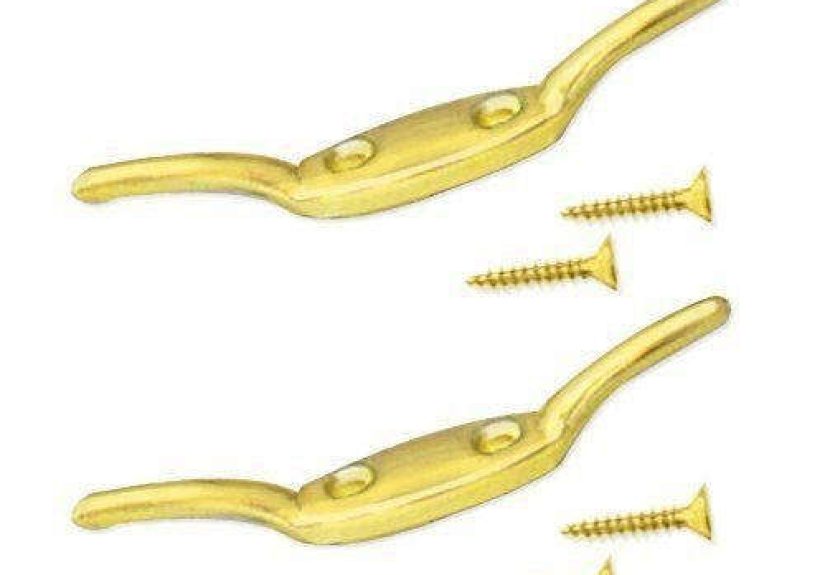
A solid brass rope cleat hook is one of those rare pieces of hardware that can look equally at home on a sailboat,
a dock, and a mudroom wall. It’s part “serious marine gear,” part “nautical décor,” and part “why didn’t I install
this years ago?” Whether you’re securing dock lines, hanging a heavy hose, or organizing a rope that keeps trying
to become a floor hazard, a cleat hook does the job with a little extra charm.
This guide breaks down what a solid brass rope cleat hook is, why brass matters (and when it doesn’t), how to choose
the right size, and how to mount it so it stays put when the wind picks upor when someone yanks on a line like
they’re starting a lawnmower.
What Exactly Is a Solid Brass Rope Cleat Hook?
A traditional rope cleat is a horn-shaped fitting designed to secure a rope with a cleat hitch. A “rope cleat hook”
usually refers to one of two designs:
-
Cleat-as-hook: a cleat mounted on a wall, post, or beam, used to wrap and store rope, cord, or
linefunctionally a hook, but better for taming slack. -
Cleat + hook combo: a cleat designed with an additional hook element (often for keys, fenders,
light gear, or a coiled line end).
In both cases, the “cleat” part provides a predictable, slip-resistant way to secure and manage rope. The “hook”
part adds day-to-day convenience: hang the coil, leash, or loop without needing another hanger nearby.
Why Solid Brass Wins Hearts (and Often, Harsh Weather)
“Solid brass” typically means the cleat is made from brass alloy throughout, not brass-plated zinc or another base metal.
That difference matters in three big ways:
-
Durability: Solid cast brass is less likely to chip or flake compared to plated hardware, especially
on edges and high-contact areas. -
Corrosion behavior: Brass resists rust (because it isn’t iron-based). In marine and outdoor environments,
it can still corrode, but generally in slower, more manageable ways than low-grade steel. -
Looks: Brass can be polished to a mirror shine, left to develop a warm patina, or finished (lacquered,
satin, antique) for a more “already lived a cool life” vibe.
One nuance: “brass” is a family of alloys. Marine-grade brasses (often with tin added) are engineered to hold up better
in seawater exposure than free-machining brasses used for indoor fittings. For boat and dock use, the best strategy is
to buy from established marine suppliers and look for hardware marketed for marine dutythen install it correctly so
fasteners and bedding don’t become the weak link.
Solid Brass vs. Brass-Plated vs. Bronze vs. Stainless Steel
If you’re shopping, you’ll see a buffet of metal choices. Here’s the practical breakdown:
Solid Brass
Great for coastal style, indoor-outdoor use, and moderate marine exposure when the alloy and installation are appropriate.
It’s also popular for decorative wall-mounted cleats because it feels substantial and ages gracefully.
Brass-Plated (Usually Zinc Alloy Underneath)
Affordable, shiny out of the box, and totally fine indoorsbut outdoors, once the plating wears through, corrosion can
accelerate quickly. If you’re mounting near salt air or using it for real line loads, plated hardware is often a false economy.
Bronze
A classic marine choice, especially for saltwater. Bronze deck fittings are known for strength and corrosion resistance.
If your cleat will see serious docking loads and regular exposure, bronze is often the “buy once, cry once” option.
316 Stainless Steel
The go-to for high-load saltwater conditionsstrong and corrosion resistant when you choose quality stainless and maintain it.
But stainless can still pit or stain in harsh marine environments, and mixed-metal setups can create galvanic corrosion if not
planned carefully.
Choosing the Right Size: Match the Cleat to the Rope (and the Job)
Cleat sizing isn’t just aesthetics. A cleat that’s too small makes line handling awkward and increases the chance of a jammed
or insecure hitch. Too large isn’t usually unsafe, but it can be bulky and harder to place.
A common rule of thumb from marine hardware suppliers is to size cleat length to rope diameter (for example, a 1/2-inch dock
line often pairs well with about a 6-inch cleat). This isn’t a law of physicsmore like a reliable shortcut that gets you in the
right neighborhood.
Quick sizing checklist
- Rope diameter: Thicker rope benefits from longer horns and more wrap space.
- Expected load: Dock lines on a heavy boat need more hardware than a light utility cord in a garage.
- Mounting surface: A cleat is only as strong as what it’s mounted to (and how).
- Line angle: Plan the lead so the rope approaches the cleat cleanly, not scraping across sharp corners.
Installation: How to Mount It So It Doesn’t Become “Decor” Mid-Storm
For wall and home use, installation is usually straightforward: locate studs (or use a backing board), drill pilot holes,
and fasten with appropriately sized screws. For marine and dock use, the standard is stronger: through-bolting with washers
and (ideally) a backing plate to spread loads.
Best practices for boats, docks, and high-load mounting
-
Dry fit and mark holes: Confirm the cleat sits flat and the rope lead makes sense (bow/stern/spring line
angles matter). -
Use proper fasteners: Marine-grade stainless fasteners are common. Match screw/bolt diameter to the cleat’s
holes and expected load. -
Add a backing plate when loads matter: G10/fiberglass laminate boards are a popular choice because they’re
strong and non-corrosive. A backing plate spreads force and reduces the risk of “crushed deck” syndrome. -
Bed the hardware to prevent leaks: Use a bedding method appropriate for your surface and future serviceability.
Many boat owners prefer butyl tape for deck hardware because it seals well and remains removable; polyurethane sealants are
tougher and can be more permanent than you want for a fitting you may need to service later. -
Tighten evenlythen re-check: Tighten until bedding compresses and squeezes out slightly, clean up, and re-check
after the bedding settles (per product guidance).
If your boat has a cored deck, take core protection seriously: over-drill, seal the core with epoxy, and re-drill to the final
size so water can’t wick into the core through fastener holes. That one step can prevent a future repair bill that arrives with
its own emotional support invoice.
How to Use a Cleat Properly: The Cleat Hitch That Doesn’t Turn Into a Snarl
The cleat hitch is popular because it’s secure, adjustable, and easy to untiewhen done correctly. The basic concept:
wrap, figure-eight, then finish with a locking turn. The most common mistakes are (1) starting from the wrong direction,
(2) stacking a mountain of wraps, and (3) skipping the clean finishing turn that keeps things from slipping.
Simple, reliable cleat hitch flow
- Lead the line to the cleat from the correct direction (so it “pulls” against the horns, not up and off them).
- Take one full turn around the base (optional but helpful for load control).
- Make figure-eight wraps across the horns.
- Finish with a neat locking turn (often a half-hitch style loop laid over a horn) so the last wrap doesn’t unravel.
More wraps don’t always equal more security. A tidy hitch that can be released under load is the goalespecially when docking,
where “panic untying” is a real sport.
Maintenance: Keep the Brass Beautiful (or Let It Age Like a Movie Star)
Brass maintenance depends on your preferred look:
-
Polished shine: Rinse salt, wash with mild soap, dry, and polish occasionally with a brass-safe polish.
A protective wax can slow tarnish. - Natural patina: Do less. Rinse off salt and grime, avoid harsh cleaners, and let time do its thing.
- Lacquered finish: Clean gentlyabrasives can damage lacquer and create patchy wear.
On boats and docks, also inspect fasteners and bedding. Many “hardware failures” begin as “tiny leak I’ll deal with later,”
which is boating’s version of saying “I’ll just ignore this smoke alarm.”
Where a Solid Brass Rope Cleat Hook Shines Outside the Marina
Not everyone buying a brass cleat hook is mooring a boat. In homes and shops, they’re popular because they’re strong, ergonomic,
and a little bit fancy:
- Entryway organizer: hang keys, dog leashes, and coil a rope-style lanyard cleanly.
- Curtain tiebacks: wrap decorative rope around the cleat for a crisp nautical look.
- Garage cord station: manage extension cords and hose lines without knots.
- Outdoor shower or pool area: hang towels and keep lines tidy in wet zones.
Buying Checklist: What to Look for Before You Click “Add to Cart”
- True solid brass (not plated): especially for outdoor or marine use.
- Base style: open-base and hollow-base designs vary in strength and installation needs.
- Hole pattern: confirm fastener spacing matches your mounting surface and backing plan.
- Finish: polished, satin, unlacquered, antiquechoose based on maintenance tolerance.
- Supplier reputation: marine suppliers tend to provide clearer specs and more consistent quality control.
Conclusion: Small Hardware, Big Difference
A solid brass rope cleat hook is a deceptively simple upgrade: it makes line handling cleaner, storage easier, and spaces
(boats or homes) feel more organized. Choose the right size for your rope, mount it like you expect it to be pulled on
(because it will), and decide whether you want it polished bright or proudly patinated. Either way, you’ll end up with a
piece of hardware that does the job and looks good doing it.
Real-World Experiences Related to Solid Brass Rope Cleat Hooks (The Stuff You Only Learn After Using One)
People often buy a brass rope cleat hook for one reasonthen discover it quietly solves three other annoyances they’d
accepted as “normal.” A common example: someone installs one near a dock box to secure a short utility line, then realizes
it’s also the perfect place to hang a coiled hose, a light fender line, and that one rogue cord that always ends up underfoot.
The cleat shape naturally “stores” line better than a basic hook because wraps sit on the horns instead of sliding off the tip.
Another pattern: first-time installers underestimate how much the mounting method affects satisfaction. When a cleat is screwed
into thin material without proper support, it can feel slightly looseeven if it hasn’t “failed.” That tiny wiggle becomes
psychologically loud. People who use backing plates (or mount into solid framing) report the opposite: the cleat feels
confidence-inspiring, like it could survive a mild hurricane and a family member who thinks rope is tightened by anger alone.
In coastal areas, owners also notice the difference between “brass-colored” and truly solid brass fairly quickly. Plated pieces
can start to show wear on corners where rope rubs, especially if the line is gritty with sand or salt crystals. Solid brass tends
to wear more honestlyno flaking finishso even when it dulls, it still looks intentional. Many people end up enjoying that
lived-in patina, because it matches the reality of outdoor life: sun, water, hands, and friction.
On boats, the biggest “aha” moment is usually about cleating technique, not the hardware itself. When someone switches from
multiple messy wraps to a clean figure-eight pattern with a proper finish, docking suddenly feels calmer. Lines come off the
cleat smoothly when it’s time to leave, and there’s less fumbling when docking in wind or current. It’s also when people notice
that an oversized cleat can make life easier: more horn length gives you space to wrap neatly without stacking rope like a tiny
spaghetti skyscraper.
For home use, the surprise benefit is aesthetic consistency. A brass cleat hook can make a space feel “designed” even if the rest
of the room is normal-life chaos. In mudrooms, they’re often used for heavy bags and leashes because the horn shape doesn’t pinch
like some narrow hooks. In bathrooms and pool areas, they keep wet items spaced out, improving drying and reducing the “towel pile
of doom.” People also like them for curtains because a rope tieback on a cleat looks intentional and is easy to adjust.
Finally, there’s the long-term satisfaction factor: solid brass hardware tends to age with you. A year later, many owners say they
like it more, not lessbecause it develops character rather than deteriorating. The cleat becomes one of those background objects
you stop noticing, which is the highest compliment any hardware can receive. It’s there, it works, it looks good, and it doesn’t
demand attentionunlike that one cabinet hinge that squeaks every time you try to sneak a midnight snack.