Table of Contents >> Show >> Hide
- Why This Skillet Lasagna Recipe Works
- Ingredients for the Best Stovetop Lasagna
- How to Make Skillet Lasagna
- What Skillet Lasagna Tastes Like
- Common Mistakes to Avoid
- Easy Variations for a One-Pan Lasagna
- What to Serve with Skillet Lasagna
- Storage, Reheating, and Leftovers
- Why This Recipe Is Great for Busy Home Cooks
- Final Thoughts on This Skillet Lasagna Recipe
- Real-Life Experiences with Skillet Lasagna Recipe
Lasagna has a wonderful reputation for being delicious and an equally dramatic reputation for turning your kitchen into a pasta-splattered construction site. That is exactly why a skillet lasagna recipe deserves a standing ovation, or at least a polite fork tap on the table. It gives you the rich, saucy, cheesy comfort of classic lasagna without requiring an engineering degree in layering or a sink full of dishes glaring at you like disappointed relatives.
This version is designed for real life. It is bold enough for Sunday-dinner cravings, but fast enough for a Tuesday when your energy level is somewhere between “I can cook” and “cereal sounds pretty great.” The noodles cook right in the sauce, the cheese goes on in cozy little clouds, and the whole thing comes together in one pan. That means fewer dishes, faster cleanup, and more time to enjoy the kind of meal that makes everyone hover in the kitchen asking, “Is it ready yet?”
Prep time: 15 minutes
Cook time: 35 minutes
Total time: 50 minutes
Serves: 4 to 6
Why This Skillet Lasagna Recipe Works
The magic of skillet lasagna is not complicated. Instead of boiling noodles in one pot, simmering sauce in another, and building neat layers in a baking dish, you let the pasta soften directly in the sauce. The starch from the noodles helps thicken everything, so the finished dish tastes rich and cohesive rather than watery. In other words, the noodles are not just invited to dinner. They help host it.
This one-pan lasagna also gives you more control over texture. You can keep the sauce loose and spoonable, or simmer a bit longer for a thicker, heartier finish. If your skillet is oven-safe, you can even broil it briefly for bubbly golden cheese on top. If not, no problem. Melted cheese from the stovetop is still a perfectly respectable life choice.
Ingredients for the Best Stovetop Lasagna
Main Ingredients
- 1 tablespoon olive oil
- 1 pound Italian sausage or ground beef
- 1 small yellow onion, finely diced
- 3 cloves garlic, minced
- 1 teaspoon Italian seasoning
- 1/4 teaspoon crushed red pepper flakes, optional
- 24 ounces marinara sauce
- 2 cups water or low-sodium chicken broth
- 8 lasagna noodles, broken into bite-size pieces
- 1 cup ricotta cheese
- 2 cups shredded mozzarella cheese
- 1/3 cup grated Parmesan cheese
- 2 tablespoons chopped fresh basil or parsley
- Salt and black pepper, to taste
Optional Add-Ins
- 2 cups baby spinach
- 8 ounces sliced mushrooms
- 1 tablespoon tomato paste for deeper flavor
- 1/2 teaspoon fennel seeds if you want sausage-shop energy
These ingredients create the ideal easy skillet lasagna: savory, saucy, cheesy, and comforting without drifting into heavy, nap-required territory. The marinara gives you speed, the sausage or beef brings flavor, and the ricotta-mozzarella-Parmesan trio keeps the dish tasting unmistakably like lasagna instead of “pasta that got very optimistic.”
How to Make Skillet Lasagna
Step 1: Brown the Meat
Heat a large, deep skillet over medium heat and add the olive oil. Add the sausage or ground beef and cook until browned, breaking it up into small crumbles with a wooden spoon. If your meat releases a lot of fat, drain off most of it. A little flavor is great. A grease pond is not.
Step 2: Build the Flavor Base
Add the onion and cook for 3 to 4 minutes, until softened. Stir in the garlic, Italian seasoning, and crushed red pepper flakes. Cook for about 30 seconds, just until fragrant. This quick step wakes up the aromatics and gives the sauce that “slow-cooked all day” energy, even though your clock knows better.
Step 3: Add Sauce and Liquid
Pour in the marinara sauce and water or broth. Stir well. If you are using tomato paste, add it now. Bring the mixture to a gentle simmer. You want enough liquid for the noodles to cook without turning the skillet into pasta cement.
Step 4: Add the Broken Lasagna Noodles
Break the lasagna noodles into rough 2-inch pieces and stir them into the sauce. Do not stress about perfect shapes. This is skillet lasagna, not an audition for a geometry contest. Make sure the noodles are mostly submerged so they cook evenly.
Step 5: Cover and Simmer
Reduce the heat to medium-low, cover the skillet, and cook for 18 to 22 minutes, stirring every few minutes to prevent sticking. If the mixture looks too thick before the noodles are tender, add a splash of water. If it looks too loose near the end, uncover the skillet and simmer for a few extra minutes.
Step 6: Add the Cheese
Once the noodles are tender, dollop the ricotta over the top, then sprinkle on the mozzarella and Parmesan. Cover the skillet again for 2 to 4 minutes, until the cheese melts. For a more dramatic finish, place the skillet under the broiler for 2 minutes if it is oven-safe.
Step 7: Rest, Garnish, and Serve
Let the skillet rest for 5 minutes before serving. This helps the sauce settle and keeps the cheese from sliding around like it is late for a meeting. Finish with basil or parsley and a little black pepper.
What Skillet Lasagna Tastes Like
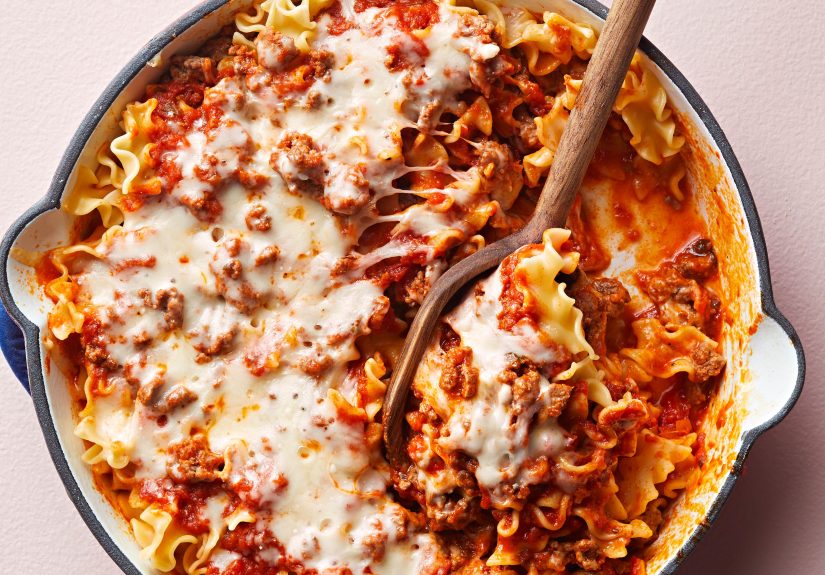
A good cast-iron lasagna recipe should taste like classic lasagna’s relaxed cousin. It has the same tomato richness, creamy cheese, and savory depth, but the texture is a little more rustic and spoonable. Instead of clean bakery-style layers, you get saucy ribbons of pasta and pockets of cheese in every bite. It is less formal, more forgiving, and honestly more fun to eat.
The edges may get slightly caramelized, the center stays soft and comforting, and the sauce clings to the noodles in a way that feels deeply satisfying. It is exactly the kind of weeknight pasta dinner that makes people think you tried harder than you actually did. That is not deceit. That is efficiency.
Common Mistakes to Avoid
Using Too Little Liquid
The noodles need room to soften. If the skillet looks dry too early, add a little more water or broth. Lasagna noodles are thirsty little overachievers.
Not Stirring Enough
You do not need to hover dramatically over the pan, but stirring every few minutes helps the noodles cook evenly and keeps them from sticking together in one giant pasta handshake.
Overcooking the Pasta
Stop simmering once the noodles are tender. The dish will continue to thicken slightly as it rests, and overcooked noodles can go from cozy to mushy fast.
Adding Cheese Too Early
If you add the cheese before the noodles are nearly done, it can disappear into the sauce instead of sitting on top in creamy, melty layers. Save the cheese flourish for the end.
Easy Variations for a One-Pan Lasagna
Spinach and Ricotta Skillet Lasagna
Stir in baby spinach during the last few minutes of cooking. It wilts quickly and adds color, freshness, and the pleasant illusion that you are being extra responsible.
Mushroom Skillet Lasagna
Add sliced mushrooms after browning the meat, or use them instead of meat for a vegetarian version. Mushrooms bring an earthy, savory depth that works beautifully with ricotta and Parmesan.
Turkey or Chicken Version
Swap the beef or sausage for ground turkey or chicken if you want a lighter skillet pasta. Just add a little extra seasoning so the flavor stays lively.
Spicy Skillet Lasagna
Use hot Italian sausage and a touch more crushed red pepper for a bolder version that brings the heat without overpowering the cheese.
What to Serve with Skillet Lasagna
This easy lasagna without baking is rich enough to stand alone, but a few simple sides make it feel like a full meal. A crisp green salad with vinaigrette is the classic move because the acidity balances the cheese and sauce. Garlic bread is also excellent, mainly because no one has ever been sad to see garlic bread show up.
Roasted broccoli, sautéed green beans, or a tomato-cucumber salad also work well. Keep the sides simple. The skillet is doing most of the talking here, and frankly, it has earned the microphone.
Storage, Reheating, and Leftovers
Store leftover skillet lasagna in an airtight container in the refrigerator for up to 4 days. Reheat gently on the stovetop or in the microwave with a splash of water to loosen the sauce. The flavors deepen overnight, which means tomorrow’s lunch may be annoyingly better than tonight’s dinner in the most delightful way possible.
You can freeze it, but the texture of the noodles and cheese is best when enjoyed fresh or within a few days. This is one of those recipes that rewards immediate enthusiasm.
Why This Recipe Is Great for Busy Home Cooks
A skillet lasagna recipe is more than a shortcut. It is a smart answer to the way people actually cook during the week. It cuts down on cleanup, streamlines the method, and still delivers the nostalgic comfort people want from lasagna. You do not have to boil noodles, dirty a casserole dish, or wait forever for layers to set. You just cook, melt, serve, and accept compliments with appropriate humility.
It is also flexible enough for families, singles, and anyone feeding hungry people with opinions. You can make it meatier, cheesier, lighter, greener, spicier, or more pantry-friendly depending on what you have. It is forgiving, reliable, and extremely difficult to hate. That is a strong résumé for any dinner.
Final Thoughts on This Skillet Lasagna Recipe
If you love the flavor of traditional lasagna but do not always love the full production, this stovetop lasagna deserves a place in your regular rotation. It brings together everything people crave in a comfort-food dinner: bubbling sauce, tender noodles, creamy cheese, and hearty flavor in a format that feels doable even on hectic nights.
Make it once, and you will understand the appeal immediately. It is the kind of recipe that sneaks into your weeknight habits and stays there, not because it is trendy, but because it works. And in the world of dinner, “works” is one of the most beautiful words in the English language.
Real-Life Experiences with Skillet Lasagna Recipe
One reason skillet lasagna has become such a favorite in home kitchens is that it solves the emotional problem of dinner as much as the practical one. Traditional lasagna is wonderful, but it often asks for the kind of time and patience people simply do not have on a weeknight. Skillet lasagna steps in like a very competent friend who says, “Relax, I brought dinner and I only used one pan.” That is not just convenient. It is comforting in a completely different way.
Many people first try a skillet lasagna recipe when they are craving something hearty but do not want to commit to a full baking project. The experience is usually the same: slight skepticism at first, followed by surprise when the kitchen starts smelling like real lasagna. There is a moment, usually right after the cheese melts, when you realize this is not some sad shortcut. It is genuinely excellent. That realization tends to create instant loyalty.
It is also a recipe that teaches confidence. Newer cooks often find layered lasagna intimidating because there are so many steps: boiling, mixing, layering, baking, resting. With skillet lasagna, the process feels more approachable. You brown the meat, stir the sauce, add the noodles, and let the skillet do its thing. It is a recipe that says, “You do not need to be fancy to make something deeply satisfying.” That is a pretty nice lesson for a Tuesday night.
Families tend to love it because it looks generous and tastes familiar. Kids usually respond well to the saucy noodles and melted cheese, while adults appreciate that it feels homemade instead of boxed or rushed. It is also a sneaky crowd-pleaser when you need a casual dinner for friends. Put the skillet in the middle of the table, add a salad and bread, and suddenly the whole meal feels warm and communal. Nobody cares that you skipped the casserole dish. In fact, most people are too busy going back for seconds.
Another common experience is discovering how adaptable the recipe is. One cook adds spinach because that is what is in the fridge. Another uses turkey instead of sausage. Someone else tosses in mushrooms, extra garlic, or a pinch of chili flakes because dinner needs a little attitude. Skillet lasagna handles all of it with surprising grace. It is one of those rare recipes that feels stable enough to trust and flexible enough to personalize.
Perhaps the best part is the leftover experience. A scoop of reheated skillet lasagna the next day has a rich, settled flavor that feels even more complete. It makes lunch feel suspiciously luxurious for something that came out of a storage container. And that may be the true genius of this dish: it is easy enough for a busy night, cozy enough for a comfort craving, and good enough to make tomorrow’s lunch the envy of every sad desk salad in the building.