Table of Contents >> Show >> Hide
- Battery vs. Alternator: What Is the Difference?
- Why the Symptoms Overlap So Much
- Common Signs of a Bad Car Battery
- 1. Slow cranking or clicking when you start the car
- 2. The car starts with a jump, then seems okay for a while
- 3. The battery will not hold a charge
- 4. Corrosion on the terminals
- 5. A swollen battery case or bad smell
- 6. Electrical issues show up mostly before the engine is running
- 7. The battery is old
- Common Signs of a Bad Alternator
- 1. The battery warning light comes on while driving
- 2. Headlights dim, brighten, or flicker while the engine is running
- 3. Power accessories act strange while driving
- 4. The car stalls after a jump-start or dies while driving
- 5. Repeatedly dead batteries
- 6. Strange noises under the hood
- 7. Burning rubber or electrical smell
- Bad Car Battery vs. Alternator: Quick Comparison
- Expert Tips to Tell Which One Is Actually Bad
- Other Problems That Can Mimic Battery or Alternator Failure
- When You Should Stop Driving
- Final Verdict: Battery or Alternator?
- Real-World Experiences: What Drivers Often Notice First
If your car suddenly acts like it woke up on the wrong side of the garage, you are not alone. One day it starts like a champ, and the next day it groans, clicks, flickers, or quits like it just remembered it has no vacation time left. In many cases, the two usual suspects are the battery and the alternator. The tricky part is that they love to impersonate each other.
That is why so many drivers replace the battery, feel briefly victorious, and then end up stranded again because the alternator was the real troublemaker all along. Or they blame the alternator when the battery is simply old, tired, and ready for retirement. Knowing the difference can save money, time, and a whole lot of dramatic parking-lot sighing.
In this guide, you will learn the most common signs of a bad car battery versus alternator trouble, how to tell which one is more likely causing the problem, and which symptoms should send you to a mechanic before your car turns into a very expensive lawn ornament.
Battery vs. Alternator: What Is the Difference?
Before we compare symptoms, it helps to know what each part actually does.
The car battery
Your battery provides the burst of electrical power needed to start the engine. It also supports electronics when the engine is off and helps stabilize voltage for the electrical system. Think of it as the sprinter: powerful at the starting line, but not meant to run the whole race by itself.
The alternator
Your alternator takes over once the engine is running. It powers the vehicle’s electrical systems and recharges the battery while you drive. Think of it as the power plant. If it stops doing its job, the battery is forced to carry the entire load, and that never ends well.
Here is the simple version: the battery starts the car, and the alternator keeps it alive. When either one fails, you can get similar symptoms, which is why diagnosis matters.
Why the Symptoms Overlap So Much
A weak battery can make the car crank slowly, dim the lights, and trigger warning lights. A failing alternator can also make the battery seem weak because it is not charging it properly. To make things even messier, corroded terminals, loose battery cables, a slipping serpentine belt, bad grounds, or a faulty voltage regulator can mimic both problems.
That overlap is why drivers often describe the issue with the same words: “The car is hard to start,” “The lights are weird,” or “It died even though I just jumped it.” The key is to notice when the symptoms happen and how the car behaves before start-up, during driving, and after a jump-start.
Common Signs of a Bad Car Battery
1. Slow cranking or clicking when you start the car
If the engine turns over slowly, sounds tired, or gives you rapid clicking instead of a healthy start, the battery is often the first place to look. This is one of the classic signs of a weak or dying battery. It may still have enough power to light the dashboard, but not enough muscle to crank the engine properly.
2. The car starts with a jump, then seems okay for a while
If a jump-start gets the vehicle going and it continues to run normally, the battery may simply be too weak to start the car on its own. That does not automatically clear the alternator, but it does make the battery a stronger suspect, especially if the problem returns after the car sits overnight.
3. The battery will not hold a charge
If you charge the battery or replace it and it keeps going dead after sitting, the battery may be worn out internally. Old batteries can lose their ability to store energy even when the rest of the charging system is fine. That is especially common in batteries that are already several years old.
4. Corrosion on the terminals
If you see white, blue, or greenish buildup around the battery terminals, that can interfere with the electrical connection and cause starting trouble. Corrosion does not always mean the battery itself is dead, but it absolutely can make a good battery behave like a bad one.
5. A swollen battery case or bad smell
If the battery case looks bloated, cracked, or misshapen, or if you notice a sulfur-like rotten-egg smell, the battery may be overheating, leaking, or internally damaged. That is not a “maybe later” issue. That is a “deal with it now” issue.
6. Electrical issues show up mostly before the engine is running
Dim dome lights, weak dashboard lights, or power accessories acting lazy before the engine starts can point toward battery trouble. If the car struggles mostly during start-up but behaves normally once running, the battery is more likely than the alternator.
7. The battery is old
Age matters. Many car batteries last around three to five years depending on climate, driving habits, and maintenance. Hot weather, short trips, and long periods of sitting can shorten battery life. Sometimes the most accurate diagnostic tool is simply a calendar with trust issues.
Common Signs of a Bad Alternator
1. The battery warning light comes on while driving
This one fools people all the time. The battery-shaped light on your dashboard does not always mean the battery itself has failed. Very often, it means the charging system is not working correctly. In plain English, your alternator may not be charging the battery the way it should.
2. Headlights dim, brighten, or flicker while the engine is running
If your headlights pulse like they are auditioning for a haunted house, the alternator is a prime suspect. A failing alternator can provide inconsistent voltage, which causes lights to dim or suddenly brighten, especially as engine speed changes.
3. Power accessories act strange while driving
Slow power windows, glitchy infotainment screens, weak blower motors, laggy heated seats, or a radio that seems to have emotional instability can all point to alternator trouble. When the alternator cannot keep up, accessories may behave erratically because the car is starved for consistent electrical power.
4. The car stalls after a jump-start or dies while driving
This is one of the biggest red flags. If you jump-start the car and it dies shortly afterward, or it stalls while driving, the alternator moves way up the suspect list. A battery can start the car, but if the alternator is not supplying power once the engine is running, the whole system can shut down.
5. Repeatedly dead batteries
If you have gone through more than one battery in a suspiciously short period, the alternator may be undercharging or overcharging. Either condition can shorten battery life. Replacing the battery without checking the alternator is like mopping the floor while the sink is still overflowing.
6. Strange noises under the hood
Whining, grinding, squealing, or growling noises can point to alternator bearing problems or issues with the drive belt. A loose or worn serpentine belt can also reduce alternator output and trigger charging problems.
7. Burning rubber or electrical smell
An overheating alternator, slipping belt, or charging-system failure can create a burning smell. If your car smells like toasted wiring or hot rubber, do not ignore it. Electrical smells are your car’s version of waving a giant red flag.
Bad Car Battery vs. Alternator: Quick Comparison
| Symptom | More Likely Battery | More Likely Alternator |
|---|---|---|
| Slow crank or clicking at start | Yes | Sometimes, if it already drained the battery |
| Battery light stays on while driving | Sometimes | Yes |
| Lights dim or brighten with engine speed | Uncommon | Yes |
| Corroded terminals or swollen case | Yes | No |
| Car dies shortly after a jump-start | Less likely | Yes |
| Electrical accessories fail while driving | Possible | Very likely |
| Repeated dead batteries | Possible | Very possible |
| Whining, grinding, burning smell | Rare | Yes |
Expert Tips to Tell Which One Is Actually Bad
Pay attention to when the problem happens
If the trouble is mostly during starting, the battery is more likely. If the problem shows up while driving, especially with flickering lights and strange electrical behavior, the alternator deserves a hard stare.
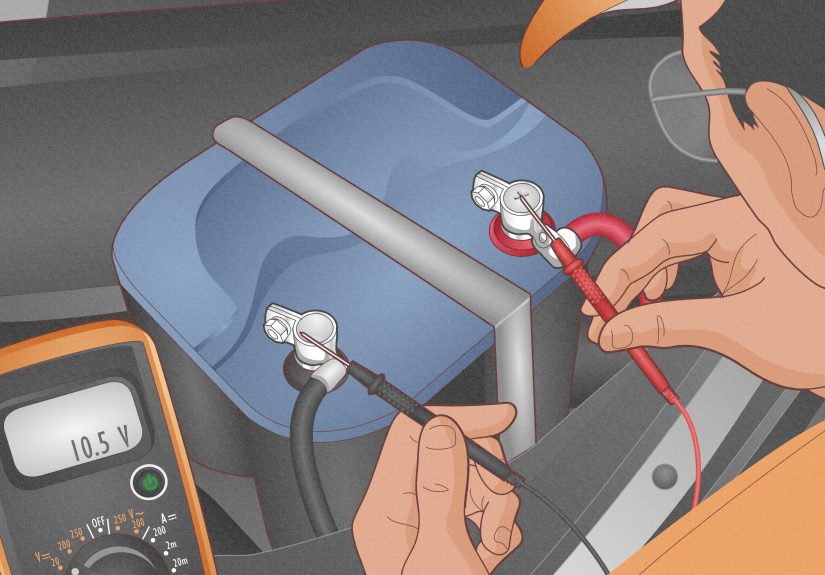
Use a multimeter
A multimeter can make this diagnosis much less mysterious. A healthy battery at rest is often in the neighborhood of 12.4 to 12.8 volts. With the engine running, many vehicles should show roughly 13.5 to 14.5 volts at the battery terminals. If running voltage stays too low, the alternator may not be charging properly.
That said, modern charging systems can vary by vehicle, temperature, and electrical load, so use the reading as a clue, not a courtroom verdict. When in doubt, compare your numbers with your vehicle’s service information.
Notice what happens after a jump-start
If the car starts with a jump and then runs fine, only to fail again later after sitting, the battery is often the issue. If the car starts but then quickly dies, stalls, or keeps acting starved for power, the alternator is more likely at fault.
Inspect the simple stuff first
Before condemning either part, look for loose cables, corrosion, damaged battery terminals, and a worn or slipping serpentine belt. Sometimes the villain is not the battery or the alternator at all. Sometimes it is a crusty terminal pretending to be a much bigger problem.
Do not use the old “disconnect the battery while the engine runs” trick
Years ago, some people tried removing the battery cable while the car was running to test the alternator. That is a bad idea on modern vehicles. It can damage sensitive electronics, create voltage spikes, and turn a minor repair into a major invoice.
Other Problems That Can Mimic Battery or Alternator Failure
Not every no-start or electrical issue means you need a new battery or alternator. A bad starter, parasitic battery drain, blown fuse, poor ground, faulty voltage regulator, damaged wiring, or broken serpentine belt can create nearly identical symptoms. Even extreme heat or freezing weather can change how the battery behaves.
That is why professional testing matters. Many parts stores and repair shops can test the battery and charging system quickly. A little diagnosis upfront is far cheaper than replacing parts by guesswork and hope.
When You Should Stop Driving
If the battery warning light comes on while driving and you also notice dimming headlights, failing accessories, or a burning smell, treat it as urgent. If the alternator is failing, the car may continue for a short distance on battery power alone, but once that power runs out, the engine can stall.
If the vehicle is losing power, getting harder to steer, or showing multiple electrical failures, move to a safe location and get help. This is not the moment for optimism or inspirational quotes.
Final Verdict: Battery or Alternator?
If your car struggles to start, clicks, has visible battery corrosion, or has an old swollen battery, the battery is the more likely culprit. If the battery warning light shows up while driving, the lights flicker or brighten with engine speed, accessories go haywire, or the car stalls after a jump-start, the alternator is the better suspect.
Still, the smartest move is not to guess. Test the battery, test the charging system, and inspect the terminals and belt. Because in the world of car electrical problems, symptoms overlap, assumptions get expensive, and the wrong replacement part does not come with a refund for wounded pride.
Real-World Experiences: What Drivers Often Notice First
One of the most common battery-related experiences starts on a cold morning. A driver heads out, turns the key, and instead of a crisp start, the engine drags like it stayed up too late watching reruns. The dashboard lights come on, maybe the radio even works, but the engine only gives a slow groan and a few clicks. Later that day, with a jump-start, the car fires up and behaves normally. That pattern often points to a weak battery that still has a little fight left, but not enough to win the morning shift.
Alternator problems usually create a more dramatic story. Drivers often say the car started fine, which is what makes the experience confusing. Then, while driving home, the headlights begin to dim at stoplights and brighten when the engine revs. The power windows move slowly, the radio cuts out, and the battery light suddenly appears on the dash like an uninvited guest. A few miles later, the engine starts stumbling or the vehicle stalls entirely. That sequence feels random in the moment, but it is a classic charging-system complaint.
Another common experience involves replacing the battery, feeling relieved, and then being annoyed all over again. The new battery works for a day or two, then the same symptoms come back. The car needs another jump. The driver begins suspecting ghosts, sabotage, or a personal curse. In reality, the alternator may have been undercharging the old battery and is now doing the exact same thing to the new one. This is why repeated battery failures should always raise suspicion about the alternator, voltage regulator, or belt.
Corroded terminals create a different kind of confusion. A driver may assume the battery is dead because the car will not start consistently, but the real problem is a poor connection. Wiggle the cables, clean the corrosion, tighten everything properly, and suddenly the car springs back to life like it was being dramatic for attention. It is a good reminder that electrical problems are not always glamorous. Sometimes the culprit is a fuzzy blue-green crust on the terminals.
Then there is the “it dies after I jump it” experience, which mechanics hear all the time. The car starts with outside help, runs for a few minutes, and then shuts off again. Drivers often describe it as though the battery “didn’t hold the jump.” In many cases, the battery did its part. The alternator simply failed to keep the system powered afterward. That difference matters because it changes the repair completely.
In real life, battery trouble tends to announce itself at start-up, while alternator trouble often reveals itself after the car is already running. That is not a perfect rule, but it is a useful one. When drivers remember exactly when the symptoms showed up, what the lights did, and how the car acted after a jump, diagnosis becomes much easier and much less expensive.