Table of Contents >> Show >> Hide
- Why Nantucket Feels Like the Capital of Coastal Vintage
- What “Coastal Vintage” Really Means on Nantucket
- The Shops That Define the Look
- Fashion, Books, Paper, and the Supporting Cast of a Great Shopping Day
- How to Shop Nantucket Without Buying the Wrong Kind of “Coastal”
- The Real Luxury of Shopping on Nantucket
- A Longer Entry From the Diary: One Perfect Nantucket Shopping Afternoon
- Conclusion
There are beach towns, and then there is Nantucket: the kind of place that makes you want to buy a striped sweater you absolutely do not need, a handwoven throw you absolutely do, and a brass candlestick that somehow whispers, “I have seen things.” Shopping here is not a frantic sport. It is more like a slow, elegant treasure hunt conducted between cobblestone streets, salt air, weathered shingles, and the occasional hydrangea ambush. If coastal vintage has a spiritual headquarters, it may very well be on this little island off Massachusetts, where the retail scene feels less like trend-chasing and more like a master class in collecting with taste.
That is the magic of coastal vintage on Nantucket. It is not gimmicky beach décor with a side of fake rope knots. It is layered, lived-in, slightly rumpled in the best possible way, and full of objects that look as though they came with their own stories. Think baskets with heritage, textiles with texture, old prints, ship-shape silver, worn wood, hand-thrown pottery, and the kind of blue-and-white palette that somehow never gets old. The island’s best shops know this. They do not scream. They murmur. And somehow, you leave wanting to redo a guest room, a bookshelves situation, and maybe your whole personality.
Why Nantucket Feels Like the Capital of Coastal Vintage
Nantucket’s style is not an accident. It comes from history, preservation, and a stubborn island commitment to character. The island’s famously protected look has helped keep its visual identity intact, so shopping here never feels detached from place. You notice it immediately in town: the shingled buildings, old storefronts, narrow lanes, and the sense that the past has not been erased just because somebody invented online checkout. This is one reason Nantucket feels so different from glossy resort towns that all start to blur together after the third iced coffee and fourth overpriced tote bag.
The local aesthetic is also deeply tied to maritime history. Nantucket’s whaling era, craftsmanship traditions, and long affection for practical beauty created a design language that still shows up in stores today. You see it in handwoven textiles, sailor’s valentines, antique maps, basketry, wood carvings, old oil paintings, and furniture that looks happiest when it has a little patina and a lot of purpose. The result is a version of coastal style that feels grounded rather than staged. It is polished, yes, but not precious. Nantucket’s rooms and shops tend to look as though real people actually live there, read there, drop sand there, and occasionally place wet towels where no wet towel should ever go.
What “Coastal Vintage” Really Means on Nantucket
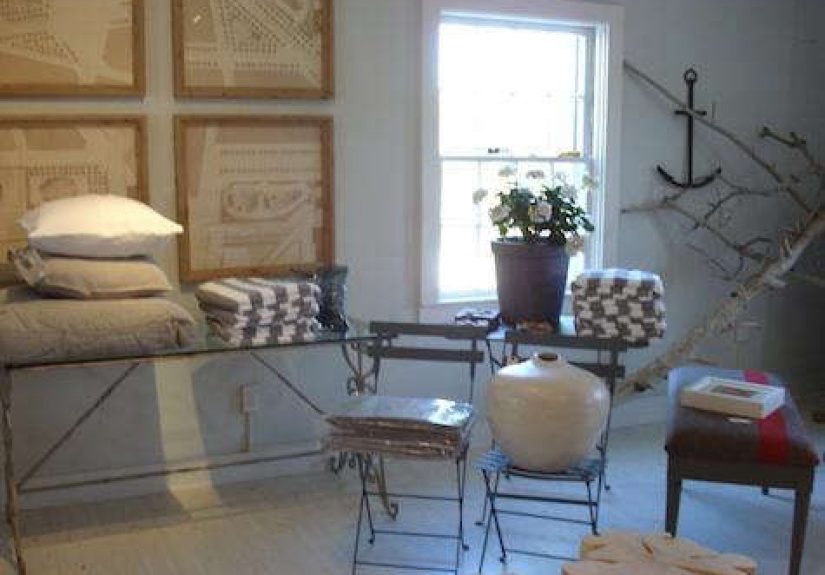
On Nantucket, coastal vintage is less about theme and more about tone. It is the difference between decorating with a decorative anchor from aisle seven and finding an old brass ship lamp that looks like it survived a nor’easter with opinions. The island’s best shopping leans into materials and memory: cane, linen, rattan, weathered oak, wool, shellwork, glass, faded stripes, and time-softened neutrals. The mood is collected, not coordinated. Nothing says “I just bought all of this at once” because the good stuff never does.
The smartest Nantucket shops also understand restraint. Coastal vintage here is rarely overloaded with nautical clichés. Instead, it relies on texture, craftsmanship, and that elusive thing known as taste. A room might feature an antique chest, handwoven blanket, ceramic lamp, and one perfect bowl that looks as though it has been passed down since the Kennedy administration. The whole point is balance: part seaside ease, part New England discipline, part “I found this in a small shop and now I’m morally obligated to tell you the backstory.”
The Shops That Define the Look
Nantucket Looms: The Island’s Design North Star
If you only have time for one home-focused stop, make it Nantucket Looms. It is one of the island’s most iconic retail institutions, and for good reason. What began as a weaving studio in the late 1960s has evolved into a design landmark that still feels rooted in craft. The shop’s handwoven throws, blankets, tabletop pieces, and decorative accessories capture the Nantucket mood beautifully: tactile, understated, elegant, and unmistakably local.
What makes Nantucket Looms especially compelling is that it does not just sell things; it sells continuity. The weaving tradition, the support for local artisans, and the mix of home goods and art all reinforce the idea that coastal vintage is not just a style category but a cultural practice. You are not merely buying a throw. You are buying the fantasy that your living room can become quieter, more layered, and approximately 73 percent more refined. Honestly, that is money well spent.
Flowers on Chestnut: The Pretty, the Playful, and the Giftable
Then there is Flowers on Chestnut, one of those shops that manages to feel festive, elegant, and dangerous to your credit card at the same time. Known for florals, gifts, and homewares, it captures a softer, more entertaining-friendly side of Nantucket style. This is where coastal vintage meets the hostess gene. It is easy to imagine walking in for a candle and walking out with paper goods, table accents, and a sudden desire to throw a clambake you are in no way emotionally prepared to host.
Part of the appeal is that the merchandise feels useful and whimsical at once. Nantucket shopping works best when it reflects how people actually live on the island: casually but beautifully, with a little more thought given to the table, the guest room, and the small rituals of summer. Flowers on Chestnut gets that balance exactly right.
Sylvia Antiques and the Thrill of Provenance
If Nantucket Looms gives you the polished version of island craft, Sylvia Antiques delivers the goosebumps. Vintage lovers know the joy of finding a piece that has presence, and Sylvia Antiques is famous for exactly that kind of object. Maritime artwork, shipping artifacts, sailor’s valentines, and traditional Nantucket baskets are the kinds of finds that make you lean in and ask questions. This is not fast shopping. This is forensic shopping, the fun kind.
Antique buying on Nantucket is special because the objects feel native to the setting. A ship portrait on a random wall in a random city is charming. A ship portrait on Nantucket feels like it came home. The same is true of shellwork, maritime silver, and woven baskets. These are not props for a look; they are part of the island’s visual vocabulary. Even if you leave with something small, the experience recalibrates your eye. Suddenly the mass-produced “coastal” section at a big-box store feels a little too eager and a little too shiny.
Fashion, Books, Paper, and the Supporting Cast of a Great Shopping Day
Coastal vintage on Nantucket is not limited to home décor. The island’s shopping scene also shines in fashion, books, and beautifully unnecessary little luxuries. Boutiques like Milly & Grace and Salt Boutique speak fluent Nantucket: breezy dresses, polished knitwear, and a kind of relaxed prep that somehow looks effortless even though it probably required very deliberate effort. The mood is crisp, easy, and just elevated enough to make you rethink every wrinkled T-shirt in your suitcase.
Bookstores matter here, too. Mitchell’s Book Corner and Nantucket Bookworks add something essential to the shopper’s diary experience: pause. On an island where style and storytelling overlap so naturally, stepping into a bookstore feels like part of the same ritual as browsing textiles or antiques. You buy a novel for the beach, a cookery book for your fantasy life, or a hardcover you swear is a gift but secretly plan to keep. That, too, is Nantucket tradition.
And then there are the specialty stores that make a shopping day feel complete: paper shops, gift boutiques, little corners filled with stationery, ceramics, candles, and objects that are impossible to justify and therefore irresistible. Nantucket understands the art of the small souvenir. The best purchase is often not the largest one. It is the item that carries place most vividly: a handwoven napkin, a basket, a shell-framed note card, a little painting of the harbor, or a book that smells faintly of cedar and old summers.
How to Shop Nantucket Without Buying the Wrong Kind of “Coastal”
There is a difference between coastal vintage and coastal clutter. Nantucket is an excellent teacher on this front. The island’s most stylish interiors rarely rely on novelty. Instead, they favor useful things, natural materials, and pieces with enough age or craftsmanship to hold their own. That means shopping with discipline. Buy the basket, skip the sign that says “Seas the Day.” Buy the handwoven throw, skip the aggressively nautical pillow embroidered by someone who has clearly never met the ocean.
A good rule of thumb is to ask whether an item would still look beautiful if you moved it inland. If the answer is yes, you are on the right track. True Nantucket style travels well because it is built on quality and mood, not gimmick. Old wood, woven textures, faded prints, and strong craftsmanship do not need a zip code to make sense.
It also helps to mix rather than match. Nantucket interiors and wardrobes are interesting because they feel accumulated. Pair the antique with the modern lamp. Put the old basket near the sleek console. Let the woven blanket soften a sharper piece of furniture. The goal is not to recreate a museum of island life. The goal is to borrow the island’s confidence in things that last.
The Real Luxury of Shopping on Nantucket
What makes shopping on Nantucket memorable is not just what you buy. It is how the whole experience unfolds. You walk from one store to another under old trees and changing light. You stop for coffee. You peek into a window display that looks like somebody’s dream pantry. You tell yourself you are only browsing. Reader, you are never only browsing. Not here.
There is also something wonderfully unfashionable, in the best sense, about Nantucket’s retail culture. Even when new boutiques open and stylish visitors flood in for the season, the island still rewards knowledge, quality, and local sensibility over hype. That makes it ideal for shoppers who want their purchases to feel personal rather than algorithm-approved. The best finds are the ones that do not scream for attention. They simply keep getting better in your house, year after year, quietly proving they were the right choice all along.
That is why a shopper’s diary from Nantucket never reads like a list of transactions. It reads like a record of atmosphere. A woven throw. A basket with a story. A bookstore detour. A paper-wrapped candle. A tiny painting of a harbor you cannot stop thinking about. Coastal vintage on Nantucket is not about buying the island whole. It is about taking home a few honest pieces of its rhythm and letting them settle into your life.
A Longer Entry From the Diary: One Perfect Nantucket Shopping Afternoon
By late afternoon, Nantucket begins to look like it has been art-directed by someone with a weakness for silver light and weathered cedar. The sidewalks soften, shop windows glow, and every person carrying tissue paper suddenly appears to be living a better, more organized life than you are. This is when the real shopper’s diary begins.
I started with the noble intention of “just looking,” which is universally recognized as the first lie of any good shopping day. First stop: textiles. There is something about touching a handwoven throw on Nantucket that makes every synthetic blanket you have ever owned feel like an apology. The textures are softer, the colors are smarter, and the entire experience suggests that maybe your home has been underachieving. Not in a cruel way. In an encouraging way. Like a stylish friend who gently tells you your living room could use more soul and fewer impulse purchases from midnight scrolling sessions.
From there, the mood shifted from woven calm to antique curiosity. An old basket sat under glass looking entirely unbothered by trends. Nearby, a maritime print had the kind of faded authority that modern reproductions spend years trying and failing to imitate. Shellwork glimmered without being tacky, which is frankly a rare and beautiful achievement. On Nantucket, even the decorative objects seem to have posture. You do not simply look at them; you square your shoulders a little and try to deserve them.
Then came the small-shop drift, which is one of the island’s great pleasures. You wander in for stationery and emerge wanting linen cocktail napkins. You pop into a bookstore and leave with a novel, a cookbook, and an entirely unrealistic fantasy about becoming the sort of person who annotates books while drinking tea near an open window. You admire a vase you do not need, circle it twice, walk out, then march back in because apparently restraint took the ferry home without you.
What I loved most was how coherent the whole retail experience felt. The fashion boutiques, paper shops, home stores, and antiques dealers all seemed to be in conversation with one another. Nothing felt random. The island’s style moved through everything: the blue-greys, the creamy whites, the woven textures, the polished-but-not-fussy silhouettes, the faint sense that every object had been chosen by someone who knows the difference between timeless and merely expensive. Even the packaging looked charming enough to keep.
At some point, naturally, there was a snack. Shopping on Nantucket is best treated like a stamina event with aesthetic rewards. You pause, regroup, compare notes with yourself, and review the situation in your tote bag. A book. A candle. A set of paper goods. A small ceramic bowl. Absolutely no regrets, though perhaps a few budgetary mysteries. Then you head back out because the light is still lovely and one more shop cannot possibly hurt. This is false, but it is a pleasant falsehood.
By the time evening rolled in, the day no longer felt like shopping in the ordinary sense. It felt like editing. Not just editing what to bring home, but editing your eye, your habits, and maybe even your definition of luxury. On Nantucket, luxury is not the loudest thing in the room. It is the well-made, well-aged, quietly confident thing that earns its place slowly. That is why coastal vintage works so well here. It is not trying to impress you in five seconds. It expects you to notice more carefully than that.
And maybe that is the real souvenir of Nantucket shopping: better attention. You leave wanting fewer things, but better ones. Fewer gimmicks, more texture. Less noise, more story. A little salt air in your memory, a little paper wrapping in your suitcase, and one excellent object at home that will always remind you of cobblestones, sea light, and the dangerous idea that “just one more shop” is a completely reasonable plan.
Conclusion
Nantucket has a rare talent for making shopping feel meaningful. Its best stores do more than sell pretty things; they preserve an island language of craftsmanship, memory, and understated beauty. For anyone drawn to coastal vintage, that makes Nantucket less of a retail destination and more of a reference point. Come for the atmosphere, stay for the handwoven textiles, the antiques with actual history, the bookstores, the charming detours, and the lesson that the best coastal style is never the loudest one. It is the one that lingers.