Table of Contents >> Show >> Hide
- The “Free Escort” That Isn’t a Joyride
- What Typically Shows Up: Tu-95 “Bears” and Friends
- Why Alaska Keeps Getting These Uninvited Flybys
- How a NORAD Intercept Actually Works
- So… How Close Is “Too Close”?
- Real-World Examples: This Isn’t a One-Off
- Risk Isn’t the FlightIt’s the Mistake
- What This Means for the U.S., Canada, and Alaska
- Conclusion: A Cold-Weather Ritual of Modern Airpower
- Experiences From the Edge of the Map (Extra Field Notes)
Every so often, the far north gets a surprise guest: a Russian long-range bomber cruising through the skies near Alaska.
It’s not invading U.S. airspace, it’s not dropping anything dramatic, and it’s not there to pick up a souvenir sweatshirt
from Anchorage. It’s doing what militaries do when they want to practice, posture, and politely remind everyone,
“Hey, we still have airplanes.”
And the U.S. response? A very expensive, very professional hellooften in the form of F-22 Raptors
(or other fighters, depending on availability) flying out to identify the aircraft and “escort” it along the edge of North America’s
aerial neighborhood. If you’ve ever had an overly attentive barista call your name the moment you walk in, you already understand
the vibe. Welcome to the world of NORAD intercepts.
The “Free Escort” That Isn’t a Joyride
The phrase “free F-22 escort” is funny because it’s technically true and financially terrifying. The U.S. doesn’t send fighters
because it’s bored; it sends fighters because identification matters. When an unknown or adversary aircraft appears
in the Alaskan Air Defense Identification Zone (ADIZ), NORAD tracks it and, when appropriate, launches aircraft to
visually confirm what it is, who’s flying it, and where it’s headed.
Here’s the key point that gets lost in the headline confetti: ADIZ is not sovereign airspace. It’s a buffer zone
beyond U.S. territorial airspace where aircraft are expected to identify themselves. Flying there is legal. Flying there without
playing nicely (or with a suspicious flight profile) is what triggers the aerial “customer service” call: “Hi, we noticed you’re
in our neighborhood. Who are you, and what are your plans today?”
What Typically Shows Up: Tu-95 “Bears” and Friends
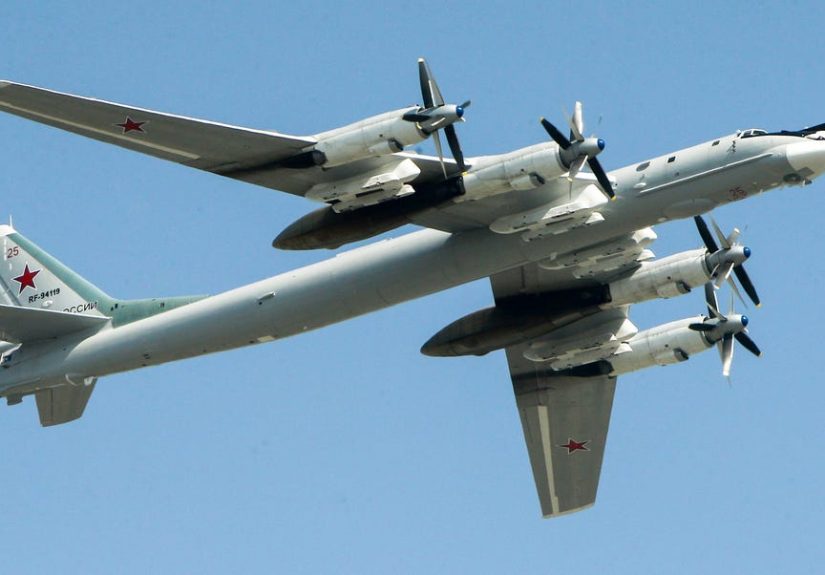
The aircraft most commonly mentioned in Alaska intercept stories is the Tupolev Tu-95, nicknamed “Bear” by NATO.
It’s a big, loud, prop-driven strategic bomber that looks like it time-traveled from a Cold War museumyet it remains relevant because
some variants are nuclear-capable and can carry long-range cruise missiles. “Nuclear-capable” is the important phrase:
capability doesn’t mean it’s carrying nuclear weapons on a given flight. But capability is enough to make defense planners sit up straighter.
Russian bomber flights are often accompanied by fighter escorts like the Sukhoi Su-35, and occasionally supported by
specialty aircraftthink tankers, reconnaissance platforms, or early warning aircraft (like the A-50 in some reports).
These “supporting cast” appearances matter because they can signal a more coordinated training profile than a simple out-and-back bomber flight.
Why Alaska Keeps Getting These Uninvited Flybys
Alaska’s geography makes it the front porch of North America for aircraft coming from the Russian Far East. The Bering Sea region is wide,
cold, and strategically significant. If you’re Russia and you want to run long-range aviation training that’s close enough to be noticed
but far enough to stay legal, the Alaska ADIZ is an obvious choice.
From a strategic messaging standpoint, these flights can serve multiple goals:
- Training: Long-range crews need hours, navigation practice, formation work, and command-and-control coordination.
- Signaling: “We can operate near your region, too” is a message, even if no border is crossed.
- Testing responses: Observing how quickly and with what assets an intercept occurs can be useful intelligence.
- Domestic optics: Bomber patrols are a classic “we’re strong” photo-op back home.
Meanwhile, the U.S. and Canada view the intercept as routine: monitor, identify, escort, document, and move on. It’s presence-meets-presence.
Annoying? Sometimes. Unusual? Not really.
How a NORAD Intercept Actually Works
The movie version of an intercept is dramatic: jets screaming upward at Mach Something, alarms blaring, pilots grimly flipping switches.
The real version is more like a well-rehearsed customer support workflowexcept the “support ticket” is a bomber the size of a small building.
Step 1: Detect and Track
NORAD uses layered sensorsradars and airborne systemsto detect aircraft and build a track. If the aircraft enters the ADIZ without clear
identification or in a way that warrants closer attention, the situation escalates from “watching” to “confirming.”
Step 2: Launch and Rendezvous
Fighters (often F-22s in Alaska-related stories, but not always) launch to intercept. Support aircraft like tankers and
airborne warning and control platforms can join depending on the mission profile. The goal is to safely rendezvous with the aircraft,
not to start an aerial argument.
Step 3: Visual Identification
Once the fighters are close enough, they visually identify the aircraft type and markings. This is why you sometimes see dramatic photos:
a sleek U.S. fighter sliding alongside a lumbering Russian bomber over open water like a politely suspicious neighbor peeking over the fence.
Step 4: Escort Until It Leaves
“Escort” doesn’t mean the U.S. is helping the Russians find the nearest airport lounge. It means staying nearby, monitoring behavior,
and ensuring the aircraft doesn’t wander toward sovereign airspace. When the aircraft exits the ADIZ, the intercept ends.
So… How Close Is “Too Close”?
Headlines love the phrase “flew too close,” but “too close” is doing a lot of emotional labor. Many intercepts happen
in international airspace and remain legally permissible. Still, distance matters because it changes reaction time.
In some documented incidents over the years, reports have described Russian aircraft coming within a few dozen miles (or a few dozen nautical miles)
of Alaska’s coast while still remaining outside sovereign airspace. That proximity is often what triggers attention, not because it’s illegal,
but because it’s strategically meaningful.
Think of it like a car driving slowly past your driveway at midnight. It’s on the public road, surebut you’re still going to look out the window.
Real-World Examples: This Isn’t a One-Off
The “F-22 escort” storyline has appeared multiple times across the last decade-plus, often involving Tu-95 bombers and occasionally fighter escorts.
Public reporting and official statements have repeatedly emphasized a common thread: intercepted in the ADIZ, stayed in international airspace.
Example: Bomber flights with fighter escorts
In several widely reported cases, Tu-95 bombers operated near Alaska with Russian fighters in the mix, prompting U.S. fighters to respond.
This is where the F-22 often gets the starring role: it’s a premier air superiority fighter and a natural choice for a high-end intercept mission.
Example: Large “packages” and support aircraft
Some intercepts have involved more than just two bombers. Support aircraft such as airborne early warning platforms and tankers have been
reported in some formations, suggesting more complex training profiles than a simple patrol. Larger packages often lead to a larger NORAD response
with multiple aircraft types supporting the intercept.
Example: Joint or coordinated activity in the region
The Alaska ADIZ has also been the stage for broader strategic signaling, including instances where Russian and Chinese aircraft conducted operations
that prompted NORAD responses. These events draw extra attention because they can reflect evolving military coordination and shared messaging.
Example: The “it happened again” cycleright up to today
Even in recent reports (including 2025–2026), NORAD has described detecting and responding to Russian aircraft operating in the Alaskan ADIZ,
again emphasizing that the aircraft did not enter U.S. or Canadian sovereign airspace. The escort is routine, but the repetition
is the point: routine interactions can still be strategically deliberate.
Risk Isn’t the FlightIt’s the Mistake
The biggest danger in these encounters isn’t that a bomber suddenly decides to take a scenic detour over Alaska. It’s the risk of
miscalculation: an unsafe maneuver, a misunderstanding, a pilot trying to be a little too “dramatic for the camera,”
or a communications breakdown.
That’s why professional conduct matters so much in intercepts. The goal is to keep the interaction predictable:
stable formation flying, safe separation, no sudden stunts. When intercepts are calm and procedural, they stay in the “routine” box.
When they aren’t, they jump into the “this could get weird fast” boxand nobody wants that box.
What This Means for the U.S., Canada, and Alaska
For Alaska, these incidents are both distant and personal. Most residents will never see an intercept up close, but the region’s role
in homeland defense is constant. Bases, radar coverage, and readiness posture matter here in a way they don’t in most of the continental U.S.
For NORAD and U.S./Canadian defense planners, the recurring pattern reinforces three priorities:
- Early warning: Detect the track early and maintain situational awareness.
- Credible response: Meet presence with presencefast, safe, and capable.
- De-escalation by professionalism: Make intercepts boring on purpose.
The paradox is that the most reassuring intercept is also the least exciting one. No drama. No stunts. Just a quiet reminder that
North America is watching its approaches.
Conclusion: A Cold-Weather Ritual of Modern Airpower
The headline “Russian Nuclear Bombers Fly Too Close to Alaska, Get Free F-22 Escort” sounds like a punchlinebecause it is, a little.
But behind the humor is a serious routine: strategic aircraft operate near a sensitive region, and NORAD responds to identify, monitor,
and ensure boundaries stay boundaries.
Russia gets training and signaling. The U.S. and Canada get confirmation and deterrence. Alaska gets to keep being Alaska: spectacular,
remote, and periodically visited by jets that absolutely did not come for the scenery (even though the scenery is, frankly, amazing).
Experiences From the Edge of the Map (Extra Field Notes)
If you want to understand why these intercept stories keep landing in the news, imagine the experience from a few different perspectives
not as Hollywood heroics, but as a set of repeating, human-scale moments that happen around a very large, very cold chessboard.
1) The Alaskan morning where the sky suddenly sounds “busier”
For most people in Alaska, the intercept is invisibleuntil it isn’t. A quiet day can suddenly come with that unmistakable roar overhead,
the kind that makes you pause mid-sentence and look up even if you know you won’t see much. You might catch a brief glint in the sky,
a fast-moving dot, or nothing at alljust the sound, like the air itself clearing its throat. Locals who live near bases or flight paths
tend to treat it the way you treat thunder: notable, sometimes startling, but not automatically alarming. The surprise isn’t that jets fly;
it’s the reminder that geography still matters, and Alaska sits right where great-power air routes naturally converge.
2) The aviation enthusiast watching the “tracks” come alive
In the broader aviation community, intercept days can feel like a live-action puzzle. People who follow open-source flight tracking,
radio chatter (where legal), and official releases will often notice patterns: a tanker sortie here, an airborne radar platform there,
unusual routing that suggests something is happening far offshore. Then, later, a statement confirms it: Russian aircraft in the ADIZ,
NORAD launched fighters, the aircraft stayed in international airspace. It’s a strange kind of modern spectator sportpart curiosity,
part civic interest, part “wow, that logistics chain is intense.” And it comes with a sobering undertone: this isn’t a game; it’s
a real readiness posture playing out in real time.
3) The crew mindset: “Make it safe. Make it boring.”
For the pilots and crews involved, the experience is less adrenaline and more discipline. Intercepts are designed to be predictable:
identify, observe, keep separation, avoid escalation, document, leave. There’s pride in that professionalismbecause the “win” is an
uneventful outcome. The phrase “escort” can sound friendly, but operationally it’s closer to “shadowing with purpose.” You’re ensuring
the aircraft doesn’t drift into sovereign airspace, you’re gathering awareness, and you’re making it clear that North America doesn’t
get surprised easily. It’s hard work wrapped in calm behavior, which is exactly the point.
4) The weird emotional whiplash of modern headlines
And then there’s the public experience: reading a headline that sounds like the Cold War rebooted, clicking through, and discovering
the most important line halfway down“the aircraft remained in international airspace.” That contrast can feel confusing. If it’s legal,
why is it news? If it’s routine, why the urgency? The answer is that routine doesn’t mean meaningless. These flights are strategic theater:
they remind everyone that the air domain is constantly monitored and constantly contested in subtle ways. The public’s experience is
to absorb a dramatic headline; the professionals’ experience is to execute a procedure that prevents drama from becoming reality.
Put all those perspectives together and the pattern makes sense. The intercept isn’t a crisis; it’s a recurring ritual of deterrence,
readiness, and message-sendingplayed out over frigid water where mistakes would be costly and where “boring” is the best possible outcome.