Table of Contents >> Show >> Hide
- What Are the Plush American Girl Dolls, Exactly?
- Why This Launch Makes So Much Sense
- Meet the Plush Lineup: Five Classics, Toddler-Edition
- Design Details That Matter for Toddlers
- Where Plush Fits in the American Girl “Age Ladder”
- How to Choose the Right Plush Doll for a Toddler
- Are They “Worth It”? Price, Value, and the Reality of Toddler Math
- How Plush Dolls Support Development (Without Feeling Like Homework)
- Care Tips: Keeping Plush Cute in a World Full of Applesauce
- Why Nostalgic Parents Are Absolutely Losing It (In a Good Way)
- of Real-Life Experiences With Plush American Girl Dolls
- Conclusion
For decades, American Girl has been the brand you graduate into: the “big kid” doll with hair you learn to brush
gently, accessories you learn not to vacuum up, and stories that quietly teach empathy while you’re busy staging a
dramatic school play in your bedroom. But what if you’ve got a tiny fanone who thinks “historical context”
means “yesterday,” and whose love language is primarily chewing?
Enter the plush era: a line of knit, toddler-ready American Girl dolls designed for kids as young as 18 months.
They’re soft. They’re sturdy. They’re made for snuggles, not salon appointments. And they come with board books,
which means you can finally combine your two favorite parenting activities: reading aloud and emotionally projecting
onto miniature outfits.
What Are the Plush American Girl Dolls, Exactly?
Think of them as a “starter set” for the American Girl universescaled down, softened up, and simplified for the
youngest crowd. The plush collection (often marketed as “My First” sets) reimagines classic historical characters as
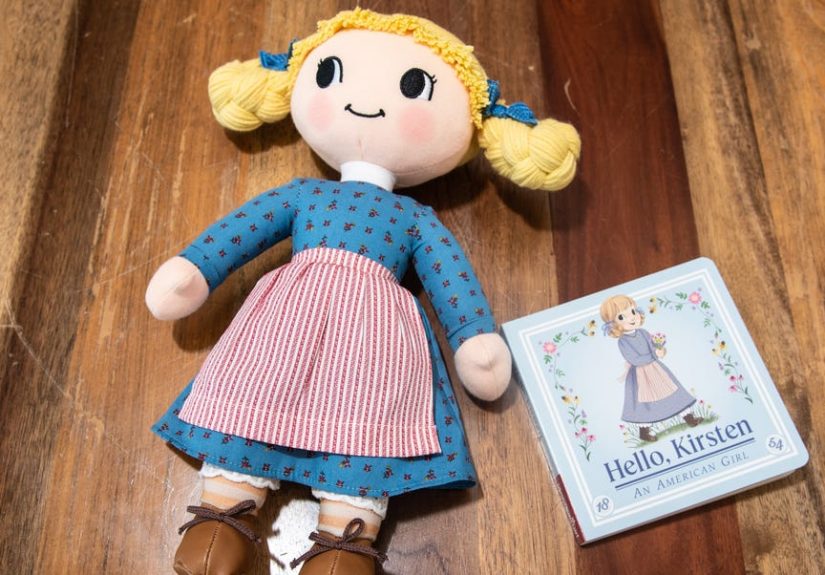
smaller knit dollsabout 13.5 inchescomplete with embroidered facial features, yarn hair, and outfits that are sewn on.
Translation: no tiny shoes to lose, no hair to tangle, and no accessories to turn your living room into a booby-trap
course for bare feet.
Each plush doll comes paired with a board book that introduces the character’s world in a toddler-friendly way.
That pairing matters: it’s not just a cuddly toy, it’s a story cuesomething you can build routines around (bedtime,
quiet time, travel days, “Mom is on a work call, please love literacy right now” time).
Why This Launch Makes So Much Sense
Traditional 18-inch American Girl dolls have long been recommended for older children (often around age 6+), partly
because of small parts and the kind of care that requires at least some impulse control. Meanwhile, American
Girl has had options for younger kidslike baby dolls meant for nurturing play and preschool-sized linesbut the plush
historical characters fill a very specific gap:
- Parents want the nostalgia without the stress of handing a delicate doll to a toddler tornado.
- Toddlers want comfort objects they can hug, drag, and sleep with.
- Caregivers want “together time” tools that blend play with early language development.
In other words: the plush line isn’t replacing the “classic” experience. It’s building a ramp up to itone that starts
earlier, feels safer, and is a whole lot cuddlier.
Meet the Plush Lineup: Five Classics, Toddler-Edition
The initial plush collection focuses on beloved historical characters many adults recognize instantly. Each plush doll
keeps signature visual cuesoutfits inspired by the originals, recognizable hair styling, and era-specific touchesjust
simplified for durability and day-to-day play.
Kirsten (1850s)
Kirsten’s look leans into pioneer practicality: braids, apron vibes, and that “I can churn butter and still be cute”
energy. For toddlers, it’s also a friendly introduction to the idea that “people lived differently a long time ago,”
which is basically the toddler version of a history lecture.
Samantha (early 1900s)
Samantha’s iconic bows and dress details translate beautifully into plush form. If you’re shopping for a child who
gravitates toward fancy (or just enjoys being called “darling” for no reason), Samantha is a crowd-pleaser.
Addy (1860s)
Addy’s story has always resonated because it’s brave and deeply human. In plush form, the focus is gentler and simpler,
but her presence still offers a meaningful entry point for families who want dolls that represent a wider range of
backgroundsand conversations that grow with the child.
Josefina (1820s)
Josefina’s styling often includes braids and warm, earthy tones. For little kids, she can be an introduction to
family traditions, community, and the idea that “home” is more than one thingsometimes it’s people, sometimes it’s a
place, and sometimes it’s the doll you insist on buckling into the car seat.
Molly (1940s)
Molly brings the “home front” era into a format toddlers can hold ontoliterally. Her classic look (sweater, skirt,
pigtails, glasses) reads as instantly character-y, which is perfect for pretend play and storytime repetition
(“Again!” being the unofficial toddler motto).
Design Details That Matter for Toddlers
Plush dolls live a harder life than display dolls. They get hugged with sticky hands, dropped from stroller height,
hauled by one leg like an action hero, and occasionally used as a pillow, a microphone, or a bargaining chip.
So toddler-focused design isn’t just “cute”it’s functional.
Soft, knit bodies
Knit plush feels cozy and flexible. It’s the kind of texture toddlers seek out for comfort, especially at bedtime or
during transitions (new daycare, travel, big feelings about the existence of socks).
Embroidered faces
Embroidered eyes and smiles remove worries about hard plastic parts and add durability. It’s also a subtle win for
parents: no “my doll’s eyelashes fell off” crisis at 7:04 a.m.
Yarn hair + sewn-on outfits
Yarn hair doesn’t tangle the way doll hair can, and sewn-on clothing means fewer missing pieces. Toddlers still get
the visual magic of “that’s Kirsten” or “that’s Molly,” without the maintenance.
Board books included
Board books are built for little hands. They can be turned (and sometimes chewed) without instantly shredding like a
paper page. Pairing a doll with a book also encourages “story play,” where the character becomes part of daily routines:
read, cuddle, repeat, request the same page seventeen times.
Where Plush Fits in the American Girl “Age Ladder”
One of the smartest things about the plush launch is how clearly it maps onto the brand’s existing “worlds of play.”
Instead of forcing a toddler into a product meant for older kids, the plush sets create a more natural progression:
- Ages 18 months+: plush historical dolls + board books (snuggle + storytime)
- Ages 18 months+: baby doll play (nurturing routines like feeding, rocking, and pretend caregiving)
- Ages 4+: preschool-sized dolls and playsets (bigger imaginative worlds, more roleplay)
- Ages 6+: classic 18-inch dolls (hair styling, accessories, deeper chapter books and collections)
That progression matters because it meets kids where they are developmentally. Toddlers are sensory learners and routine
builders. Preschoolers start expanding complex pretend play. Older kids can handle collectibles, accessories, and
longer narratives. Plush gives families a “start early” option without skipping steps.
How to Choose the Right Plush Doll for a Toddler
If you’re buying for a very young child, you’re not just choosing a dollyou’re choosing a comfort object, a bedtime
buddy, and a new “must bring everywhere” passenger. Here are a few selection strategies that actually hold up in real
life:
Pick the visual hook
Toddlers are drawn to strong visual cues: big bows, bright colors, glasses, braids. Molly’s glasses or Samantha’s bow
can be the difference between “cute” and “WE MUST TAKE HER TO THE GROCERY STORE.”
Match the household story
Some families pick based on heritage, family traditions, or meaningful representation. Others pick based on their own
nostalgia (“I had Samantha and I turned out mostly fine!”). Both are valid. The best doll is the one that becomes a
bridgebetween generations, routines, or simply between a child and their imagination.
Consider the book factor
Even if your child is too young to follow a plot, the board book creates a consistent reading ritual. The pictures and
repeated phrases become familiar, which is exactly what toddlers loveand what helps early language development.
Are They “Worth It”? Price, Value, and the Reality of Toddler Math
Let’s be honest: these plush sets are not bargain-bin stuffed animals. They’re priced like premium giftsoften around
the $60–$65 range depending on the retailer. That can feel steep for a plush doll… until you factor in what you’re
actually getting:
- Brand-level construction (designed to last through rough toddler love)
- Character design (recognizable, story-driven, not generic)
- A bundled board book (which turns it into a routine tool, not just a toy)
- Longevity (a toddler comfort item today, a nostalgic keepsake later)
In gift terms, it lands in the “one big present” zoneideal for birthdays, holidays, or those milestone moments where
you want something that says, “I love you,” and also, “I am not buying 47 plastic things with mystery batteries.”
How Plush Dolls Support Development (Without Feeling Like Homework)
The best toddler toys do two things at once: they entertain and they help kids practice life skills. Plush dolls
do that naturallyespecially when they’re paired with books.
Emotional regulation
Comfort objects help toddlers manage transitions: bedtime, daycare drop-offs, long car rides, doctor visits, and the
deeply traumatic moment when you pour the snack into the wrong bowl. A soft doll is a portable calm-down plan.
Language growth
Board books build vocabulary through repetition and shared attention. When a child “reads” to their doll or points to
pictures while you narrate, they’re practicing early literacy in the most toddler way possible: by bossing someone
around while you turn pages.
Pretend play and caregiving scripts
Caring for a doll helps toddlers rehearse empathy and routinesfeeding, rocking, tucking in, “time for night-night.”
It’s also a sneaky way to build independence (“Can you put Molly in her bed while I make dinner?” is basically a
parenting cheat code).
Care Tips: Keeping Plush Cute in a World Full of Applesauce
If a toy is meant for toddlers, it will eventually meet yogurt. The good news: plush dolls are generally easier to
live with than hair-and-accessories dolls. A few practical habits help:
- Spot-clean early to avoid permanent snack souvenirs.
- Keep them out of bathwater unless the product care instructions explicitly allow it.
- Check seams occasionallytoddlers can be surprisingly strong when motivated by chaos.
- Store the board book nearby so “doll time” naturally becomes “read time.”
Why Nostalgic Parents Are Absolutely Losing It (In a Good Way)
The plush launch hits a very specific emotional sweet spot: it lets adults share a childhood icon without handing over
something fragile, expensive, or not age-appropriate. It’s the same warm feeling as finding your old book series in a
new board-book editionexcept now the book comes with a tiny knitted friend who can attend snack time.
And because these are rooted in the classic historical characters, the dolls aren’t just cutethey’re connected to a
storytelling tradition. For some families, that’s the appeal: you’re not buying a random plush. You’re introducing a
character who can grow with your child, eventually “graduating” into longer stories, bigger dolls, and deeper play.
of Real-Life Experiences With Plush American Girl Dolls
The first thing you noticebefore the book, before the outfit details, before your brain starts whispering “I should
buy the whole set”is how carryable the plush dolls are. A toddler can scoop one up in a single arm and still
have the other hand free for the crucial work of holding a cracker. In daily life, that matters. Big dolls can be
awkward. Tiny dolls get lost. But a 13.5-inch plush hits the “I can take this everywhere” sweet spot.
Storytime becomes oddly ceremonial. The board book isn’t just a book; it’s “her book.” Toddlers love ownership, and
pairing a doll with a dedicated board book turns reading into a relationship: the child points to the picture, then
points to the doll, then insists you do it again because repetition is their personal brand. Over a week or two, you
start noticing little rituals form on their ownbook first, then hug, then the doll gets tucked into bed with a
dramatic sigh worthy of daytime television.
Travel is where the plush concept really proves itself. In the car, a plush doll functions like a stress ball with a
face. On a plane, it’s a pillow, a friend, and a non-electronic distraction you don’t have to charge. At restaurants,
it becomes a “participant” in the meal (“Molly needs a bite!”), which can be annoying until you realize it also buys
you three extra minutes to eat your food while it’s still warm. That’s basically luxury.
The doll also changes how adults interact with the child. Grandparents get chatty: “Who is she? What’s her name?”
Suddenly the toddler is practicing introductions and basic storytelling without realizing it. Older siblings often
step into a helper rolereading the board book, “teaching” the doll, making up extra scenes. If you’re in a household
with multiple kids, a plush doll can become a surprisingly peaceful shared object: it’s soft enough for the little one,
character-rich enough for the bigger one, and sturdy enough that you’re not hovering like a museum guard.
And yes, there’s a very real adult experience here too: the emotional whiplash of seeing a childhood icon reimagined
for your actual child. You’ll catch yourself thinking, “I remember this dress,” even though it’s sewn onto knit fabric
now. You’ll feel weirdly proud when your toddler “reads” to the doll. You might even feel grateful that the doll’s hair
is yarn, because it means you can love the nostalgia without signing up for daily detangling. In practice, these plush
dolls don’t just introduce kids to American Girl. They introduce families to a new version of the traditionone built
for bedtime snuggles, snack breaks, and the wonderfully chaotic early years.
Conclusion
Plush American Girl dolls are a smart, sweet entry point for the youngest fansespecially families who love the idea of
story-driven play but want something toddler-proof. With soft knit bodies, embroidered faces, sewn-on outfits, and
matching board books, the “My First” sets invite little ones into American Girl’s world earlythrough snuggles,
storytime, and everyday imagination.