Table of Contents >> Show >> Hide
- What Are Piaget’s Stages of Development?
- Stage 1: Sensorimotor Stage (Birth to About 2 Years)
- Stage 2: Preoperational Stage (Ages 2 to 7)
- Stage 3: Concrete Operational Stage (Ages 7 to 11)
- Stage 4: Formal Operational Stage (Around Age 12 and Up)
- How Are Piaget’s Stages Used Today?
- What Piaget Got Right and Where Modern Experts Push Back
- Experiences Related to Piaget’s Stages of Development in Real Life
- Conclusion
If you have ever watched a baby repeatedly drop a spoon like they are running a tiny gravity lab, congratulations: you have already met Piaget in the wild. Jean Piaget’s theory of cognitive development remains one of the most famous frameworks for understanding how children think, learn, and slowly transform from adorable chaos gremlins into people who can argue about hypothetical situations at the dinner table.
At its core, Piaget’s theory explains that children do not simply know less than adults. They actually think differently at different ages. That idea changed education, parenting, and developmental psychology in a big way. Teachers began paying closer attention to whether a child was ready for a certain type of thinking, not just whether the lesson was on the calendar. Parents started to understand why a preschooler could stage a full tea party for stuffed animals yet still insist that a taller glass contains more juice.
In this article, we will break down the four Piaget stages of development, explain the big ideas behind them, and look at how the theory is used today in classrooms, parenting, and child development practice. We will also look at where modern research agrees, disagrees, and politely tells Piaget, “Good effort, but we have follow-up questions.”
What Are Piaget’s Stages of Development?
Piaget’s stages of development are four broad phases of cognitive growth. They describe how children build knowledge over time, moving from sensory exploration to symbolic play, from concrete logic to abstract reasoning. The stages are:
- Sensorimotor stage: birth to about age 2
- Preoperational stage: ages 2 to 7
- Concrete operational stage: ages 7 to 11
- Formal operational stage: around age 12 and up
Piaget believed children are active learners. They do not sit around like empty little filing cabinets waiting for adults to insert facts. Instead, they build understanding through action and experience. In Piaget’s world, kids are more like small scientists, constantly testing ideas, making predictions, and changing their mental models when reality refuses to cooperate.
That leads to several key terms that still show up in psychology and education:
- Schemas: mental frameworks children use to organize what they know
- Assimilation: fitting new information into an existing schema
- Accommodation: changing a schema when new information does not fit
- Equilibration: the balancing act between old ideas and new learning
For example, a toddler may think every four-legged animal is a dog. That is a schema at work. When they see a cat and shout “dog,” they are assimilating. When an adult explains that cats are different, and the child updates the mental filing system, that is accommodation. Piaget would call that progress. The family cat would probably call it overdue.
Stage 1: Sensorimotor Stage (Birth to About 2 Years)
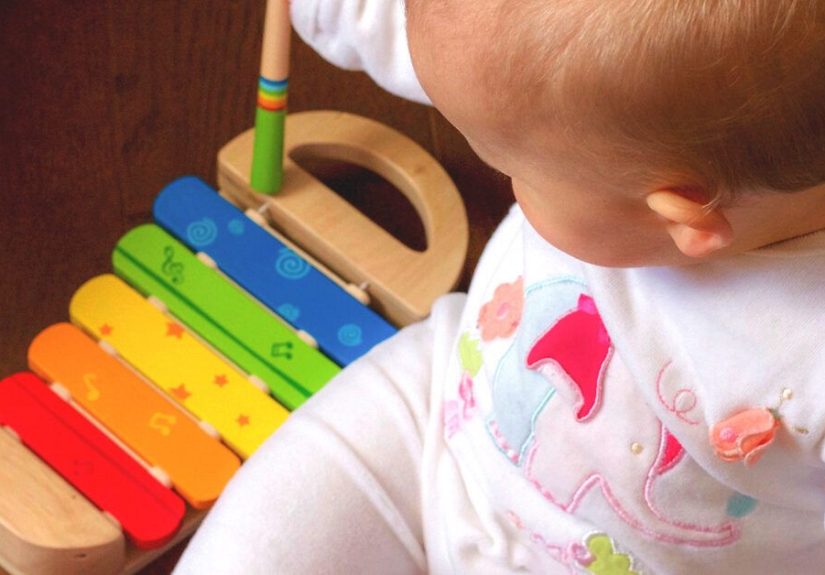
The sensorimotor stage is all about learning through the senses and physical action. Babies touch, grab, shake, stare, kick, chew, crawl, and generally conduct full-contact research on the world around them. At this age, thinking is tied closely to movement and direct experience.
Main Characteristics of the Sensorimotor Stage
- Learning through seeing, hearing, touching, tasting, and moving
- Developing cause-and-effect understanding
- Beginning to realize they are separate from other people and objects
- Developing object permanence, the understanding that things still exist even when out of sight
Object permanence is one of the most famous Piaget concepts. Before babies fully develop it, a hidden toy can seem to vanish from the universe. After it develops, peekaboo becomes less about magic disappearance and more about social delight. That is why babies eventually stop acting shocked every time your face returns from behind your hands. Your career as a magician ends early.
How This Stage Is Used
In parenting and early childhood education, this stage reminds adults that babies learn best through active exploration. They need safe spaces to move, objects to manipulate, language-rich interaction, and back-and-forth play. Sensory experiences matter. Repetition matters. Play matters. A lot.
This is why good infant learning environments include rattles, blocks, textured objects, songs, facial expressions, and “serve-and-return” interactions rather than passive screen-heavy routines. Babies are building the foundations of attention, memory, and problem solving long before they can explain any of it.
Stage 2: Preoperational Stage (Ages 2 to 7)
Welcome to the stage of pretend play, rapid language growth, bold imagination, and extremely confident logic that is not always actually logical. In the preoperational stage, children start using symbols. A banana can become a phone. A cardboard box can become a spaceship. A stick can become a wand, a sword, or a microphone, sometimes in the same afternoon.
Main Characteristics of the Preoperational Stage
- Strong symbolic thinking and imaginative play
- Rapid language development
- Egocentrism, or difficulty seeing another person’s perspective
- Centration, meaning a child focuses on one aspect of a situation at a time
- Difficulty with conservation, or understanding that quantity stays the same despite changes in shape or appearance
Conservation is the classic example here. Pour the same amount of juice into a short glass and a tall glass, and many preschoolers will insist the taller glass has more. From their point of view, height wins. End of debate. Case closed. Juice law is juice law.
Children in this stage are not foolish. They are just working with thinking tools that are still under construction. Their reasoning is real, but it tends to be intuitive rather than logical in the adult sense.
How This Stage Is Used
Piaget’s preoperational stage is widely used in preschool and early elementary education. Teachers know young children benefit from stories, role-play, visuals, movement, and concrete examples. Explanations need to be simple and grounded. Abstract lectures about fairness, time, or logic rarely land the way adults hope they will.
Parents use this insight too. A child in this stage may need short explanations, visual routines, hands-on examples, and lots of patience. “Because I said so” may end the conversation, but “Let me show you” is usually what helps learning stick.
Stage 3: Concrete Operational Stage (Ages 7 to 11)
The concrete operational stage is where children start to think more logically, as long as the problem involves real, visible, testable things. This is the era when kids become better at organizing, comparing, measuring, and understanding that appearances can be deceiving.
Main Characteristics of the Concrete Operational Stage
- Improved logical thinking about concrete situations
- Understanding conservation
- Reversibility, or knowing that some processes can be mentally undone
- Better classification and grouping skills
- Reduced egocentrism and stronger perspective-taking
This is the stage where the flattened ball of clay is finally understood to have the same amount as the original round ball. Children can follow the logic. They can sort objects by multiple characteristics. They can understand that if 3 + 4 = 7, then 7 – 4 = 3. They are becoming more systematic thinkers, but they still usually need information tied to something concrete.
How This Stage Is Used
In school, this is where charts, experiments, manipulatives, maps, timelines, and real-world problem solving shine. Teachers often use hands-on math, science labs, classification activities, and collaborative tasks because students in this stage do well when they can see and work with the idea directly.
Parents can support this stage by asking children to explain their thinking, compare options, sort items, estimate results, and work through practical daily tasks. Cooking, gardening, building, budgeting allowance, and planning a trip route all become sneaky little masterclasses in concrete reasoning.
Stage 4: Formal Operational Stage (Around Age 12 and Up)
The formal operational stage is the big leap into abstract thinking. Adolescents become increasingly able to imagine possibilities, test hypotheses, reason about ideas, and think beyond the here and now. This is the stage that powers algebra, debate club, political opinions, and dramatic late-night conversations about the meaning of life.
Main Characteristics of the Formal Operational Stage
- Abstract reasoning
- Hypothetical thinking
- Systematic problem solving
- Ability to consider multiple variables at once
- More advanced moral, scientific, and philosophical thought
A child in the concrete operational stage can solve a problem involving actual blocks on a table. A teen in the formal operational stage can think through “What would happen if gravity changed?” or “How would society work if everyone used the same currency worldwide?” Whether the answer is brilliant or wildly overconfident depends on the day.
How This Stage Is Used
Middle school, high school, and beyond rely heavily on this kind of thinking. Students are expected to analyze literature, design experiments, compare systems of government, understand symbolism, and build arguments. Piaget’s theory helps educators remember that abstract teaching becomes more effective when students are developmentally ready for it.
Even then, readiness is not identical for every student or in every subject. A teen may think abstractly in social issues but still need very concrete support in algebra or chemistry. Human development likes patterns, but it rarely reads the manual.
How Are Piaget’s Stages Used Today?
Piaget’s theory still influences how adults think about learning, even though modern experts do not treat it like a perfect script. Its biggest practical uses include:
1. Age-Appropriate Teaching
Teachers use developmental knowledge to match instruction to students’ thinking abilities. Younger children benefit from concrete materials and active exploration. Older students can handle more abstraction, debate, and hypothetical reasoning.
2. Hands-On Learning
Piaget helped popularize the idea that children learn by doing. That belief shows up today in inquiry-based learning, project-based learning, science exploration, manipulatives in math, and classroom environments that encourage discovery instead of passive memorization.
3. Curriculum Design
Many educational programs are built around developmental readiness. The goal is not to underestimate children, but to avoid teaching concepts in ways that do not match how they process information at a given stage.
4. Parenting and Communication
Parents often use Piagetian ideas without realizing it. They simplify instructions for young children, use pretend play to teach social skills, offer concrete examples for school-age kids, and invite teens into deeper discussions once abstract reasoning grows stronger.
5. Observation and Assessment
Child development specialists, teachers, and psychologists may use Piaget’s framework as one lens for observing thinking patterns. It is not a one-size-fits-all diagnostic tool, but it remains a useful way to understand how children approach problems.
What Piaget Got Right and Where Modern Experts Push Back
Piaget got a lot right. He recognized that children are active learners, that thinking changes qualitatively over time, and that development matters in education. Those ideas still shape modern classrooms and child development theory.
But research since Piaget has also complicated the picture. Many scholars argue that he sometimes underestimated what younger children and infants can do, especially when tasks are simplified or measured in different ways. A child may fail a classic Piaget task not because the concept is impossible, but because the instructions are confusing, the language is too advanced, or the situation is unfamiliar.
Researchers also point out that development is often less rigid than Piaget suggested. Not every child moves neatly through stage-like thinking in exactly the same way, and formal operational reasoning does not appear equally in every person or in every domain. Culture, schooling, language, experience, and context all matter.
So, how should we use Piaget today? As a helpful framework, not a crystal ball. His stages are best seen as a map with useful landmarks, not a GPS that predicts every turn with supernatural certainty.
Experiences Related to Piaget’s Stages of Development in Real Life
One reason Piaget’s theory has lasted so long is that people recognize it in everyday life. In homes, classrooms, clinics, and playgrounds, adults keep seeing examples that make them think, “Ah, yes, the tiny scientist is at work again.”
In infancy, the experience often looks simple but is actually profound. A baby drops a spoon from a high chair once, then again, then again, and then perhaps 84 more times because science demands replication. To an exhausted adult, it looks like a deliberate plot. In developmental terms, it is sensorimotor learning. The child is testing cause and effect, motion, sound, adult response, and object persistence all at once. The lesson for caregivers is that repetition is not always mischief. Sometimes it is research with applesauce on top.
Preschool experiences make the preoperational stage especially visible. Teachers often notice that children can invent elaborate pretend scenarios, assign roles, and narrate entire imaginary worlds, yet still struggle to understand another child’s perspective during conflict. A four-year-old may say, “He took my turn,” while standing directly in front of the toy everyone wants. That does not mean empathy is absent forever. It means perspective-taking is still growing. In practice, adults respond best by modeling emotions, naming viewpoints, and using stories, puppets, and guided play rather than expecting mini-adult diplomacy.
In the elementary years, concrete operational thinking shows up in exciting ways. Children begin explaining their reasoning with more structure. They can compare categories, follow multi-step directions, understand that rules apply consistently, and catch errors in obvious logic. This is the age when many students suddenly thrive with number lines, sorting tasks, timelines, simple experiments, and visual models. Teachers often report that children who struggled with a purely verbal explanation make rapid progress once they can move counters, fold paper, measure water, or classify objects themselves. The idea becomes visible, and once it is visible, it becomes manageable.
By adolescence, formal operational thinking appears in bursts. A middle school student may question fairness in school rules, propose an alternate ending to a novel, or argue passionately about a hypothetical world where animals can vote. The reasoning becomes broader, more abstract, and sometimes more dramatic. Parents and teachers often experience this stage as both rewarding and mildly exhausting. Teens want reasons, not just rules. They are testing arguments the same way babies tested gravity, only now with philosophy and sharper vocabulary.
Across all stages, the most useful real-world lesson is this: good teaching and good parenting meet children where they are, then help them stretch a little farther. Piaget’s lasting value is not that he gave adults a perfect chart. It is that he reminded us to respect the mind of the child as active, organized, curious, and always under construction.
Conclusion
Piaget’s stages of development remain one of the clearest ways to understand how children’s thinking changes over time. From the sensorimotor discoveries of infancy to the abstract reasoning of adolescence, the theory offers a practical framework for explaining why children learn differently at different ages.
Used wisely, Piaget’s ideas help parents communicate better, teachers design smarter lessons, and caregivers interpret behavior with more patience and less confusion. Used too rigidly, the theory can oversimplify real children, who are gloriously inconsistent and rarely develop on a perfectly tidy schedule.
The best takeaway is this: children are not empty vessels waiting to be filled. They are active builders of knowledge. Give them experiences, questions, materials, conversation, and room to explore, and they will do what children do best: learn with enthusiasm, creativity, and the occasional spectacular misunderstanding.