Table of Contents >> Show >> Hide
- Why This Idea Is So Compelling
- What the “$50” Really Means
- How Micro-Hydro Actually Makes Sense
- Why Open Source Matters More Than the Price Tag
- Where a Repurposed-Parts Water Turbine Could Shine
- Where the Romance Ends
- Environmental and Practical Reality Check
- The Bigger Lesson for Renewable Energy
- Experiences Related to the Topic: What People Learn From Tiny Hydro Dreams
- Conclusion
There is something wildly satisfying about a machine that looks like it escaped from a garage, a recycling pile, and a science fair all at once, then proceeds to make electricity from moving water. That is exactly why the idea of an open source $50 water turbine from repurposed parts grabs attention so fast. It sounds rebellious, practical, and a little bit magical. In a world where renewable energy headlines often come wrapped in industrial jargon and price tags that make wallets faint dramatically onto the floor, a tiny low-cost water turbine feels like a plot twist.
But here is the important part: the appeal of this idea is not just that it is cheap. It is that it represents a different philosophy of energy. Instead of waiting for a perfect, polished, factory-sealed solution, the open-source approach asks a simpler question: what if useful power could come from locally available parts, straightforward design thinking, and a better understanding of how water actually behaves?
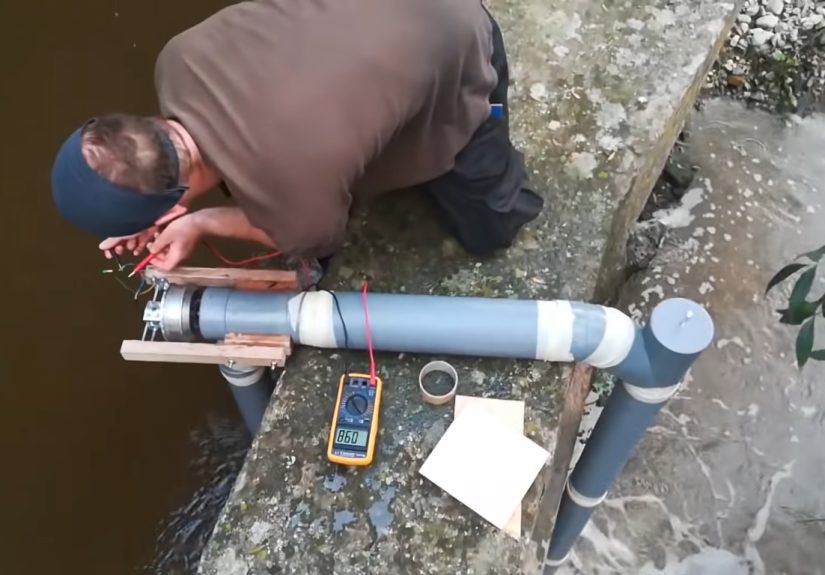
The concept became especially interesting after a widely shared prototype showed that a low-cost turbine built from repurposed components could reportedly produce meaningful output under favorable conditions. The design used scavenged parts, a low-head water setup, and a creative open-hardware mindset. That combination turned the project into more than a quirky maker experiment. It became a symbol of affordable micro-hydro thinking.
Still, this is where common sense should enter the chat wearing work boots. A headline like “$50 water turbine” is exciting, but real micro-hydropower lives or dies by site conditions, durability, safety, and legal reality. A clever prototype is not the same thing as a dependable household power system. It is a proof of concept, not a magic wand.
Why This Idea Is So Compelling
Most renewable energy conversations in the U.S. revolve around solar panels and wind turbines. Those technologies are important, of course, but small hydropower has a special advantage that engineers and off-grid dreamers have appreciated for a long time: when water flows steadily, power can be available day and night. The sun clocks out every evening. Wind has a tendency to ghost people. Water, when the site is right, is often more loyal.
That is why the open-source turbine concept feels so refreshing. It brings together several ideas people already love. First, it uses repurposed parts, which appeals to the practical, anti-waste side of the internet. Second, it is open source, which means the design philosophy favors sharing, iteration, repair, and adaptation instead of secrecy. Third, it sits inside the larger world of low-cost renewable energy, where people are constantly asking how to make resilient systems more accessible.
There is also a cultural reason this topic resonates. A machine built from reused parts tells a story. It says innovation does not always arrive in polished aluminum with a marketing budget. Sometimes it arrives looking like a plumbing aisle, a hoverboard graveyard, and a stubborn refusal to waste perfectly usable components.
What the “$50” Really Means
The phrase “$50 water turbine” is catchy for a reason. It makes readers lean in. But it also needs translation. In projects like this, the low figure usually refers to the core experimental hardware built from salvaged or unusually cheap materials, not the full cost of a robust long-term installation. That distinction matters.
A prototype can be astonishingly inexpensive when the builder already has access to scrap parts, used motors, plastic piping, maker tools, or a suitable water channel. In that context, the price tag reflects ingenuity as much as accounting. It is less “here is the universal retail cost” and more “look what can happen when resourcefulness does the heavy lifting.”
Once a design moves from proof-of-concept territory into real-world use, more costs show up like uninvited cousins at a cookout. Enclosures, weather protection, bearings, controls, wiring, load management, site preparation, debris handling, maintenance, and compliance can all matter. Even when the generating core is cheap, the surrounding system often is not. In other words, the turbine may cost $50, but the reliable system rarely shares that level of optimism.
That does not make the idea misleading. It makes it honest in a different way. The true value of the project is not that every finished installation will cost the price of a fancy dinner. The value is that the project proves how dramatically the entry barrier can drop when designers embrace reuse, modularity, and open knowledge.
How Micro-Hydro Actually Makes Sense
Head and flow are the real bosses
In micro-hydro, the most important variables are not how exciting the prototype looks in a video. They are head and flow. Head is the vertical drop. Flow is the amount of water moving through the site. Put simply, the usefulness of a turbine depends on the water resource, not on wishful thinking, motivational quotes, or the builder’s relationship with duct tape.
This is why some low-cost designs work surprisingly well in one location and become glorified yard art in another. A clever turbine cannot manufacture head or flow out of thin air. If the site has seasonal water, inconsistent volume, debris problems, or minimal drop, the output will reflect that reality with brutal honesty.
Not every turbine belongs everywhere
Small hydro systems are not one-size-fits-all. Different sites favor different turbine concepts. Some are better for high-head conditions, others for low-head or run-of-river situations. That matters because the open-source $50 turbine became interesting partly due to its attempt to work in low-head conditions using repurposed components. That is a meaningful design challenge. Low-head hydro can be attractive because it may fit canals, agricultural channels, or modest water drops, but it also demands smarter engineering and realistic performance expectations.
Steady power beats flashy theory
The most practical attraction of micro-hydropower systems is consistency. Even a relatively small output can be useful when it is available over long periods. That is one reason people in agriculture, remote properties, and resilience planning continue to pay attention to micro-hydro. A modest but continuous stream of electricity can sometimes outperform a larger but intermittent source, depending on the use case.
Why Open Source Matters More Than the Price Tag
The “open source” part of this story deserves as much attention as the “$50” part. Open design changes the conversation from product ownership to shared problem-solving. Instead of a black box, an open-source turbine invites improvement. People can study it, test it, adapt it to local materials, redesign weak points, and document what failed without pretending everything was flawless. Frankly, that is a healthier engineering culture than pretending version one descended from the heavens with perfect bearings and no leaks.
For communities with limited budgets, hard-to-source equipment, or unreliable supply chains, open-source hardware has serious appeal. Repurposed motors, improvised housings, and modular parts are not just budget tricks. They are forms of resilience. The more repairable and understandable a system is, the less dependent it becomes on specialty vendors and expensive replacement cycles.
There is also an educational dividend. Open-source energy projects teach people how systems work. They turn electricity generation from an abstract utility bill into something visible and mechanical. That kind of understanding has value even when a prototype never becomes a commercial product. It helps people think more clearly about energy efficiency, site suitability, maintenance, and tradeoffs.
Where a Repurposed-Parts Water Turbine Could Shine
This concept makes the most sense in places where water movement is predictable, legal access is clear, and expectations are realistic. Existing channels, managed agricultural water systems, educational demonstration sites, and remote locations with suitable flow can all make more sense than the average backyard fantasy creek.
It is also appealing in emergency preparedness conversations, especially as a small experimental or supplemental technology. The original attention around the design was partly tied to the broader idea of locally buildable infrastructure. That theme remains powerful. In disaster recovery or remote-area resilience, systems that can be assembled, repaired, and understood with common parts have obvious appeal.
But “appeal” is not the same thing as “drop it into any stream and call it a day.” Real success depends on local conditions, long-term maintenance, and safe electrical integration. A prototype that makes a headline can still struggle with debris, corrosion, flooding, variable flow, and mechanical wear once the camera stops recording.
Where the Romance Ends
The internet is excellent at making every good idea look one weekend away from perfection. Water has a different personality. It is patient, heavy, messy, and unimpressed by optimism. That means the biggest limitations of a cheap hydro turbine are often not the turbine itself but the environment around it.
Seasonal streams can slash output when dry months arrive. Sediment and debris can damage components. Flood conditions can destroy poorly protected equipment. Noise, vibration, and maintenance can turn a charming experiment into a recurring chore. And because moving water and electricity are involved, safety is never a decorative footnote.
Then there is legality. In the United States, even small hydropower projects may involve permitting, water rights, environmental protections, land-use questions, and interconnection rules. That reality tends to ruin the fantasy that every stream is an untapped personal power plant waiting politely for someone with a recycled motor and a big idea.
Environmental and Practical Reality Check
One reason modern small hydro design gets serious attention from researchers, agencies, and extension programs is that hydro is never just about watts. It is also about waterways, habitat, infrastructure, and public interest. A low-cost turbine may be physically small, but it still exists inside a larger environmental and regulatory context.
That is why responsible coverage of this topic should avoid oversimplifying the dream. A repurposed-parts turbine can be ingenious and still be the wrong answer for a fish-sensitive stream, a public waterway, or a site with unclear ownership. Likewise, a prototype that works beautifully in a controlled channel may not translate directly to rough field conditions.
The best reading of the open-source $50 turbine is not “hydro is easy now.” It is “clever engineering can lower barriers, but water systems still demand respect.” That is a much more useful takeaway for readers who want substance instead of wishful marketing.
The Bigger Lesson for Renewable Energy
This project matters because it shows how renewable energy innovation can move in two directions at once. One direction is industrial: bigger infrastructure, advanced materials, formal permitting, utility-scale planning. The other is local: modular experiments, repairable hardware, distributed knowledge, and designs that ordinary people can understand. The future probably needs both.
Large-scale hydropower and small open-source hydro are not competitors in the usual sense. They solve different problems. One serves grids and long-term infrastructure planning. The other can serve education, resilience, niche off-grid applications, and the global habit of solving real problems with whatever is available. That second role should not be underestimated.
In fact, one of the most important things about a project like this is that it expands imagination. It reminds people that renewable energy is not limited to expensive, sealed ecosystems. Sometimes innovation begins by looking at an overlooked motor, an awkward water path, and a pile of parts that everyone else had already dismissed as junk.
Experiences Related to the Topic: What People Learn From Tiny Hydro Dreams
One of the most interesting experiences around low-cost water turbine projects is how quickly enthusiasm meets reality, and how useful that meeting can be. People are often drawn in by the obvious charm: flowing water is everywhere in the imagination, scrap parts feel cheap, and the machine itself seems understandable. It spins, therefore it makes power. In theory, everybody is a genius by lunchtime.
Then the real-world lessons arrive, and oddly enough, that is where the experience becomes valuable. People discover that water is not just “there” in the same way a sunny roof is there. Water has moods. It rises, falls, carries leaves, clogs intakes, changes speed, disappears seasonally, and occasionally behaves like it has a personal grudge against any device placed in its path. Builders and observers alike come away with a much deeper respect for the difference between a clever object and a dependable system.
Another common experience is the emotional shift from consumer to tinkerer. Many people are used to energy as something invisible that appears after a bill gets paid. A tiny hydro prototype changes that relationship. Suddenly energy has sound, motion, vibration, and maintenance. It has bearings that wear out, housings that need protection, and output that reflects rainfall and site conditions. That can be humbling, but it is also strangely empowering. People begin to understand that power generation is not magic. It is engineering, compromise, and maintenance dressed in practical clothes.
There is also the satisfaction of repurposing. Anyone who has ever watched old parts become useful again understands the particular joy involved. A discarded motor or leftover structural component stops being trash and starts being possibility. That experience resonates beyond renewable energy. It taps into a broader culture of repair, reuse, and refusal to waste resources just because they are not shiny and new.
For educators and community groups, projects like this often create another kind of experience: participation. A low-cost open-source turbine is easier to discuss than a giant industrial hydro plant because people can actually visualize the pieces. Students can grasp the role of flowing water, rotational motion, generation, efficiency losses, and site constraints in a concrete way. Even when the design is never built full scale, it can still change how people think about physics, sustainability, and infrastructure.
In rural and agricultural conversations, the experience tends to be more practical. People look at channels, drops, pumps, and water systems they already know well and start asking smarter questions. Could wasted pressure be recovered? Is there a seasonal opportunity? Would a small constant output be more useful than a flashy but intermittent one? These are not fantasy questions. They are the kind of grounded questions that good energy planning actually needs.
And perhaps the most memorable experience of all is discovering that “cheap” does not mean “simple.” A low parts cost can coexist with serious complexity. That realization is not disappointing; it is clarifying. It teaches readers, makers, and planners that affordability comes from good design, appropriate expectations, and local fit, not from pretending the laws of physics got distracted for the weekend.
That is why the open-source $50 water turbine idea remains so fascinating. It is not merely a story about saving money. It is a story about curiosity becoming design, design becoming experiment, and experiment becoming a better public understanding of what small renewable systems can realistically do. That is a pretty good return on a pile of repurposed parts.
Conclusion
The open source $50 water turbine from repurposed parts is compelling not because it proves cheap hydro is effortless, but because it proves smart design can dramatically widen access to energy experimentation. It highlights the promise of micro-hydropower, the power of reuse, and the importance of open knowledge. It also reminds us that water energy is deeply site-specific, legally complex, and unforgiving of sloppy assumptions.
That tension is exactly what makes the topic worth reading about. The project lives at the intersection of ingenuity and reality. It is hopeful without being naïve, scrappy without being trivial, and inspiring without pretending every stream is an instant off-grid miracle. In short, it is the kind of renewable energy story that deserves attention because it is both imaginative and grounded.
Note: This article is an educational overview, not a step-by-step build guide. Any real work involving waterways, electricity, rotating machinery, or site modifications should be handled by qualified adults with proper legal, environmental, and safety review.