Table of Contents >> Show >> Hide
- Why This Little Bone Matters So Much
- The Caucasus: An Ancient Crossroads With Terrible Branding and Great Fossils
- Dmanisi Already Changed the Story Once
- So, Did Humans Leave Africa in One Clean Wave? Probably Not.
- The Real Migration Story May Be About Flexibility, Not Perfection
- What This Discovery Does Not Prove
- Why This Story Resonates Beyond Archaeology
- Related Experiences: Why a Tiny Fossil Can Feel So Enormous
- Conclusion
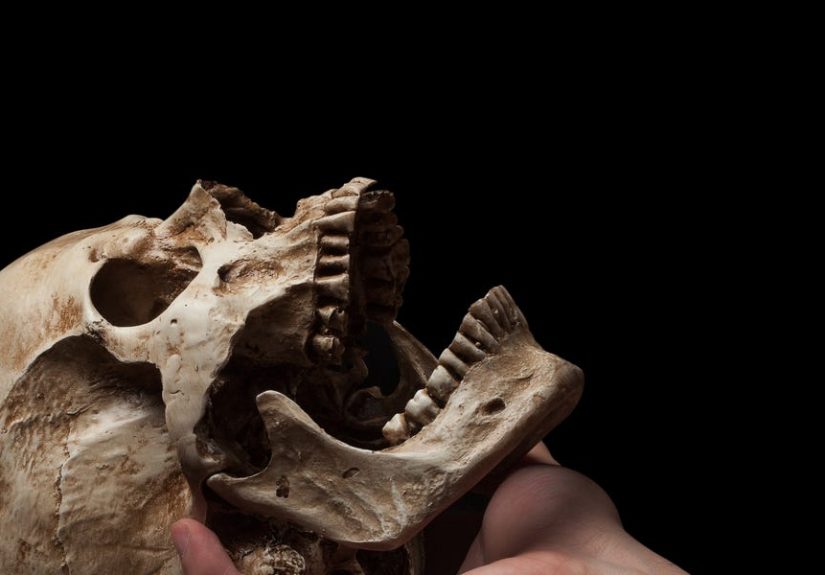
It is, objectively speaking, not much to look at. A bit of jaw. A couple of teeth. The sort of fossil fragment that could fit in your hands without making your arms tremble like you are holding the fate of civilization. And yet this tiny piece of ancient anatomy may help scientists rethink one of the biggest stories in human history: how our early ancestors left Africa and spread into the wider world.
The fossil in question is a roughly 1.8-million-year-old jawbone unearthed at Orozmani, in the country of Georgia. On paper, that sounds like a classic archaeology headline: old bone, big implications, cue dramatic music. But this time the excitement is justified. The find adds weight to a growing body of evidence suggesting that the first humans to move beyond Africa may have done so earlier, more often, and with fewer “modern” advantages than researchers once believed.
In other words, the old script may need edits. Maybe several. Possibly in red ink.
Why This Little Bone Matters So Much
The Orozmani jawbone is important not because it single-handedly blows up everything we know, but because it slots into a very specific and very consequential puzzle. The site lies near Dmanisi, one of the most famous paleoanthropological locations on Earth. Dmanisi has already yielded some of the oldest well-known human fossils found outside Africa, dating to around 1.8 million years ago. That alone made the region a major landmark in the story of early migration.
Now Orozmani is making the case that Dmanisi may not have been a lonely outpost populated by one lucky band of ancient wanderers. Instead, the broader Caucasus region may have hosted multiple groups of early humans soon after they moved out of Africa. That shift matters. A lot.
For decades, a popular view of early migration imagined a relatively tidy narrative: first, a human ancestor evolved the right body, the right brain, the right tools, and the right ecological flexibility. Then, finally, it left Africa and expanded across Eurasia. The problem is that fossils from Georgia keep refusing to behave so neatly.
The Orozmani find strengthens an idea that has been building for years: early dispersal may not have required a fully “advanced” version of humanity. These travelers were not mini modern people carrying some master plan and a laminated route map. They seem to have been smaller-bodied, smaller-brained, and more behaviorally flexible than older models predicted.
The Caucasus: An Ancient Crossroads With Terrible Branding and Great Fossils
If the location sounds oddly familiar, there is a reason. Georgia sits between Europe and Asia, making it the kind of place ancient populations could pass through, settle in, revisit, or use as a corridor while climate and landscapes shifted around them. Today it is a crossroads. Nearly two million years ago, it appears to have been one then, too.
At Orozmani, archaeologists have found more than human remains. They have also uncovered stone tools and fossils from animals such as deer, elephants, wolves, giraffes, and saber-toothed predators. That combination is the good stuff. A human fossil by itself is valuable. A human fossil found in ecological context is gold. It gives researchers a better chance to reconstruct how these early people lived, what they ate, what dangers they faced, and what kind of environment they were dealing with.
That matters because migration is never just about legs. It is about survival. A species does not expand into unfamiliar territory unless it can handle food stress, shifting habitats, predators, and the daily inconvenience of not dying.
The Orozmani material also follows the 2022 discovery of a human tooth at the same site. Together, those finds suggest the location was not a one-off curiosity. It was part of a larger pattern of human presence. And once patterns show up in paleoanthropology, assumptions start sweating.
Dmanisi Already Changed the Story Once
To understand why this jawbone is such a big deal, it helps to remember what Dmanisi already did to the field. Fossils from that site revealed a population of early humans that did not fit the old heroic image of globe-trotting pioneers. These individuals had relatively small brains compared with later humans. They were not hulking super-athletes with deluxe toolkits. Yet somehow, they were out there in Eurasia very early.
That was awkward for older theories. Many researchers had assumed big brains, highly sophisticated tools, or some dramatic cognitive leap were necessary before human ancestors could move far beyond Africa. Dmanisi complicated that story. The Orozmani jawbone makes the complication harder to ignore.
Some scholars have also argued that the Dmanisi fossils show more variation within one population than expected, raising questions about how many early Homo species we have named and whether some of them were really separate species at all. That debate is still alive, and probably will be for a while, because paleoanthropologists are not known for saying, “You know what, let’s all agree and go home.”
Still, the takeaway is clear: the earliest human migrations may have involved populations that were anatomically mixed, behaviorally adaptable, and less linear in their evolution than textbook timelines once suggested.
So, Did Humans Leave Africa in One Clean Wave? Probably Not.
One of the most intriguing consequences of the Orozmani discovery is what it suggests about migration itself. The older version of the story often sounded like a single grand departure. A species evolves in Africa, packs metaphorical bags, and heads outward. But the evidence increasingly points to something messier and more realistic: repeated movements, overlapping populations, and probably multiple pulses of dispersal over long stretches of time.
That broader view is supported by finds outside Georgia as well. Stone tools from Shangchen in China have been dated to more than 2 million years ago, which, if confirmed as evidence of hominin activity, would push the timeline for human presence in Asia back well before many classic fossil benchmarks. The catch is that Shangchen has tools but no human bones, so scientists cannot say with confidence which species made them.
That is where Orozmani becomes especially valuable. Fossils anchor the story. Tools can imply activity, but bones let researchers talk more directly about anatomy, species identity, and biological variation. A jawbone with teeth may not look like much, but in this field it is practically a signed confession.
What the Jawbone Could Help Scientists Answer
The obvious question is species. Is this fossil definitely Homo erectus, the early human species most often associated with the first major expansion out of Africa? The current evidence points in that direction, especially given the nearby Dmanisi record and the earlier tooth from Orozmani. But researchers are still studying the fossil closely, and that caution matters.
Beyond species identification, the jawbone may help answer several other questions:
Diet: Teeth preserve clues about wear, chewing behavior, and sometimes the kinds of foods individuals regularly ate.
Age and development: Tooth eruption and bone structure can help estimate life stage and growth patterns.
Population relationships: Comparing the jaw to fossils from Dmanisi and Africa may reveal whether Orozmani represents the same population, a neighboring one, or a slightly different branch of early Homo.
Migration tempo: If Orozmani and Dmanisi were occupied around the same time, that supports the idea of a wider regional population rather than a single isolated colony.
That last point is one of the most important. A small fossil can have big consequences when it changes a site from “interesting” to “systemic.”
The Real Migration Story May Be About Flexibility, Not Perfection
For years, researchers debated what special trait allowed Homo erectus and related early humans to spread so widely. Was it endurance running? Better stone tools? Social cooperation? Climate pressure? Curiosity? A willingness to walk into the next valley just to see what was there? The unsatisfying but probably correct answer is: some combination of all of the above.
What seems increasingly clear is that adaptability mattered more than perfection. Early humans did not need to be optimized for just one environment. They needed to be good enough in several. Evidence from sites across western Asia suggests these populations were not confined to a single habitat type like open savanna. They could occupy more varied settings, including woodland-rich areas. That ecological flexibility would have made migration less like a desperate one-time escape and more like a gradual expansion into workable territory.
There is also evidence from Dmanisi that social care may have played a role in survival. One famous individual from the site appears to have lived for a long time without most of his teeth, implying that others may have helped him eat and survive. That detail is easy to overlook, but it is profound. Migration is not only a story of mobility. It is a story of cooperation. A group that shares food, protects vulnerable members, and problem-solves together can move farther than a collection of rugged loners trying to reinvent survival every morning.
Sorry to the myth of the solo prehistoric alpha male. Teamwork may have been doing the heavy lifting all along.
What This Discovery Does Not Prove
It is worth slowing down here, because science headlines love caffeine. The Orozmani jawbone does not prove that everything in the migration story was wrong. It does not instantly settle debates about species names, exact routes, or whether Eurasia hosted early Homo before Africa’s fossil record currently shows. It also does not erase the importance of other major sites across Africa and Asia.
What it does do is sharpen the questions.
It makes it harder to treat Dmanisi as an isolated miracle. It adds support to the idea that the Caucasus was a real corridor for early humans. It strengthens the case that outward migration happened early and involved populations that were more variable and more resilient than old theories allowed. And it reminds us that even tiny fossils can have huge value when they appear in exactly the right place.
That is how the best archaeological discoveries work. They do not always destroy the old map. Sometimes they redraw one corner of it so precisely that the whole route starts looking different.
Why This Story Resonates Beyond Archaeology
At one level, this is a technical story about anatomy, dating, habitat reconstruction, and taxonomic arguments that can get delightfully nerdy. At another level, it is deeply human. We want to know where movement began. We want to know whether our earliest ancestors were bold, desperate, clever, cooperative, lucky, or all five before lunch.
The Orozmani jawbone offers no grand speech from the past. It cannot tell us what those travelers called themselves, what frightened them most, or whether they complained about the weather. But it does suggest that human migration began not with polished certainty, but with improvisation. With tolerance for risk. With bodies that were still changing and minds that were still experimenting. With groups willing to keep moving through landscapes full of predators, shifting climates, and absolutely zero convenience stores.
That version of the story feels truer anyway.
Related Experiences: Why a Tiny Fossil Can Feel So Enormous
There is something oddly emotional about discoveries like this, even for people who have never set foot on a dig site and whose archaeological experience mostly consists of squinting at museum labels and pretending not to mispronounce Australopithecus. A small fossil can trigger a very modern feeling: the sudden realization that history is not finished. Not the deep history, anyway. We still do not fully know how our kind became a traveling species.
Imagine standing at a site like Orozmani or Dmanisi. The landscape is quiet now, but the silence would be misleading. Nearly two million years ago, this was not some tidy outdoor exhibit. It was a working ecosystem packed with danger, opportunity, weather, hunger, and motion. Carnivores were around. Herd animals moved through. Water sources shifted. And somewhere in that setting, small groups of early humans were figuring out how to keep going. Not heroically in the cinematic sense. Just practically. Daily. One decision after another.
That is part of what makes this topic so compelling. Migration, in its oldest form, was probably not a dramatic march with a destination banner fluttering in the wind. It was more likely a chain of lived experiences: following animals, avoiding threats, scavenging, resting, testing new ground, and moving again when conditions changed. A fossil jawbone lets us feel the weight of those ordinary acts. It reminds us that world-changing events often look very small up close.
There is also a humbling quality to it. Modern people like to imagine that transformative history announces itself with fireworks. But this story may hinge on one fragment of bone, preserved by luck, found in a site smaller than many living rooms, and understood only because generations of scientists kept returning to the same questions. That should make anyone a little more patient with uncertainty. The past does not reveal itself on demand. It leaks out slowly.
For readers, the experience of following a story like this is a bit like watching a blurry photograph come into focus one corner at a time. First there is Dmanisi, already famous. Then there is a tooth at Orozmani. Then a jawbone. Then comparisons, dates, debates, and new interpretations. No single discovery tells the whole story. But together, they create a sensation that is hard to forget: the feeling that our species’ journey was never neat, never inevitable, and never as simple as the arrows on a classroom map.
And maybe that is the most meaningful experience this topic offers. It changes how you see migration itself. Not as a footnote after human evolution, but as one of its defining engines. Movement shaped diet, cooperation, risk tolerance, adaptability, and survival. To study one little bone is to confront a very big truth: our ancestors were not just evolving bodies. They were evolving strategies for living in an unpredictable world.
That idea lands because it still feels familiar. We live in changing environments, improvise under pressure, rely on one another, and keep moving through uncertainty. The scale is different, but the pattern is recognizable. A jawbone from Orozmani does not just illuminate where early humans went. It helps explain the kind of creatures they were becoming. And, by extension, the kind of creatures we still are.
Conclusion
One little bone may not rewrite the human migration story overnight, but it could help rewrite the parts that matter most. The Orozmani jawbone strengthens the case that early humans were moving beyond Africa by around 1.8 million years ago, that the Caucasus was a critical corridor in that process, and that these pioneers did not need oversized brains or a perfectly modern toolkit to spread into new lands. What they may have needed instead was flexibility, cooperation, and just enough nerve to keep going.
That is a much more interesting story than the old one. It is messier, riskier, and far more human.