Table of Contents >> Show >> Hide
- The Moose Arms Race Starts in Canada
- Then Norway Built a Bigger One
- Why the Story Went Viral
- The Real Reason a Giant Moose Makes Sense
- Canada Strikes Back
- Roadside Attractions Are Never Just Roadside Attractions
- Norway’s Style, Canada’s Charm
- What This Delightful Feud Really Says
- Traveler Experiences: What It Feels Like to Chase the World’s Biggest Moose Story
- Conclusion
Note: Clean HTML body content only, ready for web publishing.
There are international rivalries about trade, territory, sports, and prestige. And then there is the truly elite category: two places politely squabbling over which one has the taller giant moose statue.
That, in wonderfully oversized fashion, is the story behind Norway’s gleaming Storelgen and Canada’s beloved Mac the Moose. One is a polished stainless-steel roadside giant rising out of the Norwegian landscape like a futuristic forest spirit. The other is a prairie icon that has spent decades posing for photos, charming travelers, and proving that nothing says “welcome to town” quite like a moose the size of a small building.
At first glance, this sounds like a joke with antlers. In truth, it is a smart little lesson in tourism, local pride, roadside art, and the strange magic of giant things. Norway built the world’s tallest moose statue. Canada, naturally, took that personally. What followed was not war in the traditional sense, unless your definition of battle includes civic pride, upgraded antlers, and a very serious commitment to being delightfully ridiculous.
The Moose Arms Race Starts in Canada
Long before Norway entered the chat, Canada had already planted its flag in giant-moose territory. Mac the Moose, located in Moose Jaw, Saskatchewan, was completed in 1984 and quickly became one of the town’s most recognizable attractions. He was not subtle. He was not modest. He was a moose statue, enormous and proud, sitting just off the Trans-Canada Highway like he owned the road and several nearby postal codes.
And honestly, Mac had earned that confidence. For years, he was celebrated as the world’s tallest moose statue. In a place called Moose Jaw, that title was not just a cute marketing line. It was local mythology with hooves.
Mac also fits perfectly into the North American tradition of roadside attractions. Across the United States and Canada, giant statues and oversized monuments have long turned ordinary highways into treasure hunts. Travelers are suckers for a weird detour, and communities know it. Build something huge, weird, and photo-friendly, and people will stop. Then they might buy lunch, book a room, or at the very least post your town online with an enthusiastic caption and too many exclamation points.
Mac was built for exactly that kind of visibility. He transformed from sculpture into symbol. Families took pictures with him. Road-trippers used him as proof they had made the stop. The town wrapped part of its identity around him. If ever a moose could become civic infrastructure, Mac did.
Then Norway Built a Bigger One
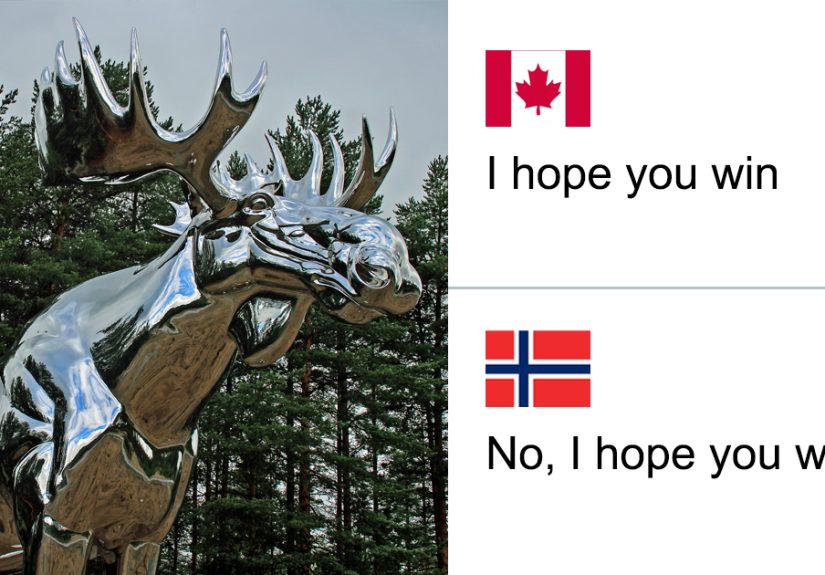
In 2015, Norway unveiled Storelgen, also known in English as The Big Elk, near Atna in Stor-Elvdal. Americans may pause here and ask, “Why elk?” The answer is simple: in Europe, the animal North Americans call a moose is commonly called an elk. Same species, different vocabulary, same majestic face that looks like it knows your Wi-Fi password but refuses to tell you.
Storelgen was not some dusty novelty plopped beside a gas station. It was a sleek, mirror-like sculpture created by artist Linda Bakke, installed near Route 3 between Oslo and Trondheim. It was designed to be visually arresting, and it absolutely is. Where Mac feels folksy and lovable, Storelgen looks like a luxury moose that moisturizes.
But the sculpture was not just built for style points. Its setting and purpose mattered. Norway placed it near a rest area in part to encourage drivers to stop, pay attention, and think about wildlife on the road. That may sound like an unusually poetic traffic-safety strategy, but it makes sense. Moose are not small. They are not shy. And they are extremely bad at filing insurance paperwork after a collision.
Storelgen also came with one very important feature: it was taller than Mac. By roughly 30 centimeters, give or take the pride of an entire continent. Just like that, Canada’s longtime claim to the tallest moose statue was gone.
Why the Story Went Viral
The internet loves many things: petty competition, national pride, and giant animals that should not logically exist in statue form. This story delivered all three.
When news spread that Norway had quietly surpassed Mac, Canadians reacted in the most Canadian way possible: with humor, irritation, and a deeply committed campaign to reclaim the title. The rivalry grew into a small but glorious media event. Officials traded playful barbs. Commentators had a field day. Late-night TV noticed. Suddenly, a niche roadside sculpture contest became international entertainment.
And that is exactly why the story worked so well. It felt refreshingly low-stakes in a world that rarely is. Nobody was pretending this was a geopolitical crisis, but everybody understood the emotional logic. Of course Moose Jaw would defend its giant moose. Of course Norway would enjoy the win. Of course the internet would cheer from the sidelines like this was the heavyweight title bout of decorative ungulates.
The best viral stories are specific. This one was wonderfully, almost suspiciously specific. Not “Canada and Norway have cultural differences.” No. “Canada and Norway are in a cross-border moose statue feud.” That headline practically writes itself.
The Real Reason a Giant Moose Makes Sense
As funny as the rivalry is, the moose itself is not a random symbol in either place. Moose are deeply tied to northern landscapes, national identity, and the mythology of wilderness. In North America and northern Europe, they represent scale, toughness, solitude, and a kind of cold-climate grandeur that is impossible to fake.
They are also genuinely massive animals. The moose is the largest member of the deer family, and it can be imposing enough in real life to make a full-grown human reconsider every outdoor decision that led to that moment. So when towns and regions choose the moose as a mascot, they are not picking some dainty woodland creature. They are choosing a beast with presence.
That matters for tourism. Great landmarks work when they feel rooted in place. A giant moose in the wrong setting would feel random. A giant moose in Saskatchewan or Norway feels inevitable, like somebody finally gave the landscape its official spokesperson.
There is another layer, too. Moose are not just symbols of beauty and wilderness. They are also a real road-safety issue in northern regions. Wildlife agencies and park officials in North America regularly warn drivers about moose collisions because these animals are large, difficult to spot in low light, and dangerous when struck by vehicles. That context helps explain why Norway’s sculpture could function as both public art and a visual reminder that the surrounding landscape is not decorative. It is alive.
Canada Strikes Back
Once Moose Jaw realized its title had been stolen by a shiny Scandinavian rival, the obvious question followed: what now?
Canada answered with the elegance of a hockey check and the creativity of a town that understands branding. If Norway had built a taller moose, Moose Jaw would simply make Mac taller again. Not by rebuilding the whole statue, but by upgrading the antlers.
And honestly, this was genius. Antlers were already part of the visual identity. Bigger antlers meant bigger drama, better photos, and a cleaner narrative. It was not enough to respond. Canada needed a comeback montage.
In 2019, Mac the Moose got a new set of larger antlers, pushing his total height above Storelgen and giving Moose Jaw the title back. It was the most peaceful escalation imaginable. Not missiles. Antlers. Not sanctions. Photo ops.
The whole thing became even more charming because officials on both sides leaned into the absurdity. There was playful diplomacy, humorous public statements, and even a so-called “moose truce” spirit around the dispute. That is part of what makes the story memorable. Nobody ruined it by becoming boring.
Roadside Attractions Are Never Just Roadside Attractions
It is easy to laugh at giant statues, and to be fair, laughing is part of the package. But roadside monuments also tell us a lot about how towns want to be seen.
Some places build monuments to conquerors, founders, or historical victories. Others build giant moose. There is something oddly democratic about that. Roadside attractions are not always about power. Often they are about invitation. They say: pull over, stretch your legs, take a picture, remember us.
That matters more than people realize. In an age when travel is filtered through phones and social media, visual landmarks have marketing value that smaller signs never will. A traveler may forget a brochure, but they will remember a 34-foot moose glaring majestically over a highway. Better yet, they will post it.
That is why this Norway-versus-Canada moose statue contest is more than a cute headline. It shows how place branding really works. Communities compete for attention all the time. Some do it with slogans. Some do it with architecture. Some, apparently, do it with enormous antler engineering.
Norway’s Style, Canada’s Charm
Part of the fun is that these two statues reflect two different aesthetics.
Mac the Moose has old-school roadside charm. He feels handmade, local, and proudly rooted in the giant-novelty tradition that makes road trips more fun. He does not need to be elegant. He needs to be memorable. Mission accomplished.
Storelgen, by contrast, feels contemporary and sculptural. Its reflective steel surface makes it part artwork, part landmark, part giant chrome daydream. It does not just sit in the landscape. It interacts with it, mirroring sky, weather, and passing light.
If Mac says, “Come take a picture with me,” Storelgen says, “Please observe my design language.”
Neither approach is wrong. In fact, the contrast is what makes the rivalry even better. This is not merely a height competition. It is a contest between two ways of making a giant moose meaningful: one through small-town warmth, the other through Scandinavian minimalism with antlers.
What This Delightful Feud Really Says
At heart, “Norway builds world’s tallest moose statue, Canada strikes back” is a story about identity. It is about how communities turn local pride into landmarks. It is about how public art can be playful without being pointless. And it is about how a ridiculous premise can still reveal something true.
People want places to feel distinctive. They want towns and regions to have stories, not just coordinates. A giant moose does that job beautifully. It is impossible to be bland while standing next to a record-setting ungulate.
And maybe that is the secret ingredient here. The rivalry works because it never loses its sense of joy. It reminds us that tourism does not always have to be solemn, polished, or luxury-coded. Sometimes the best travel story begins with a question no serious strategist would dare put in a boardroom deck: “What if we made the moose taller?”
Traveler Experiences: What It Feels Like to Chase the World’s Biggest Moose Story
For travelers, the real pleasure of this story is not just reading about the rivalry. It is experiencing the places that made it possible. Giant animal statues may sound like pure internet bait, but in person they often feel surprisingly memorable. That is because they anchor you to a moment, a landscape, and a local mood in a way polished attractions sometimes cannot.
In Moose Jaw, Mac the Moose feels like the kind of landmark that understands exactly what it is supposed to do. You do not approach him expecting mystery. You approach him expecting delight. He stands there with the confidence of a prairie celebrity who has already done thousands of meet-and-greets and still knows how to hit his angle. Families laugh, road-trippers stop longer than planned, and even cynical adults end up taking the picture they swore they were too cool to take. That is the magic of a roadside icon: resistance is futile, and usually unnecessary.
The experience in Norway is different but equally strong. Storelgen is more dramatic because of its setting. The sculpture rises from a landscape that already feels cinematic, and the polished surface catches light in a way that makes the statue look slightly unreal. It does not just announce itself; it appears. You can imagine pulling off the road, stretching after a long drive, and suddenly seeing this giant silver moose standing against the sky like a Scandinavian mic drop. It is funny, yes, but also a little beautiful. That combination is rare.
What makes both stops memorable is the same thing that makes the rivalry memorable: they connect scale with story. Lots of places have big things. Fewer have big things with personality. Mac has underdog energy, comeback energy, and a bit of “don’t count us out” swagger. Storelgen has elegance, confidence, and the calm of a sculpture that knows it changed the conversation just by showing up taller.
Travelers also get something else from these landmarks: a reminder that local pride is often the best tour guide. Neither statue works without the people around it caring. Moose Jaw embraced Mac as part mascot, part ambassador, part oversized family member. Norway gave Storelgen artistic meaning beyond novelty by tying it to the road, the region, and the reality of moose country. Visitors feel that difference, even if they cannot immediately explain it.
There is also a special kind of joy in visiting places that are in on the joke. The best roadside attractions do not pretend to be more dignified than they are. They understand that fun is part of the value. Standing in front of a giant moose, you are allowed to be amused and impressed at the same time. In fact, that is the correct response.
And that is why the experience lingers. You do not go home saying, “I viewed a sculpture.” You go home saying, “I saw the moose. The giant one. The one from the international feud.” Suddenly the stop becomes a story, and the story becomes something you retell with a grin.
That is the true win in this Norway-versus-Canada showdown. Records can change. Antlers can get bigger. Titles can bounce back and forth. But the traveler experience is the real prize. These statues turn highways into memories, towns into punchlines you actually respect, and a weird little contest into one of the most charming tourism stories of recent years.
Conclusion
Norway may have built the world’s tallest moose statue first in this round of the rivalry, but Canada’s answer proved that no title is safe when civic pride has access to larger antlers. What could have been a forgettable bit of roadside trivia became a funny, oddly insightful story about public art, travel culture, and the competitive spirit of places that know how to make themselves unforgettable.
In the end, both countries won. Norway got a striking sculpture with real landscape presence. Canada got its comeback. Travelers got a perfect road-trip story. And the rest of us got a beautiful reminder that sometimes the world is still weird in the best possible way.