Table of Contents >> Show >> Hide
- What Is Microneedling?
- Types of Acne Scars Microneedling May Improve
- How Effective Is Microneedling for Acne Scars?
- What Happens During a Microneedling Appointment?
- Microneedling With PRP, RF, or Serums
- Side Effects of Microneedling for Acne Scars
- Who Should Avoid Microneedling?
- Professional Microneedling vs. At-Home Derma Rollers
- How Much Does Microneedling for Acne Scars Cost?
- How to Prepare for Microneedling
- Microneedling Aftercare: What to Do After Treatment
- Microneedling vs. Other Acne Scar Treatments
- How to Choose a Provider
- Experience-Based Insights: What People Often Learn During the Microneedling Journey
- Conclusion: Is Microneedling Worth It for Acne Scars?
Acne scars have a special talent for overstaying their welcome. The breakout leaves, the drama ends, and then the skin says, “Actually, I brought souvenirs.” For many people, those souvenirs are tiny dents, uneven texture, enlarged-looking pores, or shadowy marks that seem to show up in every mirror with suspiciously perfect lighting. That is where microneedling for acne scars enters the conversation.
Microneedling, also called collagen induction therapy, is a minimally invasive skin procedure that uses tiny sterile needles to create controlled micro-injuries in the skin. That sounds a little medieval until you understand the goal: the treatment encourages the skin’s natural repair process, including collagen and elastin production. Since acne scars often involve damaged or uneven collagen, microneedling can help remodel the skin over time and soften the look of certain scars.
Is it magic? No. Is it useful? Often, yes. Is it something to do at home while watching a crime documentary and eating cereal? Absolutely not. Professional microneedling can be a helpful option for acne scarring, but the best results depend on scar type, skin tone, provider skill, treatment depth, aftercare, and realistic expectations.
What Is Microneedling?
Microneedling is a dermatology treatment performed with a pen-like device or another professional tool fitted with fine needles. These needles make many tiny punctures in the skin at a controlled depth. The purpose is not to “sand off” the scar but to signal the body to repair and rebuild the area.
During healing, the skin produces new collagen and elastin. Collagen is the structural protein that helps skin look firmer and smoother. Acne scars, especially indented scars, often form when the skin does not produce enough organized collagen after inflammation. Microneedling aims to restart that remodeling process in a controlled way.
Why Collagen Matters for Acne Scars
Indented acne scars are usually not just surface marks. They are texture changes in the dermis, the deeper layer of skin. When inflamed acne damages the skin, the healing process may leave behind uneven collagen. Some areas become tethered, pitted, or depressed. Microneedling creates a fresh repair signal, encouraging gradual improvement in skin texture.
This is why microneedling is usually better for texture than for color. If you have red or brown marks after acne, those may be post-inflammatory erythema or hyperpigmentation rather than true scars. They can improve with sun protection, topical ingredients, chemical peels, lasers, or time. Texture scars often need procedures.
Types of Acne Scars Microneedling May Improve
Not all acne scars behave the same way. They are like roommates: some are quiet, some are stubborn, and some require professional intervention.
Rolling Scars
Rolling scars create broad, wavy depressions in the skin. They are often caused by fibrous bands pulling the skin downward. Microneedling may help by stimulating collagen, although deeper rolling scars may respond better when microneedling is combined with subcision, a procedure that releases those tethering bands.
Boxcar Scars
Boxcar scars are wider depressions with more defined edges. Shallow boxcar scars may respond well to microneedling, especially over multiple sessions. Deeper boxcar scars may need combination therapy, such as fractional laser, chemical reconstruction, fillers, or surgical techniques.
Ice Pick Scars
Ice pick scars are narrow, deep pits that look like tiny punctures. They are often the hardest type to treat with microneedling alone because the scar extends deeply and narrowly. Dermatologists may recommend treatments such as TCA CROSS, punch excision, or laser resurfacing for these scars.
Raised Scars
Hypertrophic or keloid scars are raised rather than indented. Microneedling is usually not the first choice for these because stimulating the skin could potentially worsen certain raised scars in people prone to keloids. Steroid injections, silicone therapy, lasers, or other dermatologist-guided treatments may be more appropriate.
How Effective Is Microneedling for Acne Scars?
Microneedling can be effective for acne scars, especially mild to moderate atrophic scars such as rolling and shallow boxcar scars. Studies and clinical experience suggest that improvement is usually gradual, not instant. Think “renovation project,” not “photo filter.”
Many people notice smoother texture after a series of treatments. However, improvement varies. A person with shallow rolling scars may see a visible softening after three to six sessions. Someone with deep ice pick scars may see only modest change unless microneedling is paired with other procedures.
Most providers recommend a series of treatments spaced about four to six weeks apart. This gives the skin time to heal and generate new collagen. Collagen remodeling continues for months, so results may keep improving after the last session.
What Results Can You Realistically Expect?
Microneedling does not erase acne scars completely. A realistic goal is smoother skin texture, softer scar edges, and a more even overall appearance. Some people see subtle improvement; others see significant changes. Results depend on several factors:
- The type and depth of acne scars
- The number of sessions completed
- The needle depth and device used
- The provider’s training and technique
- Your skin tone and tendency toward hyperpigmentation
- Whether acne is active or well controlled
- How carefully you follow aftercare
For best results, acne should be under control before starting treatment. Microneedling over active acne can spread bacteria, trigger inflammation, and make the skin angrier than a cat in a bathtub.
What Happens During a Microneedling Appointment?
A professional microneedling appointment usually begins with a consultation. The provider examines your skin, identifies scar types, reviews your medical history, and asks about medications, cold sores, keloid tendency, pregnancy, recent isotretinoin use, and skin sensitivities.
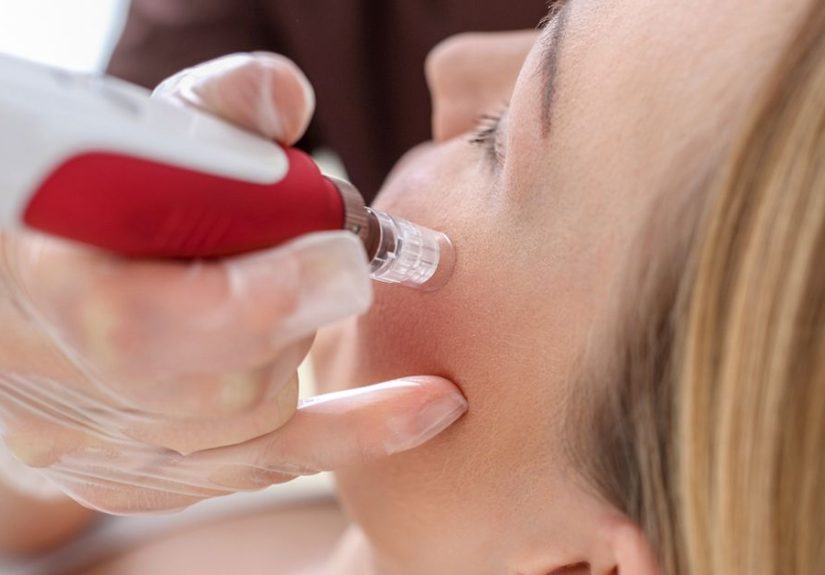
On treatment day, the skin is cleansed, and a topical numbing cream is usually applied for comfort. After the skin is numb, the provider moves the microneedling device across the treatment area in controlled passes. The depth may be adjusted depending on the area and scar severity.
The procedure may feel like a scratchy vibration, pressure, or prickly sensation. Most people tolerate it well with numbing cream. Afterward, the skin often looks red or flushed, similar to a sunburn. Some pinpoint bleeding may occur during deeper scar treatments, but it should be controlled in a professional setting.
Microneedling With PRP, RF, or Serums
Microneedling is often offered alone or combined with other treatments. The add-ons can affect results, risks, and cost.
Microneedling With PRP
PRP stands for platelet-rich plasma. A provider draws a small amount of your blood, processes it, and applies or injects the platelet-rich portion during treatment. PRP contains growth factors that may support healing and collagen activity. Some patients choose PRP for acne scars because it may improve recovery and results, though it raises the price.
RF Microneedling
Radiofrequency microneedling combines needles with heat energy. The needles deliver radiofrequency energy into the skin, which can stimulate deeper remodeling and tightening. RF microneedling may be recommended for acne scars, enlarged pores, and skin laxity, but it is more aggressive than standard microneedling and carries additional risks, especially if performed improperly.
Because RF devices use heat beneath the skin, provider experience matters a lot. Too much energy, the wrong depth, or poor technique may increase the risk of burns, fat loss, scarring, pigmentation changes, or prolonged inflammation. This is one area where bargain hunting can become very expensive.
Topical Serums and Exosomes
Some clinics apply hyaluronic acid, peptides, growth-factor serums, or exosome products after microneedling. The tiny channels in the skin may help certain products absorb more easily. However, not every topical product is appropriate for freshly needled skin. Strong acids, retinoids, fragrance, and unapproved mixtures can irritate or injure the skin.
Side Effects of Microneedling for Acne Scars
Most microneedling side effects are temporary when the procedure is done correctly by a trained professional. The skin is intentionally irritated, so a little drama is expected. The goal is controlled drama, not a full soap opera.
Common Side Effects
- Redness or darker flushing, depending on skin tone
- Mild swelling
- Tenderness or tightness
- Dryness or peeling
- Pinpoint bleeding during treatment
- A sandpaper-like texture for a few days
- Temporary sensitivity to skincare products
These effects usually improve within a few days to a week. Many people return to normal activities quickly, although makeup is typically avoided for at least 24 hours or as directed by the provider.
Less Common but Important Risks
Microneedling can cause complications, especially if done too deeply, too often, on the wrong candidate, with poor hygiene, or with unsafe products. Possible risks include infection, prolonged redness, acne flare-ups, cold sore outbreaks, scarring, allergic reactions, and post-inflammatory hyperpigmentation.
People with darker skin tones can be good candidates, and microneedling may have a lower discoloration risk than some laser treatments. Still, hyperpigmentation can happen if the skin becomes too inflamed or is exposed to sun too soon after treatment. Gentle aftercare and daily sunscreen are non-negotiable.
Who Should Avoid Microneedling?
Microneedling is not right for everyone. A dermatologist or qualified medical provider may recommend postponing or avoiding it if you have:
- Active acne breakouts in the treatment area
- Skin infection, open wounds, or eczema flare-ups
- A history of keloids or abnormal scarring
- Uncontrolled diabetes or poor wound healing
- Recent radiation treatment in the area
- Recent isotretinoin use, depending on your provider’s protocol
- Active cold sores or frequent herpes outbreaks without preventive planning
- Pregnancy, depending on the clinic and treatment plan
For younger patients, treatment should be discussed carefully with a board-certified dermatologist and a parent or guardian. Acne scarring can affect confidence, but skin is still changing during the teen years, and active acne control usually comes first.
Professional Microneedling vs. At-Home Derma Rollers
At-home rollers are popular online because they look simple. Tiny roller, big promises, dramatic bathroom lighting. Unfortunately, acne scar treatment is not a great DIY project.
Professional microneedling devices can reach controlled depths needed for scar remodeling. At-home rollers usually use shorter needles and cannot safely treat deeper scars. More importantly, at-home tools raise the risk of infection, uneven injury, irritation, and pigmentation changes. Reusing or poorly cleaning a roller can introduce bacteria into the skin. Using the wrong serum afterward can also trigger a reaction.
If your goal is collagen remodeling for acne scars, choose a licensed, trained provider. Save the DIY energy for assembling furniture and pretending the leftover screw was optional.
How Much Does Microneedling for Acne Scars Cost?
Microneedling cost varies widely in the United States. Standard microneedling may cost a few hundred dollars per session in some clinics and significantly more in major cities or medical practices. National estimates often place individual sessions somewhere from about $200 to $700, while some cost databases report higher averages depending on location, provider type, and treatment complexity.
For acne scars, one session is rarely enough. Many patients need three to six sessions, and more severe scarring may require additional treatments or combination therapy. That means the total cost can range from under $1,000 to several thousand dollars.
Typical Cost Factors
- Provider: Dermatologists and plastic surgeons may charge more than med spas, but training and safety matter.
- Location: Prices are often higher in large metropolitan areas.
- Treatment area: Full-face treatment costs more than a small area.
- Scar severity: Deeper scars may require more sessions or combination procedures.
- Add-ons: PRP, RF energy, growth-factor serums, or exosomes increase the price.
- Device: RF microneedling usually costs more than standard microneedling.
- Package pricing: Some clinics offer discounted bundles for multiple sessions.
Is Microneedling Covered by Insurance?
Microneedling for acne scars is usually considered cosmetic, so insurance typically does not cover it. Some clinics offer payment plans or package discounts. Before booking, ask for a written estimate that includes consultation fees, numbing, aftercare products, add-ons, and follow-up visits.
How to Prepare for Microneedling
Preparation can reduce irritation and help the treatment go smoothly. Your provider’s instructions should always come first, but common recommendations include avoiding tanning, sunburn, harsh exfoliants, retinoids, and irritating actives for several days before treatment. You may also be asked to stop certain medications or supplements that increase bleeding risk, but only with medical guidance.
Arrive with clean skin and no makeup. Tell your provider about your full skincare routine, prescription acne treatments, history of cold sores, allergies, and any recent procedures. A good consultation is not a sales pitch with mood lighting; it should feel like a real medical conversation.
Microneedling Aftercare: What to Do After Treatment
Aftercare matters because your skin barrier is temporarily more vulnerable. For the first few days, keep skincare simple. Use a gentle cleanser, bland moisturizer, and broad-spectrum sunscreen. Avoid direct sun, intense workouts, swimming pools, saunas, exfoliating acids, retinoids, benzoyl peroxide, scrubs, and heavy makeup until your provider says they are safe.
Do not pick peeling skin. Do not test five new products because your face “looks like it needs encouragement.” Healing skin prefers calm, not chaos. If you notice increasing pain, pus, spreading redness, fever, blisters, or unusual swelling, contact your provider promptly.
Microneedling vs. Other Acne Scar Treatments
Microneedling is one tool, not the entire toolbox. Acne scar treatment often works best when matched to scar type.
Microneedling vs. Laser Resurfacing
Lasers can be very effective for acne scars, especially fractional lasers. Ablative lasers remove or vaporize tiny columns of skin, while non-ablative lasers heat deeper layers without removing the surface. Lasers may create more dramatic results for some scars, but they can involve higher costs, more downtime, and greater pigmentation risk in some skin tones.
Microneedling vs. Chemical Peels
Chemical peels can help with surface texture, discoloration, and mild scarring. Deeper peels may improve more significant scars but come with more downtime and higher risk. Microneedling is often preferred for collagen remodeling in indented scars, while peels may be better for pigment and surface dullness.
Microneedling vs. Subcision
Subcision is useful for tethered rolling scars. A provider inserts a needle under the skin to release scar bands. Microneedling can improve collagen production afterward, so the two treatments are sometimes combined.
Microneedling vs. Fillers
Dermal fillers can lift certain depressed scars quickly. Results may be temporary or long-lasting depending on the filler. Fillers are not a replacement for collagen remodeling, but they can be helpful when volume loss or deep depressions are part of the problem.
How to Choose a Provider
For acne scars, look for a board-certified dermatologist, plastic surgeon, or appropriately licensed medical professional with experience treating scars and different skin tones. Ask how many acne scar cases they treat, what device they use, how they choose needle depth, and what complications they have seen.
Before-and-after photos should show patients with similar scar types and skin tones. Beware of anyone promising flawless skin in one session. Skin improvement is science, not fairy dust with a booking deposit.
Experience-Based Insights: What People Often Learn During the Microneedling Journey
People considering microneedling for acne scars often focus on the big questions first: Does it work? How much does it cost? Will I look like a tomato afterward? Those are fair questions. But the experience includes smaller details that matter just as much.
First, many patients learn that the consultation is the real starting line. A good provider does not simply glance at your face and hand you a package price. They identify whether your scars are rolling, boxcar, ice pick, raised, pigmented, or mixed. This matters because a person with mostly rolling scars may need subcision plus microneedling, while someone with shallow boxcar scars might do well with microneedling alone. The best treatment plan is customized, not copied from a social media caption.
Second, the sensation is usually more manageable than expected. With numbing cream, most people describe professional microneedling as scratchy, buzzy, or spicy rather than truly painful. The forehead and upper lip may feel more sensitive because the skin is thinner over bone. Cheeks, where acne scars often live rent-free, are usually easier to tolerate.
Third, the mirror immediately after treatment can be dramatic. Skin may look red, shiny, swollen, or dotted. This is normal in many cases, but it can surprise first-timers. The “fresh tomato” phase often calms down within a day or two, although deeper treatments may take longer. Planning matters. Do not schedule microneedling the day before senior photos, a wedding, a big work presentation, or any event where people will ask, “Did you go skiing on the sun?”
Fourth, results are slow. This is probably the hardest part. People often want proof after one session, but collagen does not work on overnight shipping. The skin may look brighter after healing, yet scar improvement usually builds over several months and multiple sessions. Taking standardized photos in the same lighting every month can help you notice changes that the bathroom mirror hides.
Fifth, aftercare can make or break the experience. Patients who keep things simple usually do better than those who panic-buy ten “healing” products. Gentle cleanser, moisturizer, sunscreen, and patience are the main characters. Strong exfoliants, retinoids, scrubs, fragrance, and random internet serums should wait until the provider gives the green light.
Sixth, cost planning reduces frustration. Since acne scar treatment usually needs several sessions, asking only for the price of one appointment can be misleading. It is smarter to ask: “How many sessions do you expect for my scar type, what is the total estimated cost, what add-ons are optional, and when would we reassess?” This turns a vague beauty expense into a real plan.
Finally, people often discover that microneedling improves confidence gradually, not because it creates perfect skin, but because it gives them a sense of progress. The goal is not to erase every sign that your skin has had a history. The goal is healthier texture, softer scars, and a treatment plan that respects your skin instead of declaring war on it.
Conclusion: Is Microneedling Worth It for Acne Scars?
Microneedling can be a strong option for acne scars, especially mild to moderate indented scars such as rolling and shallow boxcar scars. It works by encouraging collagen remodeling, which can gradually smooth texture and soften scar edges. However, it is not a one-session miracle, and it may not be enough for deep ice pick scars, tethered scars, or raised scars.
The best results come from the right diagnosis, the right provider, controlled acne, consistent sessions, and careful aftercare. Side effects such as redness, swelling, dryness, and sensitivity are common and usually temporary, but complications can happen. RF microneedling and at-home devices require extra caution because risks increase when heat, depth, hygiene, or technique are poorly managed.
If you are considering microneedling for acne scars, start with a dermatologist or qualified medical provider who can evaluate your scar type and build a realistic treatment plan. Your skin does not need to be perfect to be healthy, attractive, or worth caring for. But if smoother texture would help you feel more comfortable, microneedling may be one smart step in the acne scar treatment toolkit.