Table of Contents >> Show >> Hide
- What Is Metamucil, Exactly?
- Metamucil Nutrition Information at a Glance
- Why This Label Is More Interesting Than It Looks
- How Much Fiber Does Metamucil Add to Your Day?
- Powder vs. Capsules vs. Gummies vs. Fiber Thins
- Ingredients, Sweeteners, and Allergens: The Fine Print Matters
- What Metamucil Does Not Bring to the Table
- How to Use It Without Making Your Stomach Revolt
- So, Is Metamucil Healthy?
- Common Real-World Experiences With Metamucil Nutrition Information
- Conclusion
- SEO Metadata
If you have ever stood in the fiber aisle staring at Metamucil and wondering whether you are buying a digestive helper, a snack, or an orange-flavored chemistry experiment, welcome. You are in excellent company. “Metamucil nutrition information” sounds simple, but the answer changes depending on whether you pick up a powder, capsule, gummy, or Fiber Thins pack. Same brand. Very different nutrition story.
That is the part many shoppers miss. Metamucil is not one single product with one universal label. It is a whole lineup. Some versions are mostly about psyllium husk fiber. Others are more like convenience products with extra flavor, sweeteners, or snack-style ingredients. So if you want the short truth before we dig in: the healthiest choice for you depends on whether you care most about fiber grams, calories, sugar, ingredients, convenience, or taste. Ideally, all of the above. Because adulthood is just one long exercise in reading labels and pretending it is fun.
What Is Metamucil, Exactly?
Metamucil is best known as a fiber supplement brand. Its classic products use psyllium husk, a plant-based soluble fiber that forms a gel when mixed with liquid. That gel-like quality is a big reason psyllium is popular for regularity and for label claims related to cholesterol support. But the whole Metamucil family does not use the exact same fiber source.
For example, many of the brand’s powders and capsules center on psyllium. By contrast, Metamucil Fiber Gummies use a plant-based fiber blend and prebiotic ingredients instead of the classic psyllium setup. Meanwhile, Fiber Thins are more like a crunchy fiber snack, which means their nutrition panel looks more like food than a minimalist supplement.
That distinction matters because “fiber” is not the only thing on a label. Calories, sugar, carbs, sweeteners, allergens, and serving size all shape the real nutritional value of the product you are buying.
Metamucil Nutrition Information at a Glance
The chart below uses representative U.S. label examples from current product pages and retailer panels. It is meant to help you compare formats, not replace the exact label on the package in your hand.
| Product format | Typical serving | Fiber profile | Calories | What stands out |
|---|---|---|---|---|
| Sugar-free psyllium powder | 1 rounded teaspoon | About 3 g dietary fiber, including about 2.4 g soluble psyllium | Varies by variety | Classic fiber-first option; some “sugar-free” versions still are not marketed as low-calorie foods |
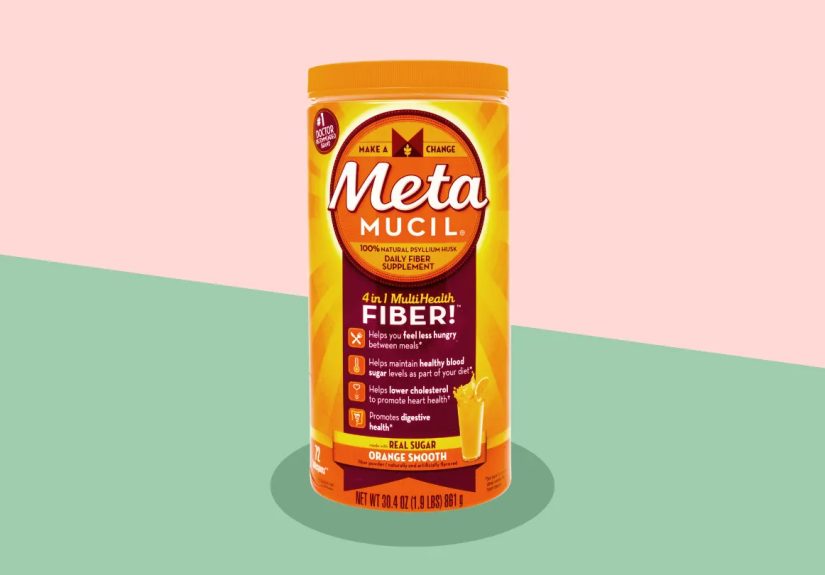
| Real-sugar orange powder | Per label serving | Representative listings show about 5 g soluble fiber | About 80 calories in one common Orange Smooth listing | Higher calorie and sugar load than the leaner powder options |
| Capsules | 5 capsules | About 2 g dietary fiber; roughly 1.8 to 2 g soluble fiber | Very little else nutritionally | Convenient, simple ingredient list, but less fiber per serving than many powders |
| Fiber Gummies | 3 gummies | 5 g fiber | Check label by variety | No added sugar in current orange gummies; uses a fiber blend rather than psyllium |
| Fiber Thins | 2 thins | About 4 to 5 g fiber | About 100 calories | More snack-like; Cinnamon Spice example includes sugar, flour, oil, and allergens |
Why This Label Is More Interesting Than It Looks
At first glance, most people just want to know one thing: How much fiber am I getting? Fair question. But that is only half the story. A smarter way to read Metamucil nutrition information is to ask five questions:
1. How much fiber is in one real serving?
Serving size does a lot of heavy lifting. Three gummies are one serving. Five capsules are one serving. Two Fiber Thins are one serving. One rounded teaspoon can be a serving for certain powders. If you compare products without checking the serving size, the label can play tricks on your brain. The fiber aisle loves a technicality.
2. Is the fiber psyllium or a different blend?
This matters because psyllium-based powders and capsules are the products most closely associated with the brand’s classic digestive and cholesterol-related label messaging. Gummies may still help you increase fiber intake, but they are not nutritionally identical to psyllium powder in a glass of water.
3. What are the calories, sugar, and carbs?
If you are watching blood sugar, trying to cut added sugar, or just avoiding products that quietly behave like snacks, these numbers matter. A powder or capsule may fit more easily into a low-sugar routine than Fiber Thins, which are intentionally snack-like. A real-sugar powder can also look very different from a sugar-free one.
4. What sweeteners or extras are included?
Some Metamucil powders use sweeteners such as aspartame, while Premium Blend is sweetened with stevia. Original smooth-style options can differ. Translation: “fiber supplement” does not automatically mean “same ingredient list.”
5. Does it fit your body and your routine?
A person who hates mixing drinks may do better with capsules. A person who wants the biggest psyllium boost may prefer powder. A person who wants fiber in snack form may reach for Fiber Thins. Nutrition is not only about numbers. It is also about what you will actually use consistently.
How Much Fiber Does Metamucil Add to Your Day?
The FDA Daily Value for fiber is 28 grams per day on a 2,000-calorie diet. That number gives useful context to Metamucil labels.
Here is the practical math:
A serving with 3 grams of fiber gives you a meaningful bump, but it is still just part of the day’s fiber goal. A serving with 5 grams does more work and moves you closer to that daily target faster. A 2-gram capsule serving is helpful, but not huge, which is why some people feel capsules are convenient but slower to make an impact on their fiber intake.
That is one reason Metamucil can be useful: it helps close a fiber gap. It does not magically erase a low-fiber diet made up of drive-thru fries and wishful thinking, but it can make the gap smaller.
Powder vs. Capsules vs. Gummies vs. Fiber Thins
Powders
Powder is the classic Metamucil format. It is usually the option people picture when they think of the brand: bright tub, water, quick stir, drink fast before it turns into orange wallpaper paste. Nutritionally, powders are often the most direct route to psyllium husk fiber. They can be a strong choice for people who want fiber support without turning the supplement into a snack.
But not all powders are nutritionally the same. Real-sugar powders can carry more calories and sugar than sugar-free versions. Some sugar-free options contain sweeteners, and some product pages even note that certain sugar-free powders are not low-calorie foods. So “sugar-free” should not be mistaken for “nutritionally invisible.”
Capsules
Capsules are the convenience champion. No glass. No mixing. No orange foam. No race against the clock before the drink thickens. Their ingredient list can also be very simple. One current capsule label lists just psyllium husk and gelatin.
The tradeoff is that capsules typically deliver less fiber per serving than many powder servings. If your goal is maximum fiber with minimal fuss, capsules are great. If your goal is the biggest fiber jump for the fewest steps, powders usually win.
Gummies
Gummies are the most approachable option for people who dislike powders and pills. They are easy, portable, and taste-friendly. Current orange gummies list 5 grams of fiber per 3 gummies and no added sugar, which is appealing on paper.
Still, gummies are not simply “powder, but fun.” They rely on a different fiber system and are more of a fiber-boosting convenience product than a classic psyllium supplement. If you specifically want psyllium, gummies are not the same thing in a cute chewy disguise.
Fiber Thins
Fiber Thins are the “I want fiber, but make it snacky” choice. And honestly, there is nothing wrong with that. The Cinnamon Spice version is around 100 calories per serving with 5 grams of fiber. But the label also looks more like a cracker or wafer than a traditional supplement. It includes ingredients such as wheat flour, sugar, corn oil, oats, and flavorings. One current label example lists 7 grams total sugars, including 6 grams added sugars, plus soy and wheat allergens.
That does not make Fiber Thins “bad.” It just means they belong in a different category. They are a fiber snack, not a lean supplement.
Ingredients, Sweeteners, and Allergens: The Fine Print Matters
If you are comparing Metamucil nutrition information for a specific diet, the ingredient list may matter as much as the nutrition panel.
For example, some people avoid aspartame, while others do not care. Some want stevia-sweetened products. Some want no added sugar. Some need to avoid wheat or soy, which makes Fiber Thins more complicated. Some follow vegetarian or religious dietary rules and may care that capsules can include gelatin.
This is why there is no single “best” Metamucil. There is only the best fit for your label priorities.
What Metamucil Does Not Bring to the Table
Metamucil can help increase fiber intake, but it is not a multivitamin, a protein shake, or a balanced meal. You generally do not buy Metamucil for protein, healthy fats, or a broad spectrum of vitamins and minerals. You buy it for fiber.
That sounds obvious, but it is worth saying out loud. A fiber supplement can support your diet. It cannot replace a diet. If your meals are consistently low in fruits, vegetables, beans, oats, nuts, and other fiber-rich foods, Metamucil can help, but it should not have to do all the work alone like the overachiever in a group project.
How to Use It Without Making Your Stomach Revolt
Most people do best when they start slowly and drink enough liquid. Psyllium products are not the kind of supplement you should swallow with two heroic sips of water and a can-do attitude. They need fluid to work properly.
Many labels and health sources also warn that taking psyllium without enough liquid may cause choking, especially if you have trouble swallowing. Some sources also recommend separating psyllium from certain medications by a couple of hours, because fiber can affect how some medicines are absorbed.
And yes, when people suddenly add more fiber, temporary bloating or changes in bowel habits can happen. That does not automatically mean the product is wrong for you. It may mean your body would have appreciated a slower, less dramatic entrance.
So, Is Metamucil Healthy?
Usually, yes, in the sense that adding fiber can be a smart move for many adults who do not get enough of it from food. But “healthy” is still product-specific.
If you want a cleaner, fiber-first option, powders and capsules often make the most nutritional sense. If you want something easy and more enjoyable, gummies can be practical. If you want a crunchy snack with fiber added, Fiber Thins may work, but they should be viewed as a snack with benefits rather than a pure supplement.
The healthiest Metamucil product is the one that matches your goals, your ingredient preferences, and your willingness to use it consistently.
Common Real-World Experiences With Metamucil Nutrition Information
One of the most common real-world experiences people have with Metamucil is simple confusion. They assume the whole brand shares one nutrition profile, then realize the powder in the orange tub, the gummies in the bottle, the capsules in the canister, and the Fiber Thins in the box are nutritionally different creatures. That discovery alone changes how people shop. Someone trying to reduce sugar may feel great about grabbing a “fiber supplement,” only to get home and realize they bought the snack-style version. Someone else may expect gummies to work exactly like psyllium powder and later learn that the fiber source is not the same. In other words, the label matters more than the logo.
Another common experience is that people underestimate serving size. Five capsules can feel like a lot. Three gummies can feel like a tiny treat. Two Fiber Thins can feel like almost nothing if you are snack-minded. One rounded teaspoon of powder can seem surprisingly modest compared with the dramatic personality of the drink once it thickens. These details matter because nutrition information only makes sense when matched to the actual serving. People often discover that they were mentally comparing products one-for-one instead of serving-for-serving, which is a very human mistake and a very unhelpful one.
Taste and texture also shape the experience more than nutrition nerds like to admit. Plenty of people know powder may be the most direct route to psyllium, but they still choose capsules or gummies because they dislike the texture of mixed fiber drinks. Others do the opposite: they try capsules, decide five pills feels too fussy, and go back to powder. Some love Fiber Thins because the product feels like a snack instead of a supplement. The practical lesson is that the best nutrition label in the world is useless if you hate using the product.
There is also the “I added fiber too fast and now my stomach is writing a complaint letter” experience. That is common enough to be almost a rite of passage. People often assume more fiber immediately equals better results immediately. In reality, the adjustment period matters. Starting slower, drinking enough liquid, and giving your body a little time tends to create a better experience than going from low-fiber chaos to full-fiber crusader overnight.
Finally, many people report that once they truly understand Metamucil nutrition information, they stop treating the brand as one product and start using it more strategically. Powder becomes the serious daily option. Capsules become the travel backup. Gummies become the easier choice for consistency. Fiber Thins become an occasional snack instead of a stealth health halo food. That kind of label literacy is the real win. The product did not change. The shopper got smarter.
Conclusion
Metamucil nutrition information is not hard once you stop asking, “What are the nutrition facts for Metamucil?” and start asking, “Which Metamucil product am I actually looking at?” That small shift makes all the difference.
If you want the most straightforward fiber-focused option, powders and capsules usually lead the pack. If you want convenience and taste, gummies may fit better. If you want a crunchy snack with fiber, Fiber Thins are the obvious choice, but they come with a more food-like nutrition profile. The smartest move is to match the label to your goal, not the marketing to your mood.