Table of Contents >> Show >> Hide
- The White Coat Does Not Come With a Battery Pack
- Why Loving Medicine Does Not Prevent Burnout
- The Human Side of Healthcare Work
- Moral Injury: When Doctors Know the Right Thing but Cannot Do It
- The Electronic Health Record: Helpful Tool or Hungry Robot?
- Patients Need Human Doctors, Not Superheroes
- What Healthy Boundaries Look Like in Medicine
- How Healthcare Organizations Can Care for the Caregivers
- What Patients Can Do to Support Better Care
- The Joy of Medicine Is Still Real
- Experience Notes: Loving the Work While Learning My Limits
- Conclusion: The Best Medicine Includes Humanity
- SEO Tags
Note: This article is educational and reflective. It is not medical advice, a mental health diagnosis, or a substitute for professional support. It is written to honor the human side of healthcare workers while encouraging healthier systems, kinder conversations, and realistic expectations.
The White Coat Does Not Come With a Battery Pack
Medicine is often described as a calling, and for many clinicians, that is not just poetic language. It is the reason they studied while everyone else slept, learned anatomy terms that sound like ancient spells, and practiced difficult conversations until “I am sorry” could be said with both clarity and compassion. Medicine is my passion. I love my job, but I am human. That sentence may sound simple, but in modern healthcare, it is almost revolutionary.
Doctors, nurses, physician assistants, therapists, pharmacists, technicians, and every other healthcare professional are trained to perform under pressure. They learn to stay calm when alarms ring, families cry, and the clock behaves like it has a personal grudge. But training does not erase humanity. A clinician can love caring for patients and still feel tired. A doctor can be excellent and still need sleep. A nurse can be deeply compassionate and still have a breaking point. Passion is powerful, but it is not a replacement for rest, staffing, emotional support, or functioning systems.
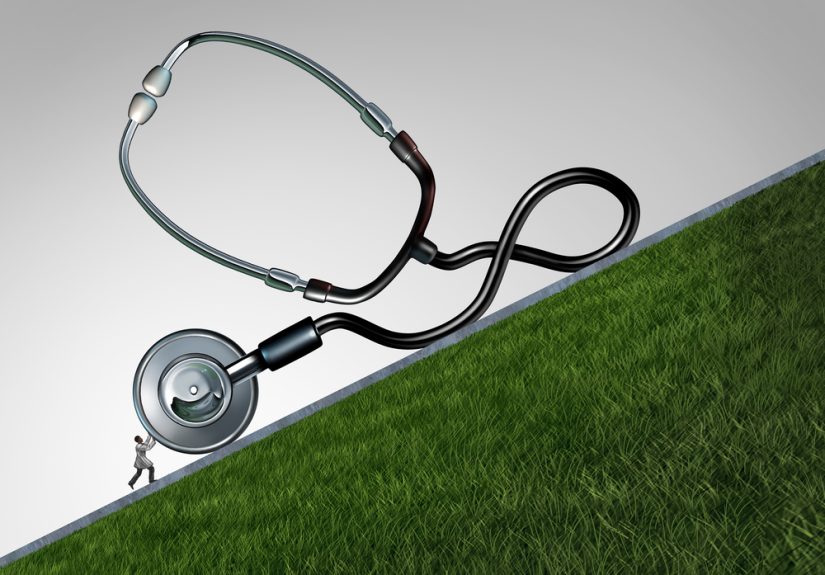
The truth is that healthcare workers carry more than stethoscopes. They carry stories. The patient who got better. The patient who did not. The family that said thank you. The family that shouted in fear. The chart that was finished after dinner. The inbox message that arrived at midnight. The missed birthday, the cold coffee, the aching feet, the decision that had to be made quickly and correctly. Medicine is beautiful, but it is not weightless.
Why Loving Medicine Does Not Prevent Burnout
One of the most harmful myths in healthcare is that passion should make a person immune to exhaustion. It sounds noble, but it is unfair. In fact, people who care deeply may be more vulnerable to burnout because they keep giving long after their inner fuel light starts blinking. They tell themselves, “Just one more patient,” “Just one more chart,” “Just one more shift,” until “one more” becomes a lifestyle.
Physician burnout is commonly described as a long-term stress reaction involving emotional exhaustion, depersonalization, and a reduced sense of personal accomplishment. In plain English, that means a clinician may feel drained, detached, cynical, or strangely ineffective even while working harder than ever. It is not laziness. It is not weakness. It is what happens when a person works inside pressure for too long without enough recovery, control, resources, or meaning.
Recent national data show that physician burnout has improved from the worst pandemic-era levels, but it remains a major concern. When more than two out of five physicians report at least one symptom of burnout, the issue is not a few people needing better yoga mats. It is a system problem. Stretching helps. Deep breathing helps. So does drinking water before your kidneys file a complaint. But wellness cannot be reduced to a poster in the break room if the workload remains impossible.
Burnout Is Not Just “Being Tired”
Everyone gets tired. Burnout is different. Tiredness usually improves with rest. Burnout can follow a person home, sit at the dinner table, and whisper, “You are failing,” even when the day was objectively heroic. It can make a kind clinician feel numb. It can make a skilled professional dread the work they once loved. It can make medicine feel less like a calling and more like a conveyor belt with fluorescent lighting.
This is why talking honestly about clinician well-being matters. It is not self-indulgent. It is patient safety. Research has linked physician burnout with lower patient satisfaction, reduced professionalism, and greater risk of safety incidents. That does not mean burned-out clinicians do not care. It means exhausted humans are still humans, and healthcare depends on attention, communication, patience, and judgment. Protecting the healer helps protect the patient.
The Human Side of Healthcare Work
Patients often meet clinicians during frightening moments. A parent brings in a feverish child. A patient waits for biopsy results. Someone hears the word “surgery” and suddenly forgets every question they planned to ask. In these moments, healthcare workers become translators of fear. They turn lab values into understandable language. They explain risks without crushing hope. They hold silence when no sentence is big enough.
That emotional labor is real. It does not always appear in productivity reports, but it lives in the body. A clinician may leave an exam room after delivering bad news and walk directly into the next room with a smile, because the next patient deserves presence too. There is no dramatic music, no scene break, no director yelling “cut.” Just hand hygiene, a deep breath, and the next human being.
Compassion is one of medicine’s greatest strengths, but compassion also has a cost when it is unsupported. Compassion fatigue can appear as emotional numbness, irritability, withdrawal, or feeling overwhelmed by suffering. A clinician may still care deeply, but the emotional system becomes overloaded. Think of it like a phone with too many apps open. The phone is not broken; it needs power, space, and fewer things running in the background.
Moral Injury: When Doctors Know the Right Thing but Cannot Do It
Burnout is not the only word clinicians use to describe distress. Many also speak of moral injury. Moral injury in healthcare can happen when professionals know what a patient needs but cannot provide it because of barriers such as insurance restrictions, staffing shortages, time pressure, resource limitations, or administrative complexity. It is the pain of wanting to do the right thing while being blocked by the machinery around you.
For example, imagine a doctor who knows a patient needs a specialist quickly, but the appointment is months away. Imagine a nurse who wants to spend ten more minutes comforting a frightened family, but three call lights are already blinking. Imagine a primary care physician who wants to discuss nutrition, sleep, medication side effects, depression, and preventive screening in one short visit while the electronic health record waits like a digital dragon demanding tribute.
That gap between values and reality hurts. Clinicians enter medicine to heal, not to wrestle with prior authorizations like they are auditioning for an administrative obstacle course. When the system repeatedly prevents good care, distress becomes more than fatigue. It becomes grief, anger, guilt, and helplessness.
The Electronic Health Record: Helpful Tool or Hungry Robot?
Electronic health records have improved many parts of care. They can make information easier to share, reduce lost paperwork, and help track medication lists, allergies, test results, and preventive care. But EHR systems can also add a heavy clerical burden. Many clinicians spend hours outside scheduled patient visits finishing documentation, managing inbox messages, reviewing results, responding to refill requests, and clicking through alerts that seem to reproduce in the night.
The EHR inbox has become one of the most visible examples of hidden work in medicine. Patients may see the visit, but not the after-visit labor: the notes, forms, messages, results, referrals, appeals, and coordination. A physician may finish seeing patients at 5 p.m. and still have a second shift waiting inside a computer. The body goes home; the chart follows.
Reducing inbox burden is not about avoiding responsibility. It is about designing smarter workflows. Team-based care, better message routing, clearer refill protocols, fewer low-value notifications, and improved EHR usability can return time to clinicians and attention to patients. Technology should support care, not quietly become the most demanding patient in the room.
Patients Need Human Doctors, Not Superheroes
There is a reason the superhero model of medicine is dangerous. Superheroes do not sleep. They do not need childcare. They do not get migraines, grief, back pain, anxiety, or a flat tire before morning clinic. Real clinicians do. When society expects healthcare workers to be endlessly available and emotionally invincible, everyone loses.
Patients deserve skilled, compassionate care. They also deserve clinicians who are not running on fumes. A tired doctor may still be brilliant, but the goal should not be to test how long brilliance can survive without oxygen. A nurse can still be kind on hour twelve, but kindness should not require personal collapse. A good healthcare system does not depend on heroism as its staffing model.
The better model is partnership. Patients can bring honesty, preparation, patience, and respect. Clinicians can bring expertise, empathy, and clear communication. Organizations can bring adequate staffing, safer schedules, team support, and leadership that treats well-being as infrastructure. Medicine works best when everyone remembers that care is a relationship, not a vending machine.
What Healthy Boundaries Look Like in Medicine
Boundaries in healthcare are sometimes misunderstood. A boundary is not a lack of compassion. It is the structure that allows compassion to continue. A clinician who protects rest, asks for help, takes a meal break, or turns off nonurgent notifications during personal time is not abandoning patients. They are preserving the capacity to care well tomorrow.
Healthy boundaries may include realistic appointment lengths, protected administrative time, clear after-hours coverage, mental health resources without stigma, and leadership that does not reward chronic overwork as proof of dedication. On an individual level, boundaries may include saying, “I need a moment,” “I cannot safely take on more right now,” or “This needs to be escalated.” These statements are not failures. They are safety tools.
Clinicians also need emotional boundaries. Caring for patients does not mean absorbing every sorrow without support. It is possible to be warm without being consumed, empathetic without becoming helpless, and dedicated without disappearing into the job. In medicine, the heart matters. So does the nervous system attached to it.
How Healthcare Organizations Can Care for the Caregivers
Personal resilience is useful, but it cannot fix a broken schedule, unsafe staffing ratio, or chaotic workflow by itself. Telling clinicians to become more resilient without improving the environment is like handing someone an umbrella during a hurricane and calling it climate policy. Healthcare organizations must treat burnout prevention as a system responsibility.
1. Reduce unnecessary administrative work
Every form, click, duplicate field, and poorly routed message consumes attention. Organizations should regularly ask: Does this task improve care? Does the physician need to do it? Can the team share it? Can automation help without creating new problems? Removing low-value work is one of the most practical ways to restore meaning.
2. Build team-based care
Doctors should not be the default destination for every task. Nurses, medical assistants, pharmacists, care coordinators, and support staff all play essential roles. When teams work at the top of their training, care becomes safer, faster, and less exhausting. The patient experiences a coordinated team instead of one overwhelmed person juggling flaming torches.
3. Normalize mental health support
Healthcare workers should be able to seek mental health care without fear of professional punishment or stigma. Confidential counseling, peer support, crisis resources, and licensing reforms can help clinicians get support earlier. The message should be clear: needing help does not make a healthcare professional unsafe; ignoring distress can.
4. Listen to frontline staff
The people closest to the work often know exactly where the system leaks time, energy, and morale. Leaders should invite feedback, act on it, and report back. Nothing says “we value your voice” like actually changing the thing everyone has been complaining about since the fax machine era.
5. Protect time for recovery
Recovery is not a luxury. It is part of performance. Safe scheduling, real breaks, paid leave, backup coverage, and respect for off-hours time all matter. A clinician who rests is not less committed. They are more likely to remain in the profession long enough to keep caring.
What Patients Can Do to Support Better Care
Patients should never feel responsible for fixing healthcare worker burnout. That belongs to systems, institutions, policymakers, and leadership. Still, patients can help create a more humane care environment through small actions that make visits more effective.
Bring a current medication list. Write down your top concerns before the appointment. Be honest about symptoms, finances, fears, and whether you can follow the plan. Ask questions if something is unclear. Use patient portals thoughtfully, especially for nonurgent issues. Remember that the person answering your message may be caring for hundreds or thousands of patients, not ignoring you while sipping iced coffee on a yacht.
Kindness also matters. Most healthcare workers remember the patient who said, “Thank you for explaining that,” or “I know this is a hard day.” Those moments do not erase systemic problems, but they do remind clinicians why they entered medicine in the first place.
The Joy of Medicine Is Still Real
Despite the challenges, medicine still contains astonishing joy. The first cry in a delivery room. The cancer scan that shows remission. The elderly patient who brings tomatoes from the garden. The child who stops being afraid of the stethoscope after deciding it is a “heart microphone.” The patient who finally sleeps because pain is controlled. The family who gets one more holiday together.
Clinicians do not stay in medicine because paperwork is thrilling. They stay because healing matters. They stay because science and humanity meet in the exam room. They stay because a diagnosis can change a life, a conversation can reduce fear, and a steady hand can become someone else’s turning point.
But joy should not require martyrdom. The future of medicine depends on preserving both excellence and humanity. A doctor should be allowed to love the work and still say, “I need rest.” A nurse should be allowed to be strong and still cry after a hard shift. A medical student should be allowed to dream big without being taught that exhaustion is the entrance fee.
Experience Notes: Loving the Work While Learning My Limits
There is a particular kind of pride that comes from working in medicine. It is not loud pride. It is quieter than applause. It is the feeling of walking out of a difficult room knowing you helped someone understand what was happening. It is the relief of catching a dangerous symptom early. It is the strange happiness of finding the right diagnosis after the clues finally line up. It is the privilege of being trusted with stories people may not tell anyone else.
At the same time, medicine teaches humility every day. You learn that the human body does not always read the textbook. You learn that good people get terrible news. You learn that being correct is important, but being kind while you are correct is even more important. You learn that patients may forget medical terminology, but they rarely forget whether they felt dismissed or heard.
Some days are energizing. The schedule flows, the team communicates, the patient improves, and even the coffee tastes like it has chosen a career in public service. Other days feel like climbing stairs while carrying invisible furniture. Every message is urgent. Every result needs follow-up. Every room holds a person who deserves your full attention, even though your brain is already holding a dozen open tabs.
On those hard days, the phrase “I am human” becomes more than a reminder. It becomes a boundary. It means I cannot pour from an empty cup and then blame the cup for being empty. It means I can care deeply without pretending I am limitless. It means I can be committed to excellence while admitting that fatigue affects focus, grief affects mood, and constant pressure affects patience.
Medicine has also taught me that small rituals matter. Washing hands can become a reset. Taking one slow breath before entering a room can help me arrive fully. Drinking water between patients can feel absurdly basic, but the body appreciates not being treated like office equipment. A five-minute conversation with a colleague can turn isolation into solidarity. Even humor helps. Healthcare workers develop a very specific sense of humor, the kind that can survive fluorescent lighting, missing pens, and printers that jam only when something is truly urgent.
The most meaningful experiences often come from ordinary moments. A patient says, “I was scared, but now I understand.” A family member says, “Thank you for being honest.” A colleague notices you are overwhelmed and quietly helps without making it a speech. These moments are not dramatic, but they are medicine at its best. They remind us that healing is not only procedures, prescriptions, and protocols. Healing is also presence.
Still, presence requires preservation. If medicine wants compassionate clinicians, it must make room for human needs. Sleep is not weakness. Food is not optional. Mental health support is not a luxury item hidden behind three committee approvals. Time with family, exercise, therapy, hobbies, faith, friendship, silence, and laughter are not distractions from medicine. They are part of the life that allows a person to keep practicing medicine with a whole heart.
So yes, medicine is my passion. I love my job. I love the challenge, the science, the relationships, and the honor of helping people through some of their most vulnerable moments. But I am human. And that truth does not diminish my dedication. It protects it.
Conclusion: The Best Medicine Includes Humanity
The statement “Medicine is my passion. I love my job, but I am human” is not a complaint. It is a call for honesty. Healthcare workers can be devoted without being indestructible. They can be brilliant without being endlessly available. They can be compassionate without being consumed.
A healthier future for medicine will not come from asking clinicians to pretend they have no limits. It will come from building systems that respect those limits, reduce unnecessary burdens, support mental health, and keep the focus where it belongs: on safe, humane, excellent patient care. The white coat is a symbol of service, but the person wearing it still has a heartbeat. That heartbeat matters too.