Table of Contents >> Show >> Hide
- Why fall prevention matters so much
- What Original Medicare does cover for fall prevention
- What Original Medicare usually does not cover
- How Medicare Advantage can change the picture
- What Medicare costs can look like in 2026
- How to use Medicare strategically for fall prevention
- The bigger lesson: Medicare covers prevention, but mostly through medical channels
- Real-world experiences with Medicare and fall prevention
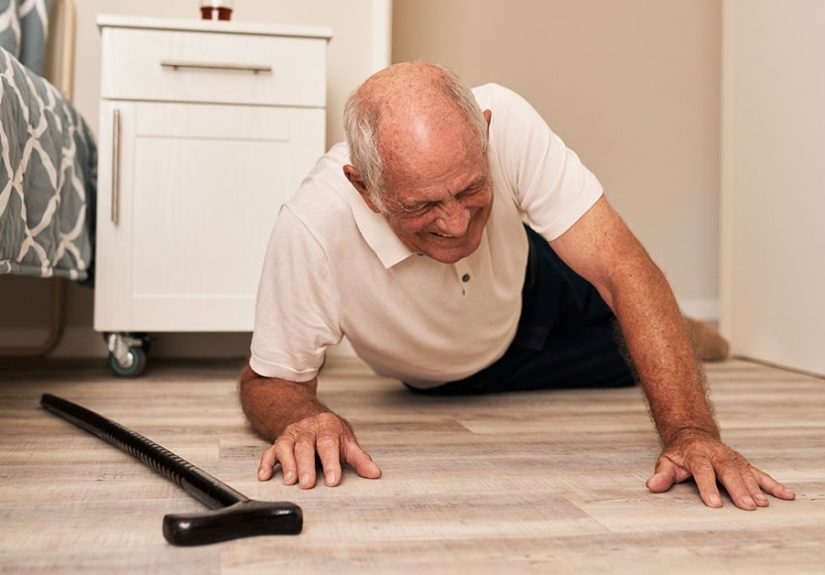
Falls are one of those health issues that sound simple until they are suddenly not simple at all. One slippery bathroom tile, one missed stair, one dizzy moment while reaching for the good coffee mug, and a routine day can turn into an emergency room visit, a rehab stay, or months of recovery. For older adults, fall prevention is not just a nice wellness slogan. It is a serious part of staying independent, mobile, and at home.
That is exactly why so many people ask the same question: Does Medicare cover fall prevention? The honest answer is yes, but not always in the neat, all-in-one way people expect. Medicare often covers the medical side of fall prevention, such as screenings, therapy, and durable medical equipment. It is much less generous when it comes to turning your home into a no-slip, grab-bar-equipped fortress of good decisions.
This is where the details matter. Original Medicare, Medicare Advantage, medical necessity, provider assignment, and home health rules all shape what gets covered, what gets partially covered, and what lands squarely in the “nice idea, but you pay for it” category. Here is how the coverage works in the real world.
Why fall prevention matters so much
Falls are not rare, and they are not just about bruised pride. A fall can lead to fractures, head injuries, loss of confidence, reduced mobility, and a cascade of health problems that make daily life harder. Even when someone avoids a major injury, the fear of falling again can quietly shrink their world. They walk less, move less, socialize less, and become weaker, which unfortunately raises fall risk even more.
That is why modern fall prevention focuses on several layers at once: screening for risk, reviewing medications, improving strength and balance, checking vision and hearing, removing home hazards, and using the right mobility equipment when needed. In other words, preventing falls is not one magic trick. It is more like a smart checklist with very practical consequences.
What Original Medicare does cover for fall prevention
1. The yearly Wellness visit
One of the most useful Medicare benefits for fall prevention is the yearly Wellness visit under Part B. This visit is not a full head-to-toe physical exam, which catches some beneficiaries by surprise. Still, it is extremely valuable because it is designed to build or update a personalized prevention plan based on your current health risks.
During this visit, your provider uses a Health Risk Assessment and reviews issues tied to safety and independence. That includes your daily function, your prescriptions, your general health risks, and the kind of everyday factors that can push fall risk higher. CMS guidance for the Annual Wellness Visit specifically includes review of fall risk, home and community safety, and referrals for fall prevention. In plain English, this is one of Medicare’s clearest on-ramps to a real fall-prevention strategy.
Under Original Medicare, you typically pay nothing for the yearly Wellness visit if your provider accepts assignment. The Part B deductible does not apply to that preventive visit itself. But there is an asterisk big enough to deserve its own spotlight: if your provider performs extra tests or services during the same appointment that are not part of the covered preventive benefit, coinsurance and other costs may apply. In Medicare land, the phrase “while you’re here” can sometimes become a bill.
2. Outpatient physical therapy
If your doctor identifies balance issues, weakness, gait instability, or recovery needs after an illness or injury, Medicare Part B can cover medically necessary outpatient physical therapy. This is one of the strongest practical tools Medicare offers for fall prevention because physical therapists do not just help after surgery. They can work on strength, balance, transfer safety, walking mechanics, and safe use of assistive devices.
Coverage matters here because exercise is one of the most consistently effective fall-prevention interventions. A well-designed program can improve lower-body strength, balance confidence, and reaction time. The right therapist can also spot things family members miss, like unsafe footwear, poor turning mechanics, or the suspicious way someone grabs every countertop like it owes them money.
Original Medicare generally covers medically necessary outpatient physical therapy with no annual payment cap. After you meet the Part B deductible, you usually pay 20% of the Medicare-approved amount.
3. Outpatient occupational therapy
Occupational therapy is another underappreciated Medicare benefit for people at risk of falling. While physical therapy focuses heavily on movement, strength, and gait, occupational therapy zeroes in on everyday function. That means getting in and out of the shower, reaching shelves safely, using bathroom equipment, dressing without losing balance, and arranging the home environment so the kitchen does not become an obstacle course.
Medicare Part B helps cover medically necessary outpatient occupational therapy when certified by a doctor or other qualified provider. After the Part B deductible, you typically pay 20% of the Medicare-approved amount. For many people, OT is where fall prevention becomes practical rather than theoretical.
4. Durable medical equipment like canes and walkers
When people ask about fall prevention coverage, this is usually the part they mean first. Yes, Original Medicare Part B can cover durable medical equipment (DME) that is medically necessary and prescribed for use in the home. Medicare’s covered DME list includes items such as canes and walkers, along with wheelchairs, hospital beds, and other equipment.
There are rules, of course, because Medicare would not be Medicare without paperwork, suppliers, and a small administrative obstacle course. The equipment must be medically necessary, your provider must prescribe it, and your supplier should be enrolled in Medicare. After you meet the Part B deductible, you usually pay 20% of the Medicare-approved amount.
This is important because the right device can prevent falls, but the wrong device can create new ones. A walker that is too low, a cane used on the wrong side, or a rollator chosen because it looked stylish online can turn “support” into “plot twist.” Covered therapy and covered equipment often work best together.
5. Home health services for eligible beneficiaries
Original Medicare can also cover home health services in certain situations. This matters when someone is homebound or leaving home takes major effort because of illness, injury, weakness, or mobility limits. If eligibility rules are met, Medicare may cover home health physical therapy, occupational therapy, some skilled nursing care, and limited home health aide care connected to skilled services.
For fall prevention, this can be especially helpful after hospitalization, after a fracture, after a noticeable decline in strength, or when a provider decides therapy at home is the safest path. Home health can also be a turning point for people who are technically “home,” but not really safe there yet.
What Medicare does not cover through home health is also worth knowing. It does not pay for round-the-clock care, meal delivery, or general homemaker services unrelated to your care plan. If the only need is personal care help, such as bathing or dressing, that alone usually does not qualify for Medicare home health coverage.
6. Treatment after a fall
Medicare is generally more straightforward about paying for treatment after a fall than it is about paying for every measure that might prevent one. If a fall leads to a medically necessary doctor visit, imaging, surgery, hospital care, outpatient rehab, or follow-up therapy, those services are usually covered under the standard Part A and Part B rules that apply to the setting and treatment involved.
That is helpful, but it also reveals a frustrating truth: Medicare often does a better job funding the consequences of a fall than funding a total home makeover that might have prevented it in the first place.
What Original Medicare usually does not cover
This is where expectations need a reality check. Original Medicare typically does not cover broad home safety equipment or structural home modifications such as grab bars, walk-in tubs, stair lifts, widened doorways, or permanent wheelchair ramps just because they would make the home safer. Those items may be wise, useful, and absolutely worth having. They just are not usually covered under standard Original Medicare rules.
That surprises many families because these are exactly the changes that seem most logical for preventing a dangerous fall at home. But Medicare Part B is generally focused on medically necessary medical equipment, not on paying to remodel a bathroom into a spa-like sanctuary of excellent judgment.
Original Medicare also does not generally cover standard medical alert systems such as Life Alert under Part A or Part B. Some people assume a fall-detection pendant must count as medical equipment, but standard Medicare rules usually do not treat it that way.
How Medicare Advantage can change the picture
Medicare Advantage plans must cover everything Original Medicare covers, but many plans also offer extra benefits. That is where fall prevention can become more interesting.
Some Medicare Advantage plans offer supplemental benefits that may include bathroom safety devices, in-home support, transportation, telemonitoring, or benefits tailored for chronically ill enrollees. The catch is that these benefits vary widely by plan, county, network, eligibility rules, prior authorization requirements, and annual benefit limits. In other words, two neighbors on the same street can both say they “have Medicare Advantage” and still have very different answers to the grab-bar question.
If you are shopping for a plan with fall-prevention needs in mind, do not stop at the glossy summary. Read the Evidence of Coverage, confirm whether the benefit is available to all members or only to qualifying members, ask about approved vendors, and check whether the plan covers equipment, installation, or both. A benefit that sounds generous can be much less magical once you discover it covers only certain items, certain diagnoses, or a tiny annual allowance.
For 2026, some Medicare Advantage plans continue to offer benefits such as bathroom safety devices and in-home support services, but availability is far from universal. That means Medicare Advantage may help with fall prevention beyond Original Medicare, but it is not automatic and it is definitely not one-size-fits-all.
What Medicare costs can look like in 2026
In 2026, the standard Medicare Part B deductible is $283. After that deductible, Original Medicare generally pays 80% of the Medicare-approved amount for many Part B-covered services, and you usually pay 20%. That common cost-sharing structure applies to things like outpatient therapy and durable medical equipment.
For the yearly Wellness visit itself, you usually pay $0 if your provider accepts assignment. But again, extra services done during the same appointment can trigger charges.
If those out-of-pocket costs feel heavy, Medicare Savings Programs may help eligible beneficiaries with premiums, deductibles, coinsurance, and copayments. This can matter a lot for people who know they need therapy, equipment, or ongoing follow-up but keep postponing care because each “small” bill adds up into one large nope.
How to use Medicare strategically for fall prevention
The best way to get value from Medicare is to think in steps, not in random pieces.
- Start with the yearly Wellness visit. Bring up dizziness, prior falls, balance issues, medication side effects, fear of falling, and difficulty getting around the house.
- Ask directly whether physical therapy or occupational therapy is medically necessary. Do not assume your provider will automatically connect the dots.
- Request an equipment evaluation if walking feels unsteady. The right cane or walker is far better than borrowing one from a relative who is three inches shorter.
- Ask whether you qualify for home health. This is especially important after hospitalization, surgery, or a clear decline in mobility.
- If you have Medicare Advantage, inspect your extra benefits carefully. Fall-prevention benefits may exist, but the details decide everything.
- Use non-covered strategies anyway when they are worth it. Better lighting, removing rugs, adding grab bars, wearing safer shoes, and checking vision are often worth doing even when Medicare does not pay.
The bigger lesson: Medicare covers prevention, but mostly through medical channels
The most important thing to understand is this: Medicare absolutely has a role in fall prevention, but it usually pays through clinical services, not through a blanket home-safety budget. It covers risk assessment, therapy, some home health, and medically necessary equipment. It is much less likely to cover the environmental fixes many families think of first.
That makes the smart approach pretty clear. Use Medicare to identify risk early, get referrals quickly, and secure covered therapy or equipment before one minor wobble becomes a major injury. Prevention is almost always cheaper, safer, and less miserable than recovery, even when the coverage rules make that feel unnecessarily dramatic.
Real-world experiences with Medicare and fall prevention
Many beneficiaries describe the same pattern: they did not realize fall prevention was even something to discuss until after a scary moment. One common experience is the person who mentions, almost casually, “I have been feeling a little unsteady lately,” during a yearly Wellness visit. That small comment leads to a fall-risk discussion, a medication review, and a referral to physical therapy. A few weeks later, they are practicing balance drills, learning how to turn safely, and realizing the problem was not “just aging.” It was a treatable risk.
Another common experience involves a caregiver who assumed Medicare would pay for every useful home safety upgrade. The family installs grab bars, buys a shower chair, improves lighting, and removes loose rugs, only to learn that Original Medicare usually does not reimburse many of those costs. The frustration is understandable. The changes are clearly related to safety. But this is where many families discover the difference between medical necessity and home improvement. Medicare often helps with the clinical part of prevention, not the hardware-store part.
There is also the very practical story of the walker. Plenty of people resist getting one because they think it signals weakness. Then they get evaluated, receive the right device through a Medicare-enrolled supplier, and realize it actually makes them more independent, not less. The real problem was never the walker. It was the fear of what it represented.
Home health can be another eye-opening experience. After a hospitalization or a decline in mobility, some beneficiaries are shocked to learn that therapy can sometimes come to them if they meet Medicare’s criteria. For someone who is technically living at home but struggling to leave safely, that can be the difference between recovering in place and spiraling into more risk.
People in Medicare Advantage plans often report a different kind of surprise: extra benefits exist, but finding out whether they apply can feel like decoding a cereal box with legal training. One person may get help with bathroom safety devices or in-home support, while another with a different plan gets nothing for the same need. The lesson from these experiences is simple. Ask early, ask specifically, and ask for the fine print. With Medicare and fall prevention, the details are not side notes. They are the whole story.