Table of Contents >> Show >> Hide
- The Moon Is a Terrible Place for Wheels
- Apollo Proved That the Rover Changes the Science
- Artemis Wants a Rover That Works Like a Crew Vehicle and a Robot
- VIPER and the Rise of Serious Robotic Prospectors
- Even the Small Ones Are Not Cute Little Gadgets
- Why “No Toy” Is the Right Way to Think About the Future
- Experiences That Prove a Lunar Rover Is No Toy
- Conclusion
At first glance, a lunar rover can look oddly adorable. Some resemble a dune buggy that wandered into a physics lab. Others look like a golf cart that got a doctoral degree in suffering. A few are small enough to fit the mental category of “science fair project with ambition.” That impression lasts right up until you remember what the Moon is actually like: airless, abrasive, brutally hot, brutally cold, full of sharp dust, weird lighting, deceptive slopes, and exactly zero tow trucks.
That is why a lunar rover is no toy. It is not a mascot, a photo prop, or a cute extra strapped to a mission for vibes. A moon rover is infrastructure. It is a science platform, a survival tool, a logistics machine, and, increasingly, a bridge between robotic exploration and human settlement. If NASA’s Apollo rovers proved that wheels can transform a landing into a field expedition, today’s Artemis-era designs are trying to prove something bigger: that mobility is what turns a visit into a sustained presence.
The Moon Is a Terrible Place for Wheels
Earth spoils us. Roads are mostly visible, tires mostly behave, and when dirt gets into a hinge, we call it annoying. On the Moon, dirt becomes a career problem. Lunar dust is not soft beach powder. It is made of jagged, electrostatically clingy grains that love to coat seals, joints, radiators, fabrics, optics, and electronics. During Apollo, astronauts reported dust getting everywhere. It irritated eyes and throats, clung to suits, and jammed moving parts. For modern rovers, dust is not merely a housekeeping issue. It is a reliability issue, a thermal issue, and sometimes a “please do not let this grind our mission to a halt” issue.
The thermal environment is just as rude. Future Artemis rovers are being designed for the lunar south pole, where conditions are far harsher and stranger than the equatorial Apollo sites. Temperatures can swing wildly, and permanently shadowed regions stay so cold they sound less like destinations and more like warnings on a sci-fi insurance policy. NASA materials for the Lunar Terrain Vehicle, or LTV, describe operating concerns that stretch from roughly 280 degrees Fahrenheit to minus 280 degrees Fahrenheit. That is not “pack a jacket” weather. That is “your vehicle had better be a triumph of materials science” weather.
Then there is the lighting. At the lunar south pole, the Sun hugs the horizon, casting long shadows and flattening contrast. Boulders, craters, ridges, and slopes can become visual tricks. A route that looks manageable can suddenly become a problem when the terrain drops away into darkness. A rover on the Moon is not just driving over ground. It is navigating a place where depth perception can be stingy and mistakes can be expensive.
Why Mobility Becomes Mission-Critical
All of those hazards explain why mobility is not a luxury. Without a rover, astronauts remain tethered to short walking distances, conservative timelines, and smaller science returns. With a rover, the mission footprint expands. More geology can be sampled. More instruments can be deployed. More cargo can be hauled. More terrain can be crossed before everyone has to turn around and make the prudent, life-preserving decision not to become a cautionary tale.
NASA’s own thinking reflects that shift. The new LTV is meant to be more than a moon buggy revival. It is being developed as a commercially provided service, with NASA testing concepts from Intuitive Machines, Lunar Outpost, and Venturi Astrolab. The goal is not just to drive astronauts around when they are on the surface. The vehicle is also expected to operate remotely between crewed missions, moving science payloads and cargo and extending exploration even when no one is sitting in the driver’s seat.
Apollo Proved That the Rover Changes the Science
The strongest argument for taking lunar rovers seriously is historical, and it has tire tracks all over it. Apollo 15 was the first mission to use the Lunar Roving Vehicle, and it immediately changed the scale of what astronauts could do. NASA records and Smithsonian reporting show that Apollo 15 covered about 17.5 miles of lunar exploration. By Apollo 17, the third rover had helped astronauts drive 22.2 miles and collect 254 pounds of rock and soil samples. That is not a minor upgrade. That is a transformation in scientific reach.
Harrison Schmitt, the geologist on Apollo 17, later said the lunar rover proved to be a reliable, safe, and flexible exploration vehicle, and that major discoveries from Apollo 15, 16, and 17 would not have been possible without it. That is about as strong an endorsement as you can get from someone who actually bounced across the Moon in one. The rover did not merely make astronauts faster. It made the mission smarter. It allowed crews to reach more diverse geological features, collect more varied samples, and set up more ambitious fieldwork.
In other words, the rover turned a landing zone into a working landscape. That lesson matters today because Artemis is not just trying to repeat Apollo for nostalgia points. It is trying to build a more durable lunar presence. And durable presence requires range, payload capacity, repeatability, and the ability to keep doing useful work after the exciting live-streamed part is over.
Artemis Wants a Rover That Works Like a Crew Vehicle and a Robot
The Artemis-era lunar rover has a much tougher job description than the Apollo version. NASA says the LTV will be something of a hybrid: part Apollo-style astronaut rover, part Mars-style robotic explorer. That means advanced communications, autonomous or supervised driving features, remote operation, power management, navigation systems, and enough durability to support multiple missions over years, not a single heroic outing.
This is where the phrase “no toy” becomes especially useful. Toys are built for novelty. The LTV is being built for reuse. NASA technical papers describe requirements and studies involving multi-year service life, remote teleoperation, night survival, and travel targets measured in kilometers rather than camera-friendly joyrides. One NASA study found that even with communication delay, operators could still remotely drive a notional LTV meaningful distances, supporting the idea that the rover can contribute between crewed visits instead of sitting idle like the world’s most expensive parked vehicle.
That shift matters because lunar exploration is becoming an ecosystem problem. Rovers are now part of a broader surface architecture that includes landers, instruments, communications, power, navigation, and eventually habitats. The rover is not the sidekick anymore. It is one of the main ways the whole surface campaign becomes practical.
Buying Rover Capability as a Service
NASA’s procurement model says a lot about where this is heading. Rather than simply buying and owning one rover in the old-school government hardware style, NASA plans to acquire lunar mobility as a service from industry. That approach reflects a bigger Artemis pattern: use commercial providers where possible, spread development across multiple teams, and treat lunar access like something that should become more routine, not permanently handcrafted.
There is also a strategic angle here. Mobility supports science, but it also supports presence, logistics, and speed. A rover that can work with astronauts, move cargo, and operate between missions is the kind of asset that helps transform a lunar program from symbolic to operational. It is the difference between planting a flag and building a workflow.
VIPER and the Rise of Serious Robotic Prospectors
If the LTV represents the human side of lunar driving, NASA’s VIPER rover represents the robotic side: scouting, prospecting, and answering questions that matter before larger crews arrive. VIPER was designed to explore the Moon’s south pole for water ice and other volatile resources, mapping where those materials are, how accessible they are, and what form they take. That may sound abstract until you remember what water means in space: drinking water, oxygen production, radiation-shielding strategies, and potentially even rocket propellant. Suddenly the rover is not just rolling around. It is doing economic reconnaissance for the future.
VIPER’s path has been messy, because space exploration enjoys drama almost as much as it enjoys acronyms. The mission was canceled in 2024, spent time in limbo, and later got a new path when NASA selected Blue Origin in September 2025 for a task order that could deliver the rover to the lunar south pole in late 2027 if milestones are met. That winding story says something important: even when programs wobble, lunar mobility remains too valuable to ignore.
VIPER also shows how specialized lunar rovers have become. Popular Science’s reporting on the rover’s design highlighted why its engineers favored four highly agile wheels, each independently controlled, for the awkward combination of slopes, fluffy regolith, and permanently shadowed craters. NASA has tested dust-protection systems for VIPER’s wheel hardware and described the rover as needing to move sideways, diagonally, and in other unusual ways to keep solar charging viable and avoid getting trapped. This is not child’s-play engineering. This is “teach the machine to moonwalk, but literally” engineering.
Even the Small Ones Are Not Cute Little Gadgets
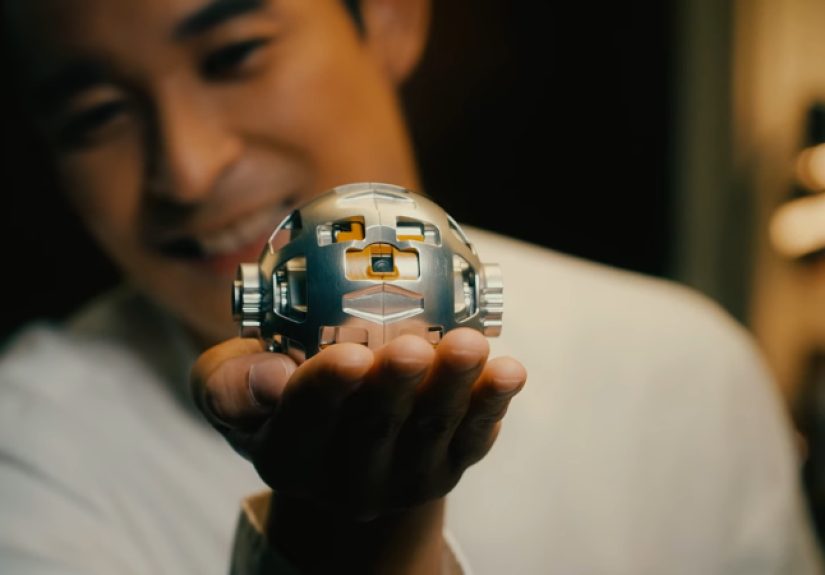
The same principle holds for miniature rovers. IEEE Spectrum’s profile of Carnegie Mellon’s Iris rover made the point beautifully: a rover can be about the size of a shoebox and still represent years of work, deep systems engineering, mass constraints, communication limits, power tradeoffs, and the kind of project management that can age graduate students in dog years. Iris looked tiny. It was still serious. Carnegie Mellon described it as a historic mission artifact that would have been the first American robotic rover to land on the Moon, had the Peregrine lander not failed after launch.
That is the sneaky thing about lunar hardware. It can look playful while being brutally unforgiving to design. A small rover is not “easy mode.” It is often the opposite. When mass budgets are tiny, every gram becomes political. When energy is scarce, every movement becomes a strategic choice. A rover that creeps 30 centimeters at a time can still embody world-class engineering, because the Moon does not care whether your machine is cute. The Moon grades on performance.
Why “No Toy” Is the Right Way to Think About the Future
Calling a lunar rover “no toy” is not just a catchy line. It is the right mental model for the next decade of lunar exploration. Serious mobility determines how much science a mission can do, how safe crews can be, how much cargo can move, how often surface assets stay useful, and how quickly a lunar campaign can shift from spectacular to sustainable.
That matters even more now because the lunar push is not hypothetical anymore. Artemis II launched on April 1, 2026, sending astronauts on the first crewed lunar mission in more than 50 years. As NASA and its partners turn that momentum toward surface operations, the rover stops being a nostalgic callback to Apollo and becomes something more important: the truck, tool bench, science cart, scouting robot, and field vehicle of the Moon economy.
So no, a lunar rover is not a toy. It is what happens when exploration grows up, gets serious, and adds wheels.
Experiences That Prove a Lunar Rover Is No Toy
The most revealing experiences around lunar rovers are not the glossy renderings. They are the human and engineering moments that show how quickly “fun machine” becomes “critical system.” Apollo gives the clearest examples. When astronauts first drove the rover on Apollo 15, they were not taking a joyride. They were managing a machine in low gravity, in bulky suits, over uneven ground, while trying to protect life support timelines, conserve energy, and still think like field scientists. Smithsonian described the first off-world road trip with a wink, but the deeper point is that the rover immediately expanded the mission’s scientific ambition. It let astronauts leave the immediate landing area and work like explorers instead of cautious campers.
By Apollo 17, the experience had become even more mature. Gene Cernan and Jack Schmitt used the rover to reach geology targets, haul tools, and bring back the kind of diverse samples that still shape lunar science decades later. When Schmitt later said the rover made major discoveries possible, he was describing a lived operational truth: mobility changes what astronauts notice, where they can stop, what they can carry, and how much confidence they have to make decisions farther from home base. On the Moon, distance is psychological as well as physical. A rover changes both.
Modern engineers face a different version of that same seriousness. NASA’s tests for VIPER and the new Artemis vehicles show the kind of practical headaches that never appear in movie versions of moon driving. Engineers have to ask whether dust will shred seals, whether wheels can escape soft regolith, whether a protective cover can keep grit out of sensitive hardware, whether a vehicle can handle a slope without sliding, and whether low-angle sunlight will confuse cameras and operators. That is the lived experience of rover development: not glamorous speed, but relentless problem solving.
Remote operators add another layer. Future lunar mobility is not just about astronauts physically holding the controls. NASA studies of remote LTV operation looked at how much distance could be covered under communication delays between Earth and the Moon. That means somebody, somewhere, may one day spend hours driving a lunar vehicle carefully enough to preserve hardware, avoid terrain traps, and complete useful work with a time lag built into every command. It is less “arcade game” and more “high-stakes forklift operation performed across space.”
Even student-built rovers reveal the same lesson. Carnegie Mellon’s Iris project involved hundreds of students’ work over years for a rover that, on paper, was tiny. That kind of effort only makes sense when the mission is treated as real exploration hardware, not a novelty object. The experience of building a lunar rover, testing one, or driving one teaches the same thing from different angles: every wheel, seal, battery, hinge, and line of code has consequences. The Moon is a ruthless reviewer. It does not hand out participation trophies.
That is why people who have actually worked with lunar rovers talk about them with a mixture of affection and respect. Affection, because they are clever, elegant, and often weirdly beautiful machines. Respect, because they operate where repair shops do not exist and small mistakes can end very large ambitions. The experience of lunar roving, whether in Apollo, in present-day test chambers, or in future Artemis operations, always leads to the same conclusion. The rover may look cool in the photos, but out there it is doing a serious job. It is carrying science, risk, and possibility on four wheels.
Conclusion
The phrase “Lunar Rover Is No Toy” works because it cuts through the aesthetics and gets to the function. The Moon does not reward cuteness. It rewards resilience, range, intelligence, and redundancy. Apollo showed that a rover can multiply the value of a human mission. Artemis is betting that a smarter, reusable, remotely operable generation can do even more. Whether the machine is astronaut-driven like the classic moon buggy, resource-hunting like VIPER, or compact like a student rover, the lesson is the same: wheels on the Moon are not decoration. They are capability. And capability is what turns exploration from a stunt into a system.