Table of Contents >> Show >> Hide
- What Happened Between Britney Spears and the Osbournes?
- Why This Celebrity Clash Hit Harder Than a Typical Gossip Story
- Britney Spears Wasn’t Just Defending a Dance Video
- The Bigger Lesson From the Britney-Ozzy Drama
- Experiences Related to This Story: Why So Many People Saw Themselves in It
- Conclusion
Celebrity feuds usually arrive wearing sequins, sarcasm, and a publicist’s carefully steamed blazer. This one showed up in a cloud of Instagram captions, podcast chatter, and the unmistakable energy of two pop-culture planets colliding at full speed. When Britney Spears fired back at Ozzy Osbourne and his family after they criticized her dance videos, the internet did what the internet does best: grabbed popcorn, opened twelve tabs, and pretended it was conducting serious cultural analysis while absolutely living for the mess.
But beneath the tabloid sparkle, this story hit a real nerve. Britney wasn’t just snapping at a random celebrity opinion. She was pushing back against something she has faced for years: the idea that the world gets to monitor her behavior, judge her tone, diagnose her moods, and decide what kind of self-expression is acceptable. Ozzy’s remarks may have sounded like classic cranky-rock-legend commentary, but Britney’s response turned the moment into a bigger conversation about fame, ageism, autonomy, and the exhausting public habit of treating women online like communal property.
So yes, this was entertaining. It was also revealing. Because once you strip away the headline-friendly profanity and family-podcast chaos, what remains is a familiar modern drama: one famous person saying, “Can everybody stop narrating my life for five minutes?” And honestly, that may be the most relatable celebrity sentence of all time.
What Happened Between Britney Spears and the Osbournes?
The podcast comments that lit the fuse
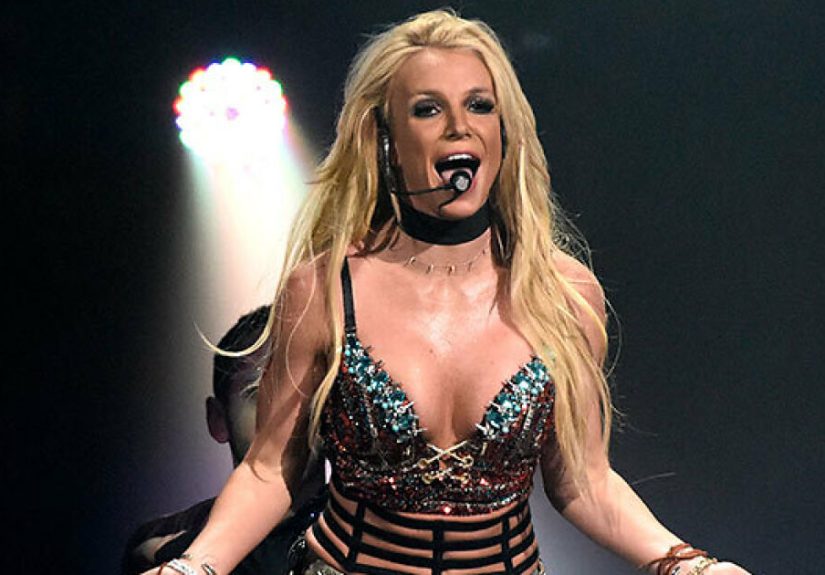
The blowup started when Ozzy Osbourne, speaking on The Osbournes podcast with Sharon, Kelly, and Jack, complained about the dance videos Britney Spears frequently posts online. Ozzy reportedly said he was tired of seeing them every day and called the whole thing “sad.” That might have been tossed off as a grumpy old-school celebrity take, but the family’s broader conversation gave the comments extra bite. What could have passed as a throwaway opinion landed more like a mini group critique of a woman who has spent much of her adult life being scrutinized in public.
That detail matters. Britney Spears is not just another celebrity dabbling in social media weirdness for fun, clicks, or an accidental thirst trap. Her online presence has become one of the main ways she speaks without an interviewer, handler, courtroom, documentary filmmaker, or gossip machine translating her emotions into tidy little headlines. Whether people love her dancing videos, find them repetitive, or simply don’t know what to make of them, those clips are still hers. That is part of why criticism of them tends to land with extra force.
And to be fair, Ozzy Osbourne has built a career on being blunt. This is not a man known for delicately wrapping his opinions in silk ribbon and lavender tissue paper. Still, intent is only half the story. Public comments from a celebrity family with decades of reality-TV fame carry their own weight. The Osbournes are not random observers. They are professionals in the business of being watched, judged, mocked, memed, and discussed. That made their criticism of Britney feel less like casual concern and more like a somewhat ironic case of reality-TV royalty throwing stones from a very televised glass house.
Britney’s response was sharp, theatrical, and unmistakably Britney
Britney did not answer with a carefully neutral statement, which is probably for the best because that would have been terribly boring and therefore deeply off-brand for this particular moment. Instead, she posted a pointed response on Instagram and referred to the Osbournes as “the most boring family known to mankind,” before telling them to “kindly f off.” In celebrity-feud terms, that is what scholars call a clean uppercut.
Her post did more than toss back an insult. It framed the criticism as part of a broader culture of policing women’s self-expression, especially when they are over a certain age and refuse to act as though joy has an expiration date. Britney also brought Kate Beckinsale into the conversation, praising the actress for pushing back on commentary about what is or is not “age-appropriate” behavior online. That reference was not random. It made Britney’s message feel less like a one-off clapback and more like solidarity against a whole category of judgment women face once the internet decides they should start behaving like decorative throw pillows.
In other words, Britney was not saying, “Please validate my dancing.” She was saying, “Stop using my life as a spectator sport.” That difference is huge. One is insecurity. The other is boundary-setting with a flamethrower.
Then came the apology that didn’t quite stick the landing
After the backlash, Ozzy later apologized. Sort of. On a subsequent episode of the family podcast, he said he was sorry for offending Britney. So far, so good. Then he added that it would be better if she did not do “the same” dance every day and suggested she change a few movements. That is the kind of apology that arrives with a bouquet and then steps on your foot while handing it over.
Kelly Osbourne tried to soften the moment by saying Britney should never stop dancing and that she loved her videos. Sharon also chimed in supportively. But the damage had already been done, and Ozzy’s so-called clarification only reinforced the original problem: Britney’s personal expression had been turned into public critique, then half-walked back without really surrendering the judgment underneath it.
That is why the apology did not fully cool the story down. It sounded less like, “I was wrong to say that,” and more like, “I’m sorry you were upset, but I still stand by the choreography notes.” Which is not exactly how you close a feud, unless your goal is to keep the content pipeline thriving.
Why This Celebrity Clash Hit Harder Than a Typical Gossip Story
Britney’s history changes the meaning of every comment
To understand why Britney’s response resonated, you have to understand the context hanging over almost everything she does in public. Her conservatorship ended in November 2021 after nearly fourteen years, closing one of the most public and controversial celebrity legal arrangements in modern entertainment history. Since then, every dance video, caption, silence, outfit, and eyebrow raise has been treated by some corner of the internet as a code to crack rather than a person living her life.
That context makes even “light” criticism feel heavier. Britney’s social media is not floating in some vacuum where people can casually joke about her habits without history entering the room. History is already in the room. It has snacks. It has opinions. It is seated in the front row.
She also released her memoir, The Woman in Me, in 2023, which reintroduced her story to the public in her own words. That book reminded readers that for years Britney’s voice was filtered, doubted, or commercialized by other people. So when she reacts strongly to being mocked, it makes sense. From her perspective, this is not just about dancing in the foyer while spinning like a glamorous Roomba. It is about retaining control over how she gets to exist in public.
The internet is still weird about women aging out of the “acceptable” box
This feud also hit a nerve because it tapped into one of the internet’s favorite hobbies: telling women how to age correctly. The rules are impossible, of course. Be sexy, but not too sexy. Be playful, but not embarrassing. Be visible, but only in a way that feels tasteful to complete strangers who somehow imagine they have voting rights over your personality. If a man in his seventies acts eccentric online, he is a legend, an icon, a lovable maniac, a beautifully chaotic uncle of rock. If a woman in her forties dances in her living room, suddenly everyone becomes the Department of Behavioral Approval.
That is what made Britney’s Kate Beckinsale reference so effective. It connected her frustration to a broader pattern. Women in public are constantly told that self-expression must become quieter, more dignified, less strange, less loud, less joyful, less visible, and generally less. Britney’s answer to that expectation was not subtle. It was essentially: no thanks, and also kindly move along.
The Osbournes and Britney are both products of the reality era
There is another fascinating layer here: the Osbournes and Britney both helped define early-2000s celebrity culture, but in very different ways. The Osbournes became famous all over again by turning family chaos into reality-TV entertainment. Britney became one of the most watched women on earth, often in ways that were invasive, unfair, and brutal. Both brands were built in front of the public eye. But the lesson each side seems to have taken from that experience is dramatically different.
The Osbournes often treat public commentary as part of the game. Say something wild, let it circulate, laugh at the reaction, move on. Britney, by contrast, seems increasingly unwilling to let commentary about her pass by as just another celebrity tax. And why would she? The tax on Britney Spears has historically been outrageous, with interest, penalties, and a suspicious number of cameras outside the building.
That mismatch is what turned a passing podcast moment into a symbolic pop-culture argument. One side seemed to view the conversation as casual chatter. The other viewed it as yet another attempt to narrate her life from the outside.
Britney Spears Wasn’t Just Defending a Dance Video
It is easy to reduce this story to a funny clash between a pop legend and a rock legend. But the deeper point is that Britney was defending the right to be messy, repetitive, theatrical, and unserious in public without having every movement turned into a referendum on her health, dignity, or age. That matters because celebrity culture has a bad habit of pretending concern when it really means control.
Concern can be compassionate. Concern can also be patronizing in a designer jacket. When famous women are publicly discussed as fragile, pitiable, or embarrassing for doing harmless things, the language of “sadness” often becomes a socially acceptable way to repackage judgment. Britney’s response blew up because she refused to accept that packaging.
And frankly, there is something refreshing about a celebrity declining to perform gratitude for criticism. Not every clapback has to be polished into inspirational wallpaper. Sometimes the truest response is shorter, sharper, and a little rude. The internet survived.
The Bigger Lesson From the Britney-Ozzy Drama
What this story ultimately revealed is how badly public culture still struggles with autonomy, especially when autonomy looks strange, inconvenient, or aesthetically repetitive. People are comfortable supporting freedom in theory. In practice, many still want that freedom to be tidy, photogenic, and approved by the group chat.
Britney Spears has become a lightning rod for exactly that contradiction. Fans say they want her free. Commentators say they care about her well-being. Media outlets say they are just covering the moment. But the second her freedom looks weird instead of inspirational, the room gets uncomfortable. That discomfort says more about the audience than it does about Britney.
Ozzy Osbourne’s comments were not the cruelest thing ever said about a celebrity online. Not even close. But Britney’s explosive response mattered because it named the irritation underneath a thousand smaller moments of public policing. It said: I see what you’re doing, I don’t enjoy it, and I am not interested in smiling politely while you do it.
That is part of why the story lingered. It was funny, yes. It was messy, absolutely. But it also exposed a truth about celebrity culture in 2024: audiences claim to love authenticity right up until authenticity starts looking odd, repetitive, emotional, or inconvenient. Then suddenly everyone becomes a critic with a clipboard.
Experiences Related to This Story: Why So Many People Saw Themselves in It
One reason this Britney Spears and Ozzy Osbourne drama traveled so fast is that it felt oddly familiar, even to people who have never posted a dance video from a foyer under suspiciously dramatic lighting. At its core, this was about being laughed at for enjoying yourself in public. And that is an experience plenty of ordinary people understand all too well.
Think about the person who starts posting workout updates, art projects, outfit videos, karaoke clips, or goofy little dances online because it makes them happy. At first, it feels freeing. Then the commentary rolls in. Why are you always posting this? Why do you dress like that? Aren’t you too old for this? Why do you keep doing the same thing? None of those comments may seem devastating on their own, but together they create a familiar social pressure: enjoy yourself, but only in a way that other people approve of.
That is why Britney’s response did not just register as celebrity gossip. It sounded like the exaggerated version of a feeling many people know. The classmate who mocks your enthusiasm. The coworker who turns your harmless hobby into a joke. The relative who acts embarrassed every time you do something creative, bold, or slightly weird. The internet magnifies this dynamic, but it did not invent it. It simply gave everybody a louder microphone and worse manners.
There is also a very recognizable age dynamic here. Plenty of adults, especially women, know what it feels like when people begin suggesting they should “tone it down,” “act their age,” or stop being visibly joyful in ways that seem unserious. You can feel the unwritten rules tighten around you: be polished, be tasteful, be mature, be less loud, be less online, be less yourself in any way that might make other people uncomfortable. What Britney said, in her own volcanic style, was that she was not signing that contract.
Another relatable part of the story is the difference between concern and control. Most people have had at least one experience where somebody claimed to be “just worried” while clearly enjoying the authority of criticizing them. It is a sneaky kind of judgment because it disguises itself as care. That is what made this feud feel bigger than a random celebrity spat. Britney was rejecting the whole script where other people get to frame mockery as concern and then expect gratitude in return.
Even the awkward apology felt familiar. Lots of people have heard the real-world version of Ozzy’s follow-up: “Sorry, but you should still probably change.” That kind of apology is common in families, friendships, workplaces, and online spaces. It acknowledges the conflict without giving up the criticism. In other words, it keeps the power dynamic alive.
So yes, this was a funny pop-culture moment. But it also reflected something deeply human. People want room to be silly, visible, repetitive, expressive, and imperfect without being publicly graded for it. Britney Spears happened to say that on a giant stage, with celebrity names attached and a headline-ready phrase in the middle. The rest of us usually say it in smaller ways: by muting the rude people, posting anyway, and continuing to dance in whatever metaphorical hallway belongs to us.
Conclusion
In the end, the Britney Spears and Ozzy Osbourne clash was about much more than one podcast comment and one scorched-earth Instagram caption. It became a flashpoint because it touched several cultural nerves at once: celebrity surveillance, aging in public, non-apology apologies, and the stubborn idea that women owe the audience a version of themselves that feels tasteful and reassuring.
Britney’s answer was messy, funny, angry, and wildly quotable. It was also effective. She took a moment that could have been framed as “concern” and exposed it as irritation dressed up in softer language. Ozzy’s follow-up apology only sharpened the contrast. He sounded like someone trying to put out a fire with a garden hose full of opinions. Britney sounded like someone who was done being narrated.
And maybe that is why this story stuck. Not because it was the biggest celebrity feud of the year, but because it captured a modern truth in gloriously impolite fashion: people love telling others how to behave online, right up until someone tells them, with admirable efficiency, to kindly back off.