Table of Contents >> Show >> Hide
- Who Was James Theodore Richmond?
- What Was the Wilderness Library (Really)?
- The Rankings: Richmond’s Legacy, From “Biggest Impact” to “Most Debated”
- #1 Founding the Wilderness Library (the whole point of the story)
- #2 The “library on foot” delivery system
- #3 Building a donation pipeline (and turning requests into results)
- #4 High-profile attention (including Eleanor Roosevelt’s involvement)
- #5 Branch libraries and “distributed shelves”
- #6 “Wilderness White Christmas” and the blurred line between library and mutual aid
- #7 Media and film: turning a library into a global “Ozarks story”
- #8 The Saturday Evening Post controversy: awareness with a hangover
- #9 Trying to formalize the mission (incorporation and boards)
- #10 The exit, the mystery, and the myth-making
- Opinions: What People Get Right (and Wrong) About Ted Richmond
- How to Read These Rankings Without Getting Played by the Legend
- What Modern Communities Can Borrow (Without Copy-Pasting the Problems)
- Experiences Inspired by “Twilight Ted” Richmond (Modern, Real-World, and Very Relatable)
- Experience #1: The “I can’t unsee the access problem” moment
- Experience #2: Starting small… and being shocked by how fast it grows
- Experience #3: Discovering that logistics is the real boss battle
- Experience #4: The “publicity can help, but it can also harm” wake-up call
- Experience #5: Realizing the project isn’t about booksit’s about belonging
- Conclusion: The Most Honest Ranking
If you’ve ever stumbled across the story of a man hauling books through the Ozarks like a one-person Amazon Prime,
you’ve probably met James Theodore “Ted” Richmondbetter known as “Twilight Ted.”
His name still pops up in library lore, Ozarks history conversations, and “how did this even work?” internet rabbit holes,
because he built something that feels both wildly old-fashioned and strangely modern:
a grassroots, donation-powered, community-centered lending network called the Wilderness Library.
This article does two things at once: (1) it ranks the most important parts of Richmond’s legacy in plain English,
and (2) it lays out the opinionsthe praise, the side-eyes, and the debatesso you can understand why his story
inspires people and irritates them in equal measure. Along the way, you’ll see what made the Wilderness Library work,
what made it controversial, and what modern readers can steal (politely) for today’s communities.
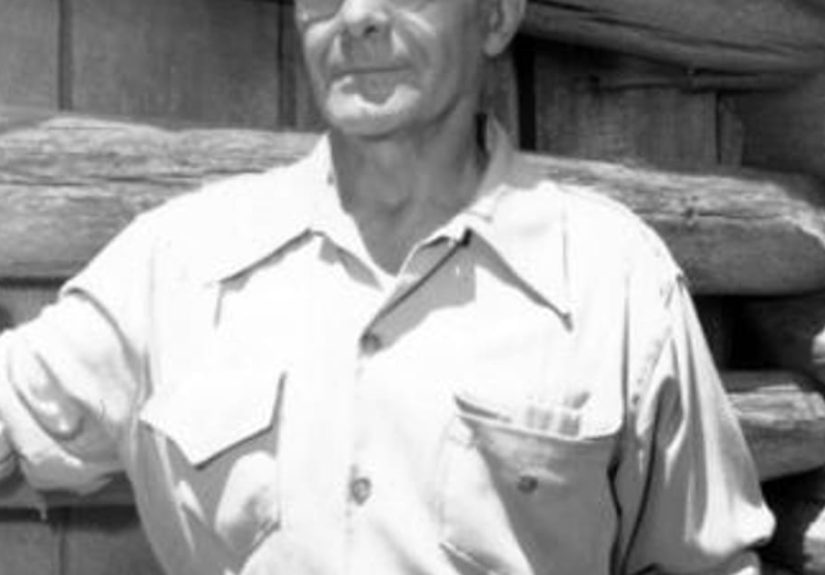
Who Was James Theodore Richmond?
James Theodore Richmond (1890–1975) lived a life that reads like three biographies stapled together:
Midwestern newspaper work, faith-and-service wandering, and then an Ozarks chapter that turned into legend.
According to historical summaries, he served in World War I, studied at multiple institutions, and eventually made his way
to Mount Sherman in Newton County, Arkansaswhere he homesteaded and built a cabin he called the Wildcat Cabin.
From there, he launched the Wilderness Library, a project that provided free reading material for decades in a region
with limited access to books and formal library services.
That’s the “what.” The “why” is where Richmond becomes polarizing: he wasn’t just lending books.
He was trying to prove that reading is a form of dignityand that people who live far from town
shouldn’t be treated as an afterthought.
Quick Snapshot
- Known as: “Twilight Ted” Richmond
- Best known for: Founding the Wilderness Library on Mount Sherman in Newton County, Arkansas
- Core idea: If people can’t reach the library, the library should reach the people
- Why he’s debated: His publicity created awarenessyet sometimes fueled stereotypes and local backlash
What Was the Wilderness Library (Really)?
The Wilderness Library was not a fancy building with matching chairs and a printer that jams only on the most important day of your life.
It was a log-cabin-based lending hub that grew into a small network. Early on, Richmond reportedly began with
very littleoften repeating some version of the line that he started with “a Bible and a prayer,” which tells you a lot about his mindset:
part practicality, part mission, part spiritual stubbornness.
The model was simple and surprisingly scalable:
Richmond requested donations, sorted what arrived, stocked shelves, placed books in community spaces,
and delivered reading material to neighbors who couldn’t easily travel.
Accounts describe him hauling heavy loads of books over rough roads and trails, while also visiting families,
preaching, sharing news, and connecting isolated households to the broader world through print.
Over time, the library expanded beyond one cabin. Materials were placed in schools and churches, and branch libraries were established.
By the early 1950s, descriptions of the collection suggest it held around 1,500 volumesa real number for a place that ran on grit,
oil lamps, and community trust.
Why it mattered
In modern terms, Richmond built a rural knowledge network before “knowledge networks” became a TED Talk phrase.
The Wilderness Library addressed two problems at once:
access (distance, transportation, poverty) and belonging (the feeling that your community is worth investing in).
The Rankings: Richmond’s Legacy, From “Biggest Impact” to “Most Debated”
Rankings are never neutral. They’re basically opinions wearing a suit.
So here’s a transparent approach: each ranked item includes (1) why it matters and (2) why people still argue about it.
#1 Founding the Wilderness Library (the whole point of the story)
This is the cornerstone. For roughly a quarter century, the Wilderness Library provided free reading material in northwestern Arkansas,
a feat significant enough to enter official historical accounts and museum narratives. It wasn’t a side hobby; it was the project
that organized Richmond’s life and made him memorable.
Why people praise it: It’s a practical act of public service with an almost stubborn compassionbooks delivered where systems didn’t reach.
Why people debate it: Some see it as heroic improvisation; others argue it highlights how institutions failed rural communities in the first place.
#2 The “library on foot” delivery system
Stories of Richmond carrying large loads of bookssometimes described as 60–70 poundsare repeated because they’re vivid and easy to picture:
one person, a sack of books, steep terrain, and neighbors who can’t easily leave their homes. It’s the kind of detail that makes people go,
“Wait… he did what?”
Why people praise it: It’s radical commitment to service.
Why people debate it: The “lone hero” framing can overshadow the role of neighbors and the broader community that helped the library function.
#3 Building a donation pipeline (and turning requests into results)
Richmond reportedly ran sustained letter-writing campaigns requesting books and magazines, and those requests worked.
Donations poured into a small post office and made their way into the hillsproof that a compelling mission can mobilize
support far beyond local borders.
Why people praise it: Early, real-world community fundraisingno apps required.
Why people debate it: Visibility can invite both support and exploitation: when the story becomes a “novelty,” communities risk being reduced to a stereotype.
#4 High-profile attention (including Eleanor Roosevelt’s involvement)
Notable donations, including books associated with Eleanor Roosevelt and Franklin D. Roosevelt’s library, elevated the Wilderness Library from
“local marvel” to “national conversation.” High-profile attention helped legitimize the project in the eyes of outsiders and donors.
Why people praise it: It drew resources and awareness to rural access problems.
Why people debate it: Celebrity interest can warp the narrativeturning real people into scenery in someone else’s inspiring story.
#5 Branch libraries and “distributed shelves”
The Wilderness Library didn’t stay trapped in one cabin. Shelves in schools and churches, plus branch locations,
made the project feel less like a single-person stunt and more like a community system.
Why people praise it: It’s the closest thing to “rural library infrastructure” built from scratch.
Why people debate it: Informal systems can be fragilewhen the founder leaves, continuity becomes a challenge.
#6 “Wilderness White Christmas” and the blurred line between library and mutual aid
Richmond’s work reportedly expanded beyond books into seasonal givingdelivering necessities like clothing, medicine, shoes, and small gifts.
This matters because it shows he understood something modern organizers repeat constantly:
people absorb information better when basic needs aren’t crushing them.
Why people praise it: Compassion that’s practical, not performative.
Why people debate it: Some worry it reinforces a “poverty showcase” narrative when outsiders retell the story.
#7 Media and film: turning a library into a global “Ozarks story”
The Wilderness Library became the subject of an Ozark-themed film project associated with Norman and Cy Weissman
and distribution to foreign audiences. That’s not just triviait shaped how the story traveled and how people imagined the region.
Why people praise it: Publicity brought attention to rural access and made the library memorable.
Why people debate it: Media often prefers “colorful” storytelling over accurate, respectful complexity.
#8 The Saturday Evening Post controversy: awareness with a hangover
A 1952 national magazine portrayal delighted in the “backwoods” anglewhile many locals were furious about being stereotyped.
This moment is essential because it shows how quickly “inspiring” stories can become insulting stories,
depending on who controls the narrative.
Why people praise it: It sparked broader protest and conversation about library access in the region.
Why people debate it: Locals felt reduced to a caricature, and Richmond’s involvement made his role complicated.
#9 Trying to formalize the mission (incorporation and boards)
Richmond attempted to secure funding and structure by incorporating the Wilderness Library and assembling boards and advisers.
That move suggests he knew the difference between a heartfelt project and a sustainable institution.
Why people praise it: He tried to build longevity, not just legend.
Why people debate it: The dream of stable funding didn’t fully materializeraising questions about what sustainability requires beyond charisma.
#10 The exit, the mystery, and the myth-making
Richmond eventually left Mount Sherman and moved to Texarkana after marrying Edna Garner.
Accounts note that stories “abound” about his sudden disappearance from the Ozarks, which has helped keep his name alive.
This ranks last only because it’s more about legend than servicebut it’s still a big part of why people keep talking.
Why people praise it: Myth keeps history from being forgotten.
Why people debate it: Myth can swallow realityand reality is where the real lessons live.
Opinions: What People Get Right (and Wrong) About Ted Richmond
The “folk hero librarian” opinion
Many people celebrate Richmond as a one-man antidote to neglect: the guy who saw a need and did something about it.
That admiration makes sensehis project was tangible, local, and human-scale.
When people rank him highly, it’s usually because his work feels like the opposite of bureaucracy:
direct action with a backpack.
The “outsider storyteller” opinion
A second opinion is more cautious: Richmond was skilled at turning the Wilderness Library into a story that outsiders wanted to repeat.
That helped the mission, but it also created a riskoutsiders often prefer “hillbilly novelty” to complex community truth.
Local backlash to national portrayals shows how harmful a “cute” narrative can be when it’s built on stereotypes.
The “infrastructure spotlight” opinion
Another perspective says Richmond’s legend is less about his personality and more about what his success revealed:
when formal library systems and transportation networks are weak,
people invent their own solutionsand those solutions should be honored, not treated as oddities.
How to Read These Rankings Without Getting Played by the Legend
The safest way to judge Richmond’s legacy is to separate two things:
the work and the story about the work.
The work includes building a lending network, expanding shelves into public spaces, and improving access to reading materials.
The story includes the “twilight” nickname, dramatic descriptions, and media portrayals that sometimes leaned hard on stereotypes.
Here’s a useful rule: if a retelling makes the locals look like scenery and Richmond look like the only real character,
the retelling probably needs editing. If a retelling emphasizes community participation, dignity, and access,
it’s closer to the point.
What Modern Communities Can Borrow (Without Copy-Pasting the Problems)
1) Make access the headline, not the aesthetics
The most modern part of the Wilderness Library wasn’t the cabinit was the distribution logic:
get books where people actually are. Today that can mean pop-up shelves, school partnerships, community fridges plus book bins,
or mobile library days that align with local events.
2) Treat storytelling as a tool with sharp edges
Richmond’s publicity helped and hurt. Modern organizers can learn from that:
tell stories that raise support without turning communities into props.
When outsiders write the narrative, stereotypes creep in. When locals lead the narrative, dignity improves.
3) Build systems, not just moments
A mission survives longer when it’s shared: multiple volunteers, clear lending rules, basic cataloging,
and partnerships that don’t depend on one personality. Richmond tried to formalize the project lateran important clue that
even legends eventually run into the wall called “sustainability.”
Experiences Inspired by “Twilight Ted” Richmond (Modern, Real-World, and Very Relatable)
The Wilderness Library story tends to spark a particular kind of experience in readers: not just curiosity, but the itch to do something.
Below are modern experiences people often report (or quickly discover) when they try to apply “Richmond-style” thinking to real life.
Think of these as practical reflectionsless mythology, more “okay, but how would this work today?”
Experience #1: The “I can’t unsee the access problem” moment
Learning about a backpack-based library tends to flip a switch: suddenly, “access” becomes visible everywhere.
People notice the seniors’ complex where nobody drives at night, the rural roads with no sidewalks, the families sharing one phone,
or the kids who can’t get a ride to the nearest branch.
The experience feels uncomfortable at first, because it’s easier to believe “there’s a library somewhere”
than to ask “can people actually reach it?”
Richmond’s story lands because it forces a simple question: if your neighbor can’t get to the books, do the books still count as “available”?
Experience #2: Starting small… and being shocked by how fast it grows
A common follow-up experience is launching a tiny lending setupmaybe a shelf at a community center, a mini “take one, leave one” bin,
or a partnership with a local school event.
People are often surprised by how quickly it grows once the community believes it’s real.
Donated books arrive in waves. Someone offers a spare bookshelf. A teacher asks for age-appropriate titles.
Another person brings a box of magazines. And then you have the next surprise:
growth is not the same as organization. The most “Richmond” lesson here is that passion starts the engine, but habits keep it running
labeling, basic sorting, and clear expectations about returns (or about the fact that some books will vanish into the wild forever).
Experience #3: Discovering that logistics is the real boss battle
Richmond’s story is often told like a moral fablegood intentions plus hard work equals books in hands.
Modern attempts reveal the less glamorous truth: logistics decides the outcome.
Who refills the shelf? Where do you store overflow? What happens when the books get wet?
How do you avoid accidentally stocking only what donors want to give instead of what readers want to read?
People who try this quickly learn to love boring solutions:
plastic bins, simple spreadsheets, kid-friendly sorting, and a routine.
Ironically, this is where Richmond’s myth becomes useful: it reminds people that the work is worth doing even when it’s not photogenic.
Experience #4: The “publicity can help, but it can also harm” wake-up call
Anyone who shares a community story online knows the feeling:
a post meant to help can attract the wrong kind of attention.
Richmond experienced a version of this when national portrayals leaned into stereotypescreating backlash and anger among locals.
Modern organizers learn to set boundaries early:
avoid “poverty tourism,” get consent before sharing photos, let community members describe their own lives,
and don’t write captions that turn real people into props for inspiration.
The best modern experience here is developing a habit of respectful storytelling:
focus on access, partnership, and agencynot on shock value.
Experience #5: Realizing the project isn’t about booksit’s about belonging
The final experience is the most surprising: people often start with books and end up with community.
A lending shelf becomes a reason to talk. A delivery run becomes a wellness check.
A reading program becomes a bridge between generations.
Richmond’s life is remembered because it points to something many communities still need:
a reliable signal that says, “You matter enough for someone to bring knowledge to your door.”
When people recreate even a small piece of that idea today, they often report the same outcome:
improved connection, more conversation, and a stronger sense of shared responsibility.
That’s the part of the Richmond story that deserves the highest rankingbecause it still works.