Table of Contents >> Show >> Hide
- Quick Verdict: Where Does The Last Crusade Rank?
- Indiana Jones Franchise Ranking: A Balanced List
- Why The Last Crusade Is Often Ranked So High
- Scene Rankings: The Best Moments in The Last Crusade
- Critical Opinion: Why Reviewers Respect It
- Audience Opinion: Why Fans Keep Returning
- Performance Rankings: Who Stands Out?
- Villain Ranking: Are Donovan and Elsa Great Antagonists?
- Technical Opinion: Why the Craft Still Holds Up
- Best Rankings by Category
- Common Criticisms of The Last Crusade
- Final Opinion: Is The Last Crusade the Best Indiana Jones Movie?
- Viewing Experience: Why The Last Crusade Still Feels So Good Today
- Conclusion
Indiana Jones and the Last Crusade is the rare blockbuster sequel that feels like a victory lap, a family therapy session, and a runaway tank ride all at once. Released in 1989, directed by Steven Spielberg, produced by George Lucas, and starring Harrison Ford opposite Sean Connery, the film gave audiences a lighter, funnier, more emotionally generous Indiana Jones adventure after the darker bite of Temple of Doom. It also gave the world one of cinema’s most useful life lessons: when choosing a Holy Grail, maybe do not grab the shiny one that looks like it belongs in a villain’s bathroom.
So where does The Last Crusade rank in the Indiana Jones series? For many fans, it sits just behind Raiders of the Lost Ark. For others, it is the most rewatchable movie in the franchise because it balances action, humor, mystery, and heart better than any other Indy outing. This article breaks down the rankings, opinions, best scenes, character dynamics, and lasting appeal of a film that still gallops along like it has a boulder chasing it.
Quick Verdict: Where Does The Last Crusade Rank?
In a practical Indiana Jones movie ranking, The Last Crusade usually lands at number two, right below Raiders of the Lost Ark. That is not an insult. Being second to Raiders is like being the second-best dessert at a bakery where everything contains butter and confidence. Raiders may have the cleaner structure and the mythic first-entry advantage, but The Last Crusade has something special: emotional warmth.
The father-son relationship between Indiana Jones and Henry Jones Sr. gives the movie a human engine. Indy is still cracking whips, dodging Nazis, solving ancient clues, and making archaeology look much more explosive than any university brochure would legally allow. But now he is also dealing with childhood frustration, parental disappointment, and the horror of being called “Junior” in public. That personal layer is why many viewers rank The Last Crusade as the most satisfying Indiana Jones sequel.
Indiana Jones Franchise Ranking: A Balanced List
1. Raiders of the Lost Ark
Raiders of the Lost Ark remains the gold standard. It introduced the character, the tone, the pacing, and the blend of pulp adventure and supernatural wonder. Its set pieces are practically carved into the stone tablet of blockbuster history. If the question is “Which Indiana Jones movie is the most influential?” Raiders still wins.
2. Indiana Jones and the Last Crusade
The Last Crusade is the emotional champion. It may borrow some structure from Raiders, including Nazis, a biblical artifact, and a race against evil forces, but it adds comedy and tenderness through Sean Connery’s Henry Jones Sr. The result is a sequel that feels familiar without feeling lazy. It is comfortable, clever, and full of memorable moments.
3. Indiana Jones and the Temple of Doom
Temple of Doom is bold, strange, intense, and divisive. Some fans adore its horror-tinged weirdness; others find it too grim or chaotic. It has incredible action, but it does not offer the same emotional balance as The Last Crusade.
4. Indiana Jones and the Dial of Destiny
Dial of Destiny gives Harrison Ford a reflective final chapter and plays with themes of age, regret, and time. It has ambition and emotional moments, but its modern style and digital-heavy action divide viewers.
5. Indiana Jones and the Kingdom of the Crystal Skull
Kingdom of the Crystal Skull has defenders, and it does contain flashes of classic Indy energy. Still, the alien mythology, digital effects, and infamous refrigerator escape keep it lower in many rankings. The film is not without charm, but it struggles to match the elegant adventure rhythm of the original trilogy.
Why The Last Crusade Is Often Ranked So High
The Ford and Connery Chemistry Is Pure Movie Magic
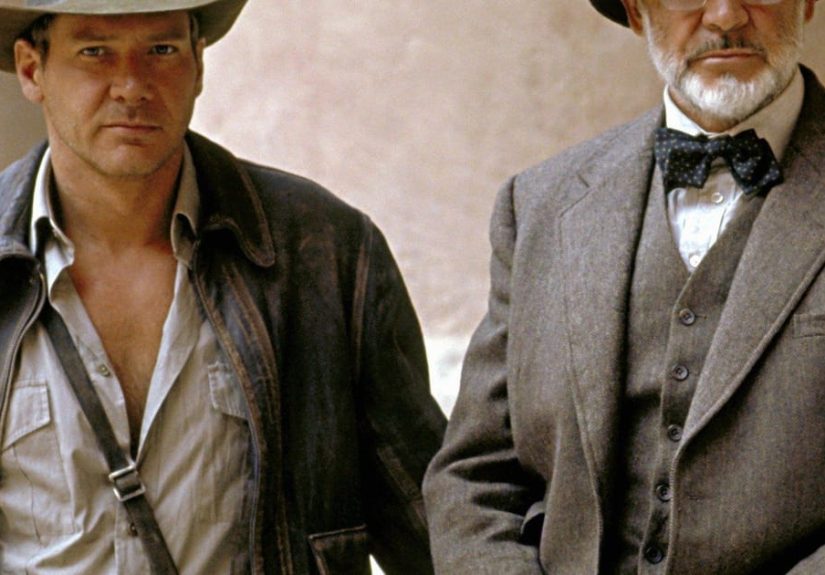
The biggest reason Indiana Jones and the Last Crusade ranks so well is the pairing of Harrison Ford and Sean Connery. Ford’s Indy is rugged, impatient, skeptical, and brave. Connery’s Henry Jones Sr. is scholarly, stubborn, distracted, and somehow both dignified and ridiculous. Together, they create a comedy duo disguised as an archaeological rescue mission.
Their dynamic works because Henry is not simply a sidekick. He is the one person who can puncture Indy’s coolness. To everyone else, Indiana Jones is a legend in a leather jacket. To Henry, he is still Junior, the boy who never listened and probably tracked mud into the house. That contrast makes Indy more human. Suddenly the fearless adventurer has daddy issues, and the movie becomes richer for it.
The Movie Brings Back the Fun
After the darker atmosphere of Temple of Doom, The Last Crusade returns to a brighter, breezier adventure style. The tone is still dangerous, but it is not oppressive. The boat chase in Venice, the motorcycle escape, the zeppelin gag, the “no ticket” moment, and the tank sequence all feel playful without becoming weightless. The movie understands that adventure should have danger, but it should also have a wink.
The Holy Grail Quest Adds Mythic Weight
The search for the Holy Grail gives the film a strong symbolic center. Unlike a treasure hunt based purely on wealth or power, the Grail quest is tied to faith, humility, sacrifice, and moral judgment. The final trials are simple but effective: spelling the name of God, kneeling before danger, and stepping into apparent emptiness. These scenes work because they connect the external quest to Indy’s inner journey. He does not just need to find the Grail; he needs to trust, forgive, and choose wisely.
Scene Rankings: The Best Moments in The Last Crusade
1. The Grail Choice: “He Chose Poorly”
The Grail chamber is the film’s most iconic sequence. Walter Donovan chooses the most ornate cup, assuming that the cup of Christ must look expensive. Naturally, this goes badly. Very badly. Rapid-aging-in-front-of-everyone badly. The scene is memorable because it delivers adventure, horror, humor, and moral clarity in one compact package. The true Grail is humble, not flashy. It is the movie’s whole theme in one prop.
2. The Tank Battle
The tank chase is one of the great action set pieces of the franchise. It has movement, geography, tension, jokes, and character beats. Indy fights on, in, around, and under the tank while Henry and Marcus create their own brand of academic chaos. The sequence is long, but it rarely feels slow because each moment changes the problem. It is not just noise; it is action storytelling.
3. Young Indy’s Opening Adventure
The prologue with River Phoenix as young Indiana Jones is a masterclass in character shorthand. In one energetic sequence, the movie explains Indy’s scar, hat, whip, fear of snakes, and obsession with preserving historical artifacts. It could have felt like a checklist. Instead, it plays like a mini adventure film. River Phoenix captures Ford’s mannerisms without doing a cheap imitation, which is harder than outrunning a circus train.
4. The Motorcycle Escape
The motorcycle chase is a perfect example of Spielberg’s clean visual comedy. Henry accidentally helps, Indy improvises, and the action has a crisp old-fashioned rhythm. The scene is thrilling, but it also lets the father-son relationship breathe. Henry is not impressed by violence; he is impressed by proper Latin pronunciation and historical documentation.
5. “No Ticket”
This tiny zeppelin moment remains one of the funniest jokes in the series. Indy throws a villain out of a window, looks at the shocked passengers, and simply says, “No ticket.” It is quick, absurd, and completely in character. The best Indiana Jones jokes are like trapdoors: they open suddenly, drop the audience into laughter, and then the story keeps moving.
Critical Opinion: Why Reviewers Respect It
Critics have often praised The Last Crusade for restoring the serial-adventure spirit of the first film while adding a warmer emotional core. The film is commonly viewed as lighter and more comedic than Temple of Doom, and that tonal shift helped it become a crowd-pleaser. Its critic ratings are strong, while audience scores tend to be even stronger, which says a lot about its long-term appeal.
One interesting split appears in professional criticism: some reviewers admire the movie’s craftsmanship but argue that it is less original than Raiders. That is a fair point. The Last Crusade does echo the first film in obvious ways. However, originality is not the only measure of quality. A sequel can succeed by deepening what already works, and this film does exactly that. It refines the formula, adds Henry Jones Sr., and gives Indy a more personal reason to chase history.
Audience Opinion: Why Fans Keep Returning
Fans often describe The Last Crusade as the most fun Indiana Jones movie. That opinion makes sense. It is funny without becoming parody, emotional without becoming syrupy, and action-packed without turning into a two-hour explosion sandwich. The movie also has a rare all-ages quality. Adults appreciate the father-son regret and reconciliation, while younger viewers get chases, puzzles, traps, and Harrison Ford looking annoyed in several historically important locations.
The rewatch value is enormous. Some movies are exciting once but lose power when the surprises are gone. The Last Crusade works even when you know every punchline and every trap. The pleasure comes from rhythm: the way scenes snap together, the way Connery pauses before delivering a dry remark, the way Ford reacts with a perfect blend of irritation and disbelief. It is comfort cinema with a bullwhip.
Performance Rankings: Who Stands Out?
1. Sean Connery as Henry Jones Sr.
Connery is the film’s secret weapon. He does not try to out-action Harrison Ford. Instead, he plays Henry as a man whose mind is always three dusty manuscripts ahead of everyone else. His comic timing is relaxed, his authority is effortless, and his emotional scenes have real tenderness. He makes the movie feel fuller.
2. Harrison Ford as Indiana Jones
Ford remains fantastic. What makes his performance special here is vulnerability. Indy is still brave and sarcastic, but around his father he becomes defensive, wounded, and boyishly desperate for approval. Ford lets the cracks show without weakening the character.
3. River Phoenix as Young Indy
Phoenix has limited screen time, but he makes a major impression. His performance gives the character a believable younger version: impulsive, idealistic, and already allergic to snakes. The opening works largely because he sells it.
4. Denholm Elliott and John Rhys-Davies
Marcus Brody and Sallah add warmth and comic texture. Marcus becomes more bumbling than in Raiders, which some fans debate, but Elliott plays him with such charm that the silliness usually lands. Sallah’s return helps the movie feel connected to the broader Indiana Jones world.
Villain Ranking: Are Donovan and Elsa Great Antagonists?
Walter Donovan is not the most terrifying Indiana Jones villain, but he fits the story well. He is polished greed in a suit, a man who wants immortality without humility. His mistake in the Grail chamber is not random; it is the natural result of his character. He chooses the shiny cup because he cannot imagine holiness looking ordinary.
Elsa Schneider is more complicated. She is intelligent, seductive, ambitious, and morally compromised. Her relationship with Indy and Henry gives the film intrigue, though she is not as fully developed as she could be. Still, her final reach for the Grail is a strong image of obsession. She is literally unable to let go, and the movie is not subtle about what that means. Subtlety, however, is not required when the floor is collapsing.
Technical Opinion: Why the Craft Still Holds Up
The film’s practical action, sharp editing, John Williams score, and carefully staged set pieces help it age beautifully. The sound work, which earned major awards recognition, gives the chases weight and personality. The tank rumbles, the motorcycles snarl, and the traps have a mechanical menace that digital effects often struggle to match. Spielberg’s direction is clean and confident. You usually know where everyone is, what they want, and why the danger matters.
Douglas Slocombe’s cinematography gives the movie a warm adventure-book glow, while Michael Kahn’s editing keeps the story moving briskly. The film runs a little over two hours, but it rarely drags. Even exposition scenes are energized by conflict, jokes, or clues. That is one reason the movie remains useful for studying blockbuster structure: it knows when to explain, when to run, and when to let Sean Connery glare at Harrison Ford like a disappointed professor grading a very expensive essay.
Best Rankings by Category
- Best Indiana Jones sequel: The Last Crusade
- Best father-son dynamic: Indy and Henry Jones Sr.
- Best emotional ending: The Last Crusade
- Best single action set piece: The tank battle
- Funniest Indiana Jones movie: The Last Crusade
- Most rewatchable entry: A close race between Raiders and The Last Crusade
- Best moral lesson: Choose humility over glitter
Common Criticisms of The Last Crusade
No movie gets universal praise, not even one with a knight guarding a cup in a canyon. The most common criticism is that The Last Crusade repeats too much from Raiders. Nazis return as villains. A biblical artifact drives the plot. The final supernatural judgment punishes arrogance. These similarities are real.
Another criticism is that Marcus Brody becomes too silly. In Raiders, he seems like a capable academic ally. In The Last Crusade, he sometimes feels like a walking lost-and-found ticket. For some viewers, that shift adds charm. For others, it weakens the character.
Still, these flaws rarely break the movie. The emotional story is strong enough to support the familiar structure, and the humor generally strengthens the film’s identity. The Last Crusade may not be the boldest Indiana Jones movie, but it may be the most generous.
Final Opinion: Is The Last Crusade the Best Indiana Jones Movie?
If “best” means most original and culturally groundbreaking, Raiders of the Lost Ark should keep the crown. If “best” means most emotionally satisfying, funniest, and easiest to rewatch on a rainy Saturday, Indiana Jones and the Last Crusade has a serious claim. It is the franchise’s warmest adventure and the sequel that most successfully expands Indiana Jones as a person.
The movie understands that treasure is never just treasure. The real prize is reconciliation, wisdom, and knowing when to stop reaching. Indy saves his father, loses the Grail, and gains something better: peace with the man who shaped him. That ending gives the film a glow that lasts long after the horses ride into the sunset.
Viewing Experience: Why The Last Crusade Still Feels So Good Today
Watching Indiana Jones and the Last Crusade today feels like opening a well-kept adventure novel and discovering that the pages still smell faintly of dust, danger, and popcorn butter. The movie has a welcoming rhythm. It does not demand that viewers study complicated lore or memorize a cinematic universe timeline. It simply says: here is a missing father, a sacred artifact, a trail of clues, some villains who deserve every punch they receive, and a hero who is much less emotionally prepared than he thinks.
One of the best experiences connected to the film is watching it with different generations. Older viewers may remember its theatrical-era charm: the practical stunts, the sweeping music, and the feeling that blockbuster filmmaking could be clever without becoming self-conscious. Younger viewers often connect first with the comedy. The father-son bickering still works because it is instantly understandable. You do not need to know archaeology to understand the pain of a parent using your embarrassing childhood nickname at the worst possible moment.
The movie also creates a strong “favorite scene” effect. Ask a room of fans what they love most, and the answers scatter delightfully. One person chooses the tank chase. Another picks the Grail trials. Someone else brings up the zeppelin. A fourth person says the opening with River Phoenix is basically a perfect short film. Then someone quietly says, “No ticket,” and everyone nods like a sacred order has been restored.
Another reason the film remains enjoyable is that its humor does not feel overly trapped in 1989. The jokes come from character, timing, and situation. Henry scares birds with an umbrella because he has knowledge, courage, and absolutely no interest in being a standard action hero. Indy reacts to danger with frustration because danger is basically his commute. The comedy grows out of who these people are, not from random one-liners tossed in like souvenir coins.
For many viewers, The Last Crusade is also the easiest Indiana Jones film to recommend. Raiders may be the masterpiece, but The Last Crusade is the crowd-pleaser. It has romance, mystery, family drama, action, old-school villains, ancient traps, and a final message that is surprisingly gentle: let it go. In a world full of noisy sequels trying to be bigger, darker, and louder, this movie wins by being warmer. It rides off into the sunset not because it has conquered everything, but because it knows exactly when the adventure is complete.
Conclusion
Indiana Jones and the Last Crusade remains one of the strongest adventure sequels ever made. It may not surpass Raiders of the Lost Ark in originality, but it comes remarkably close in entertainment value and arguably surpasses it in emotional payoff. With Harrison Ford at his sharpest, Sean Connery adding wit and heart, Steven Spielberg directing with effortless momentum, and the Holy Grail quest giving the story mythic weight, the movie continues to rank near the top of the franchise for excellent reasons.
Its best quality is balance. It is funny but not flimsy, sentimental but not mushy, familiar but not empty. Whether you rank it first or second, The Last Crusade has earned its place as a beloved classic. It reminds viewers that adventure is not only about what you find. Sometimes it is about who you forgive, what you stop chasing, and whether you choose wisely when the cup collection gets suspiciously fancy.
Note: This article is written in original wording for web publication and is based on verified public information about the film’s release, reception, rankings, performances, box office, and critical reputation.