Table of Contents >> Show >> Hide
- Why Spring Blossoms Make Portraits Feel Instantly Special
- Planning a Blossom Session That Doesn’t Feel Like a Stress Test
- Ethics and Privacy: Photographing Children Responsibly
- Working with Pregnant Clients: Comfort First, Always
- Working with Children: The Art of Controlled Chaos
- Gear and Settings: Keeping Blossoms Dreamy and Faces Crisp
- Lighting Tricks for Blossom Portraits (Without Hauling a Studio)
- Styling for Spring Blossoms: What Photographs Well
- Editing Spring Blossom Photos: Keep the Magic, Keep It Real
- Practical Safety: Sun, Pollen, and “Nature Surprises”
- Permits, Park Rules, and the Boring Stuff That Saves Your Session
- How I Tell a Story in a Blossom Session (Not Just Take “Pretty Photos”)
- My Experience Add-On: of Real Blossom Session Lessons
- Conclusion: Turning Petals Into Keepsakes
Every spring, I turn into a harmless (mostly) neighborhood detective: I’m casing streets for pink petals,
eyeballing light bouncing off white blossoms, and mentally ranking parks by two critical metrics:
“How magical is this background?” and “How fast can a toddler escape it?”
If you’ve ever wanted photos that feel like a fresh-start postcardsoft light, joyful color, and that
blink-and-you-miss-it seasonspring blossoms deliver. But the secret isn’t just showing up when the trees
look pretty. It’s planning for comfort, safety, timing, and the wonderfully unpredictable energy that comes
with photographing pregnant women and kids.
In this article, I’ll walk you through how I approach spring blossom sessions: finding locations, choosing
the right time of day, styling for flattering color, guiding gentle maternity poses, keeping children
engaged without turning into a circus (okay, sometimes it’s a circus), and editing so the blooms look dreamy
without making skin tones look like they took a wrong turn into “Oompa Loompa.”
Why Spring Blossoms Make Portraits Feel Instantly Special
Blossoms do three jobs at once: they add color, texture, and story. Even a simple outfit looks intentional
when framed by flowering branches. Blossoms also create depthforeground petals, a crisp subject, and a soft
pastel backgroundso your portraits feel layered and cinematic without needing elaborate props.
What Blossoms Give You (That Other Seasons Don’t)
- Natural “set design”: flowers become a built-in backdrop with almost no effort.
- Soft, flattering light: spring often brings hazy skies and gentle sun angles.
- Color psychology: pastels read as hopeful, calm, and celebratoryperfect for maternity and family portraits.
- A limited window: bloom season is short, which makes the final images feel even more meaningful.
Planning a Blossom Session That Doesn’t Feel Like a Stress Test
The best blossom photos happen before the camera comes outwhen you’ve already solved the biggest problems:
harsh sunlight, crowded locations, itchy pollen, and the classic “I wore stripes and now the background is
also stripes” situation.
Step 1: Choose the Right Location (Pretty + Practical)
I look for places that have blooms and space to move. A single gorgeous tree can be perfect if it’s
not surrounded by parked cars, signage, and 400 people doing engagement shoots with confetti cannons.
Great options often include:
- Botanical gardens and arboretums: curated blooms, cleaner backgrounds, clear paths.
- Neighborhood streets with flowering trees: surprisingly cinematic, especially at quiet hours.
- Public parks with clusters of blossoms: allows varietywide shots and close-ups in one spot.
- Orchards and farms (when permitted): rows create structure, but always confirm rules first.
Step 2: Time It Like a Photographer, Not Like a Tourist
Crowds and harsh light are the two fastest ways to turn “dreamy” into “why are we squinting?” I aim for:
- Weekdays when possible.
- Early morning for fewer people and cleaner backgrounds.
- Late afternoon toward golden hour when blossoms glow and skin looks softer.
Step 3: Keep Sessions Short and Comfortable
For maternity and child sessions, I generally plan 45–75 minutes. That’s long enough to create variety but
short enough to avoid fatigue, meltdowns, and the slow creep of “I’m hungry” turning into “I’m starring in
my own dramatic saga.”
Ethics and Privacy: Photographing Children Responsibly
When kids are involved, trust is the foundation. Parents are letting you document something preciousand
kids deserve dignity and privacy. Before I post anything online, I get clear written permission and confirm
what details are okay to share (or not share). Many parents are increasingly cautious about children having
a digital footprint early in life, and for good reason.
My Non-Negotiables for Kid Sessions
- Parent/guardian stays close (especially near roads, water, or crowds).
- No location “breadcrumbs” when sharing publicly (avoid school logos, street signs, unique landmarks).
- Respect a child’s “no” (if they don’t want a photo, we pivot).
- Model releases and usage clarity (what’s for private family use vs. portfolio/marketing).
Working with Pregnant Clients: Comfort First, Always
Maternity photography is about honoring a season of changewithout asking someone to perform through
discomfort. I build breaks into the session, keep water available, and choose easy walking routes. I also
avoid any posing that requires long periods lying flat on the back later in pregnancy, and I prioritize
steady, supported stances and gentle movement.
Poses That Flatter Without Feeling Forced
- Classic belly cradle: hands above and below the belly, shoulders relaxed.
- Walking slow: creates natural expressions and flowy dress movement.
- Leaning lightly: against a tree trunk (not pressing the belly), or using a bench for support.
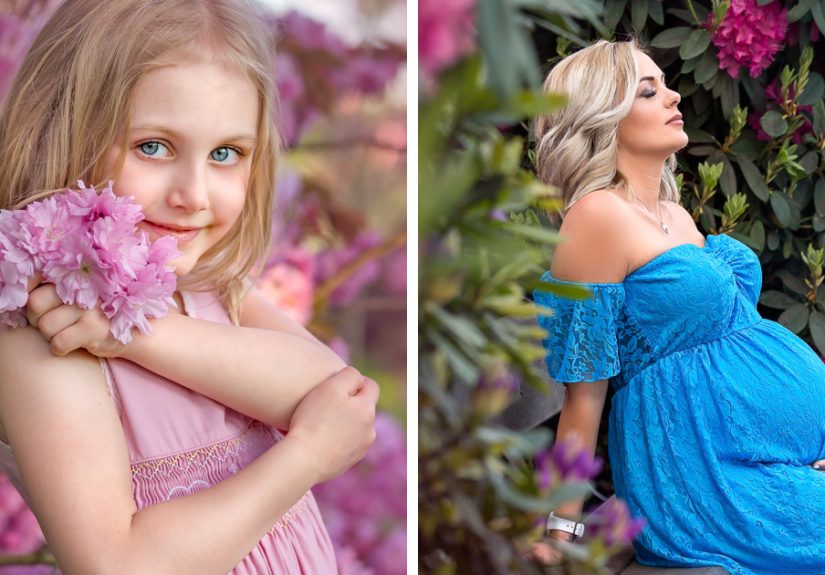
- Profile + blossoms: side angle with blooms framing the face and belly.
- Partner connection: forehead touch, hand on belly, quiet laughter prompts.
My favorite direction cue is simple: “Take a breath like you’re smelling the blossoms.” It softens the face,
relaxes the shoulders, and adds a calm, present feeling that reads beautifully in photos.
Working with Children: The Art of Controlled Chaos
Kids don’t need perfect posingthey need a reason to be there. I keep instructions playful and short, and I
build the session around motion. Stillness is optional; joy is not.
Prompts That Actually Work
- “Find the fluffiest pink tree!” (scavenger hunt energy = natural smiles)
- “Can you show me your slow-motion walk?” (they love being “in a movie”)
- “Whisper a secret to Mom.” (instant connection)
- “Give the blossoms a gentle wave.” (hands have a job, faces relax)
- “Ready, set… freeze!” (mini game for a sharp, still moment)
If a child is shy, I start with wide shots from a comfortable distance. If they’re energetic, I embrace it:
run-and-hug, twirls, tiny jumps, and “race to the next tree” can create magicespecially with blossoms
floating in the background.
Gear and Settings: Keeping Blossoms Dreamy and Faces Crisp
You don’t need exotic gear, but you do need a plan for depth of field and motion. Blossoms look best when
you separate the subject from the background. Kids, meanwhile, demand shutter speeds that can keep up with
their “suddenly I’m a rocket ship” lifestyle.
Lenses I Reach for Most
- 85mm: flattering compression, creamy backgrounds, great for maternity portraits.
- 50mm: natural look, versatile, lovely bokeh with wide apertures.
- 35mm: environmental portraits (show the blossom “scene” while staying close).
- Macro (optional): detail shotstiny hands holding petals, blossoms in hair, floral textures.
Starting Settings (Adjust to Light)
- Maternity portraits: f/2–f/3.5, shutter 1/250+ for gentle movement, ISO as needed.
- Kids in motion: shutter 1/500–1/1000, f/2.8–f/4 for a bit more focus wiggle-room.
- Backlit blossoms: watch highlights; expose for skin and protect bright petals from blowing out.
If the blossoms behind your subject look busy, step back, zoom in (or use a longer focal length), and open
your aperture. That combination simplifies backgrounds fast and turns bloom clusters into soft color washes.
Lighting Tricks for Blossom Portraits (Without Hauling a Studio)
Blossoms love backlight. When the sun is behind the trees, petals glow, hair gets a halo, and the whole scene
feels airy. The catch: your subject’s face can fall into shadow. The fix is simple and portable.
My Favorite Natural-Light Setup
- Sun behind subject (or slightly to the side) to make blossoms luminous.
- Open shade when needed (edge of trees/buildings) to avoid squinting.
- A small reflector (or a bright sidewalk, light jacket, even a white tote bag) to bounce light into the face.
In crowded areas, I also use “background control”: I shift a few feet left or right until the clutter
disappears behind blossoms. The camera doesn’t care that you moved three stepsit only cares that the
background stopped screaming “TRASH CAN.”
Styling for Spring Blossoms: What Photographs Well
Blossoms already bring color, so outfits should complementnot compete. My go-to advice is: soft solids,
gentle textures, and a color palette that plays nicely with pinks and whites.
Easy Outfit Wins
- Neutrals: cream, tan, soft gray (timeless and flattering).
- Pastels: dusty blue, sage, blush, lavender (spring-friendly without neon chaos).
- One “anchor” piece: a flowy dress, linen shirt, or textured cardigan for movement.
- Minimal logos/patterns: patterns can moiré or distract in detailed blossom backgrounds.
For maternity sessions, dresses with movement (wrap styles, maxi dresses, or anything that catches a breeze)
add instant elegance. For kids, comfort wins: if they can’t move, they won’t smileand your session becomes a
negotiation summit.
Editing Spring Blossom Photos: Keep the Magic, Keep It Real
Editing is where blossom photos can go wrong fast. Too much saturation turns petals radioactive. Too much
“warmth” turns skin orange. My goal is simple: clean, soft, and true-to-lifewith a little polish.
My Blossom Editing Workflow
- Balance exposure: protect highlights in petals; lift shadows on faces carefully.
- Dial color with HSL/Color Mixer: fine-tune pinks/magentas and tame aggressive greens.
- Use masking: brighten faces subtly without washing out blossoms; soften backgrounds while keeping eyes sharp.
- Remove distractions: bright trash cans, stray signs, and the one branch that looks like it’s growing out of someone’s head.
- Finish with gentle sharpening: crisp eyelashes, soft petals, natural skin texture.
The blossom “problem color” is usually green bounce. Grass and leaves can reflect green into shadows on faces.
A small HSL adjustment and targeted masks can neutralize that without making the scene look lifeless.
Practical Safety: Sun, Pollen, and “Nature Surprises”
Spring is beautifulbut it’s also pollen season and “the sun is sneakier than it looks” season. I build
safety into sessions, especially with pregnant clients and young children.
Allergy and Pollen-Smart Tips
- Check pollen levels and avoid peak times if a client is sensitive.
- Bring tissues and water (the glamorous essentials).
- Plan a post-session reset: change clothes and shower after outdoor time to remove pollen.
Sun-Smart Tips for Kids
- Prioritize shade and avoid long sessions in intense midday sun.
- Use hats/cover-ups when appropriate (and make them cute).
- For very young babies: keep them out of direct sunlight as much as possible.
I also watch the ground. Blossoms can be slippery when they fall, and uneven terrain turns “twirl in the petals”
into “whoops.” I pick flat areas for movement prompts and save dreamy sitting poses for clean blankets or benches.
Permits, Park Rules, and the Boring Stuff That Saves Your Session
Public spaces can have rules about large setups, tripods, blocking paths, or formal portrait sessions.
Some places may not require permits for small groups with hand-carried gear, while other locations may have
special policies. The smartest move is to check the specific location’s guidance before the session and plan
your setup to stay unobtrusive.
My “Don’t Get Kicked Out” Checklist
- Keep gear minimal: one camera, one lens swap, small reflector.
- Don’t block walkways (especially in peak bloom season).
- No exclusive-use behavior: if someone wants the tree, share the tree.
- Confirm release and usage terms: private gallery vs. portfolio permission.
How I Tell a Story in a Blossom Session (Not Just Take “Pretty Photos”)
A great gallery isn’t 40 versions of “stand near the tree.” I aim for a story arc:
establishing shots, close-up details, connection moments, and a few spontaneous frames that feel like real life.
Sample Shot List: Maternity + Child Blossom Session
- Wide scene: family under the blossoms, showing the environment.
- Medium connection: partner behind, hands on belly, child hugging in.
- Profile portrait: blossoms framing face and belly line.
- Kid detail: tiny hands holding petals, looking up at branches.
- Movement: walking, twirls, gentle runs, laughter prompts.
- Quiet moment: a pause, a breath, a “look at the blossoms” glance.
When parents later say, “This feels like us,” it’s usually because the gallery includes real interactions
not just perfect posing. Blossoms are the set; people are the story.
My Experience Add-On: of Real Blossom Session Lessons
I learned early that blossom sessions reward flexibility more than perfection. One spring, I planned a dreamy
maternity shoot beneath a row of flowering treesperfect petals, soft light, the whole romantic package. Then
we arrived to find the trees had dropped half their blooms overnight. Instead of panicking, I leaned into what
was still there: close-ups of branches, belly-and-hands portraits with a single cluster of blossoms, and wide
shots where the remaining petals looked like confetti scattered across the grass. The client later said it
felt “more honest,” like spring in real life, not a postcard.
Another time, a toddler decided the session’s main theme was “independent exploration.” Every time we tried a
posed family moment, she wandered off to inspect sticks like she was conducting a scientific study. So I
changed the plan: I photographed the parents following her leadholding hands while walking behind her,
laughing when she stopped to point at blossoms, and letting her “show Mom the best tree.” The images weren’t
stiff; they were tender. Parents don’t actually want proof their child can stand still. They want proof of
who their child is.
I also learned that blossom backgrounds can trick your eyes. In person, a tree looks like a pink cloud. On
camera, if you’re too far away with a wide lens, the blossoms turn into busy texture that competes with faces.
The fix was simple: step back, use a longer lens, and open the aperture. Suddenly the blossoms melted into
watercolor bokeh and the subject popped forward. It’s the difference between “pretty place” and “portrait.”
One of my favorite sessions happened in a tiny neighborhood corner where two flowering trees arched toward
each other like a natural doorway. We shot for twenty minutes, topsbecause the light was perfect and we
didn’t overwork it. The pregnant client was comfortable, the child stayed engaged, and we ended on a high
note before anyone got hungry or tired. That taught me a valuable rule: stop while it’s still fun. A shorter
session with great energy beats a long session with forced smiles every time.
Finally, I learned to respect spring as a sensory season. Pollen can make eyes water, and bright sun can make
kids cranky. Now I carry a small “comfort kit”: water, tissues, wipes, a snack break plan, and a quick route
to shade. The goal is always the samemake the session feel easy. When people feel safe and cared for, the
photos look effortless. And in the end, that’s what blossom portraits should feel like: a soft, bright memory
of a season that didn’t last long enough.
Conclusion: Turning Petals Into Keepsakes
Photographing pregnant women and children in spring blossoms is part technical, part emotional, and part
“please don’t eat that leaf.” When you plan for comfort, choose light wisely, guide gently, and edit with
restraint, blossoms become more than a pretty backgroundthey become a time capsule. Spring changes quickly.
Kids change quickly. Pregnancy is its own brief, powerful season. The camera is how we hold onto it.