Table of Contents >> Show >> Hide
- What You’ll Learn
- What Private Investigators Actually Do (and What They Definitely Don’t)
- Why People Hire PIs: The “77 Questions” Themes That Kept Popping Up
- Tools & Techniques: Less “Spy Gear,” More Process
- Legal Boundaries & Ethics: The Line Isn’t FuzzyIt’s the Job
- Myths About Private Investigators That Won’t Die (Even Though They Should)
- How to Hire a Private Investigator (Without Accidentally Hiring Chaos)
- How to Become a Private Investigator (The Non-Hollywood Version)
- FAQ: Questions People Keep Asking Private Investigators
- Conclusion: The Real Secret of the PI Profession
- Field Notes: Experience-Inspired Stories From the “77 Questions” Universe (Extra)
If you’ve ever imagined private investigators as trench-coat-wearing humans who live on black coffee, neon signs, and jazz saxophonescongrats. You’ve been officially recruited by Hollywood.
Real-life PIs are more likely to be dressed for comfort, sitting in a car with a granola bar, and thinking, “How long can one person browse a grocery aisle before my knees file a complaint?” And yessometimes the case really is, “I had to find a cat once.” Not a metaphor. Not a code word. A literal cat.
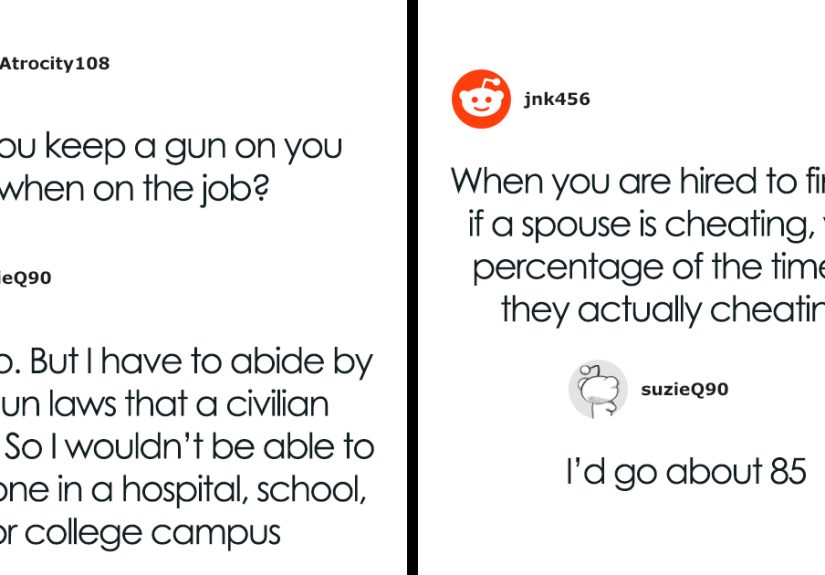
The internet loves Q&A threads where professionals spill the beans. When private investigators answered dozens of questionseverything from “What’s the weirdest case?” to “Do you ever get caught?”a clear picture emerged: the job is part paperwork, part psychology, part patience, and part “please don’t make eye contact with the subject while holding binoculars.”
What Private Investigators Actually Do (and What They Definitely Don’t)
At its core, private investigation is information work. A PI gathers facts, documents them carefully, and reports findings to a clientoften for legal, financial, or personal decisions. That can mean verifying backgrounds, locating missing people, investigating fraud, documenting behavior relevant to a court case, or supporting attorneys with evidence collection.
The “definitely don’t” list matters just as much. A licensed PI isn’t law enforcement. They generally can’t make arrests, force someone to talk, or magically access restricted government databases like they’re swiping a backstage pass. If someone promises you “guaranteed” access to private phone logs, medical records, or “secret police files,” you’re not hiring a PI you’re auditioning for a future courtroom drama.
The job is less action movie, more accuracy
A professional investigator’s superpower is documentation: dates, times, locations, observations, photos/video gathered legally, and clear notes that can hold up under scrutiny. The work is often slow, methodical, and designed to be boring in the best waybecause boring evidence tends to be admissible evidence.
Why People Hire PIs: The “77 Questions” Themes That Kept Popping Up
When you look at the kinds of questions people ask private investigators, you start to see what the public is really curious about: the weird cases, the emotional cases, the “how do you even do that legally?” casesand the big one: What’s the truth when I can’t get it myself?
1) Relationship and family cases (high emotion, high stakes)
These are the cases everyone assumes are the whole job. They aren’tbut they exist. Infidelity investigations, child custody documentation, and locating a missing family member can involve long hours and careful boundaries. The goal isn’t drama. It’s facts that help someone make a decision or support a legal process.
2) Insurance and workplace investigations (the “paper trail” universe)
Many investigators spend serious time on insurance claims, workplace issues, and fraud. Think: verifying claim details, documenting activity in public places, or helping establish whether a story matches observable reality. It’s less “gotcha” and more “does the evidence align with the allegation?”
3) Missing persons, skip tracing, and locating people
Finding someone is rarely about one magic trick. It’s a puzzle: public records, open-source research, interviews, and lawful leads. And yes, sometimes the “missing person” is a missing petbecause cats, as a species, love two things: naps and becoming a neighborhood rumor.
4) Corporate and legal support (where precision pays the rent)
Attorneys hire investigators to locate witnesses, verify claims, and build timelines. Businesses use them to investigate internal issues or vet partners. In these cases, the PI is often a behind-the-scenes support rolequiet, meticulous, and very familiar with spreadsheets.
Tools & Techniques: Less “Spy Gear,” More Process
People love asking, “What tools do you use?” expecting the answer to be “a watch that shoots lasers.” In reality, the most important tools are often: planning, lawful information sources, patience, and note-taking that would impress a librarian.
Open-source intelligence (OSINT)
A surprising amount of investigation begins with information that’s publicly available or legitimately accessible: business filings, court records, social media (viewed legally), property records, and professional licenses. The skill is separating signal from noisebecause the internet is a loud place where everyone is an expert and nobody cites their aunt properly.
Surveillance (the most misunderstood word in the job)
Legal surveillance is typically observation in public spaces or from lawful vantage pointsdocumenting what is visible without trespassing, harassing, or interfering. It’s not permission to stalk. It’s a disciplined practice with strict boundaries. The “hard” part is often mundane: staying alert, blending in, and not looking like you’re auditioning for “Suspicious Person #3.”
Interviews and field work
Investigators may interview neighbors, coworkers, or other relevant contactsprofessionally, politely, and without impersonation. The goal is to gather factual context, not to pressure anyone. Skilled PIs know that how you ask matters as much as what you ask.
Legal Boundaries & Ethics: The Line Isn’t FuzzyIt’s the Job
One of the most common public misconceptions is that private investigators operate in a legal gray zone. Actually, many professionals will tell you the opposite: the fastest way to destroy a case is to cross the line and make evidence unusableor worse, land everyone in legal trouble.
Licensing is real, and it varies by state
In the U.S., PI licensing requirements differ widely. Some states have strict age, experience, exam, fingerprinting, and bonding requirements. Others regulate differently or through specific agencies. If you’re hiring a PI, verifying licensing (where required) is basic safety, not optional.
“Can you get me their private records?” is a red-flag question
Investigators must follow privacy laws and rules around consumer information. In plain English: there are legal limits on accessing or using certain personal data, and legitimate investigators don’t “hack” their way around them. If someone pitches illegal access as a feature, that’s not a featurethat’s a future headline.
Recording laws and consent rules can be complicated
Audio recording laws vary by jurisdiction. Some states generally require all-party consent for certain recordings; others allow one-party consent. Cross-state situations can add complexity, and professionals typically default to conservative, compliant practices. Translation: “I saw it on TikTok” is not a legal strategy.
Professional ethics are part of the craft
Industry codes of ethics emphasize honesty, legality, confidentiality, and avoiding misconduct like falsifying information or impersonating law enforcement. The best investigators don’t just chase answersthey protect the integrity of the process.
Myths About Private Investigators That Won’t Die (Even Though They Should)
- Myth: PIs can do arrests. Reality: Generally, noinvestigators gather information and report it.
- Myth: PIs “always” carry a badge. Reality: Badges are regulated and often misunderstood; flashy “police-like” behavior is a warning sign.
- Myth: It’s all car chases. Reality: It’s a lot of waiting, watching, documenting, and writing reports.
- Myth: PIs can access anything. Reality: Legal access depends on laws, permissible purposes, and licensure rules.
- Myth: The job is unemotional. Reality: Many cases involve people at vulnerable moments, and professionalism matters.
The “77 questions” style threads reveal something else: people are fascinated because PI work sits at the intersection of curiosity and consequence. The answers aren’t glamorousbut they’re honest. And honesty is the whole point.
How to Hire a Private Investigator (Without Accidentally Hiring Chaos)
If you’re considering hiring a PI, treat it like hiring any serious professionalbecause you are. A good investigator will set expectations clearly, explain what’s legal, and outline how they document and report results.
Smart questions to ask up front
- Are you licensed in my state (if required), and can you verify it?
- What is your experience with cases like mine (family, legal support, corporate, insurance, missing persons)?
- What methods do you useand what methods do you refuse to use?
- What will I receive at the end (report format, photos/video, timeline, documentation)?
- How do you handle confidentiality and evidence storage?
Red flags you can spot from space
- They guarantee outcomes (“We’ll definitely get proof by Friday!”).
- They suggest illegal access (“I can pull their call logs, no problem.”).
- They blur lines with law enforcement (“I’m basically a cop.”).
- They won’t put scope, fees, and deliverables in writing.
How to Become a Private Investigator (The Non-Hollywood Version)
The path to becoming a PI depends on where you live. Many states require some combination of: minimum age, relevant experience, background checks and fingerprinting, exams, bonding, and business registration. Some investigators start with backgrounds in security, law enforcement, the military, or legal support; others build experience through agencies.
Skills that matter more than having a “mysterious vibe”
- Writing: Reports should be clear enough that a stranger can follow the logic.
- Observation: Noticing patterns without inventing stories.
- Legal awareness: Knowing the rules in your jurisdictionand respecting them.
- People skills: Calm, professional communication beats “interrogation energy.”
- Patience: Because sometimes the “breakthrough” is the 17th boring detail lining up.
If the “77 questions” have a hidden message, it’s this: the job isn’t about being sneaky. It’s about being disciplined.
FAQ: Questions People Keep Asking Private Investigators
Do private investigators get caught?
Sometimesespecially during surveillancebecause humans are observant, and also because PIs are humans. Professionals plan for this possibility, keep interactions calm, and avoid escalation. Being “caught” doesn’t automatically mean anything illegal happened, but it can affect how a case proceeds.
Can a PI find anyone?
Investigators can often locate people using lawful methods, but there are limits. Some individuals are intentionally hard to find, and the legality of data access matters. A reputable PI won’t promise miraclesonly effort, method, and honest reporting.
Can a PI prove cheating?
A PI can document observable behavior and provide evidence gathered legally. Whether that “proves” anything depends on context, your goals, and sometimes the legal standards involved. The better framing is: can they provide reliable facts you can act on?
Is hiring a PI worth it?
It can be, when you need objective documentation, can’t safely gather information yourself, or require professional reporting for legal or financial decisions. The value comes from accuracy, legality, and a clear deliverablenot from drama.
What’s the weirdest case a PI might get?
The internet’s favorite answer is the classic: “I had to find a cat once.” And honestly, that tracks. Humans lose pets, panic, and call the closest person who sounds like they solve mysteries for a living.
Conclusion: The Real Secret of the PI Profession
When private investigators answer dozens of questions in public, the biggest reveal isn’t a single shocking story. It’s the reality of the work: careful documentation, legal discipline, and the emotional intelligence to navigate high-stakes situations without making them worse.
In other words, the “secret” is boring in the most trustworthy way. And if you ever need proof that the job isn’t just noir fantasy, remember this: somewhere out there, a professional investigator is writing a perfectly formatted report about a runaway cat.
Extra 500+ words: experience-inspired section
Field Notes: Experience-Inspired Stories From the “77 Questions” Universe (Extra)
The following stories are composite-style vignettesbased on patterns investigators commonly describe in Q&A threads, licensing guidance, and ethical best practices. They’re not “one weird trick” tutorials. They’re a peek at what the work feels like when it’s done professionally: calm, careful, and occasionally absurd in a very human way.
Case File #1: The Cat With a Witness Protection Program
It starts with a frantic call: a cat is missing, the owner is devastated, and the neighborhood has three theories and zero evidence. A professional approach looks less like “cat whispering” and more like structured problem-solving: where was the cat last seen, what are likely hiding behaviors, what routes lead to quiet shelter, and who nearby has cameras or noticed movement? The odd part is that the investigator’s biggest challenge isn’t the catit’s the emotional turbulence. People want certainty right now, and the only honest answer is: “We can increase odds, not control outcomes.” When the cat is found (often closer than expected), the “win” isn’t just locationit’s restoring someone’s sense of safety.
Case File #2: The Surveillance That Was Mostly… Waiting
Surveillance sounds dramatic until you realize it can mean sitting through two full podcast seasons while documenting exactly nothing. That “nothing,” however, can be the result. In insurance or workplace-related cases, the absence of certain activity can matter just as much as its presence. The professional difference is restraint: no trespassing, no harassment, no “I followed them into their backyard because my gut told me.” Instead: lawful observation points, clear timestamps, and an evidence trail that can be explained without improvising. The best investigators aren’t trying to create a story. They’re trying to prevent a story from being invented later.
Case File #3: The Background Check That Turned Into a Reality Check
Clients often imagine background checks as a single button labeled “REVEAL TRUTH.” In reality, there are legal frameworks around consumer information and a difference between public records research and restricted data. A reputable investigator clarifies scope and purpose, gathers what is lawfully available, and documents sources carefully. And sometimes the biggest “reveal” isn’t scandalit’s nuance: two people with the same name, an old address that doesn’t match, a business entity that’s separate from the individual, or a rumor that collapses when you ask for a verifiable record. The outcome can be anticlimactic, but that’s the point: you’re paying for accuracy, not adrenaline.
Case File #4: The Lawyer’s Timeline (Also Known as the Spreadsheet of Doom)
In legal support work, investigators often build timelines: who said what, when, and what can be corroborated. It’s unglamorous and brutally effective. Witness interviews are conducted with professionalism, not intimidation. Documents are organized so another person can follow the chain of information. Photos are labeled. Notes are dated. If you want a peek into the PI mind, it’s this: they think in sequences. The “mystery” is rarely solved by one clue. It’s solved by 40 small, verified details agreeing with each other.
Across all these scenarios, the recurring lesson is simple: private investigation is a service profession built on restraint. The best investigators don’t do “whatever it takes.” They do what’s lawful, ethical, and documentablebecause that’s what holds up when the stakes are real.