Table of Contents >> Show >> Hide
- What “Human DNA Is Everywhere” Actually Means
- The Big Scientific Win: What We Can Do With All This DNA
- Why It Freaks People Out: The “Terrifying Others” Part
- 1) DNA is uniquely identifyingand you can’t change it
- 2) “Just because DNA is there” doesn’t mean what people think it means
- 3) Environmental sampling can blur the boundary between science and surveillance
- 4) Law enforcement DNA databases and genetic genealogy raise new privacy questions
- 5) Consumer DNA data can become a long-term privacy liability
- So… Should We Panic or Celebrate?
- The Near Future: More Signal, More Questions
- Real-World Experiences: Living in the Age of Ubiquitous DNA (Extra)
- Conclusion
If you’ve ever left a coffee shop and wondered, “Did I forget my phone?” good news: you probably didn’t.
Bad news: you definitely left something behind.
Humans shed DNA like glitter at a craft storequietly, constantly, and in places you did not consent to decorate.
A little skin cell here. A hair fragment there. A microscopic breadcrumb trail of “I was in this room and I had thoughts.”
The surprising part isn’t that DNA is everywhere; it’s that science is getting so good at finding it that “everywhere” now includes
air, dust, water, and the smudgy ghost of a fingerprint you never knew you made.
For researchers, this is a jackpot: environmental DNA (eDNA) and trace DNA can help solve crimes, track disease outbreaks, monitor ecosystems,
and identify missing persons. For privacy advocates (and anyone who enjoys not being genetically audited by a stray sneeze), it’s… unsettling.
Because DNA doesn’t just say “someone was here.” In the wrong hands, with the right tools, it can whisper family connections, ancestry, and biological clues
that feel way too personal for something that can drift around like dust bunnies.
What “Human DNA Is Everywhere” Actually Means
“DNA everywhere” isn’t science fictionit’s biology plus better instruments. People continuously shed cells from skin and hair, and we deposit DNA
through touch, saliva droplets, sweat, and other everyday activities. Over time, those tiny fragments accumulate on surfaces, in indoor dust, and even in the air.
When scientists collect samples from these environments, they can often detect human genetic material mixed in with everything else.
Three main “everywhere” buckets
- Touch/trace DNA: DNA left on objects and surfaces after handling, brushing, or contact.
- Air and dust DNA: DNA carried in airborne particles or settled into indoor dust.
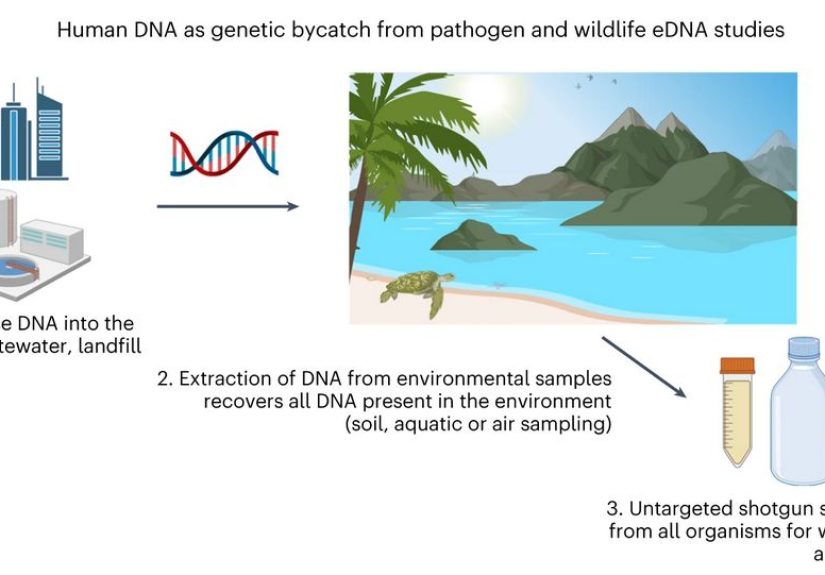
- Environmental DNA (eDNA): DNA recovered from water, soil, sand, or other environmental samplessometimes as “bycatch” in non-human studies.
The science isn’t magic: labs amplify tiny genetic signals (often using methods designed for extremely small amounts of material).
But the impact feels magicalbecause what used to be undetectable can now be read like a molecular receipt.
The Big Scientific Win: What We Can Do With All This DNA
1) Forensics: From “Who bled here?” to “Who touched this?”
Early DNA evidence often focused on obvious biological materialblood, semen, saliva. Modern forensics can often work with far smaller deposits,
including DNA left behind simply by handling an item. This has expanded the usefulness of DNA evidence beyond the most serious crimes into a wider range
of investigations, including property crimes and scenarios where traditional evidence is thin.
That’s the upside. The complication is that trace samples are messy: they can be mixtures from multiple people, and DNA can move around in ways that
don’t match Hollywood logic. A “hit” may indicate transfer, not guilt; presence, not action.
2) Public health: Wastewater as a community-level early warning system
Wastewater surveillance became widely known during COVID-19, when communities used sewage sampling to detect viral trendsoften before clinical testing
data fully reflected what was happening. The logic is straightforward: pathogens and biomarkers enter sewer systems through human waste, and sampling at treatment plants
can provide a broad snapshot of community-level trends.
This approach is powerful because it captures signals from many people at once, including those who never get tested or never develop symptoms.
It’s also relatively efficient: you can learn a lot about a population without knocking on every door.
3) Ecology and conservation: eDNA as a non-invasive wildlife tool (with human “bycatch”)
Environmental DNA has transformed biodiversity monitoring. Instead of trapping animals or relying on visual sightings, researchers can sample water or soil
and detect which species have been in the area. It’s a leap forward for conservation and ecosystem science.
Here’s the twist: when scientists collect “wildlife” eDNA samples, they often also collect human DNAbecause humans are, inconveniently, everywhere.
Some researchers describe this as human genomic “bycatch.” In certain cases, depending on collection methods and analysis choices,
it may be possible to recover identifiable human genetic information from samples originally collected for other purposes.
4) Missing persons and disaster victim identification
DNA is also a vital tool for identifying human remains and reconnecting families after disasters or long-running cases.
When other identifiers fail, genetic methodssometimes including genealogical approachescan provide answers that have been out of reach for decades.
Why It Freaks People Out: The “Terrifying Others” Part
1) DNA is uniquely identifyingand you can’t change it
If your credit card number leaks, you can cancel it. If your DNA leaks… congratulations, you’re stuck being you.
Genetic data can be uniquely identifying, and even partial genetic information can sometimes be combined with other data sources to narrow down identity or relationships.
2) “Just because DNA is there” doesn’t mean what people think it means
Trace DNA can transfer indirectly. It can persist for different lengths of time depending on conditions. It can appear as mixtures.
It can arrive via a handshake, a shared object, or the innocent act of existing near other humans.
This creates a courtroom and investigative challenge: how to interpret DNA evidence responsibly without treating it like an all-knowing narrator.
In other words: DNA is evidence, not a confession.
3) Environmental sampling can blur the boundary between science and surveillance
Many eDNA and public health projects are designed to be population-level and non-identifying.
But the mere feasibility of extracting human genetic information from environmental samples changes the ethical landscape.
If it’s technically possible to identify individualsor infer sensitive traitsfrom “anonymous” environmental material,
then governance, consent, and data handling become front-and-center.
4) Law enforcement DNA databases and genetic genealogy raise new privacy questions
The U.S. has long used criminal justice DNA databases to generate investigative leads, most famously through systems like CODIS.
Separately, investigative genetic genealogy (IGG) uses genetic genealogy databases and family-tree methods to identify suspects or unknown remains.
These tools have helped solve cold cases and identify victims, but they also raise thorny questions:
What counts as consent when relatives didn’t opt in? How broad should searches be? What oversight is needed?
Court battles and policy debates continue to shape what’s permitted, what’s restricted, and what counts as a reasonable search in a world where a relative’s upload
might indirectly make you searchable.
5) Consumer DNA data can become a long-term privacy liability
Direct-to-consumer genetic testing made DNA feel funlike a personality quiz with cheekbones.
But it also created vast repositories of genetic data whose risks can shift over time due to breaches, company policy changes, or ownership changes.
Even when companies emphasize protections, the broader U.S. privacy landscape is a patchwork, and “what happens next” can be complicated.
So… Should We Panic or Celebrate?
The honest answer is: neither, but also both.
We should celebrate the scientific value. Ubiquitous DNA helps us detect outbreaks sooner, learn more about ecosystems, and solve cases that once stayed unsolved.
But we should also take the privacy risks seriously. The same sensitivity that makes DNA such a powerful tool makes it easy to misuse or misunderstand.
What responsible DNA use looks like (in plain English)
- Purpose limits: Collect DNA for a specific goal, not because “we can.”
- Data minimization: Keep only what’s needed, as aggregated as possible, for as short as possible.
- Strong governance: Clear rules, audits, and accountabilityespecially for law enforcement and public surveillance programs.
- Interpretation humility: Treat trace DNA carefully; explain mixtures and transfer; avoid overstating certainty.
- Meaningful consent: Particularly for non-forensic research, with transparency about potential future uses.
The Near Future: More Signal, More Questions
DNA detection is getting cheaper, faster, and more sensitive. That trend won’t reverse.
Expect more “ambient genomics” in research, more sophisticated mixture interpretation in forensics, and more debate about what privacy means
when biology itself is a data exhaust.
The challenge for the next decade isn’t whether we can collect human DNA from the world around us. We can.
The challenge is whether we can build rules, norms, and safeguards fast enough to keep the benefitsand limit the creep.
Real-World Experiences: Living in the Age of Ubiquitous DNA (Extra)
Talk to forensic analysts and you’ll hear a familiar mix of excitement and caution. One lab tech describes modern trace work as “turning whispers into words”
and then immediately adds, “but you have to know when the whisper is just background noise.” In practice, that means endless attention to contamination control,
careful documentation, and a kind of professional paranoia that is, honestly, a public service. A single glove change at the wrong moment can turn a clean case messy.
A tiny mixture can balloon into a courtroom argument about who touched what, when, and whether that touch meant anything at all.
Public health teams tell a different kind of story. During the pandemic, wastewater dashboards felt like weather reports for viruses:
the numbers rose, the alerts went out, and communities tried to get ahead of the surge. Epidemiologists often talk about the relief of having a tool
that isn’t dependent on individual behaviorbecause not everyone gets tested, and not everyone can. Wastewater doesn’t care if you’re busy,
skeptical, asymptomatic, or just tired. It’s the closest thing science has to a community-level “early warning siren” that doesn’t require
a thousand separate decisions to cooperate.
Then there are the researchers doing wildlife eDNA who didn’t sign up for human ethics debatesuntil human DNA showed up anyway.
Imagine collecting river water to track an endangered fish, only to realize your sample also contains readable traces of the people upstream.
Many scientists respond the same way: “We’re not trying to identify anyone,” followed by a pause that says, “but someone else might.”
That’s the moment where a purely ecological tool becomes a governance problem. Labs start discussing whether to filter out human reads,
how to store raw sequencing data, and what their obligations are if incidental human information appears.
Everyday people experience this era more quietly. You mail a saliva kit to a consumer genetics company because you’re curious about ancestry,
then months later you read about data breaches, policy changes, or corporate shakeups and realize your curiosity created a permanent artifact.
Some users shrug“I’m not that interesting.” Others feel betrayed, not because they did something wrong, but because DNA doesn’t feel like an email address.
It feels like identity. A few people become accidental experts, learning how to delete accounts, opt out of research, or limit what gets shared.
It’s a new kind of digital hygiene, except the “digital” part is your cells.
And occasionally, the experience is profoundly positive. Families of missing persons talk about the moment a long-unknown relative finally has a name again.
Investigators describe how a genetic lead can reopen doors that had been welded shut by time. Those stories are the strongest argument for why DNA tools matter.
The uneasy truth is that the same power that delivers closure can also expand surveillance if left unchecked. Living in the age of ubiquitous DNA
means learning to hold both realities at once: the wonder of discovery and the insistence on guardrails.
Conclusion
Human DNA is everywhere because humans are everywhereand because modern science has turned microscopic leftovers into meaningful signals.
That’s a boon for forensics, public health, and environmental research. It’s also a flashing warning light for privacy, consent, and evidence interpretation.
The future isn’t about stopping DNA science; it’s about shaping it so that “we can” doesn’t automatically become “we should,” and so that the benefits don’t require
everyone to live in a permanent genetic fishbowl.