Table of Contents >> Show >> Hide
- What Happened During Zak Mirz’s Quarterfinal Performance?
- Howie Mandel’s Reaction Was Peak Howie
- Why the Red X Felt So Dramatic
- Other Judges and Fans Weren’t Exactly Quiet, Either
- Was Howie Wrong, or Just Brutally Honest?
- What the Moment Said About Modern AGT
- Did the Controversy Hurt Zak Mirz?
- The Real Reason This Moment Landed So Hard
- Extended Perspective: What Moments Like This Feel Like for Fans, Contestants, and Even the Judges
- Conclusion
- SEO Tags
Live television has a special talent for turning a perfectly normal performance into a full-blown pop culture food fight. One minute, a contestant is trying to wow the room. The next, a judge is slamming a red X, the crowd is booing, another judge is protesting, and fans at home are already warming up their thumbs for social media. That is pretty much what happened when Howie Mandel didn’t hold back about an America’s Got Talent quarterfinal act during Season 20.
The act in question belonged to magician Zak Mirz, whose September 9 quarterfinal performance was designed to be interactive, strange, and memorable. It checked all three boxes. It also managed to trigger one of the most talked-about judging moments of the live rounds. Howie, never exactly known for whispering his opinions into a decorative pillow, hit the red buzzer before the trick was finished. Then, after the full reveal landed, he walked some of it back. Not all of it. Just enough to keep the drama hot and the audience guessing.
For fans of AGT, it was classic live-show chaos. For viewers who love reality competition TV, it was the kind of moment producers probably frame and hang on the wall. And for anyone interested in how judging shapes a performance, it was a fascinating example of how timing, tension, and personality can change the way an act is received.
What Happened During Zak Mirz’s Quarterfinal Performance?
Zak Mirz entered the quarterfinals with momentum. He had already built a reputation as a magician who likes to wrap tricks inside stories, emotion, and audience participation instead of simply pulling a rabbit out of a hat and calling it a day. In the live quarterfinals, he leaned into that style again with a trick involving torn cards, animal images, judge participation, and a reveal that became bigger and weirder as it unfolded.
That bigger-and-weirder part matters, because Mirz’s act was not built like a sprint. It was built like a slow climb toward a punchline. On a show like AGT, that is both brave and dangerous. Live competition rounds reward instant impact. If a singer hits a huge note in the first 20 seconds, everybody relaxes. If an acrobat launches into orbit, the room is sold. Magic is trickier. Sometimes the payoff only makes sense when the final piece clicks into place.
Mirz asked the audience and judges to follow a sequence that seemed confusing at first. That confusion, of course, was part of the design. But in the middle of the performance, before everything snapped together, Howie Mandel hit the red X. The audience did not love that. “Did not love” may actually be too polite. The crowd booed, and the moment instantly became bigger than the trick itself.
Then came the reveal. The act ultimately paid off with a strange and memorable visual involving a kangaroo-gorilla hybrid surprise that tied the trick together and pulled Howie directly into the bit. Suddenly, what looked messy in the middle made more sense by the end. That is when the conversation shifted from “Why did he buzz?” to “Okay, maybe wait for the whole trick next time.”
Howie Mandel’s Reaction Was Peak Howie
If you have watched AGT for any meaningful length of time, you know Howie Mandel is not a judge who hides behind polite little half-compliments. He has been on the show since 2010, and part of his identity as the longest-serving judge is that he reacts in real time. He is impulsive, blunt, funny, occasionally maddening, and almost always honest. That makes him great television and, depending on the night, either a contestant’s biggest cheerleader or the human version of a cold splash of pool water.
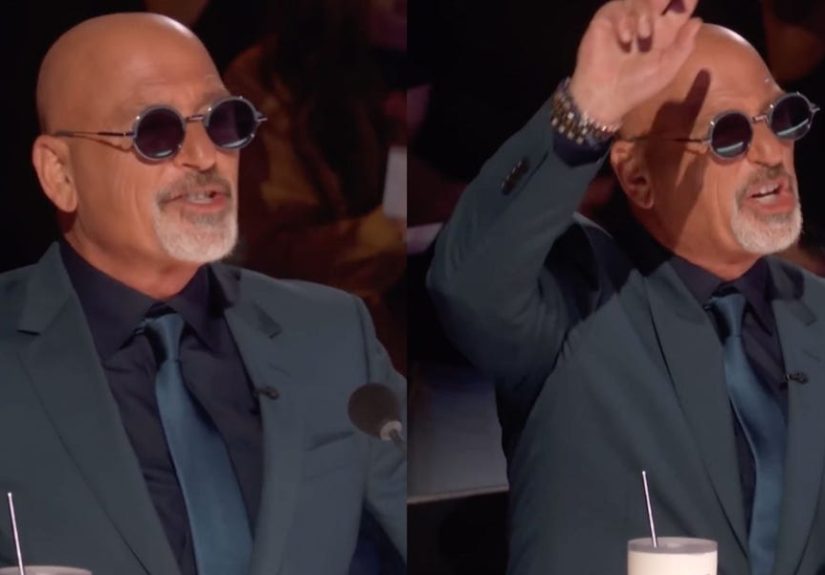
After Zak finished, Terry Crews asked the obvious question: was Howie really going to stick with that buzzer? In a moment that immediately became headline material, Howie backed off and said he wanted it taken away. So yes, he reversed himself. But no, he did not suddenly act like he had just witnessed the greatest magic performance in human history.
Instead, he explained his problem with the act in the most Howie way possible. His complaint was not really about the final reveal. It was about the road getting there. He joked that the trick seemed to take longer to build than the show’s IKEA lounge, which is exactly the kind of line that sounds like a roast, a stand-up bit, and a legitimate critique all at once.
That is why the moment stood out. Howie Mandel didn’t hold back about the AGT quarterfinal act, even after admitting the trick worked. He basically gave Zak Mirz a live-TV version of, “Nice ending, but buddy, you made us do cardio to get there.”
Why the Red X Felt So Dramatic
The red buzzer has always had outsized emotional power on AGT. Technically, it does not eliminate a contestant by itself during the live rounds. But emotionally? It lands like a thunderclap. It tells the room that a judge thinks something is not working right now. On a live show, where contestants are already balancing nerves, timing, and a national audience, that kind of interruption can feel massive.
In Mirz’s case, the red X did more than interrupt the performance. It changed how viewers watched the rest of it. Some people leaned in, curious to see whether the magician could recover. Others immediately sided with Zak and decided Howie had jumped the gun. Once the final reveal worked, the buzzer looked premature to many fans, which made the backlash even louder.
That tension is part of what makes AGT such a weirdly effective machine. The show is not just about raw talent. It is about reaction. A performance becomes a television moment when the judges, audience, and viewers at home all start arguing about what they just saw. In that sense, Howie’s red X did not just critique the act. It made the act unforgettable.
Other Judges and Fans Weren’t Exactly Quiet, Either
Howie’s reaction did not happen in a vacuum. The other judges appeared far more willing to stay with Zak’s performance and let the trick reach its finish line. Simon Cowell, in particular, pushed back on Howie’s choice to buzz so early, helping frame the moment as one of those rare occasions when the “tough judge” was not the toughest person at the desk.
That role reversal gave the scene extra juice. Usually, Simon is the judge contestants fear most. But here was Howie taking the harder line while Simon acted as the voice of patience. Reality TV loves irony almost as much as it loves a slow-motion replay, and this moment delivered both.
Online reaction followed the same split. Plenty of viewers thought Howie had been unfair and too quick on the trigger. Others admitted they understood his complaint, even if they would not have hit the buzzer themselves. That split is important because it reveals the real debate under the drama: how much patience should a live-show audience give to a magician whose act depends on setup?
Some fans want immediate astonishment. Others are willing to let suspense cook a little longer if the payoff is strong. Zak Mirz’s act turned that question into a national group project.
Was Howie Wrong, or Just Brutally Honest?
Here is the fairest answer: probably a little of both, depending on what you value in a magic performance.
If you think magic should grab viewers instantly and keep the energy high every second, then Howie’s critique makes sense. A live quarterfinal is not a casual Friday at the neighborhood magic club. It is a high-stakes sprint. Contestants do not just need to be good. They need to be impossible to ignore. From that point of view, Howie’s impatience was not cruelty. It was strategy.
But if you think some tricks need room to breathe, then his buzzer felt like a judge reviewing a movie after the first trailer. Mirz’s routine was clearly built around delayed gratification. The point was for the pieces to seem disconnected until the ending unified them. Buzzing halfway through that kind of act is like complaining that a mystery novel has too many unanswered questions before you read the last chapter.
The smartest takeaway is that Howie was reacting to pacing, not talent. In fact, his decision to retract the X and encourage America to vote suggested he knew the ending worked. He just did not love the journey. That distinction matters, because it explains why the moment felt sharp without being completely dismissive.
What the Moment Said About Modern AGT
America’s Got Talent has evolved into a show where performance quality and television packaging are constantly fighting for custody of the spotlight. Great acts still matter, obviously. But so do editing, tempo, judge chemistry, and social-media buzz. A contestant can be excellent and still lose momentum if the room gets restless. On the other hand, a controversial judge reaction can create so much attention that the act benefits from the chaos.
That is partly what happened here. Zak Mirz’s quarterfinal performance may not have been the smoothest act of the night, but it became one of the most talked-about. In live competition TV, being memorable is half the war. Sometimes even an argument helps.
Meanwhile, Howie’s broader role in the episode mattered too. He was the last judge with a Live Golden Buzzer still available that night, so his opinions carried even more weight than usual. He was evaluating with both pressure and power. Later in the show, he used that Golden Buzzer on Team Recycled, sending them straight to the finale. That decision made his earlier criticism of Mirz feel even more pointed. He was clearly measuring performers against a very specific standard: not just “good enough to survive,” but strong enough to dominate.
Did the Controversy Hurt Zak Mirz?
Not immediately. Zak Mirz still advanced from the quarterfinals to the semifinals, which says a lot about how viewers responded after the dust settled. Even with the red X, or maybe partly because of it, people kept paying attention. That alone suggests the act connected more than Howie’s mid-performance reaction might have implied.
Still, controversy on AGT is a double-edged sword. It can bring visibility, but it can also freeze an act inside one narrative. Instead of talking purely about Mirz’s creativity, many viewers were now talking about pacing, the red X, and whether Howie had been fair. That kind of framing can be hard to shake in later rounds, where contestants need the audience focused on what is next, not replaying what already happened.
Mirz ultimately did not reach the finals, but his quarterfinal performance remains the one people remember because it produced a genuine live-TV argument with real stakes. In a competition full of polished routines, that sort of messy authenticity sticks.
The Real Reason This Moment Landed So Hard
At its core, this was not just about a magic trick. It was about expectation. Audiences expect judges to judge, but they also expect them to let a performance finish before lighting it on fire. They expect magicians to amaze, but they also expect a clean, satisfying pace. They expect Howie Mandel to be blunt, but they also enjoy seeing him forced to admit when an act proved him wrong.
That is why the moment worked. It had friction, reversal, humor, and a clear human angle. Howie reacted too early. Zak got to finish the job. The audience got its drama. Simon got to play defense attorney. And viewers at home got the kind of reality-show scene that practically begs to be replayed with snacks.
So, when people say Howie Mandel didn’t hold back about the AGT quarterfinal act, they are absolutely right. He did not. But that honesty is also what made the moment worth talking about. He was tough, maybe too tough, but never fake. And on a show built around spectacle, honesty can be the most surprising trick in the room.
Extended Perspective: What Moments Like This Feel Like for Fans, Contestants, and Even the Judges
One reason this quarterfinal clash lingered with viewers is because almost everyone watching could project themselves into it. If you are a fan sitting on the couch, you know the feeling of defending a contestant like you are suddenly on their payroll. You watch someone set up a trick, the judge gets impatient, and before you know it you are pointing at the TV like a football coach who definitely could have run a better fourth quarter. Live competition shows create that weird illusion of personal investment. You are not just watching; you are participating emotionally.
For contestants, moments like this probably feel even more intense than they look on screen. A magician like Zak Mirz is not just performing a trick. He is timing every beat, calculating crowd response, listening for judge reactions, and trying not to let adrenaline turn his brain into mashed potatoes. When a red X goes off mid-act, that is not just noise. It is a grenade tossed into the rhythm of the performance. Finishing strong after that kind of interruption requires nerve, discipline, and the ability to keep selling the moment even when your insides are probably screaming.
And then there are the judges. It is easy to paint Howie as the villain of the scene, but judging live television is its own bizarre skill. A judge has to react honestly, entertain the audience, stay consistent with past critiques, and somehow make all of that happen in real time without the luxury of rewinding what they just saw. That does not excuse every harsh call, but it does explain why a judge like Howie sometimes trusts his instincts before the full picture is visible. He is not reviewing a finished painting in a quiet gallery. He is reacting while the paint is still flying through the air.
What makes this particular AGT moment memorable is that it captured all three experiences at once. Fans felt protective. The contestant had to recover in real time. The judge had to own his reaction and then partially reverse it. That is a lot of emotional traffic for one performance, which is exactly why people kept talking about it after the episode ended.
There is also something deeply human about the central lesson here: sometimes the payoff comes late. That applies to magic, comedy, television, and life in general. Not every strong performance arrives with fireworks in the first ten seconds. Some need a little setup. Some ask the audience to be patient. And sometimes the person who loses patience first is the very person holding the buzzer.
In that sense, the Zak Mirz-Howie Mandel exchange became bigger than a quarterfinal routine. It turned into a mini case study in attention span, showmanship, and second chances. Howie reacted. Zak finished. The audience reconsidered. The moment evolved. That is good television, but it is also a pretty decent reminder not to rush the ending before the story gets there.
Conclusion
Howie Mandel’s response to Zak Mirz’s quarterfinal performance was sharp, spontaneous, and impossible to ignore. He buzzed early, reconsidered later, and still made it clear that his real issue was pacing, not potential. That mix of criticism and reluctant respect turned a single magic act into one of the more memorable AGT moments of the season.
In the end, the scene worked because it had everything reality TV needs: a bold contestant, a blunt judge, a divided audience, and just enough reversal to keep everyone arguing about who was right. Whether you think Howie was unfair or refreshingly honest, one thing is certain: he did not hold back, and neither did the conversation that followed.