Table of Contents >> Show >> Hide
- Why Wicked Still Has Broadway in a Chokehold
- How to Tell If You Really Know Wicked the Musical
- Can You Recognize the Songs That Define the Show?
- What Makes Wicked Different from Other Broadway Hits?
- Common Misconceptions About Wicked the Musical
- So, How Well Do You Know Wicked?
- Experiences Fans Often Associate with Wicked the Musical
- Final Thoughts
If you think knowing Wicked means belting “Defying Gravity” in the shower while dramatically reaching for the shampoo bottle like it is a Tony Award, first of all: respect. Second, there is a lot more to this musical than green makeup, floating bubbles, and one very intense cape moment. Wicked the Musical has become one of Broadway’s biggest modern phenomena because it does something deceptively tricky: it gives audiences a familiar world, then flips it upside down and asks sharper, stranger, and more emotional questions than people expect.
So how well do you really know Wicked? This guide is part fan challenge, part deep dive, and part gentle nudge to admit that maybe Glinda is doing a lot more emotional heavy lifting than you gave her credit for. Whether you are a casual theatergoer, a full-on Oz historian, or someone who arrived after the movie buzz and wants the stage-show essentials, this article will test your knowledge while exploring what makes Wicked so enduring.
Why Wicked Still Has Broadway in a Chokehold
Wicked is based on Gregory Maguire’s novel and features music and lyrics by Stephen Schwartz with a book by Winnie Holzman. On paper, that sounds like a clever literary remix of The Wizard of Oz. Onstage, it becomes something much bigger: a musical about friendship, identity, propaganda, public image, and the dangerously convenient habit society has of labeling complicated women as villains.
The story centers on Elphaba and Glinda long before Dorothy drops in from Kansas and accidentally turns Oz into a tourism brand. Elphaba begins as a brilliant, emotionally guarded outsider with green skin. Glinda begins as charming, polished, and wildly committed to being adored. Their relationship starts with friction, grows into friendship, and then evolves into one of the strongest emotional arcs in modern musical theater.
That is the first big test of your Wicked knowledge: do you see it as a spectacle, or do you understand that its real engine is the bond between two women whose lives are shaped by power, perception, and painful choices? The dragon clock is fabulous, yes. The friendship is the whole spell.
How to Tell If You Really Know Wicked the Musical
You know the story does not begin with Dorothy
A lot of people treat Wicked like a side quest attached to The Wizard of Oz. That misses the point. Dorothy matters, but she is not the center of this universe. Wicked begins earlier, with Elphaba’s childhood, her difficult family dynamic, and her arrival at Shiz University. The show is less interested in rehashing a familiar fantasy and more interested in asking how legends get created in the first place.
In other words, if your understanding of Wicked starts with a house falling from the sky, you may need to report back to Shiz for remedial studies.
You know Elphaba is not just “the misunderstood one”
Yes, Elphaba is misunderstood. But she is also stubborn, intense, impulsive, and sometimes terrible at self-preservation. That is what makes her compelling. She is not a sanitized heroine with a tragic tint. She is principled to the point of self-destruction. Her outrage at injustice is real, especially when she sees how the Animal characters are being stripped of their rights and voices. That political thread gives the musical much of its urgency.
If you really know Wicked, you know Elphaba’s appeal is not just that she is treated unfairly. It is that she refuses to play nice when niceness requires silence.
You know Glinda is much more than comic sparkle
At first glance, Glinda seems like the show’s glitter cannon: funny, fashionable, and one hair toss away from stealing every scene. But Wicked works because Glinda is not merely comic relief. She is a study in charm, ambition, social intelligence, and the cost of choosing popularity over resistance.
Her arc is quieter than Elphaba’s, but no less important. She learns, often painfully, that being liked is not the same thing as being good. That is why “Popular” lands as more than a crowd-pleaser. It is hilarious, yes, but it also reveals how Glinda understands power: image first, ethics later.
You know the supporting characters are not decoration
People who only know the musical from clips often reduce the supporting cast to plot furniture. Big mistake. Fiyero is not just the handsome distraction with excellent hair energy; he gradually becomes one of the few people willing to see beyond the story Oz is selling. Nessarose is not just Elphaba’s sister; she embodies another version of pain, dependence, and control. Madame Morrible and the Wizard are not cartoon villains either. They are more unsettling than that. They are polished manipulators who understand that fear is useful and that spectacle can sell almost anything.
If you know Wicked, you know the show is obsessed with how institutions shape public belief. That is why its political layer still feels uncomfortably modern.
Can You Recognize the Songs That Define the Show?
“Defying Gravity” is the anthem, but it is not the whole score
Let’s be honest: “Defying Gravity” is the musical theater equivalent of a rocket launch. It closes Act I with enough emotional force to reset your pulse. Even people who have never seen the show usually know that song, or at least know the face someone makes when trying to sing the ending in public and immediately regretting it.
But real Wicked knowledge means understanding the score beyond the obvious showstopper. “The Wizard and I” gives us Elphaba’s early hope before reality takes a wrecking ball to it. “Popular” reveals Glinda’s worldview through comedy. “I’m Not That Girl” is heartbreak in velvet form. “No Good Deed” is rage, grief, and collapse crashing together. “For Good” is the emotional landing strip for the whole musical. And “Dancing Through Life” is sneakily important because it lays out Fiyero’s philosophy before the story tears it apart.
If you only know one or two songs, you know the highlights. If you understand how the score tracks character development, you know the musical.
“For Good” is where many fans realize what the story is really about
Ask longtime fans what lingers after the curtain call, and a surprising number will not say “Defying Gravity.” They will say “For Good.” That is because the song distills the heart of the show into something both intimate and universal: people change each other, and sometimes the most important relationship in a story is not romantic at all.
That emotional truth helps explain why Wicked has lasted so long. Under the flying monkeys and Ozian pageantry, it is a musical about how one friendship can reshape an entire life.
What Makes Wicked Different from Other Broadway Hits?
It turns a known story into a moral puzzle
Many musicals are content to entertain. Wicked entertains while also asking uncomfortable questions. Who gets labeled dangerous? Who controls the narrative? How much of “goodness” is performance? When does survival become compromise? These are not tiny questions. They are the reason the musical feels richer on repeat viewings.
The audience arrives thinking it knows the ending. Then the show complicates everything. Suddenly “wicked” looks like a public relations label, not an objective truth. That is smart storytelling, and it is one reason the musical continues to resonate with teens, adults, and longtime theater fans alike.
It balances spectacle with emotional clarity
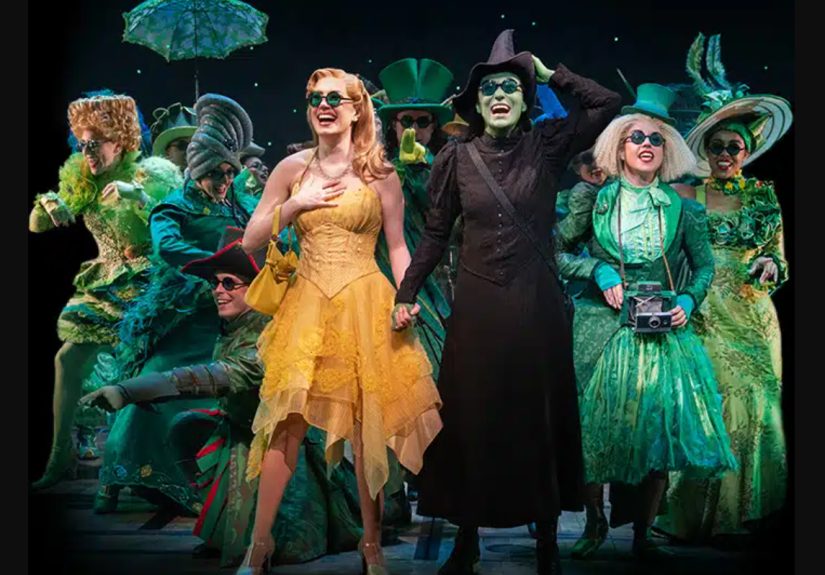
Some big musicals get so distracted by visual excess that the characters become secondary. Wicked avoids that trap. Yes, the production is famously grand. Yes, the costumes are lush, the set is intricate, and the staging has become iconic. But the design works because it supports the emotional story instead of smothering it.
The stage picture matters, but the feelings matter more. A giant theatrical machine is impressive. A giant theatrical machine that still makes people cry over two former roommates? That is Broadway sorcery.
It rewards both first-timers and repeat viewers
A newcomer can enjoy Wicked as an exciting, funny, emotionally charged fantasy musical. A repeat viewer starts noticing the layers: foreshadowing in the lyrics, mirrored character choices, shifts in power, and the careful way the show handles public myth versus private truth. That rewatch value is part of why it has remained a cultural force for so long.
Common Misconceptions About Wicked the Musical
Misconception 1: It is just a villain origin story
Not even close. Wicked is a story about how villains are made, named, marketed, and misunderstood. It is equally concerned with systems, friendship, and moral compromise. If you call it only an origin story, you are reducing a layered musical to a spooky résumé.
Misconception 2: It is only for fans of The Wizard of Oz
Knowing the original Oz story helps, but it is not required. The emotional stakes are clear even if your knowledge of Oz is limited to ruby slippers and one very anxious lion. Wicked stands on its own because its character dynamics are strong enough to pull in audiences who are not fantasy superfans.
Misconception 3: Glinda and Elphaba are opposites, full stop
They begin as opposites, but that is only the surface. The deeper truth is that each woman carries something the other lacks. Elphaba has moral clarity. Glinda understands influence and social navigation. Their relationship matters because they challenge and transform each other. That mutual transformation is the emotional foundation of the show.
Misconception 4: The musical is famous only because it is popular
That sounds silly, but it is a real misunderstanding. Wicked is popular because it gives audiences spectacle and substance at the same time. It delivers humor, heartbreak, big vocals, and political undertones without losing momentum. Plenty of shows are flashy. Far fewer become long-term emotional landmarks for audiences.
So, How Well Do You Know Wicked?
Here is a simple self-check. If you know the basic premise, the two lead characters, and the big songs, you are at the “casually enchanted” level. If you understand the political themes, the emotional complexity of Glinda, and why “For Good” matters as much as “Defying Gravity,” you are firmly in “Oz scholar with taste” territory. If you can discuss the show’s use of propaganda, image management, moral ambiguity, and friendship as narrative structure, congratulations: your broomstick has been upgraded.
The truth is that Wicked the Musical keeps rewarding curiosity. The more closely you look, the more it reveals. That is why fans return to it. Not just because the songs are great, though they absolutely are. Not just because the production is huge, though it absolutely is. They return because the show understands something essential: people are rarely what the world calls them, and love changes us even when the ending hurts.
Experiences Fans Often Associate with Wicked the Musical
One reason people keep searching for terms like “How Well Do You Know Wicked the Musical?” is that the show tends to become personal. It is not just something audiences watch. It is something they remember through very specific experiences. For many fans, the first memory is pure anticipation: walking into the theater, seeing the giant dragon above the stage, flipping through the Playbill, and hearing the crowd buzz with the kind of excitement that says everybody already knows they are about to have a moment.
Then comes that first emotional jolt. Maybe it is the opening number. Maybe it is Elphaba’s first big vocal climb. Maybe it is Glinda floating in with enough confidence to power a small city. Whatever the trigger, people often talk about Wicked as the show that turned them from “someone who likes musicals” into “someone who now has opinions about Act I finales.” It is a gateway musical in the best sense. It is accessible, thrilling, and emotionally direct, but it still leaves enough room for deeper interpretation later.
Another experience fans mention again and again is seeing themselves in one of the central friendships. Some people relate to Elphaba’s outsider status, her refusal to make herself easier for others to accept, and the exhaustion of being judged before she speaks. Others connect with Glinda’s need to be liked, her polished self-presentation, and the gradual realization that charm cannot fix everything. For a lot of viewers, the show hits hardest when they recognize pieces of both women in themselves. That is when Wicked stops being a fantasy and starts feeling uncomfortably real.
There is also the shared experience of hearing the audience react in real time. A laugh rolling through the house during “Popular.” The silence before a major emotional beat. The applause explosion after “Defying Gravity.” Musical theater fans love to talk about community, and Wicked gives them a perfect example of it. Even if you arrive alone, you do not stay emotionally alone for long. The audience becomes part of the memory.
For longtime fans, the experience often stretches beyond the theater itself. There are road trips to touring productions, cast album obsessions, school choir memories, and friend groups built on exchanging favorite line deliveries. Some remember seeing it as teenagers and returning as adults with a completely different emotional reaction. Some first loved the spectacle, then later noticed the politics. Some came for the songs and left thinking about friendship. Others came back years later and suddenly found “For Good” devastating in a way it had not been before. That is one of the show’s sneakiest strengths: it grows with its audience.
And then there is the unmistakable post-show experience. You step outside, your brain is still half in Oz, and somebody nearby is trying to sing a high note they absolutely cannot hit. That, too, is part of the tradition. Wicked has a way of following people home. It lingers in conversations, playlists, costume ideas, karaoke decisions, and late-night debates over who made the harder choice. A truly memorable musical does not end at the curtain. It keeps echoing. Wicked has been doing exactly that for years, which is a pretty strong clue that its magic is not fading anytime soon.
Final Thoughts
If you have made it this far, chances are you know Wicked the Musical better than the average audience member already. But the real answer to the question “How well do you know Wicked?” is not measured only by trivia. It is measured by whether you understand why the musical matters. It matters because it takes a familiar myth and turns it into a story about friendship, power, prejudice, and the emotional cost of becoming who you are.
That is why the show has stayed relevant for so long. It is entertaining enough for a first date, layered enough for theater nerds, emotional enough for repeat viewing, and smart enough to reward deeper analysis. Not bad for a musical that starts with people gossiping about a dead witch. Oz has always had magic, but Wicked gave it perspective. And that, very simply, is what makes the show so good.