Table of Contents >> Show >> Hide
- Before You Start: Can Your Mattress Be Rolled?
- What You’ll Need
- Step-by-Step: How to Roll Up a Memory Foam Mattress
- Step 1: Strip, Clean, and Dry
- Step 2: Clear a Workspace (Bigger Than You Think)
- Step 3: Put the Mattress in the Bag
- Step 4: Seal It Like You Mean It
- Step 5: Attach the Vacuum and Start Removing Air
- Step 6: Roll While the Vacuum Is Running
- Step 7: Strap It Securely
- Step 8: Move and Load Carefully
- Step 9: Unroll, Unbag, and Let It Recover
- How Long Can a Memory Foam Mattress Stay Rolled or Vacuum-Sealed?
- Common Mistakes (and How to Avoid Them)
- Quick Scenarios: What to Do in Real Life
- FAQ
- Real-World Experiences: What People Learn the Hard Way (So You Don’t Have To)
- Conclusion
A memory foam mattress is basically a giant, floppy brownie: deliciously squishy, oddly heavy, and absolutely determined to take up your entire life when you try to move it.
The good news? You can roll up many memory foam mattresses for short-term transportespecially if you use a compression/vacuum bag and straps.
The not-so-fun news? Not every mattress (or warranty) is a fan of DIY burrito-making.
This guide walks you through a safe, realistic method to roll up a memory foam mattress at homeplus when you should not roll it, what supplies actually matter,
and the mistakes that turn a “quick move” into “why is my mattress shaped like a taco now?”
Before You Start: Can Your Mattress Be Rolled?
“Memory foam” covers a lot of territory: all-foam beds, foam hybrids, foam layers glued together, and specialty foams with cooling or gel components.
Some brands allow gentle folding for moving, while others recommend keeping the mattress flat whenever possible.
Your safest move is always to check the manufacturer’s care guidance firstbecause “I read it online” is rarely accepted as a warranty document.
Generally OK to Roll (Short-Term)
- All-foam mattresses (memory foam, many latex/foam blends) that are flexible and don’t contain metal coils.
- Foam toppers and thinner foam pads (these are the easiest “roll candidates”).
- Temporary transport where the mattress will be unrolled soon after arrival.
Usually Not Worth Rolling
- Innerspring or hybrid mattresses with coils (rolling can stress or damage the internal structure).
- Very thick, very dense foam mattresses that fight back like an angry marshmallow (some can be folded briefly, but rolling tightly is tough).
- Long-term storage while compressed (extended compression can affect shape and support).
A Reality Check About “Mattress-in-a-Box” Magic
Yes, your mattress arrived rolled like a burrito. No, that doesn’t mean you can easily recreate factory compression.
Manufacturers use heavy-duty equipment to compress evenly, roll tightly, and seal fast. At home, you’re aiming for a manageable rollnot a perfect retail cylinder.
The goal is to reduce bulk safely, not to win an origami competition.
What You’ll Need
You can do this with basic moving supplies, but the right gear makes a big difference. Here’s the practical checklist.
Must-Haves
- Mattress compression/vacuum bag (ideally with a valve and a strong seal/zipper).
- A vacuum with strong suction (a shop vac works great if you have one).
- Heavy-duty packing tape or duct tape (for sealing edges or hose openings).
- 2–3 ratchet straps (or strong moving straps) to keep the roll tight and stable.
- At least one helper (unless you enjoy wrestling furniture solo for cardio).
Nice-to-Haves (Highly Recommended)
- Mattress bag with handles (carrying is dramatically easier, especially on stairs).
- Dolly/hand truck (your back will write you a thank-you note).
- Scissors/utility knife (for tape and trimming excess plastic).
- Work gloves (better grip, fewer “why is this plastic slicing my hand?” moments).
Step-by-Step: How to Roll Up a Memory Foam Mattress
Read the whole process once before starting. The key is to work clean, work flat, and remove air as you roll.
If you rush, the mattress will re-inflate mid-roll and you’ll learn new words you didn’t know you knew.
Step 1: Strip, Clean, and Dry
- Remove all bedding, pillows, and protectors.
- Spot-clean any stains (lightly) and let the mattress fully dry.
- Air it out for a bit if it’s been in a humid room.
Moisture is the enemytrapping dampness inside plastic is a fast track to funky smells and potential mildew.
Your mattress should be clean and completely dry before you seal it.
Step 2: Clear a Workspace (Bigger Than You Think)
You’ll need open floor spaceideally, a clean area where the mattress can lie flat.
Clear a path to the exit too. Carrying a mattress blocks your view, and stepping on a toy car at the wrong moment is a very dramatic way to test gravity.
Step 3: Put the Mattress in the Bag
- Slide the mattress into a heavy-duty bag (or compression bag) with your helper.
- If it’s a standard moving bag (not vacuum), push out as much air as you can.
- If it’s a vacuum bag, align the valve area so your vacuum hose can reach it easily.
If you’re using a standard mattress bag (no valve), you can still roll the mattressjust expect a thicker roll.
The vacuum bag is what makes the “quick & easy” part feel true.
Step 4: Seal It Like You Mean It
Seal the open edge fully. If your bag uses adhesive, press firmly along the entire seam.
If it’s a zipper seal, run the zipper all the way closed and double-check the corners.
Any tiny gap will let air back inand memory foam loves air the way popcorn loves heat.
Step 5: Attach the Vacuum and Start Removing Air
- If your bag has a valve, attach the vacuum hose per the bag instructions.
- If it doesn’t, you can carefully create a small opening for the hose and tape tightly around it (airtight is the goal).
- Turn on the vacuum and begin compressing.
You’ll notice the mattress flatten and tighten as air leaves the bag. Keep hands clear of pinch points.
This is also where a helper is priceless: one person manages the hose/seal, the other controls the mattress.
Step 6: Roll While the Vacuum Is Running
This is the secret sauce. Don’t vacuum first and roll laterroll as you vacuum so air doesn’t rush back into the foam.
- Start from the foot or head (either end is fine; choose the direction that makes moving easiest).
- Roll slowly and evenly, keeping the roll tight but not violently forced.
- Pause occasionally to let the vacuum catch up and pull out trapped air pockets.
Avoid sharp creases. You’re making a smooth “sleeping bag roll,” not folding a cardboard box.
The more even your roll, the better the mattress will rebound later.
Step 7: Strap It Securely
Once rolled, keep the vacuum running another moment, then strap the roll in at least two places:
- Strap 1: near one end
- Strap 2: near the other end
- Optional Strap 3: around the center (great for thicker mattresses)
Tighten until securesnug, not “crush the foam into a new life form.” Then seal any hose opening quickly with tape.
Step 8: Move and Load Carefully
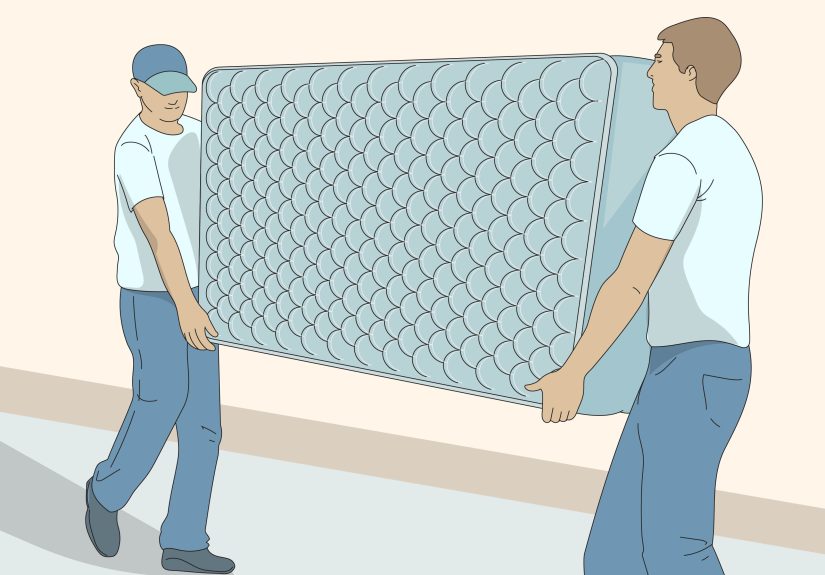
Your rolled mattress is smaller, but it’s still awkward and often heavy. Use handles if your bag has them.
When loading into a vehicle:
- Best: lay it flat if you have space.
- If upright: keep it supported and strapped so it doesn’t slump or bend sharply.
- Avoid: wedging it into a curved shape against other items for long periods.
Step 9: Unroll, Unbag, and Let It Recover
Once you arrive, unstrap and unroll the mattress on a flat surface. Open the bag and let it expand.
Many foam beds regain shape over a few hours, but some may take longer to fully reboundespecially if they were compressed tightly.
If the mattress was in cold weather, let it warm up in the room before expecting it to relax completely.
Patience here prevents tearing foam or stressing seams.
How Long Can a Memory Foam Mattress Stay Rolled or Vacuum-Sealed?
The most honest answer: as short a time as possible.
Compression is a “get it from Point A to Point B” trick, not a lifestyle.
Many storage and care guides warn that extended rolling or vacuum sealing can risk permanent changes in shape, alignment, and supportespecially for foam.
Practical Time Guidelines (Conservative)
- Ideal: unroll within 24–72 hours after moving.
- Usually OK: a few days to a couple of weeks if the roll is gentle and the mattress stays dry.
- Risk increases: beyond several weeks (especially if tightly vacuum-sealed).
- Long-term storage: store the mattress flat, in a protective bag, in a dry, climate-stable space.
If you’re storing it, prioritize dryness, airflow (when possible), and flat support. Don’t stack heavy boxes on top.
If space is tight, a storage unit or area with better temperature/humidity control is usually kinder to foam than a damp garage.
Common Mistakes (and How to Avoid Them)
Mistake 1: Rolling a Mattress That Has Coils
Hybrids and innerspring mattresses aren’t built to be rolled like foam.
If your mattress has metal coils, protect it with a mattress bag and transport it flat/upright (secured), rather than rolling it.
Mistake 2: Storing Foam on Its Side for Too Long
Foam is flexiblewhich is great until it sits bent for weeks and decides that’s its new personality.
For storage, flat is the safest position.
Mistake 3: Sealing in Moisture
Plastic bags are excellent at keeping out dirt. They are also excellent at trapping moisture.
Make sure the mattress is dry before sealing, and avoid storing it in high-humidity spaces without climate control.
Mistake 4: Making a Sharp Fold Instead of a Gentle Roll
A tight crease can stress foam layers and adhesives. Rolling distributes pressure more evenly than a hard fold.
If you must fold briefly for a tight doorway or stairwell, keep it gentle and don’t leave it folded longer than necessary.
Mistake 5: “One Strap Is Fine” (Narrator: It Was Not Fine)
One strap lets the roll bulge and shift. Two straps are the minimum; three is better for thicker beds.
Also: explain ratchet straps to your helper before tighteningbecause the soundtrack of moving day should not include panic clicking.
Quick Scenarios: What to Do in Real Life
Moving Across Town
If you have a truck or large SUV, you may not need to roll at all. Bag it, keep it clean, and secure it.
Roll only if space is tight or stairs are brutal.
Moving in a Small Car
Rolling + vacuum compression can be the difference between “it fits” and “I guess I live here now.”
Aim for the tightest roll you can achieve without forcing sharp bends.
Strap securely and keep the roll protected from punctures.
Storing Between Leases
For storage longer than a couple weeks, skip tight rolling. Use a protective mattress bag and store flat on a clean, slightly raised surface when possible.
Check periodically for moisture issuesbecause mold is the worst roommate.
FAQ
Can I fold a memory foam mattress instead of rolling it?
Sometimes, brieflymany foam mattresses tolerate gentle folding for moving.
But rolling usually distributes pressure more evenly than a hard fold, and sharp creases are best avoided.
When in doubt, follow the manufacturer’s care instructions for your specific mattress.
Do I need a special “mattress compression bag”?
If you want a genuinely smaller bundle, yes. A standard mattress bag protects from dirt and moisture but won’t compress much.
A vacuum/compression bag removes air so the mattress can be rolled tighter and held in place more easily.
Will rolling damage my mattress?
It canespecially if you roll a mattress with coils, create sharp folds, compress for too long, or trap moisture.
For many all-foam mattresses, a careful, short-term roll is commonly used for moving, but it’s still smart to keep compression time minimal.
How do I help the mattress regain shape faster after unrolling?
Let it expand on a flat foundation in a comfortably warm room. Foam becomes more pliable with warmth, and time is the real hero here.
If it was in the cold, don’t force itlet it warm up and relax naturally.
Real-World Experiences: What People Learn the Hard Way (So You Don’t Have To)
If you ask a bunch of renters, college students, and DIY movers about rolling a memory foam mattress, you’ll hear the same theme: the first time feels like a sitcom episode.
The second time feels like a plan. The third time feels like you could run a moving companyuntil you remember you still can’t find your tape gun.
One of the biggest “aha” moments people report is that bag choice matters more than expected. A thin, basic plastic bag is fine for keeping dust off,
but it’s not designed for serious compression. During real moves, bags tear when dragged around corners, scraped against door frames, or caught on a stair edge.
Movers often say the upgrade to a thicker bagor a bag with a real zipper seal and handlespays for itself the first time you don’t have to rewrap the mattress halfway to the truck.
Another common lesson: normal household vacuums can struggle. They can remove some air, but thick foam takes patience, and the seal has to be solid.
People who succeed most often describe the process as teamwork: one person babysits the vacuum connection (and patches tiny leaks with tape),
while the other slowly rolls and keeps pressure even. When someone tries to do both jobs at once, the mattress tends to “re-inflate” like it’s taking a dramatic breath,
and the roll gets lumpyharder to strap, harder to carry, and harder to fit in a vehicle.
A surprisingly frequent “oops” is rolling too aggressively. The instinct is to crank down straps and force the tightest cylinder possible.
But several DIY movers say the best roll came from going slower, letting the vacuum pull air out as they rolled, and tightening straps gradually.
That approach reduces sharp creases and makes the roll more uniformso it doesn’t bulge in the middle like an overstuffed burrito.
Many people also mention the temperature factor. Foam mattresses moved in winter can feel stiff, and trying to unfold them immediately can be frustrating.
A practical takeaway: once the mattress is in the new place, let it sit and warm up before judging it. People who give it a few hours often report it returns close to normal on its own.
Folks moving in humid climates emphasize the opposite: make sure the mattress is dry before sealing it, and avoid storing it in a hot, damp garage.
Several “my mattress smells weird now” stories begin with “we bagged it right after cleaning” or “it sat in plastic in the heat.”
Finally, real-world movers repeatedly say the most underrated tool is… a clear path. Not an expensive gadget. Not a magic strap.
Just moving shoes, toys, and boxes out of the hallway so you’re not doing obstacle-course gymnastics while holding a mattress roll.
When the path is clear, the move feels easier, safer, and fastermeaning the mattress spends less time compressed, and you spend less time negotiating with gravity.
Conclusion
Rolling up a memory foam mattress is absolutely doable when you treat it like a short-term moving trick: keep it clean, keep it dry, remove air as you roll,
and unroll it as soon as you reasonably can. Use the right bag, strap it securely, and don’t force sharp foldsyour mattress should arrive ready to sleep on,
not ready to audition as modern art.