Table of Contents >> Show >> Hide
- Why a DIY Turtle Costume Is Such a Smart Choice
- Materials You Can Use
- Method 1: The Easy No-Sew Turtle Costume
- Method 2: Make the Shell Look More Realistic
- Method 3: Baby and Toddler Turtle Costume
- How to Customize Your Turtle Costume
- Comfort and Safety Tips
- Common Mistakes to Avoid
- Real-Life Turtle Costume Experiences and Lessons
- Conclusion
- SEO Tags
If you need a Halloween costume that is cute, funny, easy to customize, and surprisingly forgiving when your crafting skills are somewhere between “competent” and “held together by hot glue,” a turtle costume is a fantastic choice. It works for toddlers, kids, teens, and adults. It can be adorable, goofy, cartoonish, realistic, or just one giant green excuse to wear comfy clothes in public. Honestly, that last option deserves more respect.
The beauty of a DIY turtle costume is that the idea is simple: green clothes, a shell, and a few small details that sell the look. You do not need a professional sewing machine, a theater degree, or a mysterious aunt who “does costumes.” You just need a plan, a few affordable materials, and enough patience to not glue your fingers to a roasting pan. Again.
In this guide, you will learn how to make a turtle costume step by step, how to build a turtle shell costume that is lightweight and wearable, and how to upgrade it so it looks better than something thrown together five minutes before trick-or-treating. We will also cover comfort, safety, and real-world lessons from actually making turtle costumes for parties, school events, parades, and Halloween nights that tend to begin with excitement and end with someone asking for snacks.
Why a DIY Turtle Costume Is Such a Smart Choice
A homemade turtle costume checks a lot of boxes. First, it is instantly recognizable. People see green clothes and a shell, and boom, you are a turtle. No long explanation required. Second, it is flexible. You can make a classic animal turtle, a sea turtle, a baby turtle, a storybook turtle, or a pop-culture-inspired version. Third, it is comfortable. Unlike costumes with giant wings, stiff helmets, or dramatic capes that try to sweep the floor like they are auditioning for Shakespeare, a turtle costume can be soft, warm, and practical.
It is also a great budget project. Many turtle costume ideas start with clothes you already own: a green hoodie, green leggings, a sweatshirt, or pajamas. The shell can be made from cardboard, felt, foam, or even an aluminum roasting pan. In other words, this is not one of those “easy DIY costumes” that somehow still requires forty-seven specialty supplies and the confidence of a Broadway costume shop.
Materials You Can Use
Before you start, choose your version. Do you want a fast no-sew turtle costume, or something fuller and more polished? Here are the most useful materials for both.
Basic Clothing
- Green sweatshirt, hoodie, long-sleeve shirt, or footie pajamas
- Green leggings, joggers, tights, or pants
- Optional green gloves or socks
Shell Materials
- Large piece of cardboard
- Craft foam or EVA foam
- Felt sheets in green, brown, and tan
- Aluminum roasting pan for a rounded shell
- Batting, stuffing, or extra fabric for a puffier shell
Fasteners and Tools
- Hot glue gun or fabric glue
- Scissors
- Duct tape
- Ribbon, rope, elastic, or webbing for straps
- Double-sided fabric tape or Velcro
- Black marker or fabric paint
Optional Accessories
- Face paint instead of a full mask
- Headband with simple turtle eyes
- Brown or tan felt for a belly panel
- Reflective tape for visibility
Method 1: The Easy No-Sew Turtle Costume
This is the best choice if you want a DIY turtle costume that looks good, feels light, and does not require sewing. It is also great for school events and younger kids because it is easier to put on and take off.
Step 1: Start With an All-Green Base
Dress the person in green from shoulders to ankles. A hoodie and sweatpants work beautifully, but pajamas are even better if comfort is your top priority. If the weather is cold, use warmer layers underneath. If the costume is for a toddler, soft green clothes are the MVP. Toddlers are not known for suffering for fashion. They are known for immediate feedback.
Step 2: Make the Turtle Belly
Cut an oval or rounded rectangle from tan or light brown felt. This becomes the belly plate on the front of the costume. Use a black marker or fabric paint to draw lines that divide it into sections. Keep it simple: one vertical line down the center and two or three horizontal lines across it is usually enough. Attach it to the shirt with fabric tape, Velcro, or a few safety stitches if you sew.
This small detail does a lot of work. Without it, you are wearing green. With it, you are suddenly a turtle. Costume magic is weirdly fragile like that.
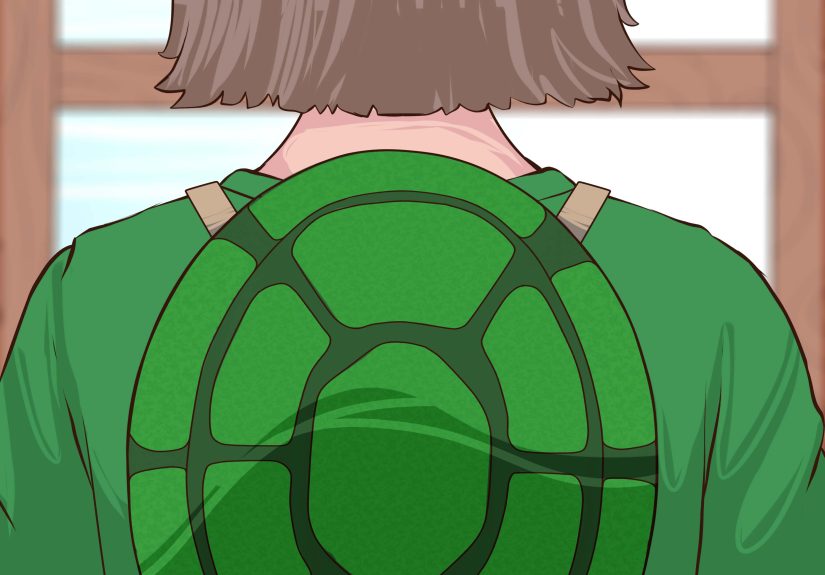
Step 3: Build a Basic Shell
Now for the star of the show: the shell. Cut a large oval from cardboard, foam board, or craft foam. It should cover most of the back without sticking out so far that the wearer knocks over furniture like a slow-moving, adorable bulldozer. If you want a more rounded shell, use an aluminum roasting pan instead. It already has a curved shape, which saves time and makes the costume look more dimensional.
Cover the shell base with green or brown felt. Then add shell segments, also called scutes, using lighter felt cut into rounded hexagon or oval shapes. Do not stress over zoological perfection. You are making a costume, not applying for marine biology tenure. The goal is “turtle-like,” not “museum exhibit.”
Step 4: Add Shoulder Straps
Attach two straps to the inside of the shell so it can be worn like a backpack. Ribbon, rope, elastic, or webbing all work. Measure carefully so the shell sits comfortably on the upper back and does not droop like it has had a long week. If the shell shifts too much, add a small chest tie or cross strap to hold it in place.
For a cardboard shell, punch holes and thread the straps through. For a pan or foam shell, use strong tape, glue, or both. This is not the section where you want to be emotionally optimistic and structurally careless.
Method 2: Make the Shell Look More Realistic
If you want your homemade turtle costume to look fuller and more polished, you can upgrade the shell with shape and texture.
Add Padding
Glue a thin layer of batting or stuffing under the outer fabric so the shell looks rounded instead of flat. This works especially well with felt-covered cardboard or foam. The result is softer, more cartoon-friendly, and much more photogenic.
Outline the Sections
Use a darker marker, puffy paint, or strips of darker felt to outline the shell pattern. This adds contrast and helps the shape read better from a distance. In photos, bold outlines usually look better than subtle ones. Halloween lighting is not known for being kind.
Shape the Edges
Instead of a plain oval, trim the shell so it has gentle bumps or sections along the edge. Even a little shaping makes the shell look more intentional. Think “crafted turtle shell” instead of “random school project rescued from the garage.”
Method 3: Baby and Toddler Turtle Costume
A turtle costume for babies and toddlers should be extra soft, light, and flexible. Skip anything hard, poky, or oversized. A felt shell attached to a onesie, sweatshirt, or tiny backpack works best. Keep the shell smaller than you think you need so your little turtle can sit, wiggle, and attempt escape with dignity.
For the cutest effect, add a simple felt hood detail or a soft cap in green. You can also make a tiny tail from felt and attach it to the back. It is unnecessary, but deeply charming, which is sometimes enough of a reason.
How to Customize Your Turtle Costume
Go Classic Animal Turtle
Use earthy greens and browns, keep the shell natural-looking, and add subtle face paint around the eyes. This version is ideal if you want a general turtle costume instead of a cartoon character look.
Make a Sea Turtle Costume
Use brighter greens, blue-green felt, and a shell pattern inspired by sea turtle markings. You can even add flipper-style sleeves or mitten-like hand pieces from felt.
Create a Ninja-Inspired Turtle Look
If your household loves cartoon nostalgia, add a colored headband, wrist bands, elbow bands, and knee accents. Keep it playful and simple. You do not need a huge foam muscle suit unless your life goal is to look like a turtle that never skips chest day.
Comfort and Safety Tips
A turtle shell costume should be fun to wear, not a portable engineering problem. Here are the rules that matter most.
- Keep the shell lightweight so it does not pull backward or irritate the shoulders.
- Make sure the costume is the right length to prevent trips and falls.
- Avoid huge, baggy, flowing pieces that can catch on things or get too close to open flames.
- Use reflective tape if the costume will be worn outdoors at night.
- Choose face paint or minimal eye-area accessories instead of a full mask if visibility is important.
- Test the costume before the event. Walking around the living room is much cheaper than discovering problems on the sidewalk.
If you are making the costume for Halloween, do one full dress rehearsal. Have the wearer sit down, stand up, climb steps, and turn around. If the shell flips, slides, pinches, or threatens to become a satellite dish, fix it before the main event.
Common Mistakes to Avoid
Making the Shell Too Big
A dramatic shell sounds fun until it wedges into every doorway. Stay proportional.
Using Weak Straps
If the straps are flimsy, the shell droops and the whole costume looks tired. Reinforce them early.
Ignoring the Front of the Costume
A shell alone is not always enough. The belly panel is a small detail that makes a huge difference.
Overcomplicating the Design
You do not need ten materials when four will do. A clear, clean design almost always wins.
Real-Life Turtle Costume Experiences and Lessons
One of the funniest things about making a turtle costume is that it always seems easier in your head. In your imagination, you casually cut some felt, attach a shell, and suddenly produce a charming woodland masterpiece. In real life, the first draft sometimes looks less like a turtle and more like a confused picnic basket. That is normal. Turtle costumes usually come together in stages, and the magic often shows up right at the end when all the parts are finally on the body instead of spread across the dining table like a craft-store explosion.
Families who make turtle costumes often learn the same lesson quickly: comfort matters just as much as appearance. A shell that looks amazing for photos but keeps sliding sideways will become annoying in about six minutes. A child who cannot sit down comfortably in the costume will absolutely let you know, probably with the urgency of a tiny union representative. That is why the best turtle costumes are rarely the fanciest ones. They are the ones that stay put, feel light, and let the wearer move around like a regular human who just happens to resemble a reptile.
Another common experience is discovering that simple materials often outperform expensive ones. Cardboard, felt, ribbon, and duct tape can work shockingly well when the shape is clean and the straps are measured properly. People sometimes assume a costume needs professional foam sculpting or specialty supplies to look polished, but that is not true. What usually makes a homemade turtle costume look good is contrast, proportion, and fit. A shell with clearly defined segments, a neat belly panel, and matching green clothes tends to look better than a more expensive version that is oversized or messy.
There is also a strong chance that the costume evolves while you make it. Maybe you planned a realistic turtle and ended up with a cuter cartoon version because the shell pattern looked better that way. Maybe the original mask felt awkward, so you switched to face paint. Maybe you started with plain sweatpants and then added knee accents because the outfit looked a little too “casual errand day.” That flexibility is part of the fun. A turtle costume is forgiving. It does not demand precision. It rewards creativity.
People also remember how much kids love the shell itself. Even after Halloween, the shell often survives as dress-up gear, living-room armor, or a random accessory during ordinary Tuesday playtime. That makes this costume feel worth the effort. It is not just a one-night outfit. It can become a favorite pretend-play piece long after the candy has disappeared and the pumpkin has emotionally moved on.
And maybe the best experience of all is this: turtle costumes make people smile. They are funny without being embarrassing, cute without trying too hard, and nostalgic without requiring everyone to understand a super specific reference. When someone sees a turtle costume, the reaction is almost always immediate: “Oh wow, that is adorable.” In costume terms, that is a major win. Very few craft projects deliver that much payoff with this little drama. Unless, of course, you count the hot glue incident. We do not count the hot glue incident.
Conclusion
If you want a costume that is affordable, comfortable, customizable, and charmingly ridiculous in the best possible way, making a turtle costume is a great choice. Start with green clothing, add a simple felt belly, create a lightweight shell, and focus on fit more than fuss. Whether you go with cardboard, foam, felt, or a roasting pan, the trick is keeping the costume easy to wear and easy to recognize.
A great DIY turtle costume does not need to be complicated. It just needs a shell with personality, a little color contrast, and enough comfort that the wearer can enjoy the event instead of negotiating with the costume all night. That is the sweet spot. Or should we say the shell spot.