Table of Contents >> Show >> Hide
- Why a Mushroom Omelette Is Worth Mastering
- Ingredients for One Mushroom Omelette
- Kitchen Tools You Need
- How to Make a Mushroom Omelette: 15 Steps
- Step 1: Choose fresh mushrooms
- Step 2: Clean the mushrooms gently
- Step 3: Slice the mushrooms evenly
- Step 4: Prepare all fillings before cooking the eggs
- Step 5: Sauté the mushrooms
- Step 6: Season the mushroom filling
- Step 7: Beat the eggs
- Step 8: Heat the pan correctly
- Step 9: Pour in the eggs
- Step 10: Move the eggs gently
- Step 11: Add the mushroom filling
- Step 12: Add cheese and herbs
- Step 13: Fold the omelette
- Step 14: Finish gently
- Step 15: Slide onto a plate and serve
- Best Mushrooms for an Omelette
- Flavor Variations
- Common Mushroom Omelette Mistakes
- Serving Ideas
- Storage and Reheating Tips
- Kitchen Experience: What Making Mushroom Omelettes Teaches You
- Conclusion
A mushroom omelette is one of those dishes that looks fancy enough for brunch but is secretly friendly enough for a sleepy Tuesday morning. It is soft, savory, earthy, buttery, and ready before your coffee has finished judging your life choices. Better yet, learning how to make a mushroom omelette gives you a kitchen skill you can use again and again: the art of cooking eggs gently, managing a filling, and folding everything into a neat little breakfast package.
This guide walks you through a classic mushroom omelette in 15 simple steps. You will learn how to choose mushrooms, clean them properly, sauté them until flavorful instead of watery, whisk the eggs, control the heat, fold the omelette, and serve it like someone who owns a clean apron on purpose. Whether you prefer button mushrooms, cremini, shiitake, oyster mushrooms, or a mixed mushroom blend, the method stays simple: cook the filling first, treat the eggs gently, and do not panic when the omelette looks almost done. That is usually when it is exactly where it needs to be.
Why a Mushroom Omelette Is Worth Mastering
A great mushroom omelette is fast, flexible, and deeply satisfying. Eggs bring protein and richness, while mushrooms add a meaty texture and an umami flavor that makes the dish taste more substantial than its short ingredient list suggests. You can keep it simple with salt, pepper, and butter, or dress it up with herbs, cheese, spinach, scallions, garlic, or a spoonful of sautéed onions.
The biggest secret is timing. Omelettes cook quickly, so the filling must be ready before the eggs hit the pan. Raw mushrooms release water as they cook, and if you add them directly to the eggs, they can make the omelette soggy. Sautéing mushrooms first concentrates their flavor and keeps the eggs tender rather than wet. Think of it as giving the mushrooms a quick spa day before they move into their egg blanket.
Ingredients for One Mushroom Omelette
- 2 to 3 large eggs
- 1 cup sliced mushrooms, such as cremini, button, shiitake, or oyster mushrooms
- 1 tablespoon butter, divided
- 1 teaspoon olive oil, optional
- 1 small garlic clove, minced, optional
- 1 tablespoon milk, cream, or water, optional
- 2 tablespoons shredded cheese, such as Swiss, Gruyère, cheddar, or mozzarella, optional
- 1 teaspoon chopped parsley, chives, or thyme
- Kosher salt and freshly ground black pepper
Kitchen Tools You Need
You do not need a professional kitchen to make a good mushroom omelette. A small nonstick skillet, usually 8 inches for a 2- or 3-egg omelette, is the most beginner-friendly choice. You will also need a mixing bowl, fork or whisk, silicone spatula, cutting board, knife, and a plate. A flexible spatula is especially useful because it helps lift the egg without tearing it. If your pan has scratches deep enough to hold a grudge, use another pan.
How to Make a Mushroom Omelette: 15 Steps
Step 1: Choose fresh mushrooms
Pick mushrooms that look firm, dry, and plump. Avoid mushrooms that are slimy, shriveled, or smell sour. Button mushrooms are mild and affordable, cremini mushrooms are deeper and earthier, shiitakes are rich and savory, and oyster mushrooms bring a delicate texture. A mixed mushroom omelette tastes especially good because each variety brings a slightly different flavor.
Step 2: Clean the mushrooms gently
Brush away dirt with your fingers, a soft brush, or a damp paper towel. If the mushrooms are noticeably dirty, give them a quick rinse under cool running water and pat them dry right away. Do not soak them. Mushrooms act a little like tiny sponges, and extra water makes browning harder. Dry mushrooms brown better, and browned mushrooms taste like breakfast got a promotion.
Step 3: Slice the mushrooms evenly
Slice mushrooms about 1/8 to 1/4 inch thick. Thin slices cook quickly and fit neatly inside the omelette. If using shiitakes, remove tough stems before slicing. If using large portobello mushrooms, scrape out the gills only if you prefer a cleaner look and milder flavor. Small pieces are easier to fold into eggs without causing dramatic omelette collapse.
Step 4: Prepare all fillings before cooking the eggs
Omelettes move fast. Once the eggs are in the pan, you will not have time to chop herbs, grate cheese, answer emails, or debate whether brunch is a personality. Set out your mushrooms, cheese, herbs, salt, pepper, and plate before you begin. If you want spinach, scallions, or onions, cook or soften them with the mushrooms first.
Step 5: Sauté the mushrooms
Place a nonstick skillet over medium heat. Add 1 teaspoon olive oil or a small piece of butter. Add sliced mushrooms in a single layer if possible. Cook for 4 to 6 minutes, stirring occasionally, until they release moisture and then begin to brown. Add a small pinch of salt near the middle or end of cooking. If using garlic, stir it in during the final 30 seconds so it smells wonderful but does not burn.
Step 6: Season the mushroom filling
Once the mushrooms are browned, season with black pepper and a pinch of thyme, parsley, or chives. Taste one slice if you can do so safely without burning your tongue in the name of breakfast science. The filling should taste good on its own. Transfer it to a small bowl or plate and keep it warm.
Step 7: Beat the eggs
Crack 2 to 3 large eggs into a bowl. Add a pinch of salt and pepper. Whisk with a fork until the yolks and whites are fully combined and no long streaks of egg white remain. For a softer omelette, you may add 1 tablespoon of water, milk, or cream. Water makes the eggs lighter; milk or cream adds richness. Do not whip the eggs into foam unless you are intentionally making a fluffier, soufflé-style omelette.
Step 8: Heat the pan correctly
Wipe out the skillet if mushroom bits remain, then place it over medium-low to medium heat. Add the remaining butter and swirl it around the pan. The butter should melt and foam gently, not brown aggressively. If it hisses like it is auditioning for an action movie, the pan is too hot. Lower the heat before adding the eggs.
Step 9: Pour in the eggs
Pour the beaten eggs into the skillet. Tilt the pan so the eggs spread evenly. Let them sit for a few seconds until the edges begin to set. This is where patience matters. Too much heat can brown the bottom before the top has a chance to cook, leaving you with a tough omelette instead of a tender one.
Step 10: Move the eggs gently
Using a silicone spatula, gently pull the cooked edges toward the center while tilting the pan so uncooked egg flows into the open space. Repeat this around the pan. This creates soft layers and helps the omelette cook evenly. Stop stirring while the top is still slightly glossy but mostly set. The remaining heat will continue cooking the eggs.
Step 11: Add the mushroom filling
Spoon the warm mushrooms over one half of the omelette. Keep the filling modest, about 1/3 to 1/2 cup for a 2-egg omelette. Overstuffing is tempting, but it can tear the eggs and turn your elegant breakfast into mushroom scrambled eggs with ambition. Still tasty, just less photogenic.
Step 12: Add cheese and herbs
If using cheese, sprinkle it over the mushrooms. Swiss and Gruyère are classic choices because they melt smoothly and pair beautifully with mushrooms. Cheddar gives a sharper, more familiar flavor. Fresh herbs brighten the omelette and keep it from tasting too heavy. A small amount is enough; herbs should support the mushrooms, not shout over them.
Step 13: Fold the omelette
Slide the spatula under the empty side of the omelette and fold it over the mushroom filling. If the omelette resists, let it cook for another few seconds. If it tears slightly, do not panic. Fold it anyway, call it rustic, and proceed with confidence. Many excellent breakfasts have survived imperfect folding.
Step 14: Finish gently
Let the folded omelette sit in the pan for 15 to 30 seconds, just long enough for the cheese to soften and the inside to warm through. For food safety, eggs should be cooked until the whites and yolks are firm, and egg dishes should be cooked thoroughly. If serving children, older adults, pregnant people, or anyone with a weakened immune system, avoid runny eggs and use extra care with safe handling.
Step 15: Slide onto a plate and serve
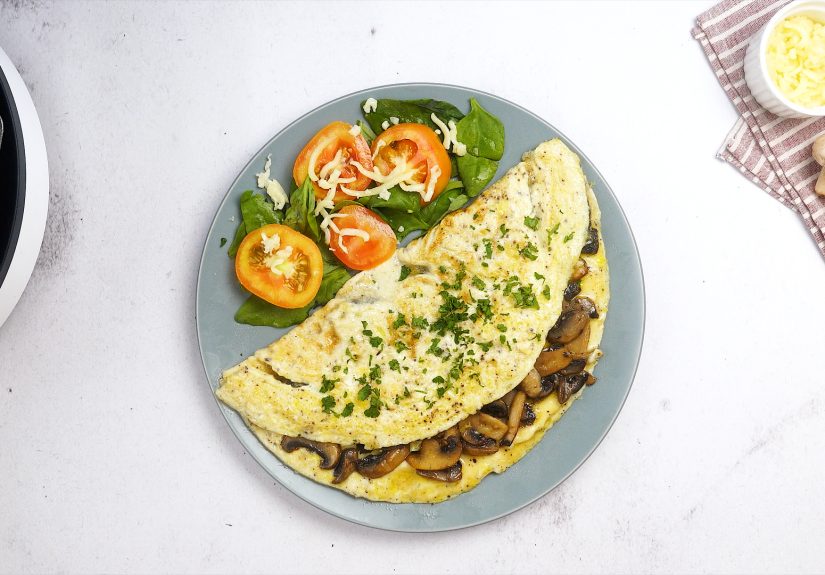
Tilt the pan and slide the omelette onto a warm plate. Garnish with more herbs, a crack of pepper, or a tiny pat of butter if you want a glossy finish. Serve immediately with toast, fruit, roasted potatoes, a simple salad, or sliced tomatoes. Omelettes wait for no one, and honestly, they should not have to.
Best Mushrooms for an Omelette
The best mushrooms for an omelette depend on the flavor you want. White button mushrooms are mild and budget-friendly. Cremini mushrooms, sometimes called baby bellas, have a deeper flavor and a firmer texture. Shiitake mushrooms taste rich and savory, but their stems are usually too tough for a delicate omelette. Oyster mushrooms are tender and slightly sweet. Portobello mushrooms work well when chopped small, though they can darken the eggs if added in large pieces.
For the best result, mix two varieties. Cremini and shiitake make a hearty omelette. Button mushrooms and oyster mushrooms keep things lighter. If you are new to mushroom omelettes, start with cremini. They are easy to find, flavorful, and forgiving.
Flavor Variations
Mushroom and Swiss Omelette
Add 2 tablespoons shredded Swiss cheese with the sautéed mushrooms. Finish with chives. This version is creamy, nutty, and classic.
Mushroom Spinach Omelette
Add a handful of spinach to the mushrooms during the final minute of sautéing. Cook until wilted, then use the mixture as your filling. This is a great way to sneak greens into breakfast without feeling like you are eating lawn clippings.
Garlic Herb Mushroom Omelette
Add minced garlic, thyme, and parsley to the mushrooms. Use a light cheese such as mozzarella or skip the cheese entirely. The herbs make the omelette fresh and aromatic.
Mushroom Onion Omelette
Cook thinly sliced onions before adding mushrooms. Let them soften and lightly caramelize. This version is sweeter, deeper, and excellent with cheddar.
Common Mushroom Omelette Mistakes
The first mistake is adding raw mushrooms directly to the eggs. Mushrooms release moisture, and that moisture can make the omelette watery. The second mistake is using heat that is too high. Eggs prefer gentle cooking. High heat toughens them and browns the bottom too quickly. The third mistake is overfilling. A mushroom omelette should be generous, not structurally impossible.
Another common issue is under-seasoning. Eggs need salt, and mushrooms need seasoning too. Season both parts lightly instead of dumping all the salt in at the end. Finally, do not walk away from the pan. Omelettes cook in minutes, which is wonderful unless you are distracted. Stay close, spatula ready, breakfast destiny in hand.
Serving Ideas
A mushroom omelette can be breakfast, brunch, lunch, or a quick dinner. For breakfast, serve it with buttered toast and berries. For brunch, add roasted potatoes, mixed greens, and fresh orange juice. For dinner, pair it with a simple salad dressed with lemon and olive oil. If you want extra protein, add turkey bacon, smoked salmon, or a side of Greek yogurt. If you want comfort, add crispy hash browns and accept applause from your future self.
Storage and Reheating Tips
A mushroom omelette tastes best right after cooking, but leftovers can be stored in an airtight container in the refrigerator for up to 2 days. Reheat gently in a covered skillet over low heat or in the microwave at reduced power. Avoid blasting it with high heat, which can make the eggs rubbery. If you plan to meal prep, consider cooking the mushroom filling ahead of time and making the eggs fresh when you are ready to eat.
Kitchen Experience: What Making Mushroom Omelettes Teaches You
Making a mushroom omelette is one of the fastest ways to understand how small cooking choices create big results. The first time many home cooks try it, they focus on the fold. They imagine the perfect half-moon shape sliding onto the plate like it just graduated from culinary school. But the real magic happens earlier: when the mushrooms hit the pan, when the butter melts without burning, when the eggs are whisked enough but not beaten into bubbles, and when the heat stays calm.
One useful experience is learning to listen to the pan. Mushrooms should sizzle, but they should not scream. If they sit quietly and release liquid without browning, the pan may be crowded or too cool. If they darken too fast, the heat is too high. After a few tries, you begin to recognize the sweet spot: steady sizzling, gentle browning, and a smell that makes people wander into the kitchen pretending they were “just passing by.”
Another lesson is restraint. A mushroom omelette is not a suitcase. You cannot pack it with every ingredient in the refrigerator and expect it to close politely. Too many mushrooms, too much cheese, or too many vegetables can weigh down the eggs. A better approach is to choose two or three supporting flavors. Mushrooms, Swiss, and chives. Mushrooms, spinach, and garlic. Mushrooms, onions, and cheddar. Simple combinations taste cleaner and fold more easily.
Heat control may be the most valuable skill. Eggs are delicate, and they reward patience. Medium-low heat gives you time to move the eggs, shape the omelette, and add the filling before the bottom turns leathery. Beginners often worry that the omelette is not cooking fast enough, so they raise the heat. That is when the bottom browns, the top stays wet, and breakfast becomes a negotiation. Trust the gentle heat. It works.
You also learn that imperfect omelettes are still delicious. A small tear does not ruin the dish. A slightly uneven fold does not matter. Even a mushroom omelette that turns into soft scrambled eggs with mushrooms is still a very respectable meal. Cooking is not a courtroom; nobody is taking the omelette stand to testify. The goal is flavor, texture, and confidence.
Over time, the process becomes almost automatic. You clean and slice the mushrooms while the pan warms. You sauté the filling until it smells deep and savory. You whisk the eggs, melt the butter, pour, tilt, pull, fill, fold, and serve. The whole thing can happen in less than 15 minutes, but it feels like a proper meal. That is the beauty of learning how to make a mushroom omelette: it is practical enough for weekdays, special enough for weekends, and forgiving enough for real life.
Conclusion
Learning how to make a mushroom omelette is less about memorizing a recipe and more about mastering a simple method. Cook the mushrooms first, season as you go, keep the eggs tender, use moderate heat, and fold with confidence. Once you understand the basics, you can customize the omelette with cheese, herbs, vegetables, or your favorite breakfast sides. In just 15 steps, you get a warm, savory, protein-rich meal that tastes elegant without requiring a chef’s hat, a brunch reservation, or a dramatic French accent.