Table of Contents >> Show >> Hide
- What actually happened when you “sprained” your ankle?
- First 24–48 hours: calm the chaos
- Days 2–7: move (a little), then move (a little more)
- Week 2 and beyond: rebuild like an athlete
- How long does healing take?
- Brace, tape, boot, or castwhat should you use?
- When to get an X-ray (Ottawa Ankle Rulestranslated)
- Red flags: don’t DIY these
- Smart self-care FAQs
- A sample 3–6 week progression (adjust to pain and grade)
- Prevention once you’re healed
- Conclusion
- Real-world recovery experiences: what actually helps
Short version: protect the joint, tame swelling early, start gentle motion as soon as it’s safe, build strength and balance, and return to activity in smart stages. Do it right and most mild ankle sprains bounce back in a few weeks; push too hard or skip rehab, and you might earn months of grumpy ligaments.
What actually happened when you “sprained” your ankle?
An ankle sprain is a stretch or tear of the ligaments that stabilize the jointmost often the lateral ligaments on the outside of your ankle after a misstep or roll. Clinicians grade sprains by severity:
- Grade I (mild): microscopic tearing, mild swelling/tenderness, stable joint.
- Grade II (moderate): partial tear, noticeable swelling/bruising, some looseness, painful weight bearing.
- Grade III (severe): complete rupture, marked swelling/instability, walking is usually not possible without significant pain.
First 24–48 hours: calm the chaos
Your first job is to reduce swelling and pain so healing can get underway. Classic first aid still matters:
RICE (with a modern twist)
- Rest & protect: Avoid painful loading. Use crutches or a brace if walking hurts. Protection reduces further ligament damage.
- Ice: 15–20 minutes at a time, separated by at least 30 minutes, several times per day for the first 24–48 hours. Always place a cloth between ice and skin.
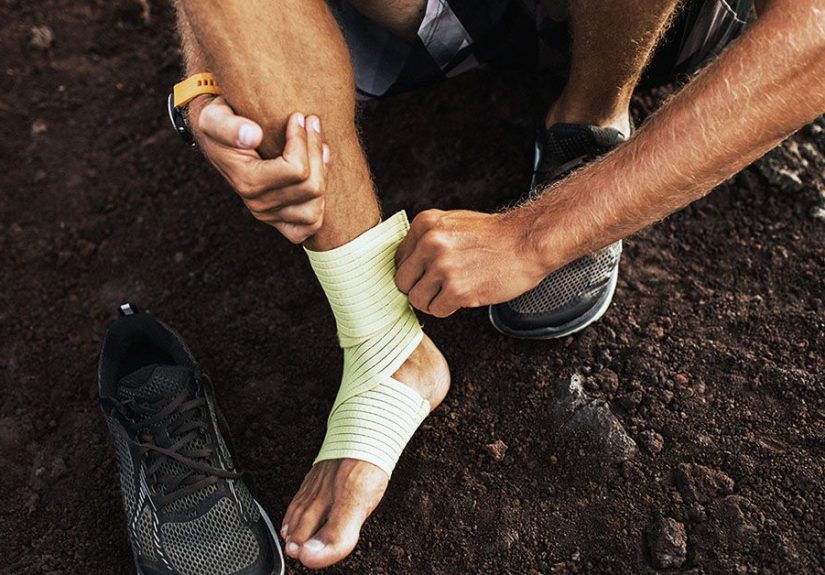
- Compression: A snug elastic wrap or sleeve helps keep swelling in check. Rewrap if you feel tingling, numbness, or color changesthose mean it’s too tight.
- Elevation: To heart level or slightly above whenever possible to encourage fluid to drain away.
Tip: If anti-inflammatory medicines are safe for you, short-term over-the-counter NSAIDs (like ibuprofen) or acetaminophen can help pain. Follow label directions and your clinician’s advice, especially if you have kidney, heart, GI, or bleeding risks.
Days 2–7: move (a little), then move (a little more)
Once pain starts settling (often within 48 hours for mild sprains), the focus shifts from “don’t move” to “move smart.” Early, gentle motion and weight bearing as tolerated can speed recovery and prevent stiffness.
Early mobility menu
- Range-of-motion drills: Draw the alphabet in the air with your toes, 1–2 sets daily. Add gentle ankle circles and ankle pumps (point/flex).
- Partial weight bearing: If steps are pain-limited, use crutches and progress to more weight as pain allows.
- Isometrics: Press the forefoot gently into a towel or the wall (4–5 reps, 5–10 seconds) in four directionsup, down, inward, outwardwithout actual movement.
- Compression + elevation “intervals”: Wrap during the day; unwrap and elevate during longer rest periods.
Week 2 and beyond: rebuild like an athlete
The right rehab prevents this sprain from turning into a “why does my ankle always feel wobbly?” situation. Add strengthening, balance, and sport-specific progressions.
Strengthening (2–4 sets, 10–15 reps, once daily)
- Theraband resisted motions: Dorsiflexion (toes up), plantarflexion (point down), inversion (inward), eversion (outward). Control the returnslow and steady wins.
- Calf raises: Start double-leg on the floor → single-leg → off a step for full range.
- Towel scrunches or marble pickups: Foot intrinsics matter for ankle control.
Balance & proprioception (daily)
- Single-leg stands: 30–60 seconds; progress eyes-closed, head turns, or on a cushion/balance pad.
- Star excursion / Y-balance patterns: Lightly reach your free foot forward/side/back while keeping your stance knee softly bent.
- Mini hops & lateral shuffles: Add once you can single-leg stand without wobbling or pain.
Return-to-run and sport criteria
- Full, pain-free range of motion and at least 90% strength vs. the uninjured side.
- 30–60 seconds stable single-leg stance on a firm surface and 20–30 seconds on a compliant surface.
- Hop test: forward hop and triple hop distances ≈90% of the other side without pain or instability.
- Sport-specific drills (cuts, pivots, jumps) performed confidently while wearing a brace or tape, if recommended.
How long does healing take?
- Grade I: ~1–3 weeks for daily activities; sports within 2–4 weeks if criteria are met.
- Grade II: ~3–6 weeks for daily activities; sports in 4–8+ weeks with structured rehab.
- Grade III: 8–12+ weeks; some cases require immobilization or surgical consult.
Timelines vary with age, previous ankle injuries, fitness, how early you start proper rehab, and whether you use external support (brace/tape) as you rebuild.
Brace, tape, boot, or castwhat should you use?
- Functional brace or lace-up support: Useful for walking comfort early on and for return-to-sport confidence.
- Elastic compression wrap/sleeve: Great for daytime swelling control.
- Walking boot: Consider for moderate to severe sprains when weight bearing is painful; transition out as pain improves to avoid stiffness.
- Cast: Rare for routine sprains; may be used for high-grade injuries per clinician judgment.
When to get an X-ray (Ottawa Ankle Rulestranslated)
Seek imaging if you have pain in the ankle/midfoot plus any of the following:
- Bone tenderness at the back edge or tip of either ankle bone (malleolus).
- Bone tenderness at the base of the fifth metatarsal (outside of the foot) or the navicular (midfoot).
- Inability to take four steps both immediately after injury and during evaluation.
Red flags: don’t DIY these
- Severe pain, obvious deformity, or you can’t bear weight at all.
- Numbness, cold/pale foot, or “pins and needles” that don’t resolve after loosening a wrap.
- Significant swelling that doesn’t improve after 48 hours, or pain that lingers beyond a couple of weeks.
- Frequent sprains or a sensation that the ankle “gives way”you may need formal rehab or further imaging.
Smart self-care FAQs
Should I ice or heat?
Ice helps early for pain and swelling. Heat can feel good later (after the first couple of days) before stretching, but avoid if it increases swelling.
Can I walk on it?
Yesas tolerated. Pain is your speed governor. Limping heavily means you’re overdoing it; use support and scale back.
Do I need physical therapy?
PT is strongly recommended for moderate or recurrent sprains and athletes returning to cutting/jumping sports. A therapist will tune your program, progress load, correct mechanics, and test readiness.
What about taping vs. bracing for sports?
Both work. Braces are reusable and quick; taping can be customized by a trained provider. Many athletes use one of them for the first season back after a sprain.
A sample 3–6 week progression (adjust to pain and grade)
- Days 0–2: RICE; protected weight bearing; ankle ABCs; isometrics.
- Days 3–7: Add band exercises in all directions; double-leg calf raises; single-leg balance 3×30 seconds.
- Week 2: Progress to single-leg calf raises; longer balance holds; gentle step-downs; stationary bike or pool jogging if pain-free.
- Week 3–4: Introduce light jogging intervals; lateral shuffles; mini-hops; agility ladder (low intensity) with brace/tape.
- Week 4–6+: Sport-specific cuts, stops, jumps; hop testing; remove brace only when strength/balance/functional tests pass.
Prevention once you’re healed
- Keep a twice-weekly maintenance routine: calf strength + evertor strength + 5 minutes of single-leg balance progressions.
- Use a brace or tape for higher-risk sports the first season back.
- Warm up (dynamic) before play; cool down (light mobility) after.
- Check footwear: stable heel counter, appropriate traction, retired before slick soles show up.
Conclusion
Treat swelling early, load wisely, and respect the rehab stages. Most sprained ankles don’t need fancy interventionsjust consistent, progressive work. Build range of motion, strength, and balance; use support gear when it helps; and clear functional tests before you sprint and cut. That’s the recipe for a faster recovery and fewer re-sprains.
SEO wrap-up
sapo: Sprained your ankle? Start with smart first aid, then pivot quickly to gentle motion, targeted strength, and balance training. This guide explains exactly how to reduce swelling, when to walk, which brace or tape to choose, the tests to pass before running, and realistic recovery timelines for Grade I–III sprainsso you can return to life (and sport) with confidence, not wobble.
Real-world recovery experiences: what actually helps
1) The impatient runner who slowed down to speed up. Alex rolled her ankle on a curb two weeks before a 10K. Day 1 was classic: ice, compression, and an elevated Netflix marathon. On Day 3 she tried a “test run,” felt sharp pain at push-off, and wisely stopped. A PT swapped running for cycling intervals and had her do banded eversion (outside ankle) work daily. She also wore a lace-up brace for neighborhood walks and practiced single-leg balance while brushing her teeth. Two weeks later she jog-walked pain-free; at Week 4 she finished a comfortable 5K. Her takeaway: if every third step still hurts, load is too highpick a pain-free cardio alternative and keep strengthening.
2) The weekend hooper who embraced the brace. Jordan’s second ankle sprain arrived during a pickup game’s messy rebound. The first time, he rested until it “felt fine,” then returned without training balancehe re-sprained within a month. This time he accepted a 6-week plan: brace for daily activity, balance pad drills, and progressive hops. He logged hop test distances each week to see progress (objective wins feel good). He returned to the court wearing a brace and kept balance work twice weekly through the season. Zero re-sprains. His takeaway: proprioception is not optional, and a brace is a tool, not a crutch.
3) The desk-bound designer who mastered motion snacks. Priya’s mild sprain didn’t hurt while sitting, but ballooned after long workdays. She started hourly “motion snacks”: 60 seconds of ankle pumps, 10 calf raises, and a quick walk to refill waterthen propped her foot on a small ottoman at her desk to stay above hip level. Swelling shrank, and she slept better. Her takeaway: elevation and frequent gentle movement beat one big workout followed by eight frozen hours in a chair.
4) The soccer coach who used criteria, not the calendar. Coach Miguel stopped guessing based on weeks and used checkpoints: pain-free full range of motion, 90% single-leg hop distance, and no apprehension with lateral shuffles. He made his players “earn” their return with these tests, and kept them in a brace for games the first month back. Re-sprain rates on his squad plummeted. His takeaway: numbers and simple field tests keep emotions from rushing the comeback.
5) The new parent who discovered nighttime strategy. Swelling woke Dana every time the baby did. A clinician suggested a gentle 5-minute routine before bed: ankle alphabet, 10 slow calf raises, then 10 deep breaths with her foot elevated on two pillows. She also wrapped a gel pack in a thin towel for one last 15-minute icing session. Nights improved; mornings felt less stiff. Her takeaway: the hour before sleep is prime time to reset swelling and stiffness.
6) The trail hiker who respected uneven ground. Once Mark could jog on flat pavement, he craved the woods. His PT had him “graduate” with a progression: treadmill incline walk → grassy field loops → easy dirt path → rocky trail. He kept the brace on for the first two hikes and added “look-up” drills to practice foot placement without staring at the ground. His takeaway: skills are surface-specific; earn the terrain.
7) The desk-to-5K group’s secret weapon: habit stacking. Their ankle-prehab circuit took five minutes and carried over to post-sprain rehab perfectly: 30 seconds single-leg balance (each leg), 12 calf raises, 10 banded eversions, 10 lateral step-downs. They tacked it onto warm-ups twice a weekinjuries and setbacks dropped. The takeaway: make ankle care small, frequent, and tied to a routine you already do.
Bottom line from the field: The people who recover fastest don’t necessarily heal “better”they manage swelling early, respect pain, progress load systematically, and keep two habits after they’re “fine”: brief balance work and occasional resisted ankle exercises. Add a brace for higher-risk play in your comeback month, and future-you will thank present-you.