Table of Contents >> Show >> Hide
- Why Fast Decluttering Actually Works
- Your Fast Decluttering Game Plan
- How to Declutter the Entryway Fast
- How to Declutter the Living Room Fast
- How to Declutter the Kitchen Fast
- How to Declutter the Bathroom Fast
- How to Declutter the Bedroom Fast
- How to Declutter a Kids’ Room or Playroom Fast
- How to Declutter the Home Office Fast
- How to Declutter the Laundry Room and Linen Closet Fast
- How to Declutter the Garage, Basement, or Storage Room Fast
- How to Keep Your Home Decluttered After the Fast Reset
- Real-Life Experiences With Decluttering Every Room Fast
- Conclusion
If your home feels like it’s auditioning for a reality show called Too Much Stuff, take a breath. You do not need a monthlong organizing retreat, a wall of matching bins, or the patience of a saint. You need a smart plan, a little momentum, and the willingness to ask one brutally useful question: “Do I actually need this here?”
Fast decluttering is less about perfection and more about visible progress. The goal is to make each room function better today, not to transform your house into a museum where no one is allowed to sit down. When you focus on the spaces you use most, the items you touch every day, and the obvious clutter first, your home starts feeling calmer almost immediately.
This room-by-room guide breaks the process into quick, realistic steps so you can declutter your home fast without getting trapped in decision fatigue. Whether you have 20 minutes, a Saturday afternoon, or a sudden burst of “I am done living like this” energy, here’s how to turn chaos into something much more civilized.
Why Fast Decluttering Actually Works
The fastest way to declutter every room in your home is to stop treating every object like it deserves a full emotional committee meeting. A speedy reset works because it targets the biggest visual wins first: piles on counters, items on floors, overstuffed surfaces, expired products, duplicate gadgets, and anything that clearly belongs somewhere else.
That approach matters because clutter does more than make a house look messy. It makes rooms harder to use. A kitchen with crowded counters feels harder to cook in. A bedroom with laundry piles feels harder to relax in. A packed entryway makes every arrival and exit more annoying than it needs to be. When you clear the obvious mess first, you improve both the look and the function of a room in one move.
There is also a mental advantage. A cluttered home can feel noisy even when nobody is talking. When you reduce visual distractions, your brain gets fewer reminders that something is unfinished. That is why a 10-minute reset in the right spot can make your whole home feel more manageable.
Your Fast Decluttering Game Plan
Before you charge into the nearest junk drawer like it owes you money, give yourself a simple system. The more structure you have at the start, the less likely you are to get sidetracked halfway through the living room by an old birthday card and three mystery chargers.
Use Four Simple Categories
- Keep: Items you use, need, or genuinely love.
- Relocate: Things that belong in another room.
- Donate: Good items you no longer use.
- Trash or recycle: Broken, expired, useless, or obvious garbage.
Follow These Ground Rules
- Set a timer for 15 to 30 minutes per space.
- Start with visible areas first, such as counters, floors, and tabletops.
- Stay in one room until your timer ends.
- Work by category whenever possible.
- Do not buy storage bins before you declutter.
That last point is worth repeating with love: organizing too much stuff is still too much stuff. It just happens to be wearing matching labels.
How to Declutter the Entryway Fast
If you want quick results, start with the entryway. This is the first space you see when you come home and the last space you see when you leave, which means even a small improvement here has an outsize effect on how organized your entire house feels.
What to Remove First
- Shoes that are out of season, damaged, or rarely worn.
- Random mail, flyers, and receipts.
- Coats that belong in closets or another room.
- Bags, umbrellas, sports gear, and anything dumped “for now.”
What to Keep
Keep only your daily essentials in the entryway: the shoes and jackets in current rotation, keys, sunglasses, dog leashes, and maybe a tray or bowl for the grab-and-go items. Add a basket for outgoing things like library books, returns, or donations. The goal is not to make the entryway empty; it is to make it useful.
How to Declutter the Living Room Fast
The living room rarely gets messy because of one giant problem. It gets messy because of a hundred tiny ones. Remote controls, coffee mugs, chargers, throw blankets, books, game controllers, and that one cable nobody claims all work together to create the illusion that your couch lives in a storage unit.
Start With Horizontal Surfaces
Clear the coffee table, side tables, and entertainment unit first. These surfaces visually dominate the room, so cleaning them off creates instant progress. Bring dishes to the kitchen, toss trash, and move stray items into a relocate basket.
Edit the “Helpful” Stuff
Many living rooms are crowded with items that seem useful but are mostly taking up space. Thin out old magazines, decorative extras, tangled charging cords, and stacks of books you are not actively reading. Keep a basket for remotes and electronics, and choose a few favorite decor pieces instead of displaying every knickknack you have ever owned.
A shelf with breathing room looks intentional. A shelf packed edge to edge looks like it needs a nap.
How to Declutter the Kitchen Fast
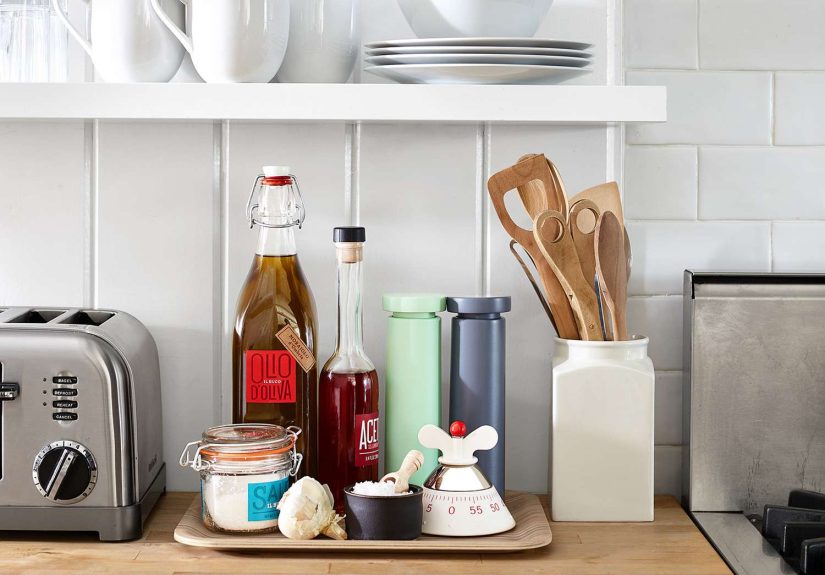
The kitchen is the heart of the home, but it is also a magnet for clutter. It collects everything from unopened mail to half-empty snack bags to a suspicious number of reusable water bottles. If you want a room-by-room decluttering win that pays off immediately, the kitchen is one of the best places to start.
Begin With the Refrigerator
This may not sound glamorous, but it is wildly effective. Toss expired condiments, old leftovers, and anything fuzzy enough to deserve its own zip code. Wipe the shelves and group similar foods together before putting them back. A cleaner fridge often creates momentum for the rest of the kitchen.
Then Tackle These Quick Wins
- Clear the countertops down to the daily-use essentials.
- Empty one junk drawer and sort it fast.
- Edit mugs, food containers, water bottles, and duplicate utensils.
- Check the pantry for expired food and “nobody likes this” purchases.
- Move specialty gadgets out of prime real estate.
The best kitchen organization tips are practical, not aspirational. Keep the items you use every day in the easiest-to-reach spots. Put specialty bakeware, seasonal serving pieces, and that waffle maker you use twice a year farther back or up high. A decluttered kitchen should make cooking easier, not more decorative.
How to Declutter the Bathroom Fast
Bathrooms get cluttered in a sneaky way. The mess is usually small, but there is a lot of it: travel-size lotions, expired sunscreen, duplicate razors, old makeup, hair accessories, hotel toiletries, and enough half-used products to start a tiny pharmacy.
Clear the Counter First
Take everything off the bathroom counter and wipe it down. Then return only what you use daily, such as hand soap, a toothbrush, moisturizer, or contact lens solution. If an item is not part of your regular routine, it should probably live in a drawer or cabinet.
Work One Storage Zone at a Time
- Check expiration dates on skincare, cosmetics, and medications.
- Group similar items together: hair care, oral care, makeup, first aid, and extras.
- Keep your morning routine items in the easiest-to-reach zone.
- Reduce backups you are unlikely to use anytime soon.
Your bathroom should support your routine, not slow it down. When your essentials are easy to grab, mornings feel less chaotic and you stop digging through six lip balms to find the one you actually like.
How to Declutter the Bedroom Fast
A cluttered bedroom can quietly sabotage your entire home because it affects how you start and end the day. Even if no guest ever sees it, you do. And nothing says “I’ll deal with it later” like the famous chair piled with clothes that is no longer technically a chair.
Start With What Does Not Belong
Grab a basket and collect anything that belongs in another room: dishes, paperwork, electronics, workout gear, shopping bags, and random household items. Set the basket outside the room and keep going. Do not leave the room every two minutes to put things away or you will lose momentum fast.
Then Hit These Problem Areas
- Your nightstand
- The top of the dresser
- The floor around the bed
- The “chairdrobe” or bench pile
- Your closet and top dresser drawer
Remove clothes that do not fit, flatter, or get worn. Store off-season clothing outside the main zone. Group similar items together so you can see what you have. A decluttered bedroom does not have to look like a hotel suite; it just has to feel restful instead of mildly accusatory.
How to Declutter a Kids’ Room or Playroom Fast
Kids’ spaces become cluttered quickly because they contain lots of small pieces, mixed categories, and a constant stream of new items. The secret is not creating an ultra-perfect system. It is making the room easy to reset.
Do the Quick Edit First
- Throw away broken toys and dried-out art supplies.
- Remove incomplete games and puzzles missing key pieces.
- Donate toys your child has clearly outgrown or ignored for months.
- Sort what stays into broad, simple categories.
Think in easy groups: books, stuffed animals, building toys, dolls, cars, crafts, and dress-up clothes. Fewer categories usually work better than too many. If a child needs a master’s degree to figure out where the crayons go, the system is too complicated.
How to Declutter the Home Office Fast
Paper clutter has a special gift for looking urgent while being mostly useless. Old receipts, unopened mail, dried-up pens, product manuals from 2017, and notebooks with three pages used can make a desk feel busier than your actual calendar.
Set Up Three Paper Zones
- Action: Bills, forms, or papers that need attention.
- File: Documents you truly need to keep.
- Recycle or shred: Everything else.
Then reduce supplies to the things you use weekly. Keep chargers, cords, and tech accessories in one contained spot. If your desk is buried under piles, start by clearing the surface. A decluttered office is not just prettier; it helps you focus, find things faster, and stop moving the same stack of papers from one side to the other like it is a full-time job.
How to Declutter the Laundry Room and Linen Closet Fast
This is where “just in case” items love to multiply. Extra detergent, old cleaning sprays, stained towels, lonely pillowcases, half-used paper products, and products you bought once and immediately regretted all tend to gather here.
What to Edit
- Empty bottles and worn-out cleaning tools
- Old or stained towels and sheets
- Unopened products you will never use
- Too many duplicate supplies
Keep complete sheet sets together and reduce towel inventory to a realistic amount for your household. Group supplies by use, such as laundry, household cleaning, and guest linens. Store the items you reach for most at eye level so the room supports your routine instead of turning it into an obstacle course.
How to Declutter the Garage, Basement, or Storage Room Fast
Storage spaces are where clutter goes to become folklore. If you are short on time, do not start by sorting every nail, holiday ornament, or mystery plastic part. Go after the large, obvious wins first.
Look for Big Progress Items
- Broken furniture or equipment you are never repairing
- Duplicate tools
- Old packaging and empty boxes
- Sports gear nobody uses
- Half-finished project supplies you no longer want
Create broad categories first: tools, yard gear, seasonal decorations, keepsakes, donations, and trash. Once the floor opens up and the big items are under control, the smaller stuff becomes much easier to sort. Fast garage decluttering is about reclaiming usable space, not alphabetizing screws.
How to Keep Your Home Decluttered After the Fast Reset
Decluttering fast feels great. Staying decluttered feels even better. Once each room is more manageable, a few small habits can stop the mess from making a dramatic comeback.
Simple Maintenance Habits That Work
- Do a 10-minute reset at the end of the day.
- Keep a donation bag or bin somewhere easy to reach.
- Use the one-in, one-out rule for clothes, mugs, decor, and toys.
- Put things back in their zone as soon as possible.
- Revisit clutter hotspots weekly, especially counters and drop zones.
The most organized homes are not the homes where nothing ever gets messy. They are the homes where mess has a system for leaving.
Real-Life Experiences With Decluttering Every Room Fast
One of the most interesting things people notice when they declutter every room in the house fast is how quickly a home starts to feel different, even before the whole project is technically finished. The first change is usually visual relief. When the entryway floor is visible again, the kitchen counters are clear, and the coffee table is no longer storing half your daily life, your brain immediately reads the space as calmer. Many people expect they need a huge makeover to feel better in their home, but often the biggest difference comes from clearing the most obvious clutter first.
Another common experience is realizing that clutter is not just a storage problem. It is a decision problem. A lot of people do not avoid decluttering because they are lazy. They avoid it because every item seems to ask for a verdict. Keep it? Toss it? Donate it? Fix it? Sell it? Move it? Think about it later? That constant decision-making gets exhausting. Fast decluttering works because it cuts down the number of choices happening at one time. Instead of judging your entire house all at once, you judge one room, one drawer, one shelf, or one category. That feels far less overwhelming.
People also tend to discover they own more duplicates than they ever realized. There are usually extra scissors, backup shampoo, five almost-identical black T-shirts, random charging cables, and a truly confusing number of reusable water bottles. Room-by-room decluttering makes those patterns obvious. When similar items are grouped together, it becomes much easier to see what is useful and what is just taking up space. This is often the moment when people stop organizing for a fantasy life and start organizing for the real one they actually live every day.
Families often notice functional improvements almost immediately. The kitchen becomes easier to cook in because the counters are open. The bathroom gets less stressful because daily-use items are easy to reach. Kids are more likely to help clean up when toy categories are simple and storage makes sense. Bedrooms start to feel more restful when laundry is put away and surfaces are not loaded with random stuff. Even a small fast decluttering session can change how a room works, which makes the results feel more meaningful than a surface-level tidy-up.
There is usually an emotional payoff too. People often describe feeling calmer, more in control, and less irritated by little daily routines. They spend less time looking for things, less time shifting piles from one place to another, and less time cleaning around clutter that should not be there in the first place. No, decluttering does not solve every problem in life. Your bills will still exist. Your inbox will still be dramatic. But a home with less clutter creates less friction, and that matters more than most people realize.
Another lesson that comes up again and again is that fast decluttering is not about becoming a minimalist overnight. It is about making your home easier to live in right now. A room does not have to be perfect to be better. A closet does not need matching velvet hangers to be functional. A playroom does not have to look catalog-ready to be manageable. Once people understand that, decluttering becomes less intimidating and far more sustainable.
In the end, the experience of decluttering fast is often less about getting rid of stuff and more about getting back ease. Ease when you open a drawer. Ease when you make dinner. Ease when you leave the house in the morning. Ease when you walk into your bedroom at night. That is the real win. A clutter-free home is not just nice to look at; it helps your day run with fewer little annoyances, and that can make your entire home feel more welcoming, more functional, and much more like a place you actually want to be.
Conclusion
If you want to declutter every room in your home fast, focus on what is visible, useful, and easy to decide first. Start with the entryway, move through the rooms you use the most, and make quick choices based on how your household really lives. Clear surfaces. Remove obvious trash. Group like items together. Keep only what earns its space.
A clutter-free home is not built in one dramatic weekend. It is built through small, repeatable choices that make your rooms work better. So grab a timer, a donation bag, and a little determination. Your home does not need a miracle. It probably just needs fewer mystery cords.